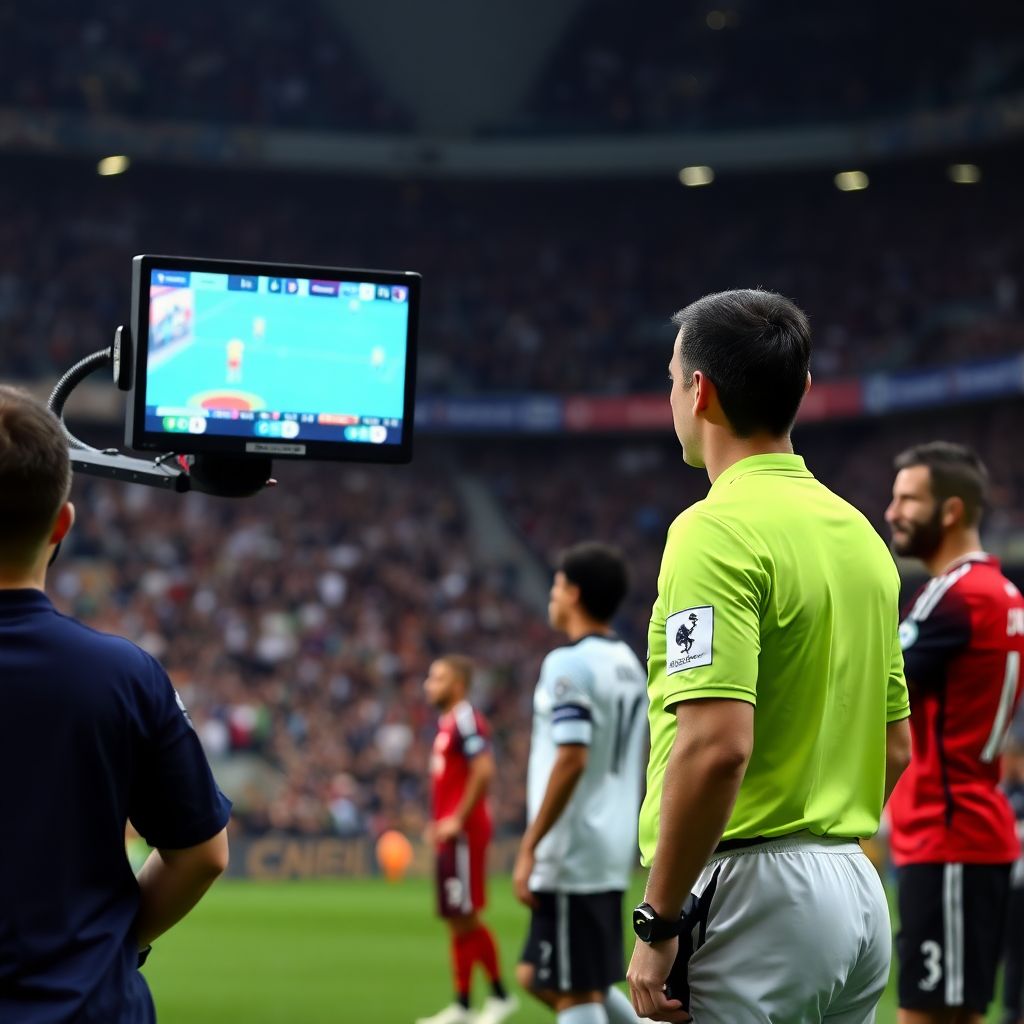
VAR in football is a technological assistant that reviews specific, high‑impact situations to reduce clear refereeing errors without turning the game into a laboratory experiment. Philosophically, it balances human fallibility, fairness and the flow of play. Used well, it protects sporting justice; used badly, it can undermine trust and enjoyment.
Core principles for assessing VAR and sporting justice
- Football is built on human fallibility; VAR should correct the worst mistakes, not all imperfections.
- Clear protocols are essential: var futbol qué es y cómo funciona must be understood by players, coaches and fans.
- Technology reduces some errors but introduces delays, opacity and new kinds of injustice.
- Justice in sport combines fair procedures, consistent criteria and respect for the spirit of the game.
- Ethically, VAR must stay proportional: minimum intervention for maximum fairness.
- Continuous review of governance, communication and training is more important than buying new cameras.
Philosophical foundations: human error, fallibility and the meaning of fairness
To understand VAR and justice, start from the role of error in football. Referees have always decided with limited information, under time pressure and in a noisy environment. This fallibility is not a bug from outside the game; it is part of football’s identity and drama.
Fairness in this context does not mean perfect accuracy. It means that everyone accepts the same risks: both teams play under the same rules, the same referee, the same possibility that a marginal offside or soft penalty goes against them. Justice is shared vulnerability, not mathematical perfection.
When tecnología var en el fútbol pros y contras is discussed, the ethical question is: what level of intervention improves fairness without destroying this shared risk and the flow of play? If every contact, every offside line and every handball is forensically analysed, the match becomes a sequence of corrections, not a continuous game.
Philosophically, VAR is justified when it protects the integrity of key outcomes (goals, red cards, mistaken identity, penalties) by correcting clear and obvious errors. It becomes problematic when it tries to fix every small inaccuracy or when its presence changes how players, coaches and referees behave, for example encouraging more simulation because «VAR will sort it out».
How VAR works: technological affordances, thresholds and inevitable limits
At a mechanical level, var futbol qué es y cómo funciona can be broken down into a simple, protocol‑driven sequence that defines when and how the system intervenes:
- Trigger events: VAR only reviews four types of incident: goals, penalty decisions, direct red cards and cases of mistaken identity. Everything else remains with the on‑field referee.
- Check versus review: All such incidents are «checked» in the background. A «review» only happens if the VAR believes there is a clear and obvious error or a serious missed incident.
- Communication channel: The video assistant team has multiple camera feeds and replay tools. They speak to the referee through a headset, summarising what they see in a short, neutral description.
- On‑field monitor: For subjective situations (e.g. intensity of a foul, handball interpretation), the referee is usually invited to watch the incident on the pitch‑side screen and make the final call.
- Objective tools and limits: Offside lines, frame‑by‑frame analysis and calibrated cameras can increase precision, but they have technical limits (frame rate, calibration errors, camera angle) that prevent absolute certainty.
- Time and intervention threshold: The protocol demands «minimum interference, maximum benefit». If an incident is grey or unclear after several replays, the default should be to stay with the original decision.
These steps show that VAR is not a magic eye but a structured decision‑support system. Its ethical quality depends less on the screens and more on how strictly this protocol is understood and applied.
The human element: referees, review teams and cognitive biases in decision-making
Despite the cameras, VAR remains deeply human. Referees, assistant referees and video officials bring their own experience, instincts and cognitive biases into each decision. Understanding typical scenarios helps explain why controversy persists.
- Marginal offsides after goals: A striker scores, the assistant keeps the flag down, and VAR checks the position. Here, tiny movements of body parts and the choice of frame can influence the offside line. Bias towards «saving» the on‑field call or towards «scientific» precision can tip the decision.
- Soft penalties and contact in the box: In crowded penalty‑area incidents, slow motion can exaggerate the severity of contact, leading to more penalties than would be given at real‑time speed. Referees may feel social pressure to «use» VAR if they are called to the monitor, even if their first impression was correct.
- Red cards for serious foul play: High challenges, studs up or dangerous tackles often involve interpretation of force, intent and point of contact. Video helps, but confirmation bias can make officials look for frames that support their initial instinct, not challenge it.
- Handball interpretations: Modern handball rules are complex and change often. VAR officials sometimes focus on whether the ball clearly hits the arm, while the referee must weigh arm position, distance and expected movement. Differences in national training create inconsistent outcomes across competitions.
- Pressure from context and crowd: In a hot stadium, with players surrounding the referee, the knowledge that VAR exists can create two opposite tendencies: either the referee becomes over‑cautious («VAR will fix it»), or overly reliant on on‑field authority («I do not want to look weak by changing»). Both distort good judgement.
- Learning curve and training: cursos online de arbitraje fútbol con var try to standardise these responses, working on communication, recognising personal biases, and understanding when not to intervene. But training cannot remove pressure, only help referees manage it better.
Justice frameworks applied to sport: procedural integrity versus outcome legitimacy
Ethically evaluating VAR means distinguishing between two related but different ideas: the fairness of the process and the fairness of the outcome. A decision can feel wrong yet be procedurally correct, or vice versa.
Advantages of VAR for fairness and legitimacy
- Reduction of gross injustice: Clear offside goals, invisible handballs on the line or confusion of player identity can be corrected, aligning the scoreline more closely with the rules.
- Increased accountability: Referees are aware that their decisions can be scrutinised, which may reduce moments of complacency or careless positioning.
- Support for referees: In high‑pressure derbies or finals, having a second layer of review can psychologically protect referees from making catastrophic, career‑defining mistakes.
- Improved long‑term consistency: As competitions share guidelines and clips, interpretations of similar situations can converge, especially when combined with shared resources like mejores libros sobre filosofía del fútbol y justicia deportiva that frame these dilemmas.
Limitations and ethical costs introduced by VAR
- Fragmentation of the match: Long checks break rhythm, cool emotions and alter tactical momentum. The sporting experience becomes more like watching video analysis than a live event.
- Opacity and distrust: Where there is poor communication, fans and players see only delays and not the reasoning. This can increase suspicion, even if the final decision is correct.
- Over‑precision in fuzzy contexts: Offside lines and slow motion give an illusion of certainty where the technology still has margins of error. Ethically, claiming objectivity that does not exist is problematic.
- Economic inequality: sistema var fútbol precio implementación varies dramatically between top leagues and lower divisions, creating different standards of justice within the same sport.
- Shift of responsibility: Coaches and players may blame «the system» instead of reflecting on their own performance or discipline, displacing moral responsibility from humans to machines.
Illustrative controversies: lessons from pivotal VAR incidents
Controversies around VAR tend to repeat the same patterns. Analysing them helps separate myths from realistic expectations.
- The millimetre offside myth: Some fans believe that any offside, however tiny, is automatically more «just» if detected by VAR. In reality, camera angles and frame selection create a margin of error that makes absolute precision impossible; insisting on millimetres can be less fair than staying with the assistant’s flag.
- The «VAR will fix everything» myth: Players sometimes stop playing, expecting VAR to retroactively award penalties or fouls. But the protocol is intentionally limited; many fouls in build‑up play are not checked, and subjective interpretations remain with the referee.
- Inconsistent communication: In some leagues, referees briefly explain decisions in‑stadium; in others, silence produces frustration. The same underlying technology feels more or less fair depending on how clearly the process is shared.
- Penalty area chaos: Corner‑kick grappling provides a good example. Fans ask why some pulls are penalised after VAR and others ignored. The reason is usually protocol: only clear, punishable offences directly affecting a goal‑scoring action are reviewed. Without public education, this looks arbitrary.
- Delayed celebrations and emotional cost: Goals followed by long checks erode spontaneous joy. Ethically, this is not a trivial «fan comfort» issue; it affects the meaning of scoring and the emotional truth of the game.
- Technology as a scapegoat: When a referee makes a poor interpretation even after review, critics often blame «the cameras» instead of the human decision. This hides the need for better training, clearer laws and improved governance.
Improvement roadmap: governance, transparency and remedial mechanisms
Improving the justice of VAR is less about more hardware and more about better governance, communication and simple, understandable protocols. A concise, transparent algorithm for checking key incidents can help everyone evaluate decisions more calmly.
Example: short algorithm to review a potential VAR incident
// Simple VAR review flow for a potential penalty or red card
1. Did the incident fall into a VAR review category?
   - If NO (e.g. normal foul in midfield) → No intervention.
2. Was the referee's view clearly blocked or the angle insufficient?
   - If YES → Stronger reason to consider intervention.
3. After 2-3 replays, is there evidence of a CLEAR AND OBVIOUS error?
   - If NO or UNCLEAR → Stay with on-field decision.
4. If YES → Recommend on-field review.
5. Referee re-watches at normal speed, then slow motion if needed.
6. Referee decides; VAR only checks factual details (inside/outside area, mistaken identity).
This type of step‑by‑step reasoning can be adapted in cursos online de arbitraje fútbol con var, ensuring that officials focus on the threshold of «clear and obvious» rather than re‑refereeing the game. Transparent publication of similar flows would also help fans understand why some incidents are checked but not overturned.
Beyond protocols, governance bodies should clarify how they evaluate errors, what sanctions or retraining follow, and how feedback from players, coaches and supporters is integrated. Debate around mejores libros sobre filosofía del fútbol y justicia deportiva shows that football culture is ready to talk seriously about justice, not just results.
Practical checklist for evaluating VAR decisions and reforms
- Ask whether VAR intervened only in its defined categories or tried to re‑referee the match.
- Check if the final call respected the «clear and obvious error» threshold, especially in subjective fouls.
- Evaluate the impact on match rhythm: were checks short, necessary and proportional to the decision?
- Look for clear, honest communication about the reasoning, not just the outcome.
- Consider whether proposed changes improve both procedural clarity and the lived experience of the game.
Quick clarifications on VAR, error and ethical implications
Is VAR meant to eliminate all refereeing errors?
No. VAR is designed to reduce clear and obvious errors in a few critical situations, not to create perfect refereeing. Trying to eliminate all mistakes would require constant interruptions and would damage the flow and emotional rhythm of the match.
Why do some leagues seem to use VAR better than others?
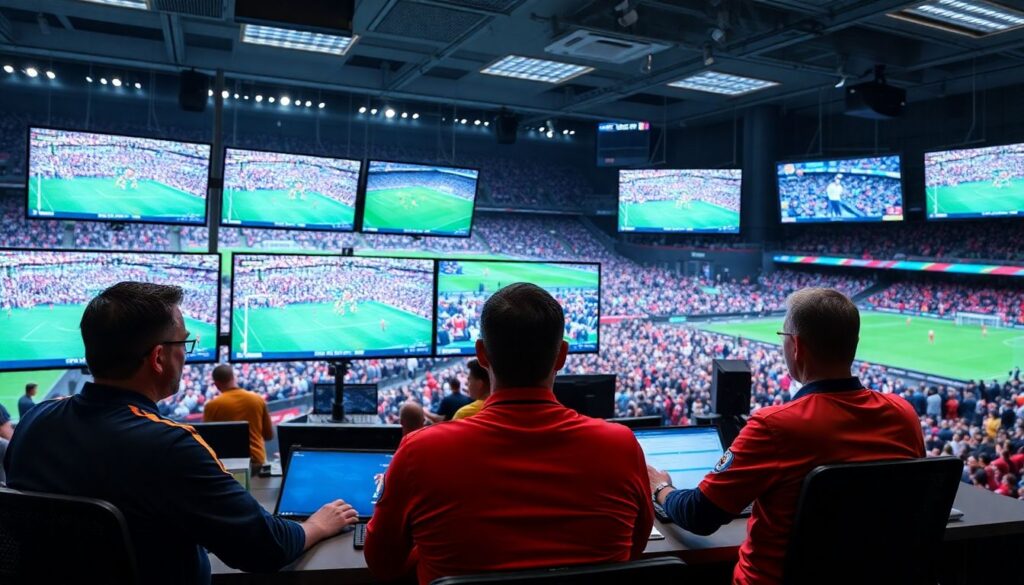
Differences usually come from governance, training and communication, not just technology. Clearer protocols, better collaboration between referees and VAR teams, and transparent explanations make the system feel fairer even with similar equipment.
Does slow motion always give a more accurate picture of a foul?
No. Slow motion can exaggerate force and intent, especially in tackles and handballs. Ethically, referees should prioritise normal‑speed replays to judge intensity, using slow motion mainly to confirm contact or the exact point of impact.
Is it fair that rich competitions have VAR and poorer ones do not?
This creates unequal standards of justice within football. However, partial implementation can still be positive if each competition is transparent about its tools and limitations, and avoids pretending that lower‑budget solutions guarantee the same level of accuracy.
Why do fans often blame «the technology» after a bad VAR decision?
Because cameras and graphics are visible, it is tempting to see them as responsible. In reality, humans choose angles, frames and interpretations. Ethical evaluation should focus on training, laws and decision‑making, not on blaming the screens.
Can philosophical thinking really help improve VAR?
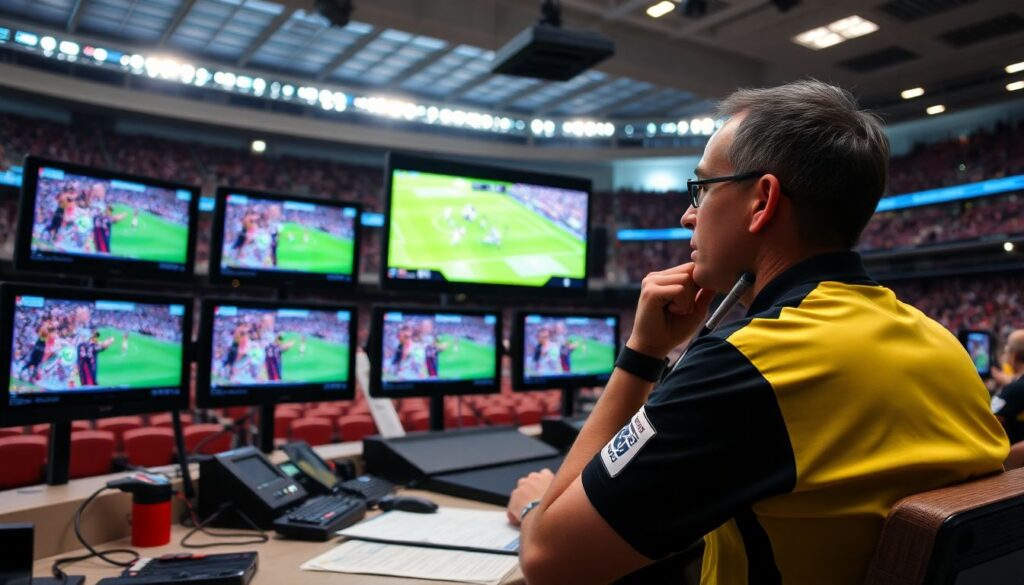
Yes. Philosophy clarifies what kind of fairness we want: strict rule application, flow of the game, or emotional balance. This helps regulators decide how intrusive VAR should be, what counts as a serious injustice, and how to explain trade‑offs to the football community.
Will future technology finally make decisions perfectly objective?
Unlikely. Better tools can reduce some margins of error, but football involves interpretation, not just measurement. Questions about intent, recklessness or acceptable contact will always require human judgement and shared moral standards, not only more pixels.