
Football is still a sport at its core because results are decided on the pitch by athletic performance under codified rules. At the same time, it functions as a global entertainment product shaped by media, sponsorship and merchandising. The key is to distinguish sporting essence from commercial packaging and to avoid mixing both levels.
Core distinctions to assess football’s identity
- Separate what happens inside the 90 minutes from everything that surrounds the match-day «show».
- Recognise who sets incentives: federations, leagues, clubs, broadcasters, sponsors, platforms and fans.
- Check whether rules protect competitive balance or mainly maximise revenues and viewer numbers.
- Distinguish sporting merit (training, tactics, performance) from market visibility (followers, shirt sales).
- Look at how you, personally, consume football: as a game, as background entertainment, or as a lifestyle product.
- Identify common fan biases, such as blaming «modern football» for every change, even when changes protect sport integrity.
Historical evolution: from local pastime to global spectacle
Originally, football in Europe was a local, community-based pastime. Clubs were rooted in neighbourhoods, factories, universities or social movements. Money existed, but the main logic was participation, local pride and physical competition, not global branding or constant content production.
Over time, three forces turned football into a global spectacle: professionalisation of players and coaches, standardisation of rules and competitions, and especially mass broadcasting. Once televised, the game stopped being only what millions did on Sunday mornings and became something billions could watch, discuss and buy around the clock.
Today the same match is simultaneously a sport, a television show, a betting event, a social media topic and a merchandising trigger. When you search for entradas fútbol partidos hoy or compare an abono temporada fútbol comprar for different clubs, you are moving inside the entertainment-product layer, but the match you will attend still follows sporting logic on the pitch.
The crucial boundary: football ceases to be a sport only if results are primarily decided by scripted narratives or commercial interests instead of skill, tactics and fair competition. So far, what has expanded is the commercial envelope around the sport, not full scripting of outcomes.
Competitive integrity: rules, governance and athletic merit
Competitive integrity describes how well the structures of football preserve fair, meaningful competition despite commercial pressures. In practice, it rests on several mechanisms that can work well or be distorted.
- Codified rules of play and officiating – Laws of the Game, referees, assistants and VAR aim to keep on-pitch decisions predictable, transparent and not negotiable by sponsors or broadcasters.
- Competition formats – League tables, promotion/relegation, group stages and knockouts determine how sporting merit converts into titles, money and prestige. Format tweaks can increase spectacle but also protect big brands.
- Regulatory bodies – FIFA, UEFA, national federations and professional leagues regulate eligibility, transfers, licensing and financial behaviour of clubs, ideally to prevent manipulation and preserve balance.
- Financial controls – Salary caps, Financial Fair Play and licensing rules try to prevent unsustainable spending that would turn sport into a pure wealth contest instead of tactical and athletic competition.
- Anti-corruption safeguards – Match-fixing regulations, betting monitoring, disciplinary processes and whistleblower channels are needed so that entertainment value never justifies manipulating results.
- Player development pathways – Academies, training standards and youth competitions ensure that access to the top level is not decided only by marketing appeal or agent power.
Frequent mistake: assuming that any commercial decision automatically kills sporting integrity. In reality, some changes (for example better refereeing technology or stricter financial rules) both increase entertainment and protect fairness. The key test is whether on-field performance still dominates outcomes.
Everyday scenarios that expose the sport-product tension
To connect these mechanisms with daily experience in Spain, consider three quick scenarios:
- You buy entradas fútbol partidos hoy for a LaLiga match that changes kick-off time to suit Asian TV markets. The sport (90 minutes, rules, referees) is intact, but scheduling prioritises product distribution over local match-going fans.
- You decide where to ver fútbol online en directo suscripción. Different platforms compete for your monthly fee using LaLiga and Champions rights. The game is the same; the subscription model turns it into a recurring entertainment product in your household budget.
- Your club offers an abono temporada fútbol comprar with added benefits (museum visit, discounts on camisetas de fútbol oficiales tienda online). The pass monetises your fandom, yet the league table still depends on coaching, training and execution.
Commercialization dynamics: broadcasting, sponsorships and revenue streams
Commercialization does not only mean «more money». It is a set of structures that turn football into a scalable, repeatable product that can be sold worldwide while still depending on live, uncertain results. Understanding where and how this applies helps avoid overreacting to every business move.
Typical ways football functions as an entertainment product
- Broadcast and streaming rights
Leagues and federations sell packages of matches to TV and digital platforms. In Spain, this shapes who controls dónde ver LaLiga y Champions en streaming, what times matches start and how often schedules change for prime-time audiences across Europe, America and Asia. - Subscription ecosystems
Fans no longer just tune in; they pay recurring fees. Deciding how to ver fútbol online en directo suscripción (single-sport platform, telecom bundle or mixed entertainment package) turns your relationship with football into a monthly content contract rather than an isolated match-night. - Sponsorship and branding
Shirt sponsors, stadium naming rights and «official partners» integrate brands into every visual element. Clubs structure content so that press conferences, training clips and mixed zones provide exposure independent of match results. - Merchandising and lifestyle
Camisetas de fútbol oficiales tienda online, limited-edition collections, fashion collaborations and even non-sport products (perfumes, games, credit cards) convert club identity into a lifestyle brand. Fans can «participate» in the club all week without ever playing or even watching a full match. - Eventization of fixtures
Classic derbies, Super Cups abroad or pre-season tours become «events» with fan zones, concerts and influencers. The match is the centrepiece, but not the whole show. For locals, this sometimes dilutes traditional match-day routines; for global audiences, it increases entry points into fandom. - Data, betting and second-screen engagement
Real-time stats, fantasy games and live betting integrate football into broader digital entertainment. This can deepen tactical understanding but also reframe matches as content units to wager on rather than contests between clubs and communities.
Frequent mistake: thinking that because revenue is crucial for clubs, winning stops mattering. In reality, sporting success still strongly feeds the business model (prize money, visibility, sponsorship prices). The risk is not that results are irrelevant, but that some institutions prioritise short-term spectacle over long-term sporting balance.
Player experience and development under market pressures
For players, modern football is both a more professional sport and a more demanding entertainment job. Training loads, nutrition and analytics improved, but so did media exposure, travel, fixture congestion and pressure to behave like content creators.
Advantages for players in the current ecosystem
- Better professional conditions – Higher salaries at top levels, better medical staff, nutrition, sports science and facilities extend careers and reduce certain types of injuries.
- Global visibility – Talented players from smaller markets can be spotted via data and video, opening transfers that would not have existed in a purely local era.
- Structured development – Academies with clear methodologies, education support and specialised coaching can give young players a more predictable path.
- Post-career opportunities – Media, coaching, punditry and ambassador roles are more numerous because football is a 24/7 content industry.
Limitations and risks created by commercialization
- Fixture overload – More competitions and tours compress calendars, increasing fatigue and injury risk, especially for internationals and top-club players.
- Brand-first evaluation – Some decisions (sponsorship deals, shirt sales, social media reach) can overshadow pure sporting criteria in recruitment or playing time at certain clubs.
- Psychological pressure – Constant scrutiny, online abuse and performance expectations affect mental health, particularly for young players thrust early into global visibility.
- Unequal opportunities – Players in lower divisions or smaller leagues rarely access the same support systems; they live all the sporting pressure with far fewer economic benefits.
Frequent mistake: romanticising the past and assuming players «used to play only for love of the shirt». Economic incentives and club politics always existed. The current challenge is to align commercial goals with player welfare so that the sport remains sustainable at human level, not only as content.
Audience behaviour: fandom, consumption patterns and cultural meaning
How fans behave often decides whether football feels more like a sport or like a commodity. The same structures can be used to deepen understanding of the game or to reduce it to background noise and impulse buying.
Common misconceptions and how to avoid them quickly
- «If I buy more, I support more»
Myth: purchasing every new shirt, special edition scarf or membership is the main way to help your club. Reality: healthy clubs need diversified, sustainable income and critical fans. Practical fix: define a yearly budget for football expenses (tickets, one abono temporada fútbol comprar, maybe a shirt) and stick to it. - «More access means more understanding»
Myth: nonstop highlights, podcasts and shows automatically make you a better-informed fan. Reality: quantity can dilute attention. Practical fix: choose a limited number of quality sources and, once a week, rewatch 20 minutes of a match focusing only on tactics or a specific player. - «Modern football is only business now»
Myth: because clubs sell camisetas de fútbol oficiales tienda online worldwide and negotiate huge TV deals, passion and identity disappeared. Reality: local rivalries, grassroots football and amateur leagues remain intense. Practical fix: attend at least a few live matches per season at different levels, not just top-tier stadiums. - «Streaming killed the stadium atmosphere»
Myth: as people ask dónde ver LaLiga y Champions en streaming, stadiums are doomed. Reality: many clubs still sell out key games; atmosphere depends more on supporter culture and pricing than on streaming itself. Practical fix: combine TV or streaming with occasional live attendance, especially for derbies or decisive fixtures. - «Big clubs control everything»
Myth: only superclubs and broadcasters shape the future. Reality: regulators, players’ unions, fan groups and even city councils also influence decisions. Practical fix: follow at least one independent outlet or supporter organisation that tracks governance, not just transfer rumours. - «Watching equals participating»
Myth: being an intense viewer replaces playing. Reality: your body and local community benefit from actual participation. Practical fix: join a local 5-a-side league or weekly pick-up game; let watching inspire doing, not replace it.
Technological and regulatory factors reshaping the game

Technology and regulation mediate the tension between football as a sport and as entertainment. Used well, they protect fairness; used poorly, they optimise only for spectacle or monetisation.
Mini case: VAR and the perception of «scripted» football
Video Assistant Referee (VAR) was introduced to correct clear and obvious errors. From a sporting perspective, it should increase justice: fewer offside mistakes, fewer ghost goals. From an entertainment angle, it adds suspense, extra talking points and broadcast-friendly replays.
Typical fan error is to interpret any VAR decision against their team as proof that «everything is fixed for TV ratings». While corruption and bias must always be monitored, most controversies stem from interpretation of complex rules, communication problems and inconsistent implementation rather than from a desire to script outcomes. A quick prevention checklist for your own analysis:
- Before blaming «the script», check the exact wording of the rule applied (offside, handball, foul).
- Compare similar incidents from other matches, not only your club’s games.
- Separate disagreement with current rules from suspicion of deliberate manipulation.
- Observe whether both teams benefit and suffer from VAR over a season rather than from a single match.
Other technologies (goal-line systems, tracking data, fitness wearables) and regulations (squad size limits, homegrown player rules, financial controls) follow a similar pattern: they can keep football recognisably the same sport while adjusting to global scale. The key is transparent governance and informed, critical fans.
Practical questions about whether football remains a sport
Does commercialization mean football is no longer a genuine sport?
No. Commercialization has expanded the business around football, but results at professional level are still determined by athletic performance under fixed rules. The concern is not that it stopped being a sport, but that economic incentives can distort competitive balance if regulators and fans are not vigilant.
Is paying for streaming or TV making me part of the problem?
Not automatically. Paying to watch matches, whether via cable or a ver fútbol online en directo suscripción, is simply one way to access the sport. The issue is how platforms and leagues use that money and how you balance your role as consumer with your role as citizen and supporter.
Are match schedules decided more for TV than for stadium fans?
Often, yes. Kick-off times increasingly follow global broadcast interests rather than local convenience, especially in top leagues. This reflects football as a global product. However, without in-stadium atmosphere, TV value drops, so smart leagues seek a compromise rather than ignoring match-going fans completely.
Do shirt sales and social media followers now matter more than trophies?
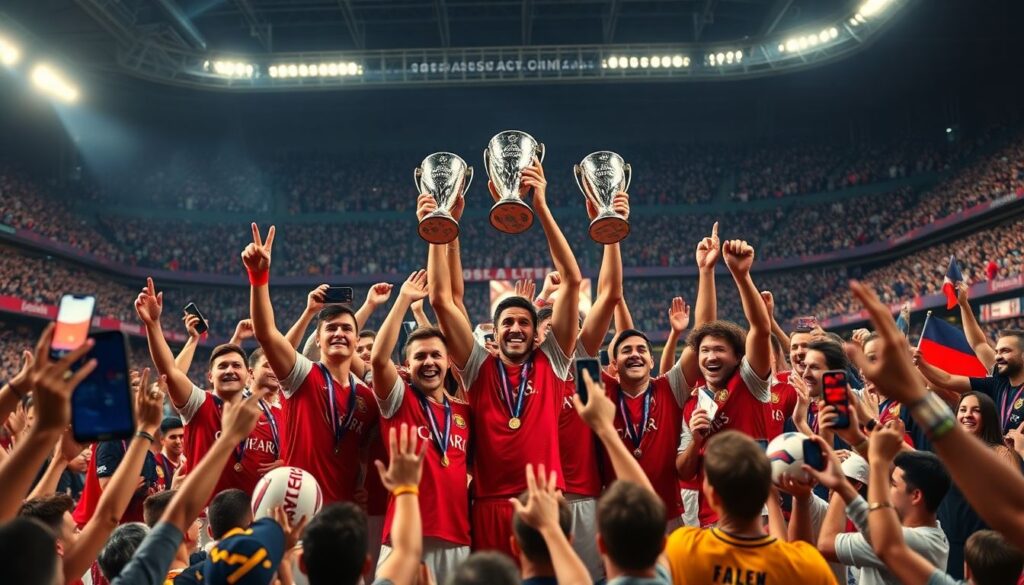
For marketing departments, global reach and merchandise sales are crucial. Yet, over time, sporting success remains one of the most effective ways to grow revenue. Trophies, deep runs in Europe and consistent performance still drive the largest jumps in income and brand power.
Can lower-division or grassroots football escape the entertainment logic?
Partly. Grassroots and amateur levels in Spain are less exposed to global TV and merchandising, so they preserve more of the community-sport feel. Still, they are influenced by top-level trends in tactics, media and expectations. Supporting local clubs helps maintain this more «pure» layer of the game.
How can I enjoy modern football without feeling manipulated as a consumer?
Set clear limits: define a yearly budget for tickets, subscriptions and merchandise; prioritise live experiences over impulse buys; and complement watching with playing or volunteering locally. Being conscious of your choices turns you from a passive target into an active participant in the football ecosystem.
What signals would show that football is truly becoming scripted entertainment?
Clear red flags would include evidence of systematic match-fixing, rules changed mid-competition for specific clubs, or competitions designed to guarantee certain finalists regardless of results. Currently, controversies exist, but they do not reach that level of scripting. Continuous scrutiny by fans and media is essential.