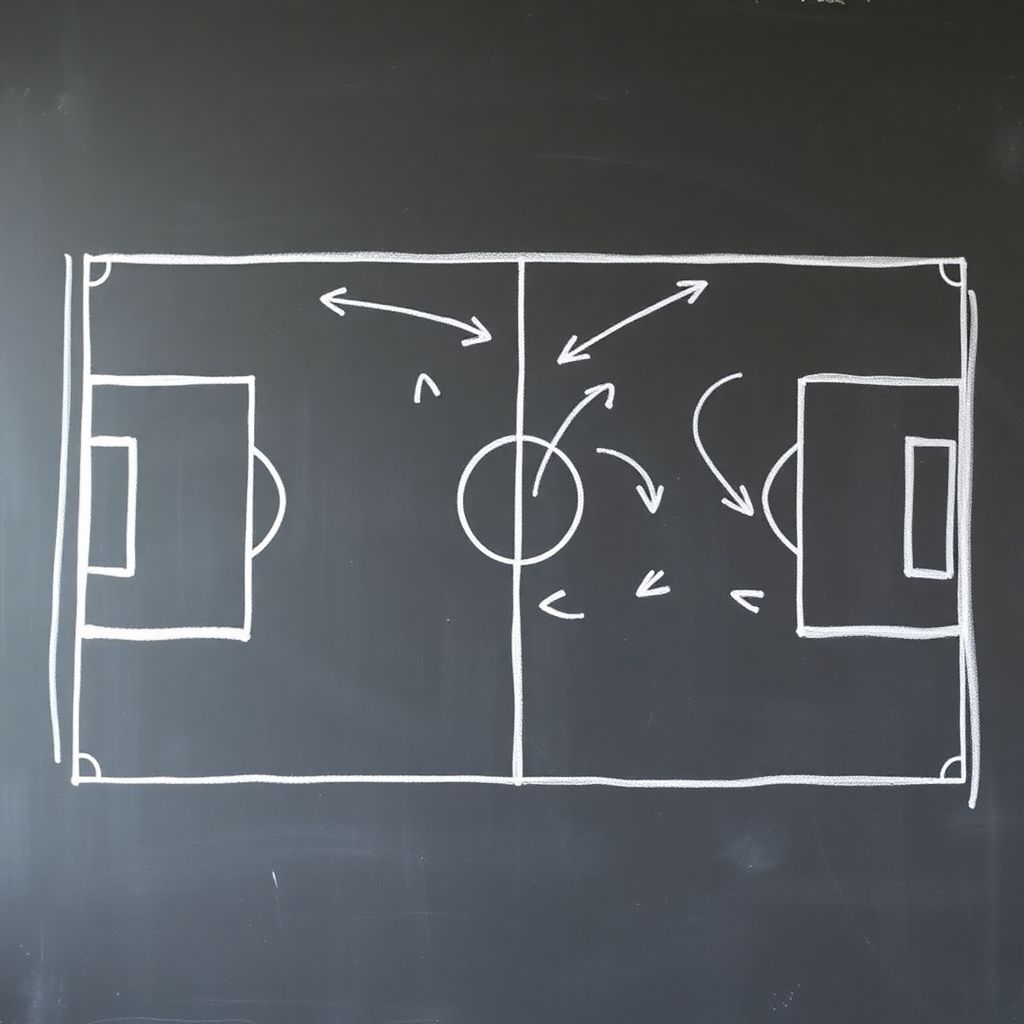
The evolution from WM to modern positional play is a shift from fixed lines to dynamic control of space. WM organised players in clear layers, catenaccio maximised defensive security, Total Football reframed roles as flexible, and today’s juego de posición uses structure to create superiorities, often turning «the system» into a restrictive dogma.
Essential Tactical Conclusions
- WM is not the primitive opposite of positional play; it is an early attempt to structure space in three vertical lines.
- Catenaccio is less about parking the bus and more about orchestrated coverage, pressing triggers and counter-attacks.
- Total Football turns fixed roles into interchangeable tasks around the ball and available space.
- Modern juego de posición is a framework of spatial rules, not a catalogue of rigid patterns or shapes.
- The same «system» can produce fluid or sterile football depending on player profiles and coaching constraints.
- Coaches, recruitment and even a máster en táctica y estrategia de fútbol often over-emphasise formations instead of principles.
Debunking Myths: WM, Catenaccio and the ‘Origins’ of Positional Play
WM (3-2-2-3) is often presented as a naïve, pre-modern shape with fixed positions and little collective intelligence. In reality, WM already tried to manage vertical compactness, balance numbers between lines and concentrate talent in central corridors. It is a structural ancestor, not an enemy, of current positional thinking.
Another persistent myth says that catenaccio killed creativity and only defended deep. Historical catenaccio used a sweeper and tight marking, but also explicit pressing cues and fast counter-attacks. The «lock» was tactical, not just emotional: closing central spaces to make the rival predictable, then exploiting transitions.
Modern discourse frequently treats juego de posición as something suddenly invented by Cruyff or Guardiola. The deeper truth is that positional play formalises long-standing ideas about width, depth and occupation of strategic zones. WM and catenaccio already negotiated these issues, though with less fluidity and weaker pressing capacity.
This matters for practitioners choosing libros de táctica futbolística moderna or a curso online de análisis táctico de fútbol: understanding continuities avoids worshipping the new as magic and dismissing the old as useless. It lets coaches extract principles instead of copying frozen historical systems.
Anatomy of the WM: Formation, Roles and Strategic Intent
- Base structure (3-2-2-3): Three defenders (often with a central stopper), two half-backs, two inside forwards and three forwards formed a «W» plus «M». This gave numerical presence in every vertical lane but left wide defensive spaces vulnerable.
- Central stopper and half-backs: The central defender engaged the opposing centre-forward, while half-backs balanced between supporting the back line and stepping into midfield. Their decisions shaped the team’s ability to compress or stretch the block.
- Inside forwards as connectors: Positioned between midfield and attack, they were early «between-the-lines» players, linking build-up to final third actions. Their movements anticipated the modern role of attacking midfielders and false nines.
- Wingers and depth: Wide forwards stretched the last line and pinned full-backs. They were crucial for creating horizontal gaps in rigid man-marking schemes and for providing crossing platforms against compact central blocks.
- Pressing and rest defence: Pressing was less coordinated than today, but WM already contained ideas of first-line pressure by central forwards and covering responsibility for half-backs. Rest defence was primitive yet recognisable: keeping enough players behind or around the ball to delay counters.
- Strategic intent: WM sought to stabilise central zones, create clear reference points for passing lanes and attack from width with numerical occupation in the box. The logic is spatial and relational, not only numerical, which links directly to modern positional concepts.
- Practical takeaway for coaches: When studying formación para entrenadores de fútbol sobre juego de posición, reading WM structures helps to recognise how current 4-3-3 and 3-2-5 shapes echo those same lanes and heights on the pitch.
Bridges and Ruptures: Tactical Shifts from WM to Mid‑20th Century Systems
The path from WM to modern systems is not a straight upgrade; it is a sequence of adaptations to changes in offside rules, pressing intensity and athletic demands. Several key scenarios show how ideas evolved while maintaining underlying concerns with space and superiority.
- From WM to 4-2-4: Teams dropped a defender and pushed an extra player into the front line. The aim was to fix the rival’s back four with four attackers, while the double pivot managed transitions. This shift increased vertical threat but demanded more collective pressing behind the first line.
- From 4-2-4 to 4-3-3: Adding a third midfielder responded to the need for central overloads as pressing grew. The «8» emerged as a shuttle player between lines, reducing the disconnect between a deep pivot and an isolated front line.
- Catenaccio and the sweeper: Re-configuring WM with a libero behind man-markers ensured numerical superiority against two strikers. The bridge here is clear: positional play’s obsession with a spare man at the back has its roots in that libero logic, now expressed via rest-defence lines and inverted full-backs.
- South American adaptations: The 4-3-3 and 4-4-2 in Argentina and Brazil integrated more ball circulation and dribbling as structural tools, not just individual talent. The medium block and zonal marking appeared as alternatives to pure man-marking, preparing the environment for future pressing systems.
- Local contexts and education: In Spain, the eventual rise of juego de posición was mediated by club academies, literature and even early software de análisis táctico para entrenadores de fútbol that visualised patterns over time instead of isolated «moves». Each stage bridged old structures with new interpretations.
Total Football and the Reframing of Space: From Roles to Principles
Total Football is often reduced to «everyone can play everywhere», but historically it is a systematic redefinition of reference points: from fixed zones to dynamic occupation of space around the ball. Roles became bundles of tasks; positions turned into temporary stations.
| Aspect | WM / Catenaccio | Total Football | Modern Juego de Posición |
|---|---|---|---|
| Main reference | Nominal position and direct opponent | Ball, space and team-mates | Zones, lines and superiority types |
| Role flexibility | Low to medium | High, constant rotations | Medium to high, within clear rules |
| Defensive organisation | Mostly man-marking plus sweeper | Aggressive pressing and zonal shifts | Coordinated pressing, hybrid references |
| Key objective | Balance and individual duels | Collective dominance of space | Creation of stable superiorities |
Benefits of the Total Football shift
- Transforms marking from individual duels into collective responsibility for zones and passing lanes.
- Allows constant creation of free men by using rotations instead of static assignments.
- Encourages multi-skilled players, raising the baseline of technical and tactical competence.
- Makes pressing and counter-pressing a natural extension of attacking structure.
Limitations and hidden costs
- Requires extremely high tactical culture and shared references; without that, rotations become chaos.
- Physically and mentally demanding; intensity drops can break the whole mechanism.
- Can blur accountability: if «everyone defends», sometimes no one closes the decisive space.
- Easily misunderstood in coaching education and even in a máster en táctica y estrategia de fútbol as «constant movement» instead of purposeful occupation.
Juego de Posición Today: Core Principles, Patterns and Persistent Misconceptions
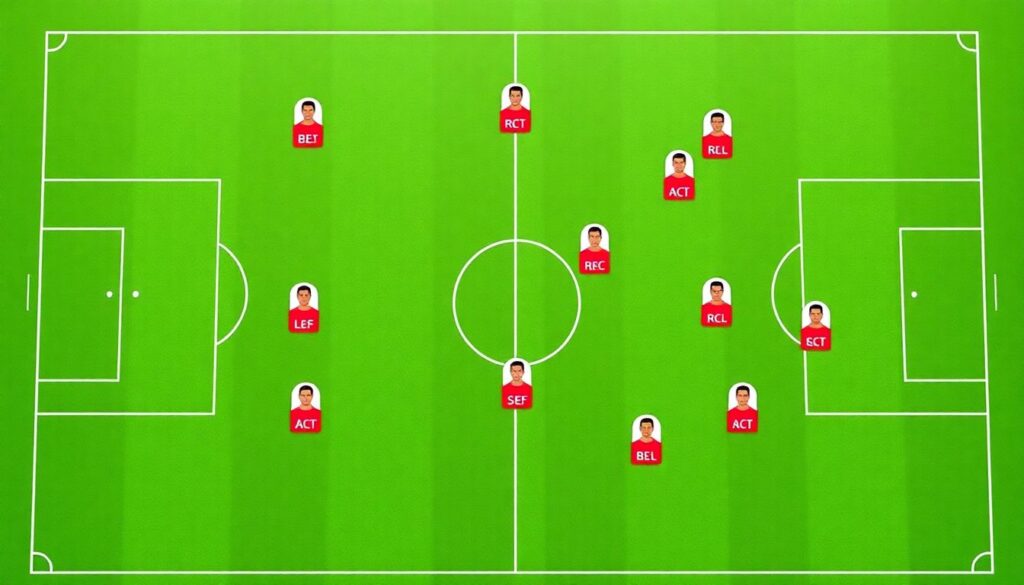
Modern positional play formalises how to use width, depth and interior spaces to create stable superiorities. It is less about the initial 4-3-3 or 3-2-4-1 on paper and more about how many players occupy each vertical lane and horizontal line at each phase of play.
- Confusing formation with positional structure: A 4-3-3 can attack in a 2-3-5 or 3-2-5, or even a 3-1-6. The key is how many players stand between opposition lines, who pins the last line and which lanes are intentionally left empty.
- Copying patterns instead of principles: Blindly imitating a top team’s half-space runs or inverted full-backs ignores local context. Coaches should ask: what superiority (numerical, positional, qualitative, dynamic) does this movement create, and can my squad reproduce the same logic?
- Over-structuring young players: In academies, overemphasis on «stay in your lane» can kill creativity. Positional rules must be scaffolding, not a cage. A good formación para entrenadores de fútbol sobre juego de posición teaches when to break the rule, not only how to obey it.
- Misreading possession as slowness: Positional play is not synonymous with sterile circulation. The ball should move to provoke, disorganise and then hit the exposed space. Tempo control includes choosing when not to play fast.
- Ignoring defensive phases: Juego de posición is often taught as an attacking concept only. In reality, rest-defence, pressing traps and counter-pressing are built into the same structure; build-up positions pre-define how you can defend transitions.
- Neglecting analytical tools: Without video and data, it is hard to diagnose if principles are applied. Even basic software de análisis táctico para entrenadores de fútbol can reveal recurring spacing mistakes and help design better training constraints.
The Tyranny of the System: How Tactical Orthodoxy Shapes Coaching, Recruitment and Play
Across eras, the «system» tends to dominate how clubs think: WM, 4-4-2, catenaccio, 4-3-3, 3-4-3. The label becomes an identity badge, and everything else (training, scouting, even academy pathways) bends around that declared orthodoxy, sometimes against the actual strengths of the squad.
In the WM era, clubs sought powerful inside forwards to fit the structure; under catenaccio, agile sweepers and tenacious man-markers became indispensable. Today, a club declaring itself a positional-play reference may sign technically gifted midfielders but ignore the need for depth-runners or true one-versus-one wingers, producing sterile circulation with no threat behind.
Education also reflects this tyranny. Many libros de táctica futbolística moderna and more than one curso online de análisis táctico de fútbol present systems as templates to apply, not questions to interrogate. Coaches graduate knowing the «correct» way to build up but lacking tools to adapt principles to a different league, squad or culture.
To resist this, clubs can reverse the logic: start from player profiles and context, then decide which principles matter most right now, and only then choose a nominal formation. Analysts can frame reports around advantages and risks of current spacing, instead of whether the team played a textbook 4-3-3.
Mini case: algorithm to test if your positional idea really works
Use this short algorithm after matches or training games to validate whether your positional play is functioning as intended.
- Map your intended structure: Write your desired attacking shape (for example, 3-2-5 in possession). Define:
- Who gives width on each side.
- Who occupies between-the-lines zones.
- Who pins the last defensive line.
- Sample 10 possessions: Using video or basic tagging in software de análisis táctico para entrenadores de fútbol, select 10 settled possessions (at least three passes each) against an organised block.
- Check core questions for each possession:
- Was the width provided as planned on both sides?
- How many players were between the lines: none, one, or at least two?
- Was the last line pinned by one or more players, or could defenders step out freely?
- Did you maintain at least one spare defender behind the ball for rest-defence?
- Score your alignment: For each possession, give one point for every «yes» answer. Sum and divide by (number of questions × 10). This gives a simple alignment ratio between 0 and 1.
- Interpret the result:
- High ratio: Your players internalise the structure; time to add variability and pressing details.
- Medium ratio: Principles appear but are inconsistent; adapt training games to over-reward correct spacing.
- Low ratio: The system lives on the whiteboard only; simplify rules and address role confusion individually.
- Close the feedback loop: Transform insights into one or two clear constraints for the next session (for example, «goal counts double if at least two players are between the lines when the final pass is played»). This is the bridge between theory, practice and any future máster en táctica y estrategia de fútbol you may study.
Concise Answers to Common Tactical Confusions
Did positional play really start with Cruyff and Guardiola?
No. They refined and popularised positional principles, but WM, catenaccio and Total Football already dealt with space, superiorities and structure. The novelty lies in the level of detail, pressing integration and training methodology, not in the idea of occupying zones intelligently.
Is catenaccio just parking the bus with ten players behind the ball?
Not exactly. Classic catenaccio used a sweeper, tight marking and deep blocks, but also had clear pressing triggers and fast counter-attacks. It is more accurate to see it as a system for controlling central spaces and transitions than as pure passive defence.
Can a team play positional football without huge possession numbers?
Yes. Juego de posición is about how you use the ball and occupy space when you have it, not about dominating possession stats. You can apply the same principles to shorter, more vertical attacks as long as spacing and superiorities are respected.
Is Total Football incompatible with modern structured positional play?
No. Total Football contributes ideas about interchangeability and dynamic occupation, while modern positional play adds clearer rules about zones and rest-defence. Many top teams blend both: structured spacing with flexible roles around the ball.
Should youth teams strictly copy professional systems like 4-3-3?
Only partially. Copying a professional shape can help with reference points, but youth coaching should prioritise principles: creating angles, using width, recognising superiorities. Over-rigid systems at early ages can limit creativity and decision-making.
How useful are coaching books and online courses for understanding these evolutions?
They are useful if they connect historical systems to modern principles instead of selling fixed templates. When choosing libros de táctica futbolística moderna or a curso online de análisis táctico de fútbol, look for material that explains why ideas changed, not just what shapes teams used.
Do you need advanced software to analyse your team’s positional play?
Advanced tools help but are not mandatory. Basic video review and simple tagging already reveal spacing patterns and repeated issues. As your level rises, specialised software de análisis táctico para entrenadores de fútbol can speed up diagnosis and communication with players.