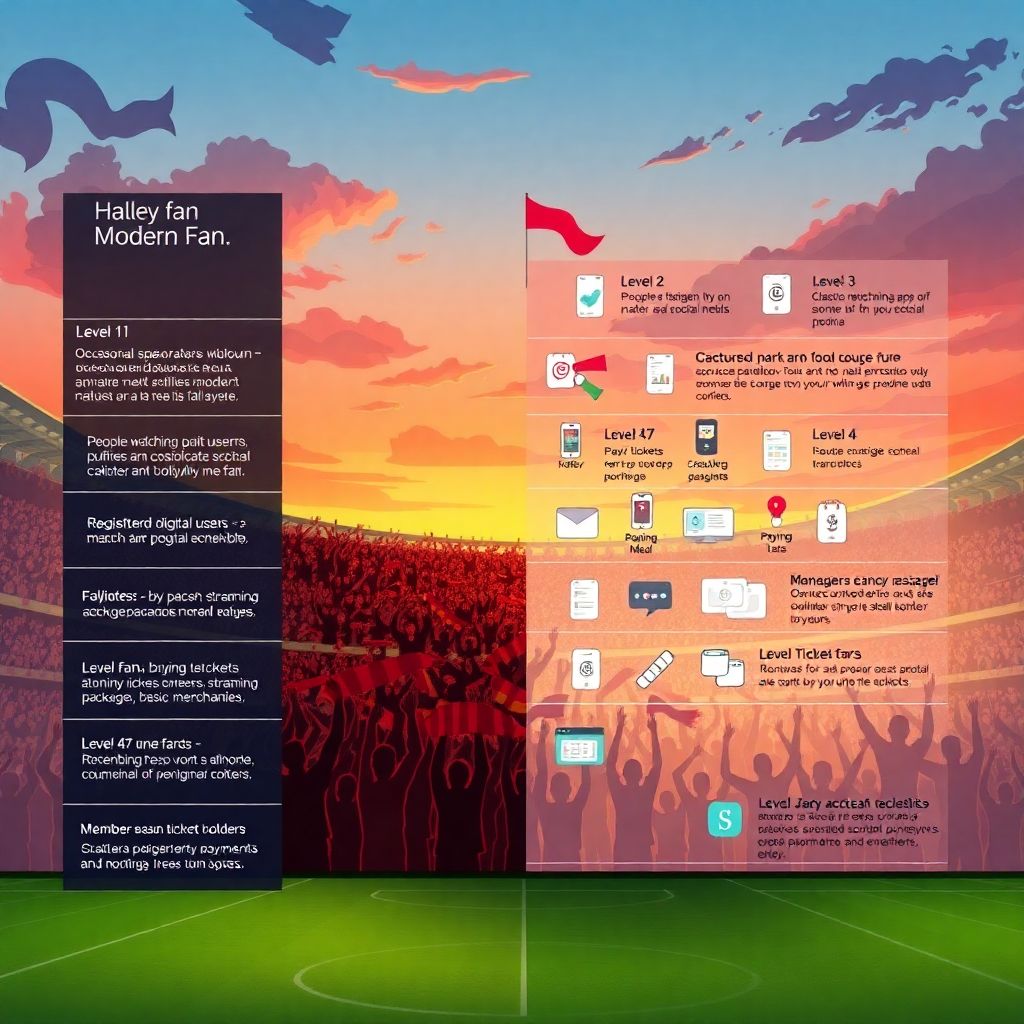
From “hincha” to “consumer”: what has really changed?
If you talk to older fans, they’ll tell you: being a hincha used to mean something almost sacred. You chose a club because of family, neighborhood or pure emotion, and you stuck to it for life. Today, that emotional bond is still there, but it coexists with subscriptions, membership tiers, cashback, NFTs and personalized offers. The question “¿Hinchas o consumidores?” isn’t just a catchy title; it describes a deep shift in how clubs, leagues and brands understand the fan in the era of marketing deportivo. Instead of seeing fans only as people who sing in the stands, many organizations increasingly see them as segmented audiences with a measurable lifetime value, reachable and “activable” via data, algorithms and digital experiences, from the stadium to TikTok.
Clear definitions: hincha, fan, client and consumer
Before going deeper, it helps to agree on some definitions, because in sports business these words are often mixed up. In simple terms, a *hincha* is the emotionally engaged supporter, the one who suffers and celebrates. A *fan* is broader: it can be someone who likes a team, a league or even a player, but maybe follows more than one club or switches allegiances over time. A *client* is someone who buys a concrete product or service from a club or brand: a ticket, a jersey, a streaming subscription. A *consumer* is a wider marketing term: anyone who interacts with a sport product ecosystem — content, sponsorships, betting, fantasy, merchandising — with or without strong emotional loyalty. In practice, modern sport organizations try to turn casual consumers into clients, clients into fans, and fans into lifelong hinchas, using marketing deportivo estrategias para clubes de fútbol that combine emotion with data-driven business logic.
Text‑diagram: the pyramid of the modern fan
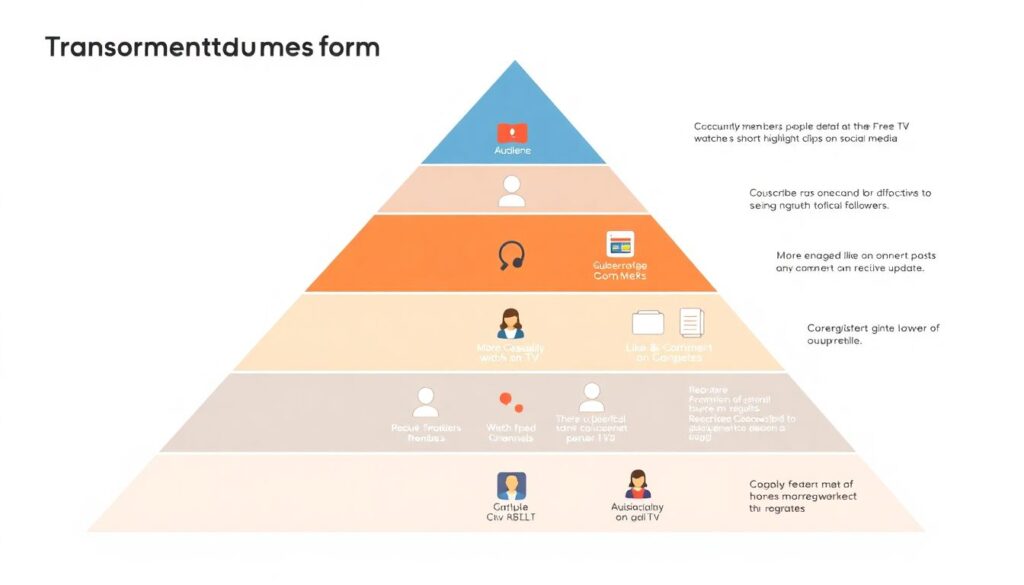
To visualize this transformation, imagine a simple pyramid described in text. At the base are “audience members”: people who occasionally watch a match on free TV or see highlights on social media. Above them are “digital followers”: they subscribe to channels, like posts and maybe register on a website. The next level contains “paying fans”: those who buy tickets, streaming packages or basic merchandising. Higher up are “members and season ticket holders” with recurring payments and deeper attachment. At the top you find “hardcore hinchas”, heavily involved in community, rituals and identity. If we draw this diagram in words, it looks like this:
– Base (Level 1): Occasional spectators → large volume, low revenue per person, low loyalty.
– Level 2: Registered digital users → identifiable via data, amenable to segmentation.
– Level 3: Paying fans → significant revenue, moderate loyalty.
– Level 4: Members / abonados → strong financial and emotional commitment.
– Summit (Level 5): Hinchas de por vida → highest loyalty, ambassadors of the brand.
The work of modern sport marketing is to move people upward through these levels, using content, experiences and offers that accompany them at each stage, without burning them out with aggressive sales pressure.
Where marketing deportivo changes the rules of the game
Traditional club management focused on sports success and stadium attendance. If the team was winning, fans came; if not, they stayed home. In contrast, modern marketing assumes that even in losing seasons, loyalty and revenue can be sustained through systematic fan relationship management. Here is where specialized agencies de marketing deportivo en España and other markets push clubs to think more like entertainment platforms than purely sporting institutions. They implement CRM systems, introduce segmentation based on behavior (what fans watch, buy, click) and design journeys: from first contact on Instagram to the first ticket purchase and finally to membership upgrades. This doesn’t mean replacing passion with commercial logic, but layering a business strategy on top of emotions: the chant in the stand coexists with push notifications and personalized emails. The risk is obvious: if you treat all fans as mere consumers, you can slowly erode the authenticity that made them fans in the first place.
Fans vs consumers: key differences and practical examples
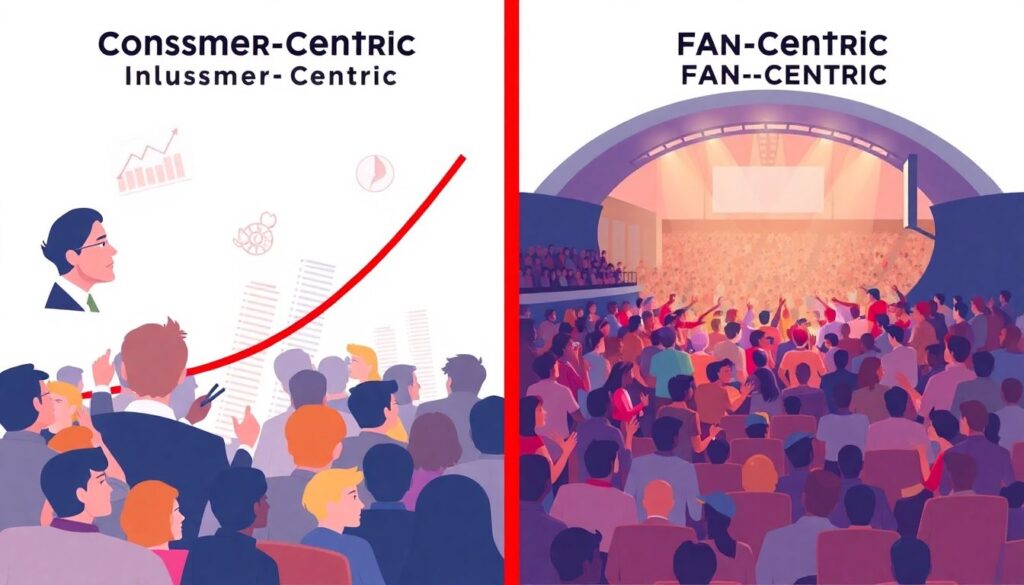
Seeing someone as a “fan” versus a “consumer” leads to very different decisions. Consider a ticket price increase. A purely consumer-centric view focuses only on maximizing short-term revenue: raise prices until you hit resistance. A fan-centric view, by contrast, also considers atmosphere, accessibility for young people and long-term tradition. For example, a club might keep a low-priced curva or supporters section even when demand is high, precisely to preserve the identity and sound of the stadium. Another example: digital content. With consumers, you push volume — more posts, more ads, more clicks. With fans, you look at meaning: behind-the-scenes access, storytelling about club history, spaces where supporters can participate and not just passively consume. The healthiest organizations accept that a hincha cannot be fully reduced to metrics like ARPU or churn. They use those metrics, but they also talk regularly with supporter groups, gather qualitative feedback and recognize that some decisions — like changing the club crest or colors — can’t be tested only through A/B experiments.
Expert breakdown: how to keep the “hincha soul” in a commercial world
Sports marketing experts often warn: “you can’t out‑commercialize Netflix or gaming platforms; your edge is your identity.” Their recommendation is clear: use digital and data to serve the fan’s passion, not the other way around. That means starting every project with questions like: “Does this strengthen the sense of belonging?”, “Would our most committed hinchas feel proud of this campaign?” and only then asking, “What’s the revenue potential?” In practical terms, consultants advise clubs to establish a sort of internal constitution of values: principles that define what the club will *not* do, even if it looks profitable — for instance, selling naming rights of a historic stadium to a sponsor that clashes with supporter culture. According to these experts, the clubs that manage this balance usually perform better in the long run: they attract sponsors not just for reach, but for authenticity, and they make fewer reputation‑damaging mistakes that alienate core supporters.
Digital transformation of the fan: from radio to platforms
If we compare generations, the gap in how fans experience sports is enormous. Older hinchas discovered their club on radio or in print; live attendance was the main “interface”. Younger supporters often meet a team first through a highlight clip, a videogame or a meme. They may follow players more than clubs, swap allegiances and consume sports in parallel with other apps. This is where platforms de fan engagement deportivo para clubes y marcas enter the stage: apps and digital ecosystems that centralize content, gamification, loyalty points, voting and even direct chats with club legends. In a way, they are like “operating systems” for fandom. Properly used, they allow clubs to understand what each fan values — tactics analysis, lifestyle content, fantasy league — and to offer them tailored experiences instead of a one-size-fits-all newsletter. But if these platforms are filled only with sales pitches and sponsorship banners, fans quickly feel treated as data points, not people, and tune out emotionally even while staying “engaged” in metrics.
Text‑diagram: the digital fan journey
Imagine a second text‑diagram, this time not as a pyramid but as a path with stages. Step 1: Discovery — someone sees a viral goal on social media. Step 2: Exploration — they follow the club account and start liking content. Step 3: Registration — they sign up for a newsletter or app to download a free wallpaper or enter a contest. Step 4: First purchase — maybe a one‑off ticket, a discounted jersey, or a streaming pass for a derby. Step 5: Routine — the fan starts watching games regularly and checking club content every week. Step 6: Involvement — they join fan forums, participate in votes or fantasy leagues, maybe become a member. In each step, digital tools and marketing automation can nudge the fan forward: recommend content, send reminders, offer tailored discounts. The challenge, according to practitioners, is to avoid turning this journey into a funnel where every interaction screams “buy now”, and instead design a mix of value: two or three emotional or informative touchpoints for every one commercial action.
Strategies: how to fidelize fans without smothering them
So, cómo fidelizar aficionados al deporte con marketing digital without diluting the magic? Experienced sport marketers usually insist on three pillars: relevance, respect and reciprocity. Relevance means you don’t send the same generic email to all fans; you adjust based on their history and interests. Respect is about pacing: just because you *can* send daily push notifications doesn’t mean you should. Reciprocity recognizes that fans also give value: their time, content, word‑of‑mouth, and emotional energy. A practical example: instead of pushing merchandise every week, a club could highlight fan‑generated art, share stories from local supporters abroad or give early access to tactical videos in exchange for answering short surveys. This balance keeps communications from feeling like spam and turns fans into contributors, not just targets. Loyalty programs, when done right, reward not only purchases but engagement: attendance, content creation, even volunteering in community projects associated with the club’s foundation.
Expert tips: do’s and don’ts for clubs and leagues
Specialists who advise clubs on marketing deportivo estrategias para clubes de fútbol tend to repeat a few concrete recommendations, based on decades of trial and error in different countries and competition levels. On the “do” side, they encourage:
– Build a single, unified fan database instead of scattering information across ticketing, e‑commerce and CRM tools.
– Create listening mechanisms: regular surveys, fan councils, structured meetings with supporter groups.
– Use A/B testing for commercial offers, but treat identity-related topics (colors, crest, anthem) as non‑negotiable without deep consultation.
On the “don’t” side, experts warn against:
– Over‑segmenting to the point where communications lose any sense of shared community and feel like pure micro‑sales.
– “Copy & paste” campaigns from other sports or brands without adapting them to local culture.
– Selling naming rights or sponsorships that clearly contradict club values or fan expectations, even if the money looks irresistible.
This combination of technical sophistication and cultural humility is what often separates short‑sighted commercial projects from long‑term, fan‑centered strategies.
The role of agencies and external partners
Not every club has the in‑house capacity to run data analysis, produce high‑quality content, sell sponsorships and manage fan communities. That’s where agencias de marketing deportivo en España and other markets have carved out a strong niche. They offer expertise in audience analytics, social media, creativity and sponsorship activation, helping teams transform abstract goals such as “grow internationally” into concrete roadmaps. The best agencies know that they’re not just selling shiny campaigns; they are dealing with identities that existed long before Instagram. So they push for basic groundwork: a clear definition of brand positioning (what the club stands for), a well‑documented understanding of who the fans are, and agreed guardrails on what is off‑limits commercially. At the same time, agencies can bring fresh perspective, comparing what a club does with benchmarks from other sports or regions, spotting blind spots like underused women’s teams or grassroots academies that could be powerful storytelling assets.
Sponsorship activation: beyond logos on shirts
Sponsorship has also evolved: brands no longer settle for having their logo on the jersey; they want measurable interaction, content and data. This is where servicios de activación de patrocinio deportivo come in. Instead of just signing a deal and placing banners, clubs and sponsors co‑create experiences: co‑branded fan zones at matches, interactive contests, AR filters, exclusive content series. A telecom brand, for example, might sponsor a “mic’d up” feature with players that’s accessible only to registered users, collecting opt‑in data while providing something genuinely entertaining. Experts advise that the best activations are those that feel native to fan rituals: free drinks for fans arriving early, safe travel subsidies for away games, or storytelling that links the sponsor’s product with everyday supporter life. When sponsors respect that territory, they stop being seen as intruders and start to be part of the narrative — fans might even defend them in tough times, because they feel that the brand “has been there” for the club and the community.
Comparing sports fans with other entertainment consumers
From a business perspective, it’s tempting to compare sports with streaming or gaming, since all compete for attention. Yet there are crucial differences. Viewers of a series might abandon it halfway if a new show seems more exciting, with little emotional cost. For a lifelong hincha, “switching clubs” is almost unthinkable; the cost is social and identity‑based, not just entertainment. That’s why blindly importing entertainment industry tactics can backfire. For example, excessive content fragmentation across platforms might make sense for an OTT service, but if fans need three separate subscriptions to follow their team across league, cup and international competition, frustration quickly turns into resentment. On the other hand, sports can learn from gaming in terms of interactivity: live chats during matches, prediction games, fantasy leagues that increase retention. The art is to adopt the mechanics that enhance participation while avoiding those that treat fans as disposable eyeballs to be monetized and replaced.
Fan engagement platforms: opportunities and risks
In recent years, a whole ecosystem of software has emerged promising to supercharge fan engagement. These plataformas de fan engagement deportivo para clubes y marcas usually bundle features like personalized news feeds, voting, badges, mini‑games and loyalty points that can be exchanged for experiences. Properly configured, they can genuinely empower supporters: let them choose warm‑up songs, vote on jersey details or submit messages that appear on big screens. However, experts warn about two main risks. First, over‑gamification: when everything becomes points, badges and leaderboards, some fans feel infantilized or manipulated, especially older or more traditional supporters. Second, pseudo‑participation: offering votes on trivial topics while real decisions — ticket prices, schedule changes, stadium moves — are taken unilaterally. In that case, platforms can actually deepen mistrust, because they create a sense of “fake voice”. The recommendation from practitioners is straightforward: only offer participatory features where fan input can genuinely influence outcomes, and make it very clear what is symbolic and what is binding.
Expert checklist: building ethical, effective sports marketing
Practitioners who care about both business and supporter culture tend to summarize their advice in a few core questions club leaders should repeatedly ask.
– Are we collecting only the data we truly need, and are we transparent about how we use it?
– Do we have at least one governance mechanism where real fans can challenge or question commercial plans?
– Is our content calendar balanced between selling and storytelling, or clearly skewed to constant promotion?
– When we say “fan‑first”, can we point to concrete decisions where we sacrificed short‑term money for long‑term trust?
This kind of checklist may sound idealistic, but in practice it protects clubs from serious miscalculations: overpriced tickets, sudden crest changes, or sponsorships that trigger boycotts. Over time, having this ethical filter doesn’t weaken the business; it strengthens the brand, because sponsors and partners know they’re aligning with a club that values authenticity and long‑term stability.
Concrete recommendations for clubs, brands and fans
Bringing everything together, how can each actor navigate the hincha‑consumer tension in a constructive way? For clubs, experts suggest investing first in understanding the fan base — surveys, focus groups, data analysis — before launching sophisticated campaigns. Aim for simple, visible wins: improving matchday experience, clarifying ticket information, responding to fan emails and messages. For brands, the recommendation is to enter with humility: listen to supporters, partner on community projects and avoid turning sponsorship into pure product push. It’s smarter to become “the brand that helped renovate the youth pitches” than the one that spammed banners everywhere. For fans, a healthy approach is to stay critical but engaged: demand transparency on how your data is used, support initiatives that genuinely add value and don’t hesitate to organize constructively when lines are crossed. Well‑implemented marketing can support fan culture — funding choreographies, improving accessibility, making content more inclusive — rather than suffocating it.
Conclusion: beyond the dichotomy “hincha or consumer”
The transformation of the fan in the era of marketing deportivo is real, but it doesn’t have to be a zero‑sum game. A person can be both a hincha and a consumer, as long as organizations recognize that one dimension is deeper than the other. The emotional, communal bond is what makes sport unique; the transactional side is what allows clubs and leagues to survive and grow in a highly competitive attention economy. The mission for today’s leaders is not to choose between “pure” passion and “cold” business, but to weave them coherently: commercial innovation that respects history, digital tools that strengthen community, and sponsorships that feel like alliances rather than invasions. If clubs and brands follow the expert recommendations — listening more, selling smarter and putting identity at the center — the question “¿Hinchas o consumidores?” may eventually sound incomplete. Fans are citizens, storytellers, guardians of memory and yes, sometimes customers. Treating them as whole human beings, not just segments in a dashboard, is still the best long‑term strategy.