
Economic inequality between leagues and clubs is mainly shaped by TV money, global branding and ownership wealth. European football behaves closer to an oligopoly than to balanced competition, but smart revenue sharing, soft cost controls and targeted solidarity payments can improve sporting balance without destroying incentives for investment and high-performance clubs.
Concise fiscal summary: implications for competition
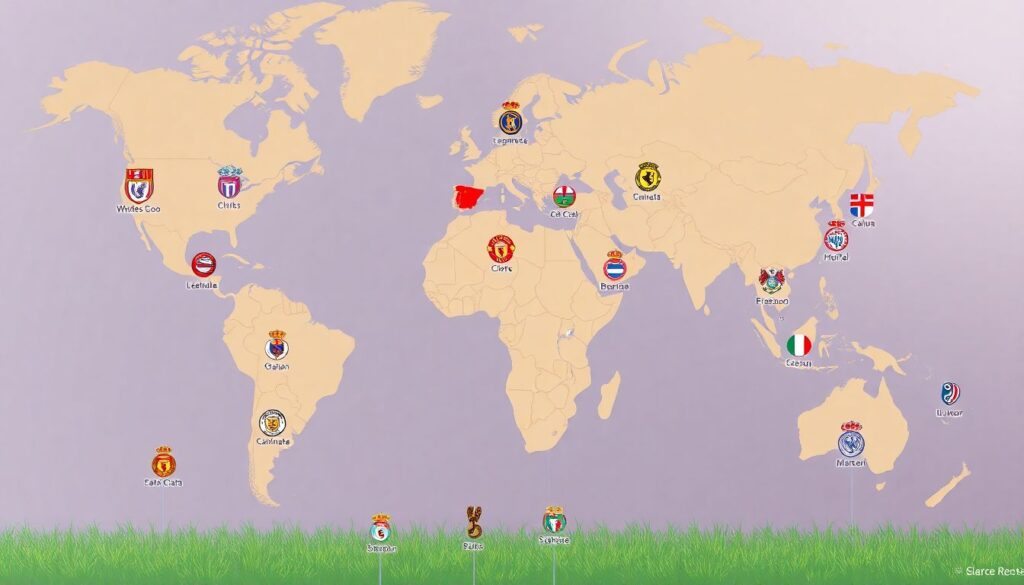
- Broadcasting income is the main driver of gaps between leagues; domestic contracts and global deals create a hierarchy visible in any ranking ingresos económicos ligas de fútbol.
- Within leagues, distribution formulas decide whether money reinforces an oligopoly or keeps mid-table clubs competitive across seasons.
- The business model of the clubes de fútbol más ricos del mundo blends global merchandising, large stadium revenues and international fanbases, widening distance from local clubs.
- Ownership wealth (state funds, billionaires, investment funds) can override sporting merit, especially where rules on losses and related-party sponsorship are weak.
- Moderate revenue sharing plus enforceable cost controls usually offers the best cost-benefit balance for leagues with limited budgets and ambitions to stay attractive.
- Small and medium leagues should treat ingresos por televisión Premier League vs LaLiga as a warning: copying top-spender behaviour without top-spender income is financially suicidal.
Financial Landscape: revenue streams, market concentration and distribution mechanics
For league administrators comparing models of economic organisation, use these criteria to diagnose where you are and which tools you can realistically afford.
- Composition of revenues: Share of income from domestic TV, international TV, matchday, commercial and player trading. This determines dependence on one source and vulnerability to shocks.
- Concentration of TV rights: Whether national broadcasting contracts are centralised or club-by-club. This is crucial when analysing derechos de televisión fútbol europeo comparación ligas and anticipating bargaining power.
- Distribution formula inside the league: Fixed vs performance-based shares, solidarity payments to lower divisions, and caps on the richest clubs’ TV shares.
- Cross-border demand: Ability to sell rights abroad. Leagues with weak international appeal should avoid copying the modelo de negocio grandes clubes de fútbol europeo that depends on global brand monetisation.
- Ownership structure and capital access: Member-owned vs private vs state-linked clubs, and ease of attracting equity or debt. This drives tolerance for losses and risk-taking.
- Regulatory strictness: Domestic financial rules (licensing, payroll limits, transparency) and how seriously they are enforced compared with continental regulations.
- Wage-to-revenue norms: Typical share of income devoted to first-team salaries across the league, even without formal caps. This signals how much room remains for infrastructure and youth investment.
- Competitive parity indicators: Diversity of champions, frequency of surprise European qualifiers and depth of mid-table competitiveness, compared with other leagues in the ranking ingresos económicos ligas de fútbol.
- Solidarity across pyramid: Percentage of top-division income that reaches second tier and grassroots, and how that translates into talent development rather than short-term wages.
Competitive Imbalance: how broadcasting, sponsorship and ownership concentration skew outcomes
The economic architecture can be simplified into several strategic options. Each has different costs, benefits and political risks for leagues deciding between more open competition and an oligopolistic status quo.
| Variant | Best suited for | Advantages | Disadvantages | When to choose |
|---|---|---|---|---|
| Market-driven, low sharing | Global brands and top-tier leagues with strong international demand |
|
|
When the strategic goal is global conquest and you accept oligopolistic dominance as the price of maximum revenue. |
| Moderate central revenue sharing | Established leagues seeking balance between stars and competitiveness |
|
|
When your league wants sustainable growth and can still rely on a few big brands to carry international rights. |
| Strong equalisation with merit bonuses | Medium and small leagues focused on domestic balance |
|
|
When your broadcast market is limited and you prioritise an interesting domestic competition over European trophies. |
| Revenue sharing plus soft salary cap or luxury tax | Leagues wanting cost control without rigid limits |
|
|
When wage inflation threatens financial stability but you do not want to scare away investment from ambitious owners. |
| Owner- or state-subsidised growth model | Emerging leagues or clubs backed by governments or sovereign funds |
|
|
When political authorities see football as strategic soft power and can sustain multi-year investment cycles. |
When analysing ingresos por televisión Premier League vs LaLiga or any other derechos de televisión fútbol europeo comparación ligas, this framework helps you see that distribution choices, not only contract size, decide how far your league slides towards an oligopoly.
Club-Level Economics: budgets, wage structures, transfer markets and survival strategies
At club level, strategy must match budget reality, not fantasy based on what the clubes de fútbol más ricos del mundo are doing.
- If you are a low-budget club in a top league, then:
- Prioritise wage stability over transfer speculation; target free agents and loans with options.
- Invest relatively more in analytics, set pieces and physical conditioning than in transfer fees.
- Adopt a clear sell-to-survive model: short contracts with upside resale, transparent to fans.
- If you are a mid-budget club in a medium league, then:
- Lock in core players on medium-length contracts before they overperform and become unaffordable.
- Balance the budget on conservative TV revenue assumptions; treat prize money and European participation as upsides, not as baseline.
- Specialise in one or two markets (age profile, geography) to avoid expensive bidding wars.
- If you are a high-budget contender but not a global brand, then:
- Use wage structure as your main tool: clear internal tiers and strict exceptions to prevent locker-room inflation.
- Channel marginal income increases into infrastructure, academies and global content instead of simply raising salaries.
- Copy processes, not only transfers, from the modelo de negocio grandes clubes de fútbol europeo: global scouting, data, brand partnerships.
- If you are an elite brand with international pull, then:
- Separate a budget line for long-term brand investments (stadium, digital, academies abroad) from the annual player budget.
- Use your leverage in league negotiations responsibly; an extreme market-driven model may maximise your income but erode domestic interest.
- Design a premium wage structure for superstars but cap the middle tier to avoid unsellable contracts.
- Budget vs premium choices inside any club:
- Budget path: focus on youth, data-driven recruitment, flexible wages and coach continuity.
- Premium path: star signings, higher fixed wages, global marketing spend and reliance on constant European qualification.
- Choose the path that your five-year projected revenues can safely support, not the one fans demand today.
Regulatory Instruments: revenue sharing, salary controls and financial fair play evaluated
League decision-makers can follow a simple cost-benefit sequence to choose a regulatory mix.
- Define your realistic income ceiling: Estimate domestic and international TV, sponsorships and ticketing under conservative assumptions; use benchmarks from derechos de televisión fútbol europeo comparación ligas rather than optimistic scenarios.
- Decide the minimum survival standard: Determine what level of income each club needs to run a professional squad and academy without structural losses.
- Choose a revenue distribution floor: Guarantee that survival standard through fixed TV shares and solidarity payments, then distribute the rest by performance, audience or historical value.
- Set a cost-control objective: Decide whether you want to cap wage-to-revenue ratios, limit losses over rolling periods or introduce luxury taxes for overspending clubs.
- Align domestic rules with supranational regulations: Ensure compatibility with continental financial fair play to avoid clubs playing under different constraints in domestic and European competitions.
- Plan enforcement capacity: Budget for auditing, data systems and sanctions; weak enforcement is worse than light but credible regulation.
- Review and adjust every cycle: After each TV contract period, re-evaluate impacts on competitiveness, insolvencies and fan engagement, then fine-tune sharing formulas and caps.
Comparative Case Studies: oligopolistic patterns across top-tier and secondary leagues
In practice, leagues and clubs regularly repeat similar mistakes when trying to close the gap with richer competitions.
- Copying wage levels from richer leagues without matching revenue growth, creating chronic deficits and emergency fire sales.
- Overestimating the impact of one or two star signings on international rights, while underinvesting in production quality and fan experience.
- Allowing a few dominant clubs to shape TV distribution solely around their short-term interests, cementing an oligopoly that eventually hurts overall product value.
- Designing financial rules with large loopholes (related-party sponsorships, soft loans) that favour clubs with politically connected owners.
- Neglecting second-tier and grassroots solidarity, weakening the talent pipeline and forcing clubs to overpay for imported players.
- Ignoring warning signs from ingresos por televisión Premier League vs LaLiga contrasts and assuming that any growth in domestic contract size justifies aggressive borrowing.
- Failing to communicate financial reforms to fans, which turns necessary austerity into a perceived lack of ambition.
- Relying on short TV cycles and unsustainable betting sponsorships instead of building diversified, long-term commercial partnerships.
- Not tracking how changes in distribution affect competitive balance over time, so political debates are driven by anecdotes rather than data.
Cost‑Effective Policy Mix: pragmatic interventions for leagues with limited budgets
For leagues with modest TV markets, the most efficient option is usually moderate to strong revenue sharing plus soft cost controls, to preserve competition and club solvency. For globally attractive leagues, a more market-driven system with targeted solidarity and transparent rules on owner funding can support premium products without sliding into an unregulated oligopoly.
Practical clarifications for league administrators and club managers
How does TV distribution shape sporting competitiveness?
Distribution decides whether TV income amplifies or moderates structural inequalities. A high fixed share helps small clubs survive, while a strong variable part rewards success. Finding the right balance is more important than maximising total contract size alone.
Why is European football often described as an oligopoly?
Because a small group of clubs concentrates most revenues, titles and global audiences. Their financial and brand dominance, reflected in any ranking ingresos económicos ligas de fútbol and club revenue tables, makes it difficult for outsiders to break into the elite on sporting merit alone.
Can small leagues realistically compete with the big five?
They cannot match financial firepower, but they can offer compelling domestic competition, strong youth development and disciplined finances. The goal is not to copy the clubes de fútbol más ricos del mundo, but to become a sustainable exporter of talent and stories.
Is strict salary capping the best solution to inequality?
Hard caps can stabilise finances but are difficult to coordinate internationally and can reduce star appeal. Soft mechanisms, such as wage-to-revenue ratios and luxury taxes, often provide a better cost-benefit compromise, especially for leagues integrated into European competitions.
How should a club set its wage budget safely?
Use conservative revenue projections excluding uncertain prize money or transfers. Set a maximum wage-to-revenue ratio and stress-test it against relegation or missed European qualification, adjusting squad size and contract length accordingly.
What is the role of financial fair play in this context?

Financial fair play limits long-term losses and pushes clubs to align spending with income. It does not equalise resources between leagues, but it can reduce extreme owner-funded distortions that worsen oligopolistic effects.
When is aggressive owner investment justified?
When there is a realistic path to future revenues-stadium upgrades, audience growth or stronger TV deals-that can eventually sustain higher costs. If extra spending only buys short-term results without structural change, financial risk outweighs sporting benefit.