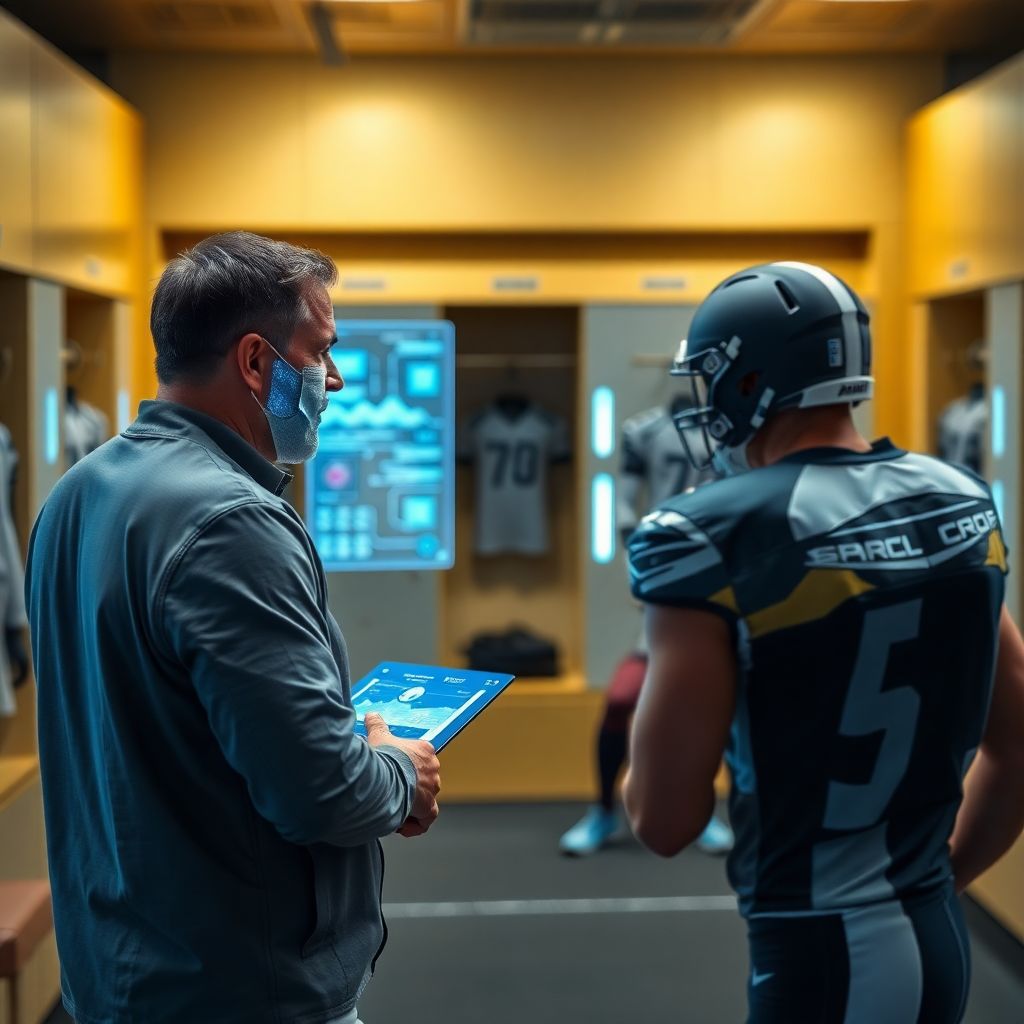
Coaching «nose» is not dying; it is being redefined. The best results in modern football come from hybrid models: coaches keep responsibility for context, dressing room and tactical nuance, while analítica deportiva avanzada supports decisions with objective patterns, risk estimates and scenario testing, especially in recruitment, load management and game preparation.
Core contrasts between data-driven models and coaching intuition
- Intuition is fast and context-rich; data models are slower to build but scale better across seasons and squads.
- Intuition shines with interpersonal dynamics; software de análisis de datos en el deporte shines in pattern detection and bias reduction.
- Data is strong on «what usually happens»; coaches are stronger on «what is happening right now».
- Herramientas de scouting y big data para entrenadores are excellent for long-term recruitment; intuition is crucial for short-term selection and role definition.
- Platforms and dashboards organise information; the coach’s «olfato» prioritises and translates it into concrete on-pitch actions.
- Pure intuition is vulnerable to mood and pressure; pure models can ignore motivation, leadership and locker-room politics.
- Hybrid workflows allow head coaches, analysts and club directors to share responsibility with clear rules and thresholds.
Origins and limits of the coach’s ‘nose’: psychology and experience
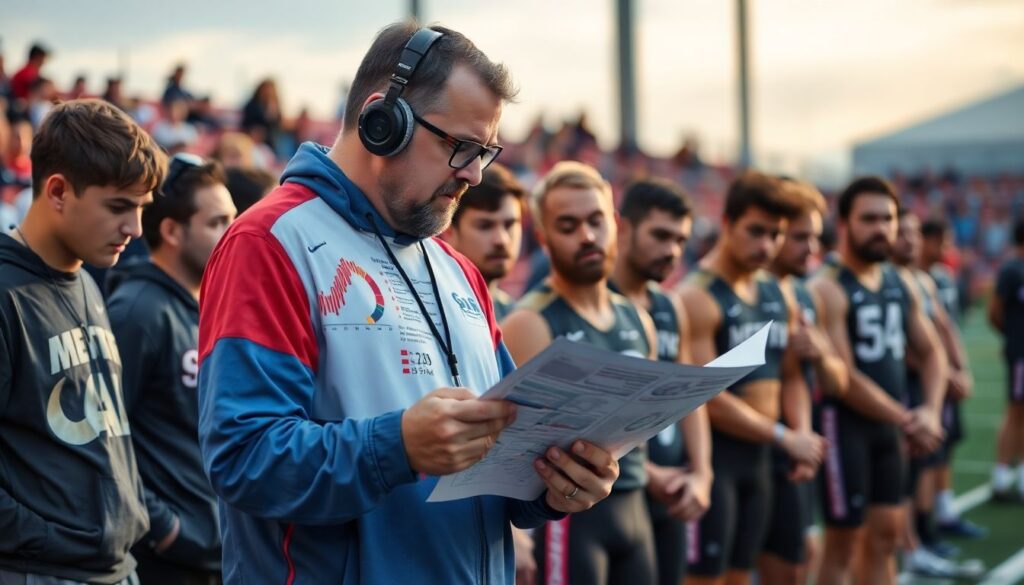
The coach’s instinct is a mix of pattern recognition, emotional reading and experience compressed into fast decisions. Understanding where it works and where it breaks helps you decide how much weight to give analytics versus gut feel.
- Pattern recognition from experience: Years of seeing similar matches build mental shortcuts. Useful for tempo, momentum, opponent intentions.
- Social and emotional reading: Coaches sense confidence, fear, frustration. Key for man-management, captain choice, substitutions under pressure.
- Context sensitivity: Knowledge of club culture in Spain, media pressure and dressing-room politics shapes what is realistic today.
- Motivational leverage: Choosing the right message or challenge for a specific player in a specific week remains hard to quantify.
- Cognitive biases and blind spots: Recency bias, confirmation bias and overvaluing «warriors» can distort selection and recruitment.
- Limited sample memory: Even great coaches recall a few extreme matches, while data covers dozens of games and thousands of actions.
- Time and stress constraints: Under match-day pressure, the brain simplifies reality and falls back to habits, not always optimal ones.
- Personal history: Ex-defenders overvalue defensive security; ex-forwards may tolerate more risk. Analytics can rebalance these tendencies.
Action steps for personas:
- Head coach: Write down 3 recurring «rules of thumb» you use (e.g. «never sub the captain early»). Ask an analyst to test them on last season’s data.
- Performance analyst: Identify 2-3 typical coach biases in your staff and design one simple metric to complement each.
- Club director: In performance reviews, ask coaches to separate decisions based on feel versus evidence and discuss both calmly.
What advanced analytics actually measure in player performance
Analítica deportiva avanzada is not one thing but a family of tools and workflows. Below is a comparison of common options you find in plataformas de análisis de rendimiento deportivo and how they interact with intuition.
| Variant | Best suited for | Strengths | Weaknesses | When to prioritise this option |
|---|---|---|---|---|
| Pure coaching intuition | Head coaches with deep league experience; small clubs with minimal data support | Fast, flexible, context- and emotion-aware, great for man-management and in-game feel. | Prone to bias, hard to audit, struggles with long-term trends and squad planning. | Short-term decisions under time pressure, managing dressing-room dynamics, crisis management weeks. |
| Basic descriptive stats and video tagging | Staff starting a curso de analítica deportiva para entrenadores; semi-professional clubs | Low learning curve, easy communication with players, quick wins in set plays and physical load. | Limited predictive power; can create false security if context is ignored. | First step when building a data culture, post-match reviews, opponent basic scouting. |
| Advanced event and tracking analytics | Clubs using dedicated plataformas de análisis de rendimiento deportivo and specialists | Rich detail on space, tempo, pressures, expected threat, role fit and tactical compliance. | Requires expertise, costs time and money, risk of overcomplication for staff and players. | Medium- to long-term game model development, detailed opponent preparation, injury risk management. |
| Recruitment-focused big data scouting | Sporting directors, analysts managing herramientas de scouting y big data para entrenadores | Global search, role-based filters, objective benchmarks, good for undervalued profiles. | May miss character, adaptability, language, family context and dressing-room impact. | Early shortlist building, cross-checking live scouting, replacing key players within profile constraints. |
| Hybrid intuition + model-based protocols | Clubs with defined roles (coach, analyst, director) and clear decision processes | Balances human insight and objectivity, transparent, repeatable, easier to improve over time. | Needs discipline, buy-in and minimal data literacy from all staff levels. | Strategic decisions (style, recruitment, academy pathways) and controversial calls (dropping stars, big transfers). |
How personas can use this table:
- Head coach: Choose one area to go one level up (e.g. from intuition to basic stats in substitutions, or from basic stats to advanced tracking on pressing).
- Performance analyst: Map your current tools to the variants and propose a 12-month progression, including realistic steps and staff education.
- Club director: Decide which decisions deserve hybrid protocols (e.g. recruitment, contract renewals) and invest in the matching level of analytics.
When intuition outperforms models: situational examples
There are recurring scenarios where the coach’s «nose» legitimately has priority over any model outputs, even from the best software de análisis de datos en el deporte.
- If a key player has recently suffered a personal issue that the model cannot know about, then trust intuition on his readiness and adjust minutes, even if workloads look green.
- If a derby in LaLiga or Segunda has extreme emotional and media pressure, then prioritise leadership, temperament and local identity over marginal statistical advantages between similar players.
- If you see clear fear or panic in a young goalkeeper after a mistake, then consider an early substitution or strong support, regardless of pre-game plans or xG models.
- If the opponent arrives with a tactical scheme completely different from all recent matches, then react with intuitive adjustments first and review data at half-time, not before.
- If your staff’s trust in data is low and a model recommendation would destroy buy-in, then negotiate a mixed solution and plan an educational session later in the week.
- If the weather or pitch state in a Spanish lower-division stadium is extreme, then privilege players who cope well physically and mentally, even if the model had other favourites.
Actionable rules:
- Head coach: Define 3 domains where your intuition has veto power (e.g. captaincy, injury comebacks, penalties) and communicate this upfront to analysts.
- Performance analyst: Tag these «intuition-priority» cases in your reports so nobody expects hard recommendations from the data.
- Club director: Respect those coach veto domains, but ask them to describe the reasoning in writing for later review.
Integrating metrics into daily coaching routines: practical workflows
To avoid a culture war between numbers and feel, embed analytics into repeatable daily and weekly routines.
- Define decisions where data must be consulted. For example: weekly training load, set-piece design, opponent tendencies and recruitment lists. Publish a simple list inside the staff office.
- Assign clear ownership. The performance analyst prepares the numbers; the head coach interprets them; the assistant coaches translate them into exercises on the pitch.
- Standardise reporting windows. Decide fixed times: post-match (within 24 hours), pre-training (15 minutes), pre-game (48 hours). Avoid ad-hoc requests that overload analysts.
- Use one main platform as a hub. Choose among your plataformas de análisis de rendimiento deportivo the one that becomes «home» for clips, dashboards and notes to avoid fragmentation.
- Limit metrics to what staff can action. For a typical Spanish professional staff, 5-10 key indicators per phase of play is already a lot; archive the rest for analysts only.
- Close the loop with review questions. After each match week, ask: «Where did we follow data and regret it?» and «Where did we ignore it and regret it?» and record answers.
- Upskill continuously. Encourage assistants and youth coaches to join at least one curso de analítica deportiva para entrenadores per year, aligning language and concepts across the club.
Persona adaptations:
- Head coach: Protect a 20-minute daily slot with your analyst; treat it as vital as training itself.
- Performance analyst: Produce one-page PDFs or short video explainers focused on interpretation, not just raw charts.
- Club director: Evaluate staff not only on results but on process adherence to these workflows.
Organizational barriers to trusting data in team environments

Most problems are not mathematical but human and organisational. Recognising them helps you design better hybrid systems.
- Lack of role clarity: Nobody knows who makes the final call when data contradicts coach intuition, creating politics and mistrust.
- Poor communication of insights: Analysts send complex dashboards; coaches only have minutes and prefer 2-3 clear messages with video examples.
- Defensive ego reactions: Staff fear that numbers will be used to judge or replace them, so they unconsciously ignore or attack analytics.
- Tool overload: Too many herramientas de scouting y big data para entrenadores and platforms, each with different metrics and definitions, confuse decision-makers.
- Misaligned incentives: Analysts get praised for sophisticated models; coaches get judged by weekend results, not process quality.
- Lack of basic data literacy: Common misunderstandings of correlation, variance and sample size lead to overreaction to small trends.
- Short-termist culture: In many Spanish clubs, constant coaching changes make long-term analytical projects hard to sustain.
- Player mistrust: If players see data as punishment, they hide information or «game» GPS outputs instead of embracing feedback.
- No post-mortem discipline: Without structured reviews, nobody learns when intuition was right or wrong versus the models.
Concrete improvements:
- Head coach: Publicly back your analyst and reference their work in team meetings to normalise data use.
- Performance analyst: Reduce tools and metrics; focus on one main story per report.
- Club director: Protect time for long-term projects and link contract renewals partly to process quality, not only table position.
Designing hybrid decision protocols: roles, thresholds and responsibilities
The best option is rarely pure intuition or pure analytics. Intuition is best for acute, human-centred, high-pressure decisions; advanced models and platforms are best for repetitive, long-horizon and high-investment choices. A written hybrid protocol, agreed by coach, analyst and director, gives clarity: who leads, who advises and when evidence can override gut feel.
Common practitioner objections and concise rebuttals
Does relying on analytics kill the coach’s personality and leadership?
No. Data supports decisions; it does not replace your voice. Personality shows in how you set priorities, communicate decisions and handle pressure, not in ignoring useful information.
Our players are not ready for complex stats. Should we still invest?
Yes, but keep complexity backstage. Analysts and coaches can work with detailed metrics, then translate them into 2-3 simple messages and clear clips for players.
What if the model recommends a player the coach really dislikes?
Use a two-step rule: the model builds the shortlist; the coach applies contextual filters (character, tactical chemistry, language). Both must document their arguments before a final decision.
Can small clubs without big budgets benefit from data?
Yes. Start with simple, low-cost tools: event data, GPS, and structured video tagging. Consistency and clear questions matter more than expensive platforms at the beginning.
How do we avoid analysts becoming «statistics police»?
Define them as service providers to coaches, not judges. Their job is to clarify options, risks and trade-offs, then accept that the head coach signs the decision.
Is it worth sending staff to a curso de analítica deportiva para entrenadores?
Usually yes, if the course is practical and aligned with your club’s tools. Shared vocabulary between staff members dramatically improves the impact of any data investment.
Can we ever fully automate recruitment with big data?
No. Big data narrows the search and reveals undervalued profiles, but live scouting and human interviews remain essential to assess mentality, adaptability and cultural fit.