
Neither the club‑empresa nor the pure community club is «better» in every situation. For Spanish football (es_ES), corporate models fit capital‑intensive, growth‑oriented projects, while member‑owned clubs protect identity and social impact. The best choice depends on governance culture, risk appetite, investors, league rules and local expectations.
Decision snapshot: core distinctions between club models
- Clubes empresa vs clubes de comunidad en el fútbol moderno differ mainly in who holds power: investors vs members and local stakeholders.
- The modelo club empresa ventajas desventajas fútbol pivots on faster decisions and capital access versus higher financial and identity risks.
- Community clubs trade agility and funding for democratic accountability and long‑term social legitimacy.
- Private inversores privados en clubes de fútbol modelo club empresa usually demand clear exit routes and profit potential.
- In smaller Spanish markets, mixed or hybrid governance can balance ambition with community control.
- Regulators shape the futuro de los clubes empresa en el fútbol profesional through licensing, financial fair play and ownership rules.
Origins and governance: why the models evolved differently
- Power structure. Club empresa: share capital determines control. Community club: members or socios elect boards and major decisions.
- Purpose and mission. Corporate entities are designed to create financial value; community entities prioritise sporting and social value, often codified in statutes.
- Legal form and jurisdiction. National law (e.g., Spanish SAD regime) and federation rules condition whether clubs can remain member‑owned or must convert.
- Decision‑making speed. Company boards can pivot quickly; assemblies of members add friction but increase legitimacy for sensitive decisions (stadium sale, relocation, rebranding).
- Checks and balances. Community clubs rely on elections and transparency duties; clubes‑empresa rely on company law, minority shareholder rights and sometimes golden‑share mechanisms.
- Succession and continuity. In corporate clubs, a change of owner can radically shift strategy; in community clubs, political change is incremental and usually slower.
- Cultural roots. Many Spanish clubs emerged from neighbourhood associations or worker groups, while newer club‑empresa projects grew around investors and cities seeking elite football visibility.
- Stakeholder voice. Community models structurally integrate fans and local institutions; corporate models need formal advisory councils or fan‑share schemes to avoid disconnect.
Practical takeaway: Start your choice by mapping who should ultimately hold veto power over identity‑defining decisions: investors, members, or a protected mix.
Economics and incentives: revenue flows, profit motives and sustainability

| Variant | Best suited for | Advantages | Drawbacks | When to choose |
|---|---|---|---|---|
| Corporate club‑empresa | Ambitious professional clubs seeking rapid growth, major infrastructure, or entry into top divisions |
|
|
When you have credible private investors, a realistic growth plan and strong regulation to limit excess risk. |
| Member‑owned community club | Historically rooted clubs with broad local fan‑bases, especially in small and mid‑sized Spanish cities |
|
|
When protecting identity and continuity is more important than maximising short‑term competitive jumps. |
| Hybrid: investor‑led with member safeguards | Traditional clubs opening to capital but unwilling to lose all community control |
|
|
When significant capital is needed but political and social cost of full conversion is unacceptable. |
| Hybrid: community‑led with minority investors | Stable community clubs seeking moderate growth or stadium upgrades without ceding control |
|
|
When your priority is to stay a community club but you accept limited investor involvement for defined objectives. |
Practical takeaway: Use the table to align financial structure with realistic revenue potential and your tolerance for investor influence.
Sporting outcomes: talent pipelines, competitive balance and long‑term performance
Use these scenario rules of thumb when weighing diferencias entre club empresa y club comunidad fútbol from a sporting perspective:
- If your academy is the main asset and you compete in a talent‑rich but cash‑poor region, then a community or community‑led hybrid model usually protects long‑term youth investment better than a highly leveraged club‑empresa.
- If your strategic goal is fast promotion through aggressive player recruitment and high wage bills, then a corporate club‑empresa or investor‑led hybrid is more realistic, provided you cap debt and build exit plans for key contracts.
- If your league already suffers from extreme financial gaps, then regulators and federations should favour ownership rules that spread risk and encourage community influence to preserve competitive balance.
- If you plan to join a multi‑club ownership network, then you need corporate‑level governance but with contractual protections to ensure local sporting priorities are not sacrificed to group‑level optimisation.
- If your women's or youth sections are strategically important for brand and social mission, then entrench minimum investment obligations in statutes or shareholder agreements regardless of model.
Practical takeaway: Translate your sporting plan into clear financial and governance requirements before locking in an ownership model.
Social capital: fan ownership, identity and community obligations
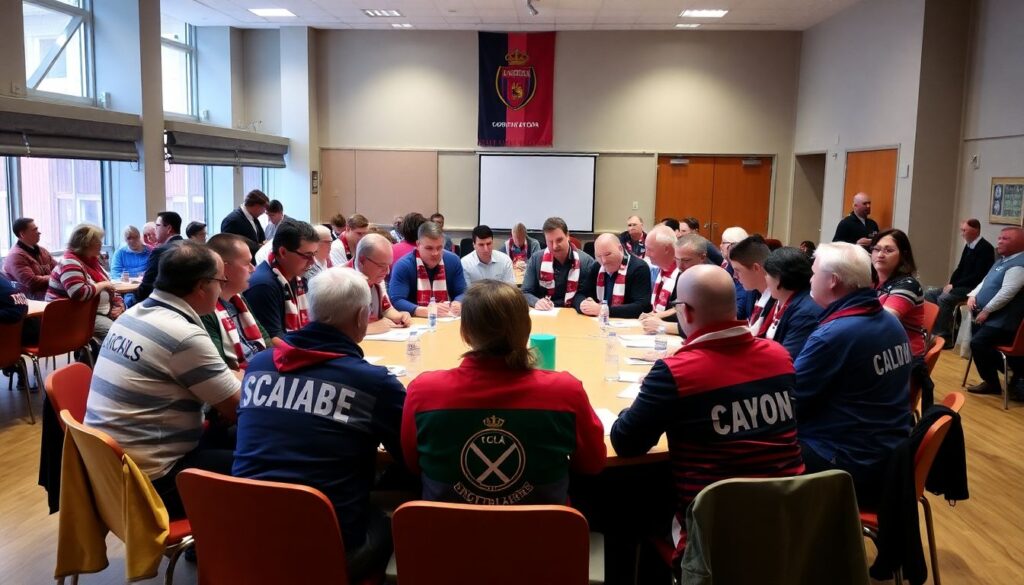
- Define non‑negotiables: colours, badge, stadium location, ticket pricing philosophy, youth access. Decide which of these must be legally protected.
- Map your real community: season‑ticket holders, ultras, local authorities, schools, small sponsors, neighbourhood associations.
- Choose representation channels: member assemblies, fan council, advisory board, or reserved board seats for community representatives.
- Decide how social objectives are measured: participation numbers, grassroots programmes, inclusive pricing, women's football integration.
- Link governance to obligations: embed social targets into statutes, shareholder agreements or licensing conditions so they survive ownership changes.
- Test reputational resilience: simulate a controversial decision (e.g., selling the stadium) under each model and assess likely backlash and its management.
- Align communications: explain clearly to fans why you favour either a club‑empresa or a community structure and what safeguards exist.
Practical takeaway: Treat social capital as an asset with explicit protections, not as an informal side effect of sporting success.
Regulation and risk: compliance, takeover exposure and financial controls
- Underestimating regulatory layers: clubs often focus on company law and ignore federation licensing, stadium rules and local‑authority constraints.
- Weak owner‑fit assessment: failing to vet potential investors' track record and time horizon before converting into a club‑empresa.
- Over‑reliance on soft promises: not translating verbal commitments about academy funding or ticket prices into binding legal clauses.
- Ignoring insolvency scenarios: no pre‑agreed protocols for what happens to badges, records and stadium rights if the company fails.
- Excessive leverage: using optimistic promotion or European qualification scenarios to justify debt levels that the club cannot support in down cycles.
- Opaque related‑party deals: tolerating transfer and sponsorship operations that benefit owners' other businesses at the expense of the club.
- Insufficient minority protections: in partially sold community clubs, not granting vetoes or enhanced rights on identity‑critical matters.
- Static statutes: failing to review governance documents when league rules or national laws evolve around club ownership models.
- Regulatory arbitrage: shopping for the least strict framework instead of building a robust, transparent structure that can withstand scrutiny.
Practical takeaway: Build your model assuming tougher future oversight and stress‑test it against worst‑case financial and governance shocks.
Action pathways: choosing strategy depending on stakeholders’ objectives
- If you are club leadership or current owners
- Need rapid capital for infrastructure and are comfortable with shared control: prioritise an investor‑led hybrid or full club‑empresa with hard identity safeguards.
- Value independence above all and can grow gradually: maintain or move toward a community or community‑led hybrid model.
- If you are a private investor
- Seeking clear governance control and exit options: a corporate club‑empresa is usually necessary, with transparent communication to fans.
- Targeting long‑term regional legitimacy over fast returns: negotiate a balanced hybrid where community representation is a feature, not a bug.
- If you are a federation or league
- League financially fragile: encourage community or hybrid structures, strict leverage limits and fit‑and‑proper tests.
- League under‑capitalised but stable: open to reputable inversores privados en clubes de fútbol modelo club empresa, with clear social and identity safeguards.
- If you are organised fans or socios
- Club at risk of collapse without investment: consider conditional support for a hybrid or corporate model in exchange for legal guarantees.
- Club financially sound: defend community governance and explore minority‑investor projects only for specific, time‑bound goals.
For legacy Spanish clubs rooted in their barrios, a community or community‑led hybrid usually offers the best balance. For ambitious projects chasing rapid promotion and global reach, a well‑regulated club‑empresa or investor‑led hybrid can work, provided identity protections and prudent financial limits are firmly entrenched.
Common stakeholder queries and rapid guidance
What is the core difference between a club‑empresa and a community club?
A club‑empresa is a corporate entity where investors or shareholders control strategic decisions and expect financial returns. A community club is owned and governed by members or socios, who prioritise sporting continuity and social impact over profit.
Which model suits Spanish mid‑table professional clubs best?
Stable mid‑table clubs in Spain often benefit from community or hybrid models that preserve identity while allowing targeted investment. A full club‑empresa structure makes more sense if there is a credible growth plan, strong oversight and broad local support for partial loss of member control.
How do private investors change governance in a club‑empresa?
Private investors centralise decision‑making in a board focused on value creation, usually with fewer direct channels for fan influence. This can speed up sporting and commercial decisions but requires explicit mechanisms to protect long‑term interests of members, city and supporters.
What does the future of clubes‑empresa in professional football look like?

The futuro de los clubes empresa en el fútbol profesional will likely combine more multi‑club ownership, stricter financial rules and higher expectations around fan engagement. Purely speculative projects will face increasing resistance, while transparent, well‑regulated investors should remain welcome in capital‑hungry leagues.
Can a community club gradually transition towards a corporate model?
Yes, many clubs follow staged transitions: first incorporating a commercial arm, then admitting minority investors, and only later considering majority sales. Each phase should be approved democratically, with clear protections for name, colours, stadium and existing social commitments.
How should federations regulate takeovers to protect club identity?
Federations can require fit‑and‑proper owner tests, cap leverage, and make licensing conditional on preserving key identity elements and youth investment. Transparent approval processes and consultation with fan groups reduce conflict and improve the legitimacy of any ownership change.