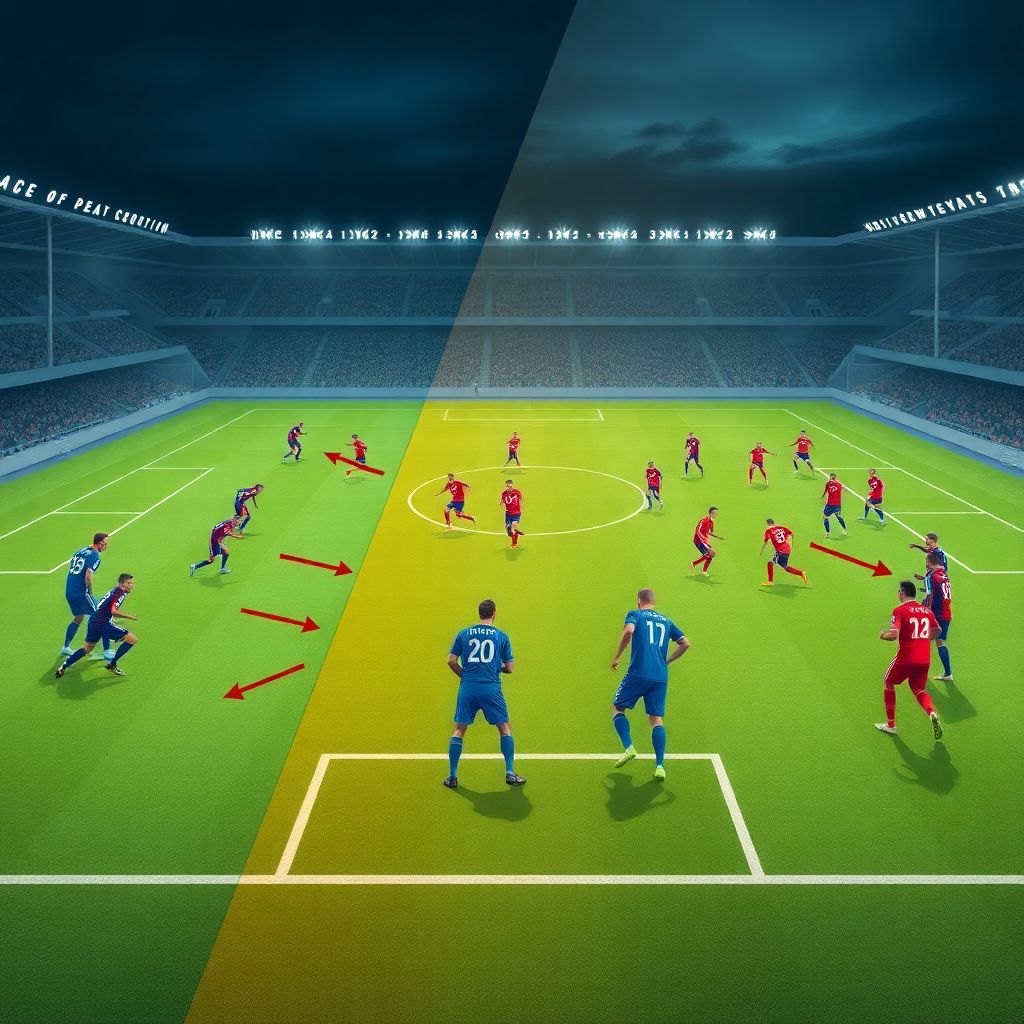
Catenaccio, tiki-taka y gegenpressing: much more than X’s and O’s
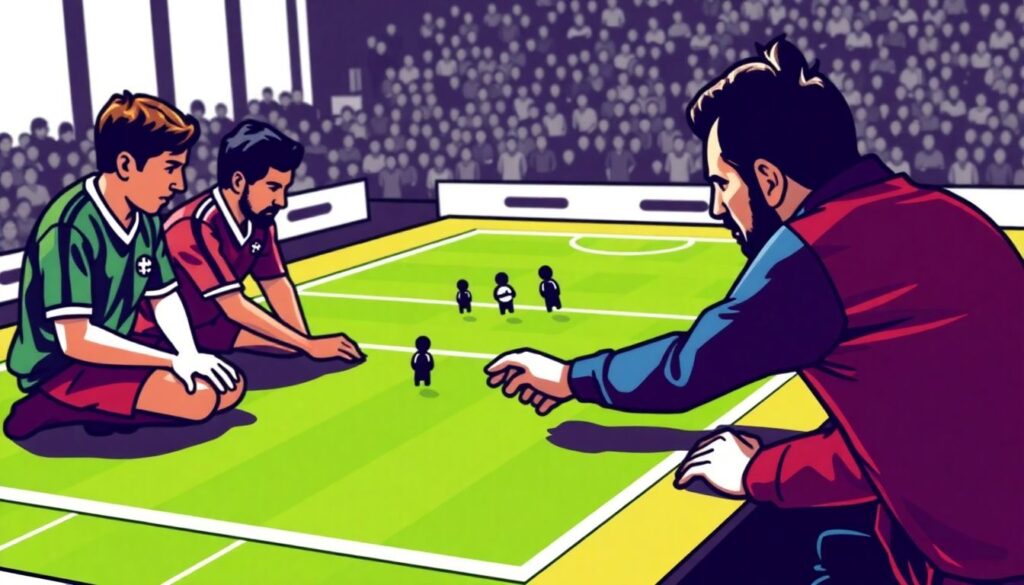
We talk about Catenaccio, tiki-taka and gegenpressing as if they were just tactical choices on a whiteboard, but they’re closer to worldviews wrapped in magnetic counters. Catenaccio is the suspicious pessimist: assumes the world (and the rival) will hurt you if you expose yourself. Tiki-taka is the patient rationalist: believes that control of the ball is control of reality. Gegenpressing is the hyperactive optimist: every loss is an immediate opportunity to win it back. When you read libros sobre tácticas de fútbol catenaccio tiki taka gegenpressing, what you really see is three different answers to the same question: how do I reduce uncertainty in a chaotic game with 22 people, a ball that never stops and a scoreboard that judges everything?
From Herrera to Guardiola to Klopp: a quick time‑travel

Historically, Catenaccio grows out of post‑war Italian football, with Nereo Rocco and especially Helenio Herrera at Inter in the 1960s. Tight lines, libero sweeping danger, brutal efficiency: if you score once, you close the door and throw away the key. Decades later, in Spain, tiki-taka emerges as the polished evolution of positional play, with Cruyff as the ideological architect and Guardiola as the perfectionist engineer at Barcelona and then at City. Meanwhile, gegenpressing appears in Germany as a response to slower build‑up: from Rangnick’s ideas to Klopp’s Liverpool, the team turns every turnover into a trigger for a collective sprint. By 2026, all three legacies coexist, hybridized, inside almost every elite dressing room.
Three philosophies, three ways of living the same 90 minutes
If we compare the mental frameworks, Catenaccio assumes that space is a trap: the more you give, the more the rival will exploit. So it compresses zones, shortens distances, accepts long defensive phases as part of the job. Tiki-taka, in contrast, understands space as an investment: you stretch the opponent horizontally and vertically to create free men between the lines. Gegenpressing flips the logic: it doesn’t worship position as much as the moment of transition, where structures are fragile and decisions rushed. The ball is less a treasure to keep and more a detonator you use to destabilize the other team, especially right after losing it and before they can breathe.
Pros and cons: what the numbers don’t always say
On paper, Catenaccio’s main advantage is defensive stability with low resources: you can survive with less talent if your block is synchronized. It reduces variance in expected goals against and often improves your performance in knockout ties. The downside? Attacking transitions become predictable, you struggle against low blocks when you must chase the score, and players with creative instincts may feel suffocated. Tiki-taka optimizes ball retention and chance quality, but at the cost of tempo: when circulation turns sterile, you rack up passes without penetration, and high pressing rivals can weaponize your slow build‑up. Meanwhile, gegenpressing demands extreme physical capacity, short vertical distances and brave center-backs; fatigue and injuries can wreck a season if the squad isn’t built for that intensity.
Technology, data and the “tactics behind the tactics”
In 2026, we can’t talk about these models without mentioning tracking data, load monitoring and video‑analysis. Catenaccio 2.0 uses high‑resolution positional data to calibrate distances between lines to the meter and adjust the timing of lateral shifts. Tiki-taka now integrates automated pitch mapping to identify overload zones in real time, with analysts flagging when a winger is pinned too wide or when the interior should occupy the half‑space. Modern gegenpressing relies on physical metrics — repeated sprint ability, recovery time, deceleration patterns — to decide who can actually sustain three seconds of maximal pressure after every turnover. Advanced tools don’t replace the idea, but they expose its mechanical limits and help adapt the model to the biological reality of the squad.
How to choose: identity first, system second
When coaches ask which path to follow, the right answer rarely is “copy Guardiola”, “copy Herrera” or “copy Klopp”; it starts with context. Budget, academy profile, calendar density, and culture of the club matter more than the whiteboard. Before enrolling in any curso online de táctica fútbol tiki taka y gegenpressing, a young coach should clarify three things: what emotional climate they want on the pitch, what risk they can tolerate in possession and what physical profile their players really have. A high school team with two fast forwards and limited training time probably benefits more from a compact block plus explosive counters than from a positional play that demands very precise automatisms built over years.
Practical recommendations for real‑world coaches
For amateur and semi‑pro environments, a pragmatic approach is to define a base model and then add micro‑principles from the other philosophies. A Catenaccio‑oriented coach can build from a strong 4‑4‑2 low block, but integrate a five‑second counterpress after losing the ball in the final third, a lite version of gegenpressing. A tiki-taka aficionado can maintain the idea of third‑man runs and positional superiority but apply clearer “vertical triggers” once the pivot receives facing forward. Coaches fascinated with high pressing must include fallback rules: if the first line is broken twice in a row, the block drops to mid‑press for ten minutes to manage fatigue. The art is not ideological purity, but coherent mixing without sending contradictory cues to the players.
Comparing modern Catenaccio to classic tiki-taka
Today’s “defensive” football is much more proactive than old stereotypes. A good manual de táctica defensiva catenaccio y presión alta gegenpressing explains that deep blocks can coexist with aggressive pressing in defined zones: for example, staying compact in the middle third but jumping with three men on a backward pass to the rival goalkeeper. Tiki-taka, after its golden peak 2008–2012, has also evolved: more coaches now accept longer passes to move the block, deliberately using the long ball as a positional reset before re‑establishing short combinations. In both cases, the purest versions from the textbooks are rare; on actual grass, what you see are blended models tuned to competition demands and player characteristics, not ideological manifestos.
Gegenpressing and the cult of transition
Gegenpressing seduces many coaches because it promises something very hard to resist: turning your biggest weakness — losing the ball — into your biggest chance to create danger. Instead of retreating, you compress the ball zone with three to five players, blocking short passing lanes and forcing a panicked clearance that your back line can recover. However, this model demands synchrony: the first presser’s angle, the cover shadow of the second, the distance of the pivot behind them. When even one player is late, the whole scheme collapses and the rival runs into oceans of space. It’s a philosophy that rewards brave squads and punishes half‑commitment: there is no “medium” gegenpressing that truly works over time.
Learning the philosophies: beyond drills and schemes
Education has caught up with the complexity of these ideas. The best libros sobre tácticas de fútbol catenaccio tiki taka gegenpressing now include chapters on cognitive load, communication codes and leadership, not just diagrams. Good programs don’t separate tactics from human behavior: they show how a player’s tolerance to ambiguity affects pressing decisions or how a captain’s personality alters defensive discipline. Serious formación para entrenadores en filosofía de juego tiki taka y gegenpressing insists that a model is sustainable only if it matches the psychological profile of the squad and the values the club wants to project. The blackboard is just one layer; the locker room dynamics, the language used in team talks, and even the way training is structured through the week carry the core philosophy.
Coaches as “curators” of ideas
By 2026, the best staffs look less like dictators of a system and more like curators of a library of micro‑principles. They borrow elements from the mejores entrenadores que usan catenaccio tiki taka y gegenpressing, but adapt them to their competitive niche. A small club might copy only Liverpool’s five‑second counterpress rule, Inter’s compact central block and Barça’s use of the interior between lines, assembling a patchwork that looks unique from the outside. The key competence is not memorizing famous patterns, but diagnosing which problems your team faces weekly — defending crosses, attacking low blocks, surviving transitions — and then selecting and tailoring principles from these great “isms” as tools, not as dogmas.
Tendencias 2026: hybrid football and “tactical load management”
The main tactical trend in 2026 is hybridization plus energy management. Elite coaches accept that you cannot sustain 90 minutes of ultra‑high gegenpressing every three days in a congested calendar, so they plan “pressing windows”: 15–20 minute phases of extreme aggression combined with calmer positional segments that resemble tiki-taka circulation. Likewise, defensive modules become fluid: one match block behaves like modern Catenaccio in a 5‑3‑2, the next game the same line steps 10 meters higher and morphs into a mid‑press. Data departments talk about “tactical load” the same way fitness coaches talk about physical load, trying to avoid cognitive burnout from hyper‑complex instructions that players cannot execute under pressure.
Where this is going: philosophies, not fashions
Everything suggests that, whatever buzzwords appear next, the core questions will remain the same: how much risk do you accept without the ball, how do you manage space with it, and what do you do in the three seconds after possession flips? Catenaccio, tiki-taka and gegenpressing are durable because they answer those questions from different angles that fit different psychologies and contexts. When you take a curso online de táctica fútbol tiki taka y gegenpressing or study footage of old Italian defensive masters, you’re not just learning systems; you’re choosing how your team will feel, suffer and enjoy the game. Behind every tactical board there is, quietly, a philosophy of life about control, trust, effort and fear of error — and that’s why these “tactics” never really go out of fashion.