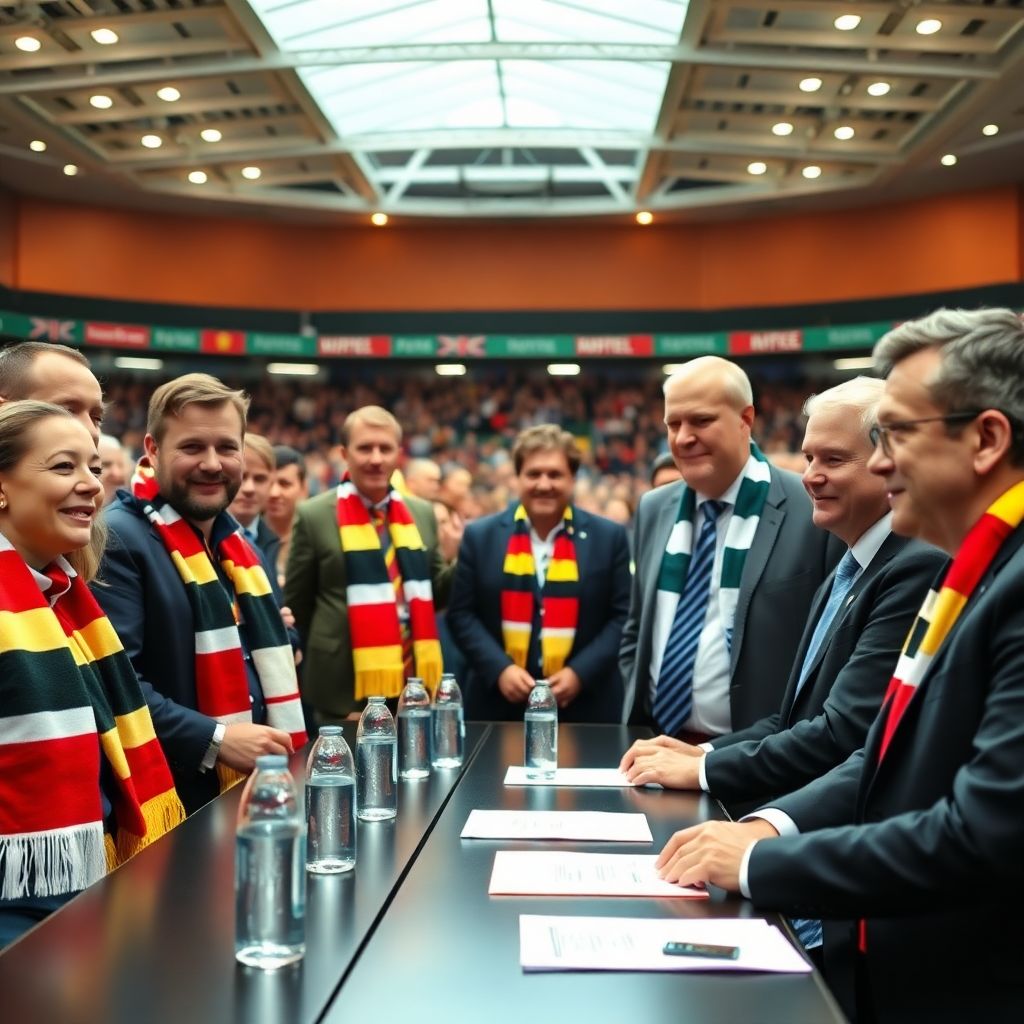
Fan ownership today usually means structured influence, not absolute control: members or small investors hold shares, voting rights, or veto powers alongside capital from fondos de inversión en clubes de fútbol europeos. If supporters organise early, use legal tools, and accept shared governance, a club can still meaningfully «belong» to its fans.
Defining what ‘fan ownership’ looks like now
- Fan ownership ranges from full member control to minority stakes with specific veto or consultation rights.
- Modern propiedad de clubes de fútbol por aficionados often coexists with private equity and other financial investors.
- Regulation (for example modelos de propiedad 50+1 en fútbol europeo) is decisive for what fans can realistically achieve.
- If fans act before a sale, they can negotiate protections; if they act after, they must buy or win rights back gradually.
- Supporter power depends less on romantic claims and more on statutes, shareholder agreements, and regulatory allies.
- Hybrid structures can combine professional capital with a protected democratic «core» controlled by fans.
Historical models of supporter ownership and why they mattered
Historically, the clearest expression of propiedad de clubes de fútbol por aficionados has been the member-owned club. In Spain and Latin America, this is the socio model: the club is an association, not a company, and members elect the president and board. Capital is raised mainly via memberships, ticketing and broadcasting.
In Germany, the best-known example is the family of modelos de propiedad 50+1 en fútbol europeo. In essence, the club association must retain majority voting control over its professional company. Investors can contribute capital and hold shares, but strategic control is protected on the side of the members.
In the UK and parts of Latin America, supporter trusts emerged where pure member ownership was no longer legally or financially feasible. These trusts buy minority shareholdings and negotiate board seats or vetoes on issues like stadium sales, relocations or name changes. Here, «ownership» is more about governance levers than equity percentages.
These models mattered because they made three things normal: elected leadership, transparency to the base, and limits on speculation. Where they survive, clubs owned by socios tend to treat the institution as a civic asset. Where they were dismantled without safeguards, clubs became vulnerable to short‑term, debt‑fuelled takeovers.
Legal and corporate mechanisms that enable fan stakes
If your goal is to make the club «belong» to fans in a credible, legal sense, you need concrete tools. Below are typical mechanisms that give supporters real, enforceable power instead of symbolic consultation.
-
Member associations (asociaciones / clubes de socios)
The club is a non-profit association whose supreme body is the members’ assembly. Members elect and dismiss the board, approve budgets, and decide on asset sales or transformations into companies. -
Supporter shareholdings via trusts or cooperatives
Fans pool money through a trust or cooperative that buys shares in the club’s company. The trust then exercises voting rights according to internal democratic rules, maximising collective influence even with a small equity stake. -
Golden shares or «founder» shares
A special class of share held by a supporters’ entity or municipality gives veto rights over core decisions: stadium sale, relocation, name, colours, crest, or change of registered office. This prevents irreversible damage even if financial investors hold the majority. -
Shareholder agreements with reserved matters
When investors come in, supporters (or a public authority) sign an agreement listing «reserved matters» that require their consent: new debt above a threshold, related‑party deals, or changes in sporting philosophy (for example, moving the first team away from the city). -
Supporter board seats and nomination rights
Statutes or agreements may grant one or more board seats to fan representatives. Some models also give the supporter trust the right to nominate independent directors with specific skills (finance, legal, community relations). -
Regulatory caps and licensing conditions
Leagues or federations can require that clubs maintain a minimum level of member control, fan representation, or approval for stadium deals as a condition of their licence to compete. Germany’s 50+1 and some Latin American licensing rules are examples of this approach. -
Public‑interest or community‑asset status
In some jurisdictions, stadiums or clubs can be registered as community assets, making it harder to sell or redevelop them without consultation or offering fans a right of first refusal.
Mini-scenarios: applying the mechanisms in real clubs
Before moving to investment funds, it helps to see how these tools play out in practice. The key is to think in «if…, then…» terms that translate abstract governance into concrete campaigns.
Scenario 1 – Spain, socio club under pressure to become a SAD
If your socio‑owned club is being pushed to convert into a sports company, then negotiate the transformation so that:
- Members retain a golden share or a minimum blocking stake.
- The statutes require a supermajority of socios for any sale of the stadium or badge.
- A supporters’ trust is created before shares are issued, so that fans can subscribe collectively.
Scenario 2 – UK‑style company attracting a foreign buyer
If a single investor is close to buying all shares, then the supporters’ trust should:
- Secure, in writing, a right to buy a small percentage of shares over time.
- Insist on one or two board seats plus a list of reserved matters (stadium, colours, club name).
- Work with local authorities to register the stadium as a community asset.
Scenario 3 – Latin American club needing capital for infrastructure
If the club is negotiating with a private fund to redevelop its ground, then supporters should push for:
- A separate stadium company where the club and a public body retain joint control.
- Clear clauses against relocation and speculative resale of the land.
- Transparent revenue‑sharing formulas so benefits return to sporting activity, not just to the fund.
How private investment funds change control, incentives and timelines
Fondos de inversión en clubes de fútbol europeos and global private equity funds bring both opportunities and risks. They answer the question de cómo invertir en clubes de fútbol como aficionado very differently from member‑based models: instead of lifetime membership, they focus on financial return within a limited time horizon.
-
Shorter time horizons and exit pressure
If an investment fund enters your club, then you should assume it aims to exit within a few years. This creates pressure for quick increases in valuation, which may favour player trading or real‑estate projects over long‑term academy and community investment. -
Leverage and financial engineering
If the acquisition is debt‑funded, then the club’s cash flows will partly serve to pay interest and principal. This can limit sporting investment and increase the risk of crisis if sporting results are poor or broadcasting revenues fall. -
Multi‑club ownership and conflicts of interest
Many funds now own stakes in several clubs across different leagues or continents. If your club becomes one «asset» in a multi‑club network, then you must monitor conflicts: player loans that favour the group’s interests, prioritisation of one «flagship» club, or pressure to accept certain coaches or sporting directors. -
Professionalisation and data‑driven management
If a fund brings in specialised staff, then you may see better budgeting, analytics‑based recruitment, and clearer reporting. This can be positive, provided governance safeguards exist so that professionalisation does not become opaque technocracy disconnected from supporters. -
Brand globalisation vs local identity
Investment funds may prioritise global brand alignment, similar colour schemes, or joint sponsorships across their portfolio. If this happens, then there is a real risk of diluting unique local identity unless fans have formal vetoes over cultural elements.
| Aspect | Clubes de fútbol propiedad de socios | Fondos de inversión y dueños privados |
|---|---|---|
| Decision power | Members’ assembly elects leadership and approves key decisions. | Board answers mainly to investors seeking financial returns. |
| Capital access | Slower, based on memberships and organic revenue. | Faster, via equity and debt markets. |
| Time horizon | Open‑ended, oriented to generational continuity. | Finite, based on planned exit (sale, IPO). |
| Fan voice | Direct voting rights, higher transparency. | Depends on negotiated rights; often limited without activism. |
Hybrid governance: co-ownership structures, golden shares and protective clauses
Most realistic future models will combine elementos de clubes de fútbol propiedad de socios vs fondos de inversión. Hybrid governance recognises that clubs need capital but also that legitimacy and long‑term stability come from supporters. The art lies in designing structures that align both forces instead of placing them in permanent conflict.
Advantages of hybrid and protective structures
- If members retain a strategic blocking minority, then a fund can bring capital and expertise without controlling the club’s soul.
- If a supporters’ entity holds a golden share, then investors cannot irreversibly damage identity (stadium, name, colours) even if they own most ordinary shares.
- If shareholder agreements define clear reserved matters, then daily management stays flexible while fundamental questions need broader consent.
- If leagues enforce licensing rules inspired by modelos de propiedad 50+1 en fútbol europeo, then no single investor can fully dominate without some fan or member counterweight.
- If municipalities or public institutions co‑own key assets (stadiums, training grounds), then speculative real‑estate plays become harder.
Limits and risks of hybrids
- If fan rights exist only on paper without enforcement mechanisms, then investors can gradually bypass them through creative structures.
- If supporters are permanently divided or disorganised, then their theoretical power will not translate into real influence at board level.
- If golden shares are too broad or inflexible, then investors may lose interest or underinvest, fearing that they will never be able to adapt the business model.
- If regulators create complex but weak rules, then lawyers may find easy loopholes while fans assume they are protected.
Assessing the trade-offs: sporting ambition, financial sustainability and democratic voice
Debates about ownership are full of myths. To make good decisions, supporters need to test each option against clear trade‑offs, not romantic slogans. Think in concrete conditional terms rather than absolutes.
-
Myth 1: «Fan ownership guarantees success»
If a club is owned by socios but mismanaged, then democratic structures alone will not save it from financial or sporting decline. Professional competence and realistic budgets matter as much as voting rights. -
Myth 2: «Investment funds always destroy identity»
If a fund enters under a strong governance framework with enforced cultural protections, then it can fund infrastructure and professionalisation without erasing history. The danger appears when fans accept money without locking in those protections. -
Myth 3: «Majority ownership or nothing»
If you cannot realistically keep majority fan ownership, then focusing on key vetoes and board seats can still secure meaningful influence. A smaller but well‑designed stake may work better than a paper majority vulnerable to future dilution. -
Myth 4: «Debt is always evil»
If debt finances productive assets (stadium, training ground) under conservative assumptions, then it can be compatible with sustainability. Problems arise when leverage mainly finances player speculation or shareholder payouts. -
Myth 5: «Regulation will save us»
If fans rely only on national laws or league rules, then they may be surprised by loopholes. Internal club statutes, local political alliances, and organised supporter structures are equally important.
Concrete tactics supporters can use to secure meaningful influence
The crucial step is to translate principles into specific, conditional actions. Below is a practical «if…, then…» roadmap that fan groups in Spain, Europe and Latin America can adapt to their context when they ask whether a club can still belong to its aficionados.
Step-by-step conditional strategy for fan influence
-
If your club is still member‑owned (asociación or socio model), then:
- Update the statutes to require supermajority member approval for any conversion into a company or sale of core assets.
- Create a permanent, independent supporters’ trust to act quickly if shares are ever issued.
- Push your league and federation to recognise fan consultation rights formally in their regulations.
-
If your club is already a company with a dominant private owner, then:
- Organise a broad, inclusive supporters’ group capable of fundraising and legal action.
- Seek a minority shareholding with negotiated rights: at least one board seat, information rights, and vetoes on identity‑related issues.
- Use local laws (community‑asset status, heritage protection) to secure stadium and crest even without share control.
-
If a sale to an investment fund is imminent, then:
- Demand transparent publication of the deal terms and push for a public consultation, even if not legally required.
- Propose a concrete term sheet: fan golden share, cap on leverage, commitments on youth investment, and regular open meetings.
- Coordinate with media and local authorities so that «no‑conditions» buyers face social and political costs.
-
If you are exploring cómo invertir en clubes de fútbol como aficionado, then:
- Prioritise collective vehicles (trusts, cooperatives) over individual speculation, so that supporter capital translates into unified voting power.
- Prefer clubs or structures where your investment guarantees governance rights, not just dividends or hypothetical resale value.
- Be sceptical of schemes that promise fan «tokens» without clear legal rights in the club’s statutes or company law.
-
If your country is revising sports or company law, then:
- Lobby for options that embed 50+1‑style protections or at least mandatory fan representation on boards and licensing committees.
- Use comparative examples from modelos de propiedad 50+1 en fútbol europeo, Latin American socio traditions, and UK community‑asset law to show lawmakers viable alternatives.
- Insist on clear enforcement mechanisms and sanctions for breaches, not just aspirational principles.
Mini case sketch: shifting from pure investor control to shared governance
Imagine a mid‑table European club taken over by a foreign investment fund. Initially, fans have no formal say. After years of protest and dialogue, a supporters’ trust negotiates a deal.
If the trust commits to buying a small stake over several seasons, then the fund agrees to:
- Allocate two board seats to fan‑nominated directors once the trust reaches an agreed threshold.
- Create a golden‑share‑like mechanism around the club’s name, colours and stadium.
- Publish an annual community impact report co‑signed by the supporters’ directors.
If fans deliver their part of the bargain (capital, coherent representation, constructive engagement), then the relationship evolves from confrontation to conditional partnership. The club still seeks profit and sporting success, but its long‑term identity is now co‑governed, not owned in the purely financial sense.
Priority checklist for organised fan groups
- If you have no legal entity, then create a formal supporters’ trust or association as soon as possible.
- If your club statutes are vague on sales, identity or conversion, then launch a campaign to amend them with clear protections.
- If investors are circling, then prepare a standard governance «offer» (board seats, golden share, reserved matters) in advance.
- If regulators seem distant, then build alliances with other clubs’ fans to push for league‑wide fan protection rules.
- If internal divisions weaken your voice, then agree minimum common goals (stadium, colours, democratic say) and park secondary disputes.
Typical supporter concerns about ownership and control
Can a club truly belong to its fans when an investment fund owns most shares?

Yes, but only if fans secure specific governance rights. With golden shares, reserved matters, and guaranteed board seats, supporters can control the club’s identity and long‑term direction even when a fund holds the financial majority.
Is the 50+1 model the only way to protect supporter influence?
No. Modelos de propiedad 50+1 en fútbol europeo are powerful but not unique. Countries without formal 50+1 can still embed fan power through company statutes, licensing rules, community‑asset laws and strong supporter trusts.
What is the main risk when a private equity fund buys our club?
The main risk is that short‑term financial goals override long‑term sporting and community priorities. Without enforceable safeguards, this can translate into heavy debt, aggressive ticket price increases, or real‑estate projects that detach the club from its local base.
Do minority fan shareholdings actually change anything?
They can, if designed well. A small but organised minority, acting via a trust, can negotiate board seats, information rights and vetoes on key issues. A symbolic stake without rights, or fragmented across thousands of individuals, has much less impact.
Is it better to refuse all outside investment to stay «pure»?
Not always. If refusing capital means chronic underinvestment and eventual collapse, then purity is empty. The key is to accept investment only with clear, written protections for identity, democratic voice and financial prudence.
What can individual fans do if their club is already owned by a distant investor?
Join or build an organised supporters’ group, educate yourself on the club’s legal structure, and push for concrete reforms: fan board seats, improved transparency, and statutory protections. Coordinated, long‑term pressure works better than isolated boycotts.
Are «fan tokens» a form of real fan ownership?
Usually not. Unless tokens are linked to formal rights in company law or club statutes, they tend to give only marketing‑level influence. Genuine fan ownership requires enforceable rights, not just digital votes on minor decisions.