
Commentators’ language in Spanish sports broadcasts creates ready-made stories: heroes, villains and epic battles built from clichés, dramatic metaphors and selective descriptions. Understanding these patterns helps media students, fans and professionals in formación online en locución y relato deportivo to detect bias, recognise marketing agendas and design more responsible, precise narrations for live and recorded events.
Core linguistic features to monitor
- Repetition of clichés and stock phrases that compress complex play into simple emotional labels.
- Epic framing that turns routine league games into life-or-death spectacles.
- Hero-building through selective praise, metaphors and narrative arcs.
- Demonisation of rivals via moral language and exaggeration of conflicts.
- Use of visuals, sound and on-screen graphics to reinforce judgments.
- Institutional interests of broadcasters, clubs and any agencia de marketing deportivo y medios.
Clichés and stock phrases in commentary
Clichés in sports commentary are fixed expressions repeated so often that they become automatic: they save time and create instant emotional impact, but they also flatten nuance. In Spanish football broadcasts, they appear constantly in narración deportiva en vivo, in highlight shows and in social media clips.
Typical stock phrases include lines like «el héroe inesperado», «no se rinde nunca», «no estaba en el guion» or «el fútbol es así». During a curso narración deportiva en vivo, one of the first exercises is usually to detect these templates and separate them from accurate description of what actually happens on the pitch.
Clichés are not always negative. They can help rhythm, shared culture and humour. The problem starts when they replace analysis: calling any strong tackle «criminal», any fast winger a «puñal por banda», or every comeback «épico» hides tactical detail and encourages exaggerated emotional reactions.
| Type of phrase | Cliché version | More neutral alternative |
|---|---|---|
| Match importance | «Partido de vida o muerte.» | «Partido clave para la clasificación.» |
| Player error | «Inexcusable, imperdonable.» | «Error grave que cambia el partido.» |
| Referee decision | «Escándalo absoluto.» | «Decisión polémica, se puede discutir.» |
Checklist to identify clichés in a broadcast:
- Notice repeated sentences across different matches and channels.
- Ask whether the phrase adds information or only emotion.
- Try to reformulate the line in more concrete, descriptive terms.
Narrative techniques that manufacture epic stakes
The language of epic stakes converts ordinary competition into drama that feels historic. Máster periodismo deportivo y comunicación programmes often analyse how this theatrical style increases engagement but can distort perception of risk, pressure and importance.
- Hyperbolic framing of context: Using expressions such as «el partido del año», «la hora de la verdad» or «noche mágica en el Bernabéu» even in early league fixtures. Neutral alternative: «Partido importante para consolidar la racha positiva.»
- Binary win-or-disaster language: Presenting outcomes as glory or catastrophe, ignoring intermediate scenarios. Example: «Si pierde hoy, fracasará la temporada.» Neutral: «Una derrota complicaría mucho sus opciones de título.»
- Countdown and final-chapter metaphors: Comparing minutes to «últimas balas», «el último tren» or «todo o nada en estos instantes finales». Neutral: «Quedan diez minutos, el margen de reacción es pequeño.»
- Historical anchoring: Constant references to legendary nights, derbies and past traumas to inflate current stakes. Neutral: «Este partido recuerda por intensidad a aquel clásico, pero el contexto de la tabla es distinto.»
- Personalisation of pressure: Loading responsibility onto one face: «Hoy se examina X», «la historia juzgará a este entrenador». Neutral: «Su planteamiento hoy será muy analizado por la afición y la prensa.»
Checklist for epic-stakes detection:
- Is the language describing real consequences or inventing symbolic ones?
- Would the phrasing still make sense in a month when the league has moved on?
- How many intermediate possibilities between glory and disaster are being ignored?
Lexical and syntactic choices that construct heroes
Hero-building is not only about praise; it is about consistent lexical and syntactic patterns that place certain players at the centre of the story. Servicios de branding para comentaristas deportivos sometimes work explicitly on these patterns to create recognisable «voices» that align with club narratives or sponsors.
Scenario 1: The tireless warrior
Lexis: «incansable», «se deja la piel», «no se esconde nunca», «líder espiritual». Syntax tends to foreground the player as subject of strong verbs: «Lleva al equipo en volandas», «se echa el equipo a la espalda». Neutral version would focus on actions and stats: «Ha cubierto mucho campo y participa en casi todas las presiones.»
Scenario 2: The genius or magician
Lexis: «genio», «mago», «tocó la varita», «hace cosas que no están al alcance de nadie». Syntax uses metaphors and often erases team context: «Él gana partidos solo». A more balanced narration would mention combinations and structures: «Recibe entre líneas, atrae rivales y libera espacios para sus compañeros.»
Scenario 3: The redeemed sinner
Lexis: «se redime», «se reconcilia con la afición», «cierra bocas». Narration builds a mini-arc: past failure, doubt, then redemption with a key action. Neutral alternative: «Tras varios partidos irregulares, hoy ha estado muy preciso en los últimos metros.»
Scenario 4: The born leader and captain
Lexis: «capitán sin brazalete», «liderazgo silencioso», «voz autorizada del vestuario». Syntax often attributes intentions and internal states: «Quiere este club como nadie», «siente el escudo». A more cautious commentary would avoid guessing inner emotions: «Habla mucho con sus compañeros y asume la responsabilidad en los momentos difíciles.»
Checklist to analyse hero construction:
- List adjectives and metaphors used for one player across several matches.
- Check how often teammates or structures are mentioned in the same actions.
- Note when commentators claim to know motives, feelings or morality.
Rhetorical strategies used to demonize opponents
Demonisation simplifies complex rivalries into moral stories: «us» as noble fighters, «them» as cheaters, cowards or villains. In La Liga or Champions League coverage, this is frequent around historic rivalries and controversial refereeing decisions.
Potential advantages of conflict-heavy rhetoric
- Audience engagement: Clear villains generate strong emotions, clicks and social media debate, which can satisfy broadcaster metrics.
- Community identity: Shared indignation strengthens «our side» feelings among fans, which some clubs and channels deliberately cultivate.
- Narrative simplicity: Moral stories are easier to follow than complex tactical or institutional explanations.
Limitations and risks of demonisation
- Dehumanisation: Systematic use of labels such as «tramposos», «llorones», «equipo sucio» encourages disrespect and, in extreme cases, violence.
- Bias blind spots: The same actions (time-wasting, protests, fouls) are judged harsher for rivals than for local heroes.
- Loss of credibility: Excessive accusations and conspiracy language can make informed viewers distrust the commentary.
- Reinforcement of stereotypes: Linking negative traits to cities, countries or groups (for example, «equipos italianos siempre marrulleros») spreads unfair generalisations.
Checklist for spotting demonisation:
- Compare vocabulary used for similar fouls or protests by each team.
- Watch for collective labels («los de siempre», «esta gente») instead of concrete descriptions.
- Notice when structural issues (scheduling, fatigue, refereeing norms) are replaced by moral blame.
Multimodal cues: visuals, sound, and paratext in shaping judgment
Commentary is not only words. Camera angles, replays, music, crowd microphones and on-screen graphics create meaning. Formación online en locución y relato deportivo seria teaches future narrators to coordinate their voice with these multimodal cues instead of letting them dictate emotional overreaction.
- Error 1: Trusting slow-motion replays as «truth». Slow motion makes normal contact look violent. Good commentary reminds viewers of real-time speed: «En cámara lenta parece más fuerte, a velocidad real el contacto es más leve.»
- Error 2: Letting crowd noise define the narrative. Home crowds protest more; if the narrator mirrors their indignation, the audience receives a biased message. Balanced line: «La grada protesta con fuerza, pero la repetición muestra un contacto mínimo.»
- Error 3: Dramatic music and trailer-style graphics for regular games. Pre-match packages often sound like film trailers, pushing the «final» feeling. The voice can compensate with context: «Es una jornada más de Liga, aunque el ambiente se vive como una final.»
- Error 4: Overusing split-screen reactions. Constant shots of angry coaches or crying fans support melodramatic scripts. Alternative: briefly acknowledge emotion and return to tactical or positional analysis.
- Error 5: Reading betting or stats graphics uncritically. Probabilities and xG models are shown as certainties. Responsible language highlights limits: «Según este modelo, tal equipo es favorito, pero el fútbol tiene mucha variabilidad.»
Checklist for multimodal awareness:
- Ask who chose this camera angle, graphic or music and why.
- Separate what you see in real time from what slow motion exaggerates.
- Check if the narrator adds context or simply amplifies visual drama.
Institutional and audience factors that condition commentator language
Commentators work inside ecosystems: clubs, leagues, advertisers, production teams and audiences with expectations. An agencia de marketing deportivo y medios or a club media department may not write the script, but they influence tone, heroes, and taboos through contracts, access and informal pressure.
Mini-case from a Spanish league broadcast:
- The channel has rights for a club that is pushing a «cantera y valores» image.
- In meetings, producers repeat that the broadcast should highlight academy players.
- During the match, the commentator receives live messages: «Habla más del canterano X, mete corte de la entrevista previa.»
- The language becomes: «símbolo del proyecto», «chico de la casa», «representa los valores del club», even in a discrete performance.
In this dynamic, the choice is rarely between «total objectivity» and «hard propaganda». It is a negotiation between professional ethics, job security and audience taste. Máster periodismo deportivo y comunicación programmes that are honest about these conditions prepare students better for real newsroom pressures.
Simple checklist of institutional influences:
- Who owns the channel and what other businesses or clubs are related?
- Which players, leagues or sponsors appear constantly in promos and cross‑content?
- How does the tone change between general broadcasts and club-owned channels?
Actionable language tips for current and future commentators

This block offers concrete practices that can be applied immediately by students, streamers and professionals, whether in a curso narración deportiva en vivo or in personal online projects.
- Replace three clichés per match. Before going on air, write a short list of phrases you overuse. During the game, consciously swap them for specific descriptions of movements, spaces or decisions.
- Verbalise uncertainty. Instead of «no hay duda, es penalti», try «parece penalti a primera vista, pero la repetición aclarará mejor el contacto». This protects your credibility and lowers emotional temperature.
- Balance praise with explanation. After calling a player «brilliant», add why: «Lee bien el espacio detrás del lateral y ataca el segundo palo en el momento justo.»
- Use symmetric vocabulary for both teams. Decide in advance: if you call time-wasting «gestión de partido» for one side, apply the same term when the rival does it.
- Leave space for the game. Strategic silences in key plays allow crowd sound and images to speak. Then come back with calm, structured synthesis rather than shouting for twenty seconds.
End-of-article self-check for critical listening
- Can you list at least five common clichés and reformulate each in precise, neutral language?
- When watching a heated match, do you detect how heroes and villains are verbally constructed?
- Are you able to separate what visuals suggest from what commentary adds or exaggerates?
- Do you know which institutional interests may shape the tone of a given broadcast?
- After a game, can you summarise it in three factual sentences without epic metaphors?
Practical clarifications and quick answers
Is it always wrong for commentators to use clichés?
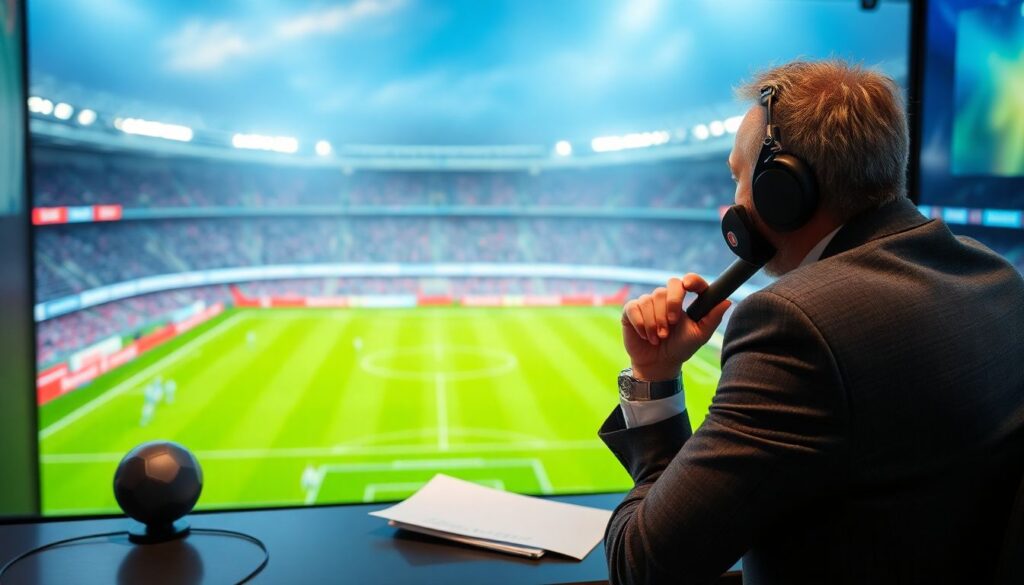
No. Clichés can help rhythm, humour and shared culture. The problem is excess: when most lines are stock phrases and replace concrete analysis of tactics, space and decisions. Moderation and awareness are the key criteria.
How can a student start analysing commentary critically?
Record a match and transcribe five to ten minutes. Underline clichés in one colour, epic metaphors in another, and moral judgments in a third. Then rewrite the same fragment trying to be factual and neutral. Compare both versions.
Do marketing and branding always make commentary less objective?
Not necessarily, but they create incentives to emphasise certain angles: star players, redemption stories, historic rivalries. Servicios de branding para comentaristas deportivos responsables pueden trabajar la voz propia sin caer en propaganda, if they keep transparency and respect for facts.
Can independent streamers avoid these epic and hero/villain patterns?
They can, but many reproduce TV styles unconsciously. The first step is to notice which phrases and tones you imitate. From there, you can build your own style, focusing more on explanation than on melodrama.
What is the role of journalism schools and masters in changing this language?
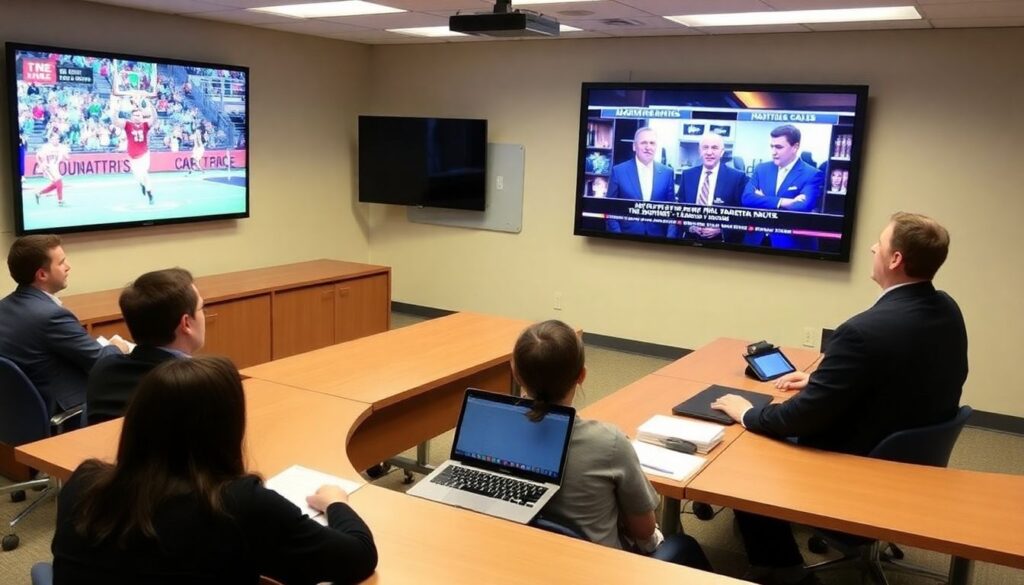
Serious programmes such as a máster periodismo deportivo y comunicación can train students to recognise bias, practice alternative narrations and resist some institutional pressures. However, real change also depends on broadcasters valuing more balanced and analytical commentary.
Does epic commentary actually affect how fans remember matches?
Yes, narrative framing influences memory. When actions are described as «históricos», «épicos» or «traiciones», fans tend to recall them with more intensity and moral weight, even if the objective stakes of the game were lower.
Is neutral language always more boring for the audience?
No. It is possible to be energetic and passionate while staying precise and fair. The challenge for commentators is to find wording that respects complexity but still carries rhythm, humour and emotion.