Superligas and closed formats can stabilise elite finances but usually weaken open competition and local ecosystems. For most European stakeholders, a reformed open model with stronger revenue sharing beats a fully closed Superliga. Closed leagues only make sense as tightly regulated, semi-open projects with guarantees on access, solidarity and fan costs.
Quick comparative summary
- Fully closed Superligas maximise elite revenue but concentrate risk, power and fan alienation.
- Semi-closed formats with limited promotion/relegation balance planning certainty with some sporting merit.
- Strengthened open UEFA competitions keep pyramids alive if domestic revenue sharing is improved.
- Budget-first clubs and leagues benefit more from open formats with caps and cost controls than from joining an arms race.
- Fans are most sensitive to superliga europea entradas precios, kick-off times and loss of traditional rivalries.
- Regulators should link derechos de televisión superliga europea streaming to hard solidarity and governance conditions.
Defining Superligas and closed formats: structure and variants
When comparing Superligas and closed formats, use clear criteria rather than ideology. Below are core factors to evaluate any proposal.
- Access and mobility: Is entry based on sporting merit, fixed membership, or hybrid rules (e.g. wildcards plus league positions)? How many clubs can realistically move up or down each season?
- Governance and voting power: Who controls competition rules, commercial strategy and admission of new clubs: permanent members, all participants, or independent bodies linked to UEFA and national leagues?
- Revenue generation model: Balance between derechos de televisión superliga europea streaming, central sponsorship, matchday income and commercial add-ons (e.g. abonos y suscripciones fútbol europeo superliga bundles, hospitality tiers).
- Revenue distribution and solidarity: Share between big brands and smaller clubs; guaranteed payments for domestic pyramids; mechanisms to stabilise relegated teams and community projects.
- Calendar integration: Impact on domestic leagues and cups; travel load; midweek vs weekend slots; collision with national team windows.
- Regulatory alignment: Compatibility with UEFA statutes, national federation rules, EU/UK competition law and national labour/tax regimes.
- Fan accessibility and culture: Effects on superliga europea entradas precios, away travel, local kick-off times, atmosphere, and demand for camisetas oficiales equipos superliga europea comprar.
- Risk allocation: Who bears stadium, wage and broadcast risk: individual clubs, joint league funds, private investors, or public authorities?
- Integrity and betting environment: How stable, closed formats interplay with apuestas deportivas superliga europea casas de apuestas regulation, match-fixing prevention and data integrity contracts.
Financial logic: revenue capture, distribution and survival for smaller clubs
From a budget-first view, the core question is not ideology but who earns what, who pays the risks, and how smaller clubs avoid being priced out.
| Variant | Best suited for | Main financial upsides | Main financial downsides | When this is the rational choice |
|---|---|---|---|---|
| Fully closed European Superliga | Global mega-clubs with strong brands and investor backing | Maximum control over derechos de televisión superliga europea streaming; predictable schedule for sponsors; easier sale of global abonos y suscripciones fútbol europeo superliga bundles and premium hospitality. | High fixed costs; dependence on continuous audience growth; backlash risk depressing superliga europea entradas precios and shirt sales; near-zero direct benefit for domestic pyramids. | Only when political/legal risk is low and participating clubs accept long-term reputational costs in exchange for stronger commercial control. |
| Semi-closed Superliga with promotion/relegation | Top and upper-mid clubs in the Big 5 leagues plus ambitious challengers | Improved media rights versus current formats; some planning certainty for investors; space for structured solidarity and parachute schemes. | Entry barriers still high; domestic leagues risk devaluation; mid-tier clubs must over-invest to avoid relegation cliff edges. | When regulators can enforce minimum solidarity, and domestic leagues redesign formats to stay attractive and financially viable. |
| Reformed open Champions League-style competitions | Broad range of professional clubs across Europe | Maintains sporting access; centralised TV and streaming rights; scope to rebalance distributions towards smaller markets and early rounds. | Top brands feel under-monetised; calendar congestion; smaller clubs still heavily dependent on qualification swings. | When UEFA and leagues commit to deeper revenue sharing and cost controls instead of allowing an unchecked bidding war for players. |
| Domestic leagues with enhanced revenue sharing | National federations and medium/small-market clubs | Stabilises pyramids; easier budgeting for wage bills and academies; aligns interests between TV partners and a broader set of teams. | Top clubs sacrifice some upside; may reduce short-term transfer spending at the very top. | When political priority is national competitiveness and club survival, not maximising global income of a few brands. |
| Hybrid regional leagues under UEFA umbrella | Clubs from smaller leagues seeking scale without full Superliga | Share production costs; create more marketable fixtures; can package regional derechos de televisión and streaming with local language offers. | Travel costs; risk of hollowing out domestic top divisions; complex governance and calendar issues. | When adjacent markets share language/time zones and fans accept regular cross-border rivalries instead of purely national calendars. |
For clubs with tight budgets, the safest options are open or semi-open formats combined with strict internal wage policies, because they avoid the dependency on winning access to a closed shop. Premium clubs with global fanbases gain more from centralising commercial rights, but only if they limit fixed cost escalation and protect fan trust.
Sporting consequences: competition, motivation and player development
Sporting structure shapes both motivation and budget risk. Use scenario thinking to choose formats that fit your risk appetite and development goals.
- If you are a top-10 European club prioritising global brand value, then a semi-closed or fully closed Superliga is a premium option: more guaranteed high-level games, consistent demand for camisetas oficiales equipos superliga europea comprar and global content. Budget risk rises sharply, so wage caps or internal cost rules become essential.
- If you are a stable first-division club in a mid-sized league, then committing to open UEFA competitions plus strong domestic revenue sharing is safer than chasing a Superliga wildcard. Your motivation to invest in academies stays high, and one bad season will not destroy your finances.
- If you are a federation designing long-term player pathways, then open pyramids with controlled promotion/relegation beats closed formats. Young players need visible routes from grassroots to top tier; a locked Superliga narrows that path and can push talent hoarding at rich clubs, inflating budgets.
- If your priority is competitive balance and unpredictable results, then formats with more mobility (promotion/relegation, access from domestic cups) are superior. To protect budgets, pair them with solidarity funds and clear relegation support, rather than eliminating risk via permanent membership.
- Budget-focused scenario: if your league cannot match Superliga salaries, focus on being a development and selling league in an open system. You trade trophies for sustainability, using TV money and transfer income to avoid debt spirals.
- Premium-focused scenario: if your club can monetise massive global audiences, you may accept higher sporting inequality in exchange for premium competitions and global abonos y suscripciones fútbol europeo superliga style packages, provided fan access and integrity safeguards are robust.
Regulatory landscape: UEFA, national federations and antitrust risks
Before backing any Superliga or closed format, follow a short decision algorithm anchored in legal and budget constraints.
- Map your dependencies: share of income from UEFA competitions, domestic rights, matchday, sponsors, apuestas deportivas superliga europea casas de apuestas partnerships and merchandising.
- Check compatibility with UEFA and federation statutes: will participation threaten access to national leagues, cups or the national team for players?
- Assess antitrust exposure: can organisers credibly argue that the new format improves consumer choice, investment and solidarity, instead of acting as a pure cartel?
- Stress-test worst-case finances: what happens if courts block the project after contracts are signed, or if fans boycott superliga europea entradas precios perceived as excessive?
- Demand written solidarity and governance clauses: revenue floors for domestic pyramids, role of independent directors, transparency over derechos de televisión superliga europea streaming deals.
- Coordinate with governments and competition authorities: seek early guidance to avoid retroactive sanctions, tax surprises or forced structural changes.
- Prepare an exit strategy: contractual paths to rejoin existing competitions with limited financial penalties if the new format fails commercially or socially.
Social impact: supporters, ticketing, and local club ecosystems
Many proposals fail not on spreadsheets but in the stands. Common mistakes to avoid include:
- Ignoring local income levels when setting superliga europea entradas precios, assuming all match-going fans can absorb Premier League-style pricing.
- Designing calendars for overseas TV audiences only, with late kick-offs that damage local attendance and youth participation.
- Bundling derechos de televisión superliga europea streaming into expensive packages that require multiple subscriptions instead of simple, affordable abonos y suscripciones fútbol europeo superliga options.
- Underestimating the symbolic value of domestic rivalries and regional derbies in favour of repetitive blockbuster fixtures.
- Treating merchandising purely as a global business and neglecting the emotional link of camisetas oficiales equipos superliga europea comprar to local identity and pricing fairness.
- Allowing betting sponsorships and apuestas deportivas superliga europea casas de apuestas visibility to dominate stadium and broadcast branding, fuelling political pushback.
- Failing to consult organised supporter groups and local authorities before announcing structural changes, which magnifies resistance.
- Cutting support for grassroots, women’s football and community programmes while increasing star wages, sending a clear message of extraction rather than partnership.
- Assuming that "global fans" will automatically replace disillusioned local supporters, ignoring the cost of rebuilding authenticity and atmosphere.
Comparative table of formats and realistic policy outcomes
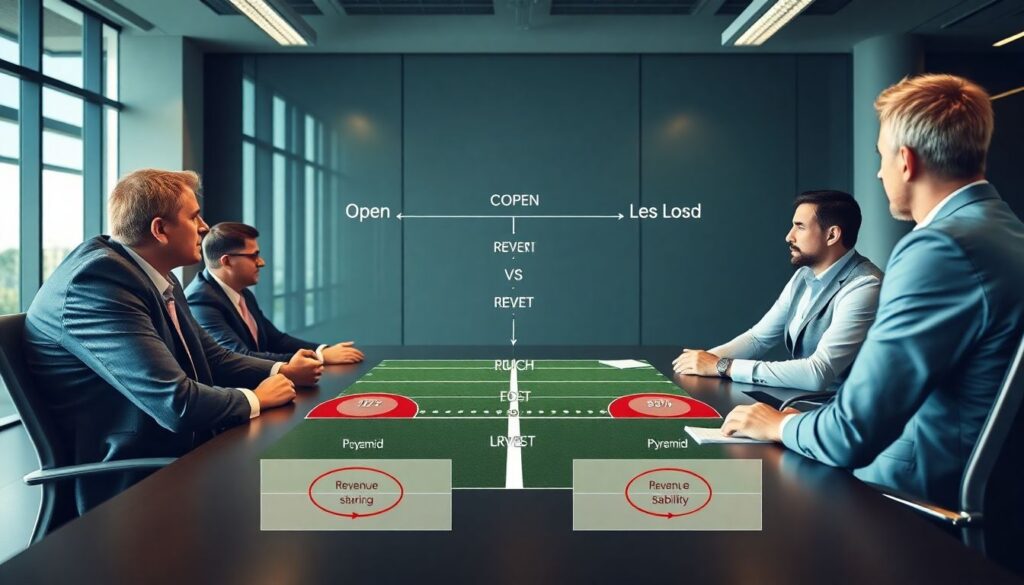
For financial stability across the pyramid, the best direction is a reformed open model with stronger revenue sharing and cost controls. For maximising elite club revenues, semi-closed Superligas with regulated access and solidarity conditions are preferable to fully closed systems. Pure closed leagues offer short-term income spikes but carry the highest legal, social and budget risks.
Direct answers to recurring stakeholder concerns
Is a European Superliga financially safer for big clubs than current UEFA competitions?
It can be safer in terms of predictable fixtures and TV income, but only if fan demand remains strong and legal challenges fail. Without guarantees on access to domestic leagues and national teams, risk can actually increase rather than decrease.
Will smaller clubs benefit from any closed or semi-closed Superliga format?
They benefit only if binding solidarity mechanisms exist: fixed revenue shares for domestic leagues, development funds and relegation support. Without this, smaller clubs face reduced visibility, lower TV values and a harder path to European exposure.
How would a Superliga affect ticket prices and access for local fans?
Pressure to monetise global demand typically pushes ticket prices upward, especially for top games. To protect local fans, organisers must cap prices, preserve affordable sections, and avoid excessive packaging of tickets with premium services or compulsory subscriptions.
Are there sporting advantages to closed formats beyond money?
Closed or semi-closed leagues can support long-term squad building and tactical projects because relegation pressure is lower. However, they also risk reducing competitive intensity, limiting underdog stories and narrowing development pathways for players from smaller clubs.
Can regulators legally block a Superliga-style competition in Europe?

Regulators can make participation costly by restricting access to official competitions or national teams, but EU and national courts will ultimately weigh competition law arguments. Outcomes are uncertain, so clubs should avoid strategies that only work if regulators permanently lose.
What is the most budget-responsible path for a mid-table club in a Big 5 league?
Focus on sustainability within domestic and UEFA structures: enforce internal wage limits, invest in academies, and lobby for better revenue sharing. Betting club survival on entry to a Superliga is high-risk with limited upside compared to controlled growth.
How should fans evaluate new proposals being marketed as "reform"?
Ask who gains financially, who loses access, and what legal guarantees exist on solidarity, ticket affordability and governance. Any genuine reform should clearly improve opportunities for local clubs and supporters, not just repackage income for a small elite.