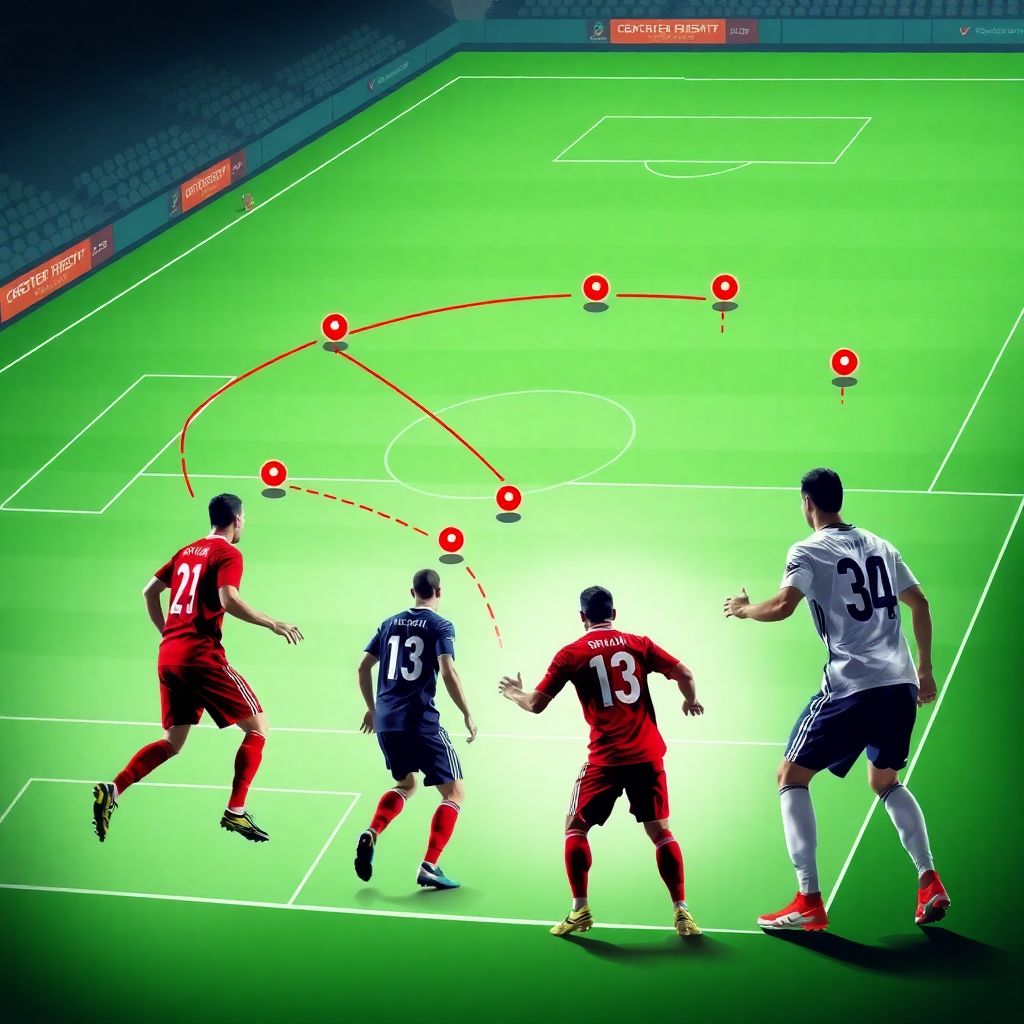
Balancing modern tactical frameworks with «romantic» attacking freedom is possible if you treat structure as a floor, not a ceiling. Use tácticas modernas en el fútbol actual to organise pressing, spacing and rest-defence, while protecting zones where your most creative players enjoy autonomy, especially in final third combinations and transitions.
Core Contrasts Between Tactical Innovation and Romantic Play
- Modern structures optimise space, pressing and rest-defence; romantic play optimises intuition, freedom and joy.
- Romantic football often prioritises spectacle and risk; tactical innovation prioritises control and repeatability.
- Data and video drive modern decisions; romantic views lean on «feel» and tradition.
- Players in tactical systems have narrower roles; romantic play accepts role overlap and chaos.
- Modern models are easier to teach across squads; romantic models rely more on special individuals.
- Hybrid approaches can protect creativity while stabilising defensive phases.
- Coaches, analysts and sporting directors each must calibrate the balance for their context and league.
Philosophical Roots: What Romantic Football Values
Before choosing between modern frameworks and romanticism, define your selection criteria. For Spanish clubs and academies, these nine points are a useful checklist.
- Identity and tradition: How strongly does your club culture associate with attacking, aesthetic football, street-style improvisation or cantera values?
- Player profile: Do your players naturally fit fútbol de posesión vs fútbol directo ventajas y desventajas, or are they more suited to unstructured, expressive play?
- Risk tolerance: Are board and fans willing to accept chaotic matches, open transitions and occasional collapses in exchange for attacking intent?
- Development vs. results: In youth setups, romantic play can accelerate technical and decision-making growth; at professional level, survival may demand stricter organisation.
- Time horizon for the project: Romantic overhauls usually need more time and patience; rigid tactical templates can deliver «quick stability» but may cap ceiling.
- Fan engagement and brand: In markets like LaLiga, style of play affects ticket sales, media narrative and sponsor interest.
- Analytical infrastructure: If you invest in analysts, tracking data and cursos online de análisis táctico de fútbol, you unlock more of the benefits of modern structures.
- Coaching staff expertise: Staff steeped in mejores libros sobre táctica futbolística moderna and study of pressing/positional play will naturally lean tactical; ex-players with street-football roots may lean romantic.
- League and opponent profile: In lower Spanish divisions with poor pitches and direct rivals, pure romanticism may be punished; hybrids are often more realistic.
Contemporary Tactical Principles Reshaping the Pitch
The table below compares five realistic approaches along the spectrum from romanticism to highly modern structures. It is written so a coach, an analyst and a sporting director can all quickly see pros, cons and implementation cost.
| Variant | Best suited for | Pros | Cons | When to choose | Implementation cost |
|---|---|---|---|---|---|
| Pure Romantic Attacking | Clubs prioritising spectacle, academies focusing on creativity | Maximises freedom, unpredictability and player enjoyment; can unlock geniuses who dislike rigid schemes | Defensive fragility, unstable results, hard to scale; difficult for analysts to model | When avoiding relegation pressure, building identity, or in youth stages focused on expression | Low tactical cost, high risk cost; limited need for complex analysis tools |
| Structured Possession Play | Technically strong squads and clubs aligned with fútbol de posesión traditions | Controls tempo and territory; supports clear training periodisation; aligns with fútbol de posesión vs fútbol directo ventajas y desventajas discussions favouring control | Can become sterile; overload of rules may suffocate instinct; vulnerable to high-intensity presses | When you dominate ball technically and need stability in LaLiga-style competitions | Medium to high: extensive coaching detail, video analysis and rehearsal required |
| Vertical Press and Transition | Athletic squads with strong fitness and pressing habits | Maximises modern pressing, quick transitions and xG from high regains; attracts analysts with clear KPIs | Very demanding physically; less room for slow, «romantic» build-up; requires depth to rotate | When you are not top favourite but can out-run opponents and exploit tactical chaos intelligently | High: fitness staff, data tracking and specialist pressing drills essential |
| Direct Structured Football | Teams with target forwards, limited build-up skills, difficult pitches | Simple to coach; clear roles and reference points; low mistake risk in own half | Less attractive to fans; may underuse gifted playmakers; fewer touches for creative players | When squad lacks technical security or in lower divisions; good short-term rescue strategy | Low to medium: quick implementation but requires buy-in from fanbase and board |
| Adaptive Hybrid Model | Clubs seeking balance between romanticism and modern control | Keeps modern rest-defence and pressing while allowing freedom in defined zones; flexible vs different rivals | Complex coaching task; players need high tactical IQ; analysts must support constant fine-tuning | When you want long-term identity plus competitiveness in European-level contexts | High: investment in staff education, mejores libros sobre táctica futbolística moderna and continuous analysis |
For analysts wondering cómo ser analista táctico de fútbol profesional, developing frameworks to quantify these variants (pressing efficiency, possession value, directness) is central to providing actionable insights.
Conflict Zones: Where Structure Suppresses Spontaneity
Use scenario-based rules to avoid your tactical model killing creativity. This section is persona-oriented: coaches, analysts and sporting directors can all translate the principles into their roles.
- If your 3rd man patterns feel robotic in training, then as a coach introduce «free play» blocks each week where the only rule is directional play and pressing triggers; analysts can tag these drills to study which uncoached combinations appear naturally.
- If creative players stop attempting risk passes in matches, then relax your negative feedback on turnovers in the attacking third; for the sporting director, protect them in internal communication so they do not become scapegoats for systemic issues.
- If high pressing ruins your team’s freshness by minute 60, then analysts must provide objective intensity curves; coaches adjust the press to be situational (after backward pass or bad touch) and sporting directors review squad depth to support the intended intensity.
- If build-up schemes force your best dribbler into constant back passes, then redraw your positional map so they start higher or in half-spaces; reduce touch-limit rules for them while keeping stricter principles for support players.
- If data dashboards only reward «safe» actions, then analysts redesign KPIs to value progressive passes, 1v1 attempts and risky receptions between lines; communicate these metrics to the board to align evaluation with your chosen style.
- If youth coaches copy first-team tactics blindly, then sporting directors must publish age-specific guidelines: younger categories get more romantic freedom, older categories gradually integrate tácticas modernas en el fútbol actual.
Successful Hybrids: Case Studies of Balanced Teams
Use this short algorithm to converge on a balanced model that fits your club. It is written so each persona knows their specific responsibility at each step.
- Define non-negotiables by persona: Coach lists 3-5 game principles (e.g., immediate counterpress), analyst lists 3-5 tracked metrics (e.g., high-regain shots), sporting director defines 3-5 recruitment filters (e.g., players comfortable in multiple structures).
- Map current squad to tactical variants: Use the comparison table to rate each line (defence, midfield, attack) on suitability for possession, pressing, or direct play; decide your initial «default» and backup variants.
- Design freedom zones and moments: Coach chooses pitch zones and game phases where constraints are minimal (e.g., last third wide channels); analyst monitors whether those areas correlate with chance creation.
- Prototype in controlled environments: Test the hybrid in friendlies or specific match phases (e.g., first 20 minutes each half); analysts compare outcomes to old model; the sporting director observes whether players look comfortable or over-coached.
- Codify into training microcycle: Allocate clear weekly slots: one for structured tactical work, one for high-intensity pressing, one for «romantic» games (rondos, small-sided chaos) to preserve instinct.
- Align recruitment and academy: Sporting director updates scouting profiles to seek players with tactical discipline plus improvisation; academy coordinators gradually mirror the first-team hybrid with age-appropriate constraints.
- Review and iterate each quarter: Every few months, the trio (coach, analyst, sporting director) reviews game model, fan sentiment and squad evolution and adjusts how romantic or modern the approach should be.
Decision Toolkit: Evaluating Trade-offs by Match Phase
These are frequent decision errors when choosing between romanticism and modern tactics across the main phases of play.
- Kick-off and early minutes: Overcommitting to romantic high-risk build-up before players «feel» the game, instead of starting with a slightly more structured press and simple patterns to gain confidence.
- Consolidated possession: Using too many rigid positional rules in midfield, leading to sterile U-shaped circulation; hybrids should allow one or two players to abandon structure to overload key zones.
- Defensive organisation: Romantic coaches often neglect rest-defence, leaving counters wide open; modern-minded analysts sometimes overreact with ultra-low blocks that completely deny pressing instincts.
- Transitions after regaining: Either always going direct, wasting chances to stabilise in the opponent half, or always securing the ball, killing potentially decisive counters; elite hybrids switch according to opponent structure and game state.
- Transitions after losing the ball: Chasing romantic counter-presses with unfit squads; or, conversely, dropping immediately and abandoning any chance of regaining in promising zones.
- Set pieces: Ignoring set pieces as «anti-romantic» details or making them so rehearsed that no player feels empowered to improvise second balls or short variations.
- Game-state management: Staying «faithful to style» when leading by a goal instead of temporarily shifting to more direct structured football; or abandoning identity too early when a single goal down.
- Rotation and fatigue: Applying intense modern pressing ideas with a thin squad, rather than moderating intensity and leaning on possession control plus situational pressure.
- Communication with stakeholders: Failing to explain to board and fans why a more balanced approach is chosen, allowing the false narrative of «romantic vs resultadista» to dominate.
Operational Steps: Coaching, Recruitment and Matchday Rules
For coaching staffs in Spain, the adaptive hybrid model is usually best for sustained competitiveness; pure modern pressing models can be best for analysts and clubs seeking rapid edges, while a more romantic orientation suits academies, identity-driven projects and sporting directors prioritising long-term brand and talent development.
Practitioners’ Concerns and Concise Responses
How can a coach add structure without killing joy?
Limit strict rules to first and second phase (build-up and progression) and defensive transitions, while keeping attacking third principles intentionally loose. Use at least one weekly session of free games and positional rondos with minimal constraints.
What metrics should an analyst track in hybrid models?
Combine modern tactical KPIs (high regains, passes into final third, expected threat) with creativity indicators such as 1v1 attempts, progressive carries and risky receptions. Visualise these by player and by zone to see where romantic freedom is actually productive.
How does a sporting director recruit for balance?
Target players with tactical discipline off the ball and open decision-making on the ball. In scouting reports, rate not only role execution but also spontaneity, body orientation under pressure and willingness to combine in tight areas.
Are cursos online de análisis táctico de fútbol really useful?
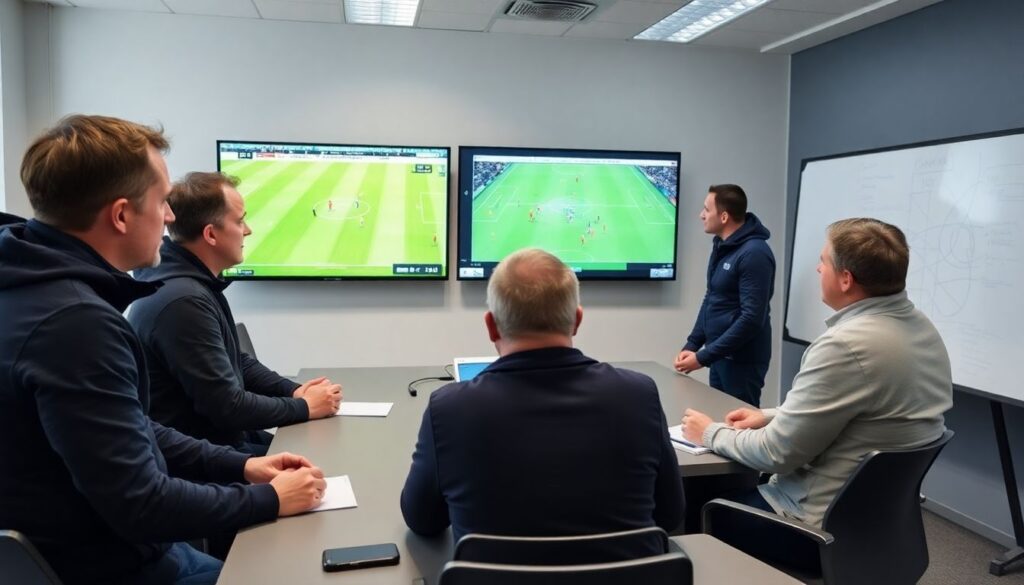
Yes, provided they include practical work with real match footage, clear frameworks and feedback. They are particularly valuable for bridging the gap between classroom theory and club realities, especially if you aim to work closely with coaching staffs.
How do I compare fútbol de posesión vs fútbol directo in my context?
Analyse your squad’s technical comfort, physical profile and league style. Then review your last matches: when you keep the ball, do you progress or simply circulate? When you go direct, do you retain second balls? Use this evidence instead of abstract debates.
What are the mejores libros sobre táctica futbolística moderna to start with?
Begin with books that explain positional play, pressing and match analysis using clear diagrams and case studies from European football. Complement them with coaching manuals from federations and club academies to see how concepts translate into drills.
How to become a professional tactical analyst?

If you wonder cómo ser analista táctico de fútbol profesional, start by coding matches on your own, learn basic data tools, build a small portfolio and combine it with formal study or cursos online de análisis táctico de fútbol that include mentorship and practical projects.