
Historical background: how we got to the Super League moment
When people talk about “La Superliga” and the fight for the soul of European football, they’re really talking about a tension that has been building since the early 1990s. The creation of the UEFA Champions League in 1992 was the first big turning point: the old European Cup was turned into a more commercially oriented, closed‑feeling product, with group stages, TV‑friendly scheduling and a clear bias toward big markets. From that moment, elite clubs realized that *they*, not the federations, generated most of the global revenue through broadcasting rights, sponsorships and global fanbases.
Over the next decades, the so‑called “G14” and later the European Club Association (ECA) were used as pressure tools. Top clubs periodically floated the idea of a breakaway league to extract better conditions from UEFA: more guaranteed matches, more spots for big leagues, and a higher share of the central commercial pool. In that sense, the infamous April 2021 announcement of the European Super League wasn’t a lightning bolt from nowhere; it was the culmination of thirty years of power accumulation by the continental elite.
Then everything crashed in 48 hours. Fan protests in England, governmental pressure, threats of sanctions from UEFA and FIFA, and an immediate reputational meltdown forced almost all Premier League clubs to pull out. What remained was a legal and political battle, especially in the EU context, around competition law and the right of clubs to create alternative competitions. The later court decisions against UEFA’s monopoly narrative reopened the debate and turned “La superliga y la lucha por el alma del fútbol europeo” from a failed coup into an ongoing structural question: who ultimately governs the game?
Basic principles: how the Super League model rewires the ecosystem
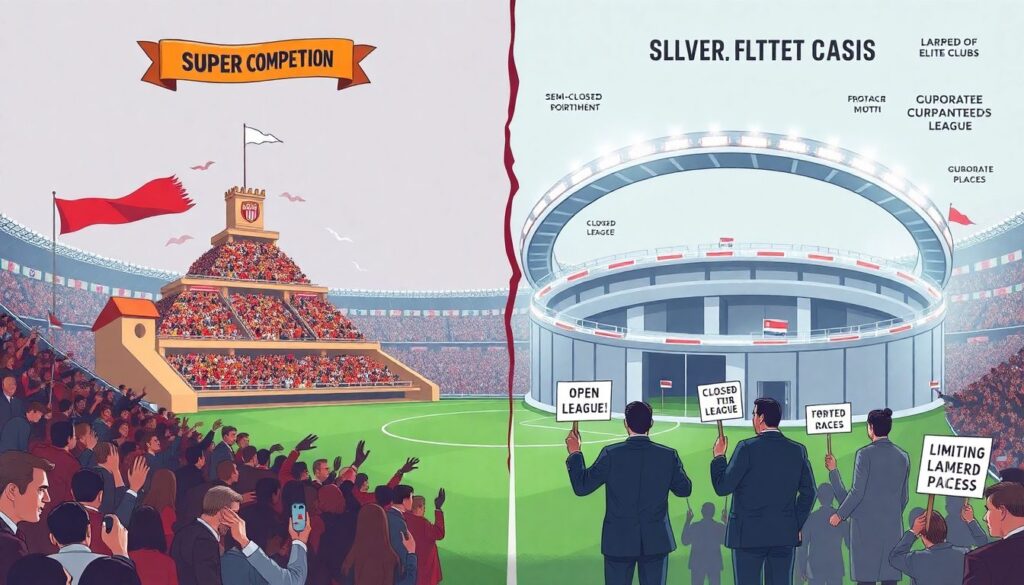
Underneath the PR slogans, the Super League concept rests on a few technical design principles that directly clash with the traditional European sports model. First, there is a move from open competition with promotion and relegation towards a semi‑closed or fully closed league structure. That implies reduced sporting risk for founding members, which in financial terms looks attractive to investors because it stabilizes cash flows and allows for more predictable media rights valuations. In governance jargon, this means prioritizing *franchise security* over *competitive meritocracy*.
Second, the revenue model is heavily centralized and tailored for global audiences. Unlike domestic leagues, where local matchday income still matters (stadium tickets, *entradas superliga europea* in a hypothetical scenario), a Super League is built primarily around transnational broadcasting contracts, digital platforms and sponsorship packages priced at a global scale. This pushes clubs toward standardized “content windows”: fixed kick‑off slots, optimized calendars for Asian and American time zones and integrated social‑media monetization.
Third, player labor markets and competitive balance are affected via what economists call *resource concentration*. If the same group of clubs secures recurring participation, they lock in a larger share of broadcasting and commercial revenue over time. That leads to greater wage inflation at the top, increased transfer market polarization and a widening gap with national leagues. From a regulatory standpoint, Financial Fair Play or cost control mechanisms become harder to enforce coherently if one competition exists outside UEFA’s integrated pyramid.
In short, the Super League logic treats European football less as a hierarchical pyramid rooted in local communities and more as a premium content cluster built around a few global brands, governed by private corporate law rather than federation‑based statutes.
Implementation examples: failed attempts and future blueprints
People often think the only “real” Super League attempt was the 2021 project, but if you zoom out, you’ll see multiple pilot schemes that tested crucial components of the model. The expanded Champions League formats, especially the new Swiss‑system design, already emulate a quasi‑league with more guaranteed games for big clubs. The Club World Cup expansion, endorsed by FIFA, is another controlled experiment in transforming sporadic tournaments into recurring high‑value events, tightly packaged for broadcasters and a global *suscripción streaming fútbol europeo* ecosystem.
On the club side, ownership structures tell their own story. Multi‑club ownership groups (City Football Group, Red Bull, 777 Partners, etc.) operate using portfolio management logic more familiar to private equity than to classic sports associations. They optimize player pathways, data infrastructures and global merchandising as if football clubs were nodes in a network, not standalone cultural institutions. From a Super League perspective, this architecture is perfect: it slots seamlessly into a transnational, cross‑brand competition.
A more subtle implementation front is digital direct‑to‑consumer distribution. When fans ask *dónde ver superliga europea en directo*, the long‑term answer isn’t necessarily a traditional TV channel. It’s likely to be a proprietary platform—either league‑owned or powered by a major tech firm—offering dynamic pricing, real‑time stats, alternate commentary feeds and personalized highlights. The subscription model for such a product would be an evolution of today’s *suscripción streaming fútbol europeo*, only more segmented and less tied to national boundaries.
Concrete scenarios: how a Super League could actually look
1. Closed elite league with limited access
A fixed set of 16–20 clubs with permanent membership and 2–4 rotating spots via a qualifying competition. Domestic league participation continues, but the Super League becomes the primary revenue engine with its own commercial ecosystem.
2. Hybrid model integrated with UEFA competitions
The Super League acts as a “Division 0” above the Champions League, negotiated as a joint venture with UEFA. Entry is performance‑based but heavily weighted toward top markets; revenue distribution is skewed to founding clubs.
3. Platform‑driven, globally scheduled product
Matchdays are aligned with global prime times, and broadcasting is handled mainly through a league‑controlled platform. Packages may bundle live games, archive content, fantasy leagues and betting integrations with the *mejores casas de apuestas fútbol europeo*.
4. Soft Super League via Champions League expansion
No formal breakaway occurs, but the Champions League format continues expanding to the point where it functionally behaves like a closed league: seeding rules favor big clubs, coefficient‑based access is normalized, and domestic leagues become feeders.
Common misconceptions: what fans and media often get wrong
One widespread misconception is that a Super League would automatically deliver “better football” just because it pits big names against each other more often. Analysts who work with performance data point out that competitive intensity doesn’t simply rise with club brand value. If financial and sporting risk is reduced for the same set of clubs, you can actually end up with more predictable outcomes and less tactical experimentation. Upsets, underdog runs and high‑variance strategies—core elements of tournament drama—tend to decline in probability.
Another myth is that fan resistance is purely nostalgic and will fade as new generations grow up in a streaming‑first world. Yet surveys across multiple markets show that even younger fans differentiate between global entertainment platforms and local football identity. They might happily use an international *suscripción streaming fútbol europeo* service to follow several leagues, then still turn up in person at their neighborhood stadium every weekend. The idea that you can fully substitute local belonging with pure digital fandom is more wishful thinking from certain investors than an evidence‑based forecast.
A third misunderstanding surrounds merchandising and consumption. Commercial departments sometimes assume that a Super League would automatically boost shirt sales and related products—*camisetas equipos superliga europea comprar* sounds like an easy win on paper. In reality, saturation risk is high: when every top club launches several kits a season and global marketing campaigns overlap constantly, marginal gains flatten. Without authentic narratives and organic rivalries, merchandise degenerates into generic fashion items, which weakens long‑term brand attachment.
Expert insights: financial, legal and sporting perspectives
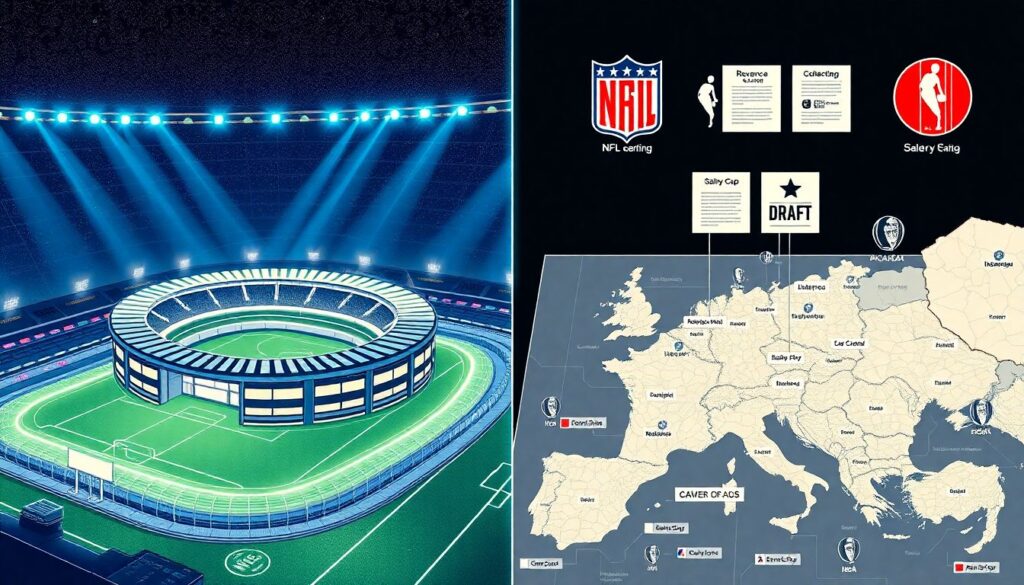
Sports economists warn that structurally, a closed or semi‑closed Super League resembles American franchise leagues only on the surface. In the NFL or NBA, revenue sharing, salary caps and drafts are baked into the collective bargaining framework. In European football, there is no equivalent unified labor structure, and cross‑border legal fragmentation complicates any attempt to impose hard caps. The likely outcome is *partial* regulation that doesn’t fully offset resource concentration, which would deepen the divide between the top 20–30 clubs and the rest of the ecosystem.
Legal experts highlight that EU competition law cuts both ways. On one hand, it restrains UEFA and FIFA from abusing a de facto monopoly position to block new competitions. On the other, it requires any new league to respect fair access principles, transparent governance and non‑discriminatory criteria. In practice, that means a Super League that is completely closed for sporting reasons would face serious legal challenges; to survive, it would probably need at least a formal pathway for new participants, even if structurally biased.
From a tactical and performance standpoint, coaches and analysts raise a different type of red flag: matchload. A dense, high‑intensity calendar among top clubs, layered on top of domestic obligations, pushes players into chronic fatigue territory. Injury analytics departments already show upward trends in soft‑tissue injuries at elite clubs; a Super League without robust workload management and schedule optimization would worsen both player welfare and quality of play. That’s why several performance directors argue that any reform must start with a *global calendar re‑design*, not with commercial goals.
What this means for fans: tickets, streaming and betting
For match‑going supporters, one of the core concerns is accessibility. In a Super League scenario, *entradas superliga europea* pricing would likely be detached from local income levels and more aligned with global demand curves. Dynamic pricing algorithms, hospitality packages and “tourist premium” strategies already used by some elite clubs would probably become standard across the board. Experts in fan governance argue that legal caps on ticket prices or mandatory supporter representation in club boards might be necessary counterweights.
On the remote‑viewing side, the key friction is fragmentation. Fans already subscribe to multiple services to watch domestic leagues and international cups. Adding a separate platform just for a Super League—on top of existing providers—could create subscription fatigue. Media analysts suggest that, if a breakaway happens, the only sustainable model for viewers might be a consolidated bundle where *dónde ver superliga europea en directo* is integrated with domestic rights, rather than isolated behind yet another paywall.
Betting markets would adapt quickly. A competition with frequent high‑profile games is a dream scenario for operators and affiliates that promote the *mejores casas de apuestas fútbol europeo*. Regulators, however, caution that more frequent high‑stakes matches, broadcast at global prime times and heavily integrated into second‑screen apps, increase exposure to problem gambling risks, especially among younger demographics. Expect tighter ad restrictions, mandatory risk‑profiling and more rigorous age verification systems around any Super League product.
Balanced recommendations from experts: how to protect the “soul” while modernizing
Sports governance specialists don’t deny that European football needs reform; the disagreement is about direction and control. Their recommendations tend to cluster around a few practical axes rather than a binary “Super League yes/no” stance.
1. Lock in meritocracy with legal safeguards
Enshrine promotion/relegation principles and open access to top competitions in national and EU‑level legislation. This doesn’t prevent format innovation but makes it harder to institutionalize fully closed leagues.
2. Strengthen revenue solidarity mechanisms
A higher percentage of top‑tier broadcasting revenue—whether from UEFA competitions or any new league—should be contractually earmarked for grassroots, women’s football and lower divisions. Transparency in how that money is distributed is crucial.
3. Embed fans into governance structures
Introduce mandatory supporter representation on club boards or supervisory councils, with veto rights on existential decisions like joining or creating a Super League. Germany’s 50+1 rule is often cited as an imperfect but useful reference model.
4. Rationalize the calendar before adding new competitions
Independent workload panels, combining medical, performance and scheduling experts, should have binding authority over match calendars. Commercial expansions must be conditional on medical feasibility, not the other way around.
5. Demand transparency from investors and multi‑club groups
Require full disclosure of ownership chains, conflict‑of‑interest policies and intra‑group transfer rules. Multi‑club structures aren’t inherently bad, but without strict regulation they undermine competitive integrity and fan trust.
If a Super League—or something functionally similar—does eventually emerge, the central question won’t just be which clubs participate or how much the TV deal is worth. The deeper issue is whether European football chooses to function primarily as a financial asset class or as a multi‑layered cultural institution with economic activity attached. The “fight for the soul” is about who gets to answer that question, and on whose terms.