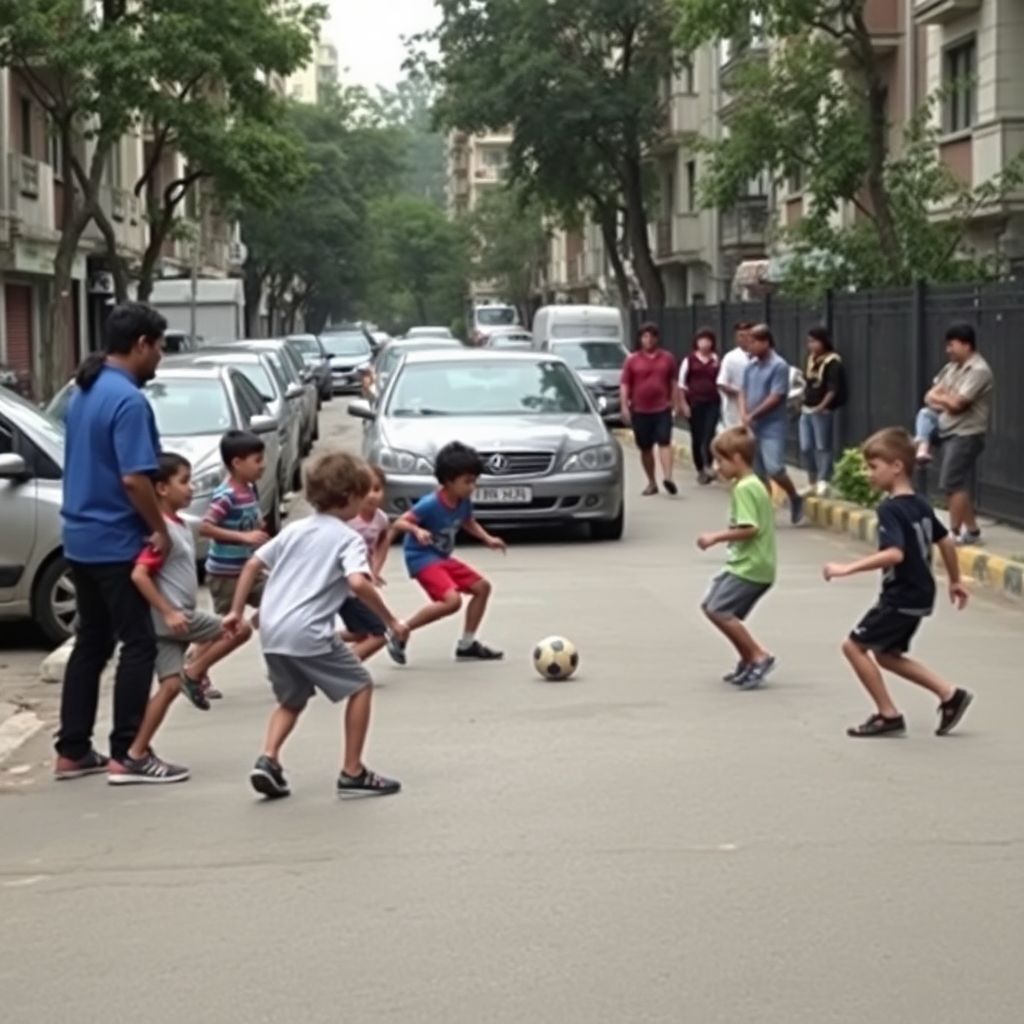
Street football is not extinct, but it is under pressure from urban design, adult control and screens. If adults protect small free spaces, relax safety panic and organise less, then kids still choose to play in the street. The challenge is creating conditions where informal play feels possible, safe and welcome.
Street Football in One Glance
- If a game is self‑organised, mixed‑age, with improvised rules and goals, then you are seeing real street football, not a mini‑academy.
- If streets and plazas are full of cars and bans, then children migrate to organised clubs or screens.
- If all football is paid, scheduled and uniformed, then creativity, resilience and social mixing usually shrink.
- If cities reserve micro‑spaces for ball games, then informal play often returns surprisingly fast.
- If parents accept some controlled risk and boredom, then kids learn to create their own games and solve conflicts.
How Street Football Shaped Childhoods
Street football (el potrero, el parque, la plaza) is informal play organised by children themselves in any available space: a courtyard in Madrid, a dead‑end street in Sevilla, a dusty lot in Buenos Aires. No coach, no fixed timetable, teams changing every few minutes, rules negotiated on the fly.
If football happens mainly in fenced pitches with referees and fixed rosters, then it is closer to club or academy training than to street football. If adults decide who plays, in what position and for how long, then the essence of potrero – autonomy and improvisation – is weakened.
For many generations, especially in Spain and Latin America, childhood memories are tied to these games: jumping garages in Vallecas to chase a ball, using school bags as posts in Montevideo, playing until the street lights turned on. If those everyday games disappear, then childhood becomes more programmed and less shared in the neighbourhood.
Street football also acted as a filter. If you could handle the rough pavement, the older kids, the uneven teams and the constant teasing, then you developed resilience that later helped in formal competition and in life beyond football.
Factors Driving the Decline of Informal Play
If we want to protect street football, then we must first understand what is pushing it out. The decline is rarely due to children not liking football; it is usually about the environment adults create around them.
- Traffic and lack of safe micro‑spaces – If every quiet street is turned into a parking lot or shortcut, then kids lose the natural places where impromptu games used to arise.
- Over‑structuring childhood – If afternoons are filled with homework, music lessons and multiple trainings, then there is no unplanned time left for a quick 3‑vs‑3 below the house.
- Fear culture and safety panic – If parents believe the street is always dangerous, then they keep children indoors or only in supervised activities, even when the actual local risk is moderate.
- Commercialisation of youth sport – If the first suggestion to a football‑loving child is to search «escuelas de fútbol infantil cerca de mí», then play is framed as a service to buy, not as a game to create.
- Screens and digital entertainment – If the easiest option after school is a console or mobile, then the small frictions of going downstairs to find friends can kill the habit of outdoor play.
- Noise complaints and restrictive bylaws – If neighbours and councils penalise ball games in patios and plazas, then even motivated kids can be fined or chased away.
- Economic pressure on public space – If every vacant lot is quickly built over or turned into a paid facility, then free, rough spaces – the classic potrero – disappear.
Consequences for Skill Development and Social Bonds
If children play mostly in street environments, then their football education is wide, messy and improvisational. They learn to adapt to bad bounces, strange angles, older rivals and changing teams. This tends to produce intuitive positioning, creativity in tight spaces and mental toughness.
If football is limited to structured sessions and summer programmes like «campamentos de fútbol para niños verano», then kids may gain technique and fitness but miss the constant decision‑making of unsupervised games. They dribble less out of necessity and more on command, and they feel less free to try risky moves.
If early football is pay‑to‑play – families comparing «clases de fútbol para niños precio» and choosing between club packages – then participation depends more on money and logistics than on neighbourhood culture. The result is often less social mixing: children mostly meet others from similar backgrounds, in their own club bubble.
Beyond football, if kids never share rough play in the street, then they lose a daily school of negotiation and empathy. Street football teaches how to handle unfair fouls, how to include a younger sibling, how to defend a friend. Without that, then many conflicts are outsourced to adults instead of being solved peer‑to‑peer.
Finally, if communities push talented kids only into «academias de fútbol de alto rendimiento para jóvenes» and remove them completely from informal play, then they risk burnout, identity tied only to performance and less connection to their barrio. A mixed pathway – academy plus potrero – is usually healthier.
Examples of Cities Where Street Football Survives
If we look closely, then we still find live pockets of street football, even in dense cities. They rarely appear in glossy brochures; they live in the empty hours of the day, in corners that escaped cars and strict regulation.
- Madrid barrios – If you walk through Carabanchel or Vallecas on a mild evening, then you may still see 5‑a‑side games between bollards, with younger siblings acting as ball boys.
- Barcelona inner courtyards – If a block has a shared patio with tolerant neighbours, then kids often turn it into a mini‑Camp Nou with improvised tournaments.
- Small Spanish towns – If the plaza remains semi‑pedestrian and the bar terrace accepts some noise, then football fills the centre every afternoon.
- Latin American barrios – If there is a dirt patch or concrete corner in Montevideo, Rosario or Medellín, then you will likely find a ball rolling until sunset.
Yet there are limitations.
- If these spaces depend only on neighbour tolerance, then one complaint can end years of street play overnight.
- If municipalities do not officially recognise ball‑friendly areas, then police and security guards may be forced to move children along.
- If local clubs see informal play as competition rather than complement, then they may lobby to close open spaces in favour of paid pitches.
- If new housing projects ignore children’s everyday routes, then future generations may grow up without knowing that the street can belong to them.
Policies and Community Actions That Revive Play
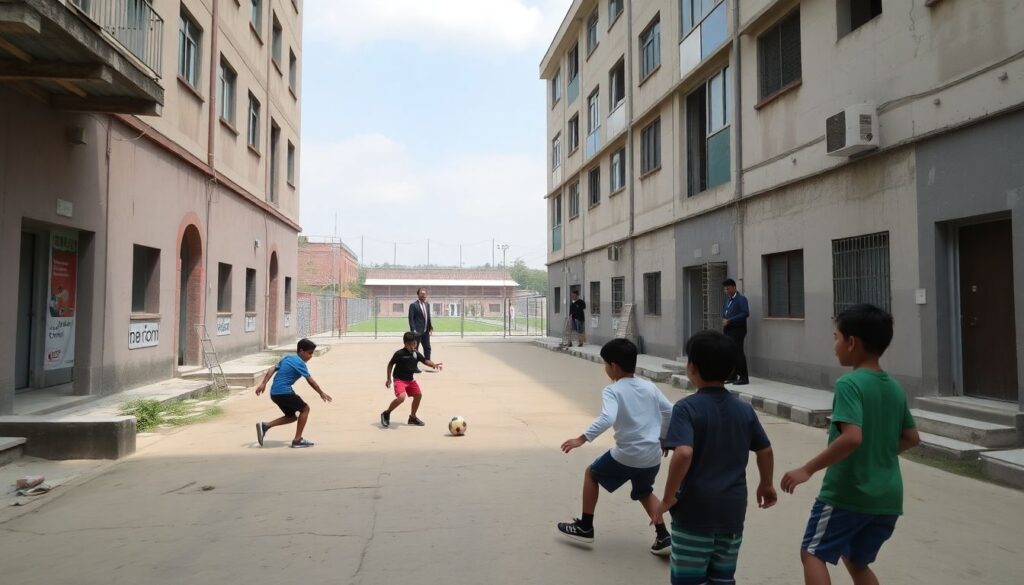
If decision‑makers want more street football, then they must go beyond building big sports centres. The key is protecting many small, imperfect spaces close to where children actually live.
- Myth: safety requires constant supervision
If councils believe kids are only safe inside organised clubs, then they over‑police parks and plazas. A better rule: if a space is visible, has low traffic and a mix of adults around, then it can be safe enough for semi‑unsupervised play. - Myth: serious talent only comes from formal academies
If clubs think potrero play damages technique, then they may forbid it. Reality: if kids combine free play with good coaching, then both creativity and structure improve. - Mistake: designing spaces without child input
If planners never ask local kids where they actually play, then new playgrounds stay empty. In contrast, if children help choose markings, goals and rules, then they will use and protect the pitch. - Mistake: banning balls due to noise
If neighbours push for zero‑noise policies around patios, then the only option left is indoor screens. Compromise: if buildings designate specific hours and corners for ball games, then both rest and play can coexist. - Myth: only expensive equipment creates engagement
If councils prioritise fancy turf and lighting over accessibility, then poorer areas stay without options. Often, if there is a flat surface, two goals and basic «ropa y accesorios de fútbol para niños online» or from local shops, then children will handle the rest. - Mistake: mixing traffic and play
If streets remain full of fast cars, then no policy leaflet will bring kids back. Real change happens when specific streets, hours or plazas are clearly dedicated to play, with physical barriers to slow or block traffic.
Practical Steps for Parents, Coaches and Planners
If you are a parent in Spain wondering whether to choose another extra activity or to leave some free afternoons, then think like this: if my child has at least two days with unscheduled time and access to a safe space, then street football has a chance to appear.
Mini‑case from a Madrid barrio: neighbours noticed that kids only played football during scheduled club sessions. If families coordinated to free one weekday evening, blocked a short side street with cones and agreed basic rules (no loud games after a certain hour), then within weeks 10-15 kids were playing self‑organised matches again.
Coaches also have influence. If a coach insists that players join extra formal sessions instead of playing with friends, then potrero time disappears. But if the message is «if you finish your homework and training, then go play with whoever is downstairs», then street games are re‑legitimised.
City planners and local councils shape the physical stage. If redevelopment plans include only parking and ornamental gardens, then children become invisible users. If instead every new block reserves a multi‑use hard court and calm access routes, then street football becomes a natural extension of daily life.
For families already involved in clubs, camps and gear shopping, simple rules help balance things. For example, if you enrol your child in «campamentos de fútbol para niños verano», then promise one extra unstructured week afterwards. If you spend time comparing «clases de fútbol para niños precio», then also spend time locating realistic, nearby spots where your child can play for free without a coach.
End‑of‑Article Self‑Check: Are You Protecting Street Football?
- If your child’s week has zero unplanned afternoons, then you are likely squeezing out street football – can you free at least one?
- If you live near a quiet plaza or courtyard, then have you asked neighbours and the community to allow ball games at agreed times?
- If you choose between different clubs or «escuelas de fútbol infantil cerca de mí», then do you ask coaches whether they support kids also playing informally?
- If you buy «ropa y accesorios de fútbol para niños online», then do you also make sure there is a nearby, free place where those boots will actually touch concrete or grass?
- If you work in planning or local government, then have you clearly marked at least a few streets or plazas as permanent ball‑friendly zones?
Quick Answers on the Future of Street Football
Is street football really disappearing or just changing form?
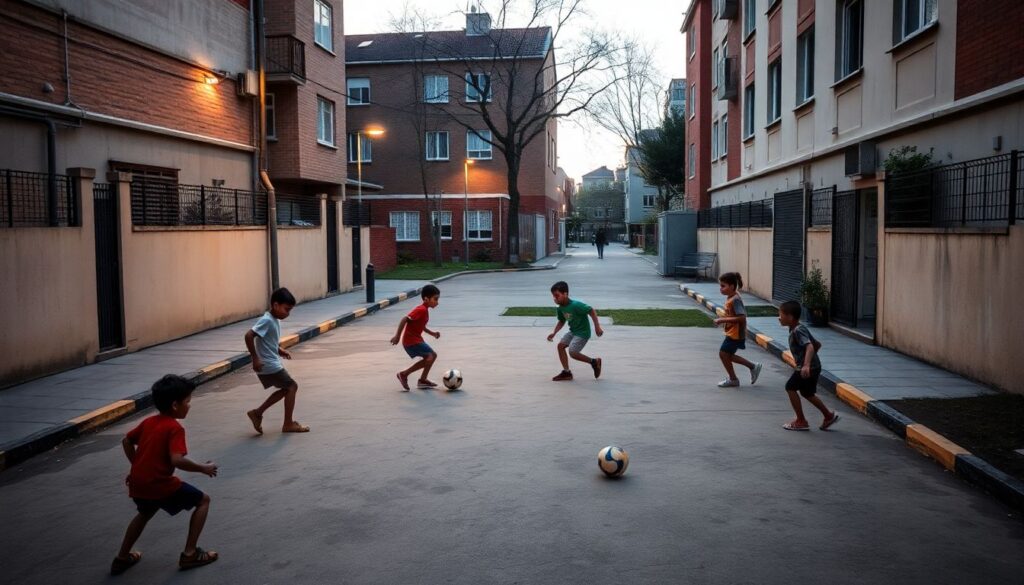
In many cities it is shrinking, not completely disappearing. If we manage to keep small, free spaces near homes and reduce over‑scheduling, then street football can adapt and survive in courtyards, semi‑pedestrian streets and shared schoolyards.
Can organised academies replace the benefits of potrero play?
They can complement some aspects but not fully replace them. If all football is coached and timed, then kids lose autonomy, mixed‑age interaction and constant self‑directed decision‑making that only street games provide.
How can parents support street football without neglecting safety?
If parents set clear boundaries – where, with whom, until what time – and get to know other families and neighbours, then children can enjoy semi‑independent play with a reasonable safety net. The goal is managed risk, not zero risk.
What role do local clubs and coaches play in saving street football?
If clubs publicly value free play and avoid overloading children with sessions and tournaments, then families feel allowed to prioritise informal games. Coaches can explicitly tell players that potrero time counts as valuable football education.
Is it worth fighting noise and space battles with neighbours?
Usually yes, if it is done respectfully. If communities negotiate schedules, zones and simple rules instead of total bans, then they gain livelier, safer public spaces where children are visible and active.
How do digital games and screens fit into this picture?
If screens are the default filler of any free moment, then outdoor play will always lose. If families apply simple rules – screens after outdoor time, not before – then children are more likely to go downstairs and start games.
What is the first small step a city can take to revive street football?
If a municipality designates even a few streets or plazas as ball‑friendly, protects them from parking and fast traffic, and communicates this clearly, then kids quickly reclaim those spaces and informal football returns.