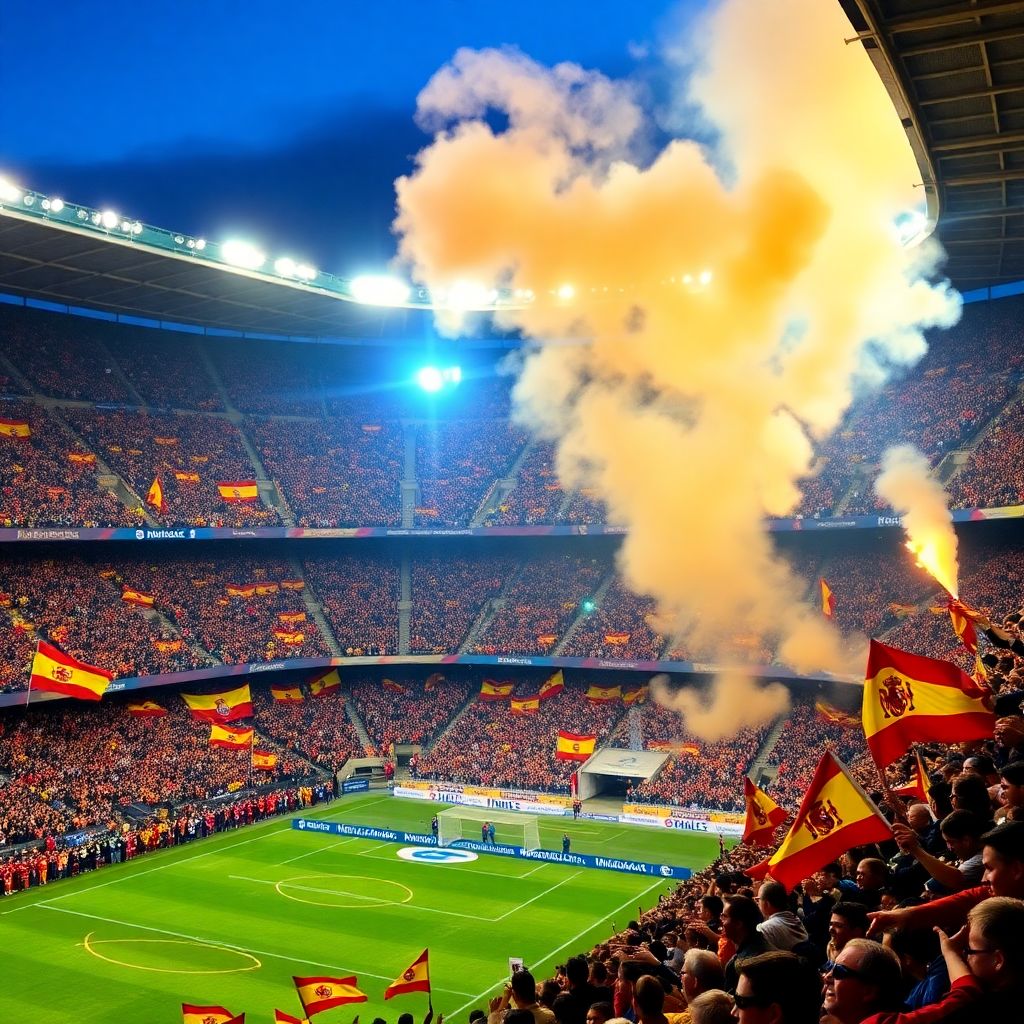
Football matters so much because it organises emotions, identities and hopes into a shared game that feels larger than everyday life. It offers belonging, beauty, rivalry and a simple but deep question: what is worth giving time, passion and loyalty to? Through football, people in Spain test answers to that question together.
Core concepts framing this analysis
- Football is a structured space where meaning, identity and values are played out in public.
- Rituals of fans turn matches into social glue, especially in local and regional contexts in Spain.
- The beauty of play gives aesthetic pleasure, similar to music or dance, but with uncertainty and risk.
- Rules and fairness shape our moral sense of justice, cheating and responsibility.
- Symbols, chants and media stories translate complex emotions into simple narratives of victory and defeat.
- Philosophical reflection on football can guide coaching, fan culture and policy choices.
What Football Reveals About Human Meaning
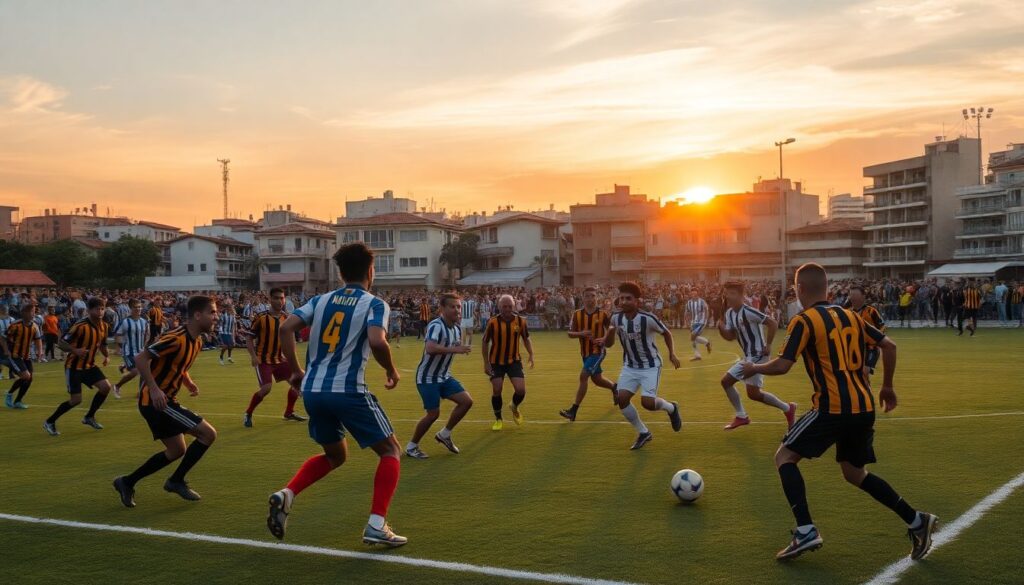
Philosophically, football is a small world where big human questions become visible: What is a good life? What is fair? Who are «we»? The pitch is limited, the rules are clear, yet emotions, conflicts and joys are as intense as in politics, art or family life.
In Spain, from barrio pitches to La Liga, football creates shared stories that cut across class, region and generation. A grandparent in Sevilla and a teenager in Bilbao may feel strongly about different clubs, but both live weekly cycles of hope, fear and celebration around the same sport.
Meaning appears through three main layers. First, personal: the joy of playing, the discipline of training, the pride of supporting a club. Second, social: rituals with friends, city rivalries, regional identities like Catalan or Basque pride. Third, symbolic: the idea that a club «represents» justice, beauty, rebellion or tradition.
When people say football is «only a game» and, at the same time, react as if results were life or death, they reveal something central: humans use games to rehearse serious values in a safe but emotionally real environment. The sense of the game is a mirror of the sense of life.
Ritual, Belonging and the Social Life of Fans
Ritual in football means repeated behaviours that give structure and shared meaning to fan experience. These rituals create and reinforce belonging, from small local clubs to global giants. Mechanically, they work through repetition, synchronisation and public visibility.
- Pre-match routines: Meeting always in the same bar, taking the same metro line to the stadium, wearing the same scarf. Example: friends in Madrid who never miss their pre-match caña and bocadillo before walking to the Bernabéu. The routine signals: «This is our time, our people.»
- Chants and songs: Singing together synchronises breathing, movement and emotion. In a packed stand at Mestalla or San Mamés, the shared song turns thousands of individuals into a single voice, giving a strong sense of «we exist together».
- Home-and-away identity: Fans treat «home» as sacred territory and «away» as a symbolic invasion. The long bus trip of away fans in Segunda División becomes a rite of loyalty, where effort proves commitment to the club.
- Season cycles: Each season starts with hope, moves through tension and ends in either relief, celebration or disappointment. Together, fans in Spain learn to handle loss, uncertainty and change through this yearly emotional education.
- Micro-rituals of superstition: Sitting in the same chair, using a particular jersey, or turning the TV off during penalties. Philosophically, these express the human desire to control fate, even when we know rationally we cannot.
- Commemoration and mourning: Minutes of silence, mosaics for legends, scarves left at stadium gates when a fan dies. Here football ritual touches directly on mortality and memory, linking individual lives to the long story of the club.
Through these mechanisms, the stadium, the peña and even the living room in a flat in Valencia become places where people re-learn who they are and to whom they belong. Belonging is not abstract; it is felt in shared songs, shared journeys and shared silence after a painful defeat.
Aesthetics of Play: Skill, Form and Narrative Pleasure
The aesthetics of football concern why a pass, a movement or a whole match can feel beautiful, even if your team loses. It connects technical skill, tactical structure and unfolding drama into a kind of live, risky performance.
- Combinative play and flow: The quick, short-pass style associated with some Spanish teams can be aesthetically pleasing as it creates visible patterns and rhythm. A fan enjoys the intelligence of movement, not just the final goal.
- Moments of individual brilliance: A dribble that breaks two defenders, or a goalkeeper’s impossible save, condenses practice, courage and creativity into a few seconds. These actions feel like small works of art that can be replayed forever in highlight videos.
- Collective pressing and solidarity: Beauty also appears in coordinated effort. When a mid-table side in La Liga presses together and defends as one block, spectators sense harmony and mutual support, not only tactical efficiency.
- Narrative arcs within a match: Coming back from two goals down, a last-minute equaliser, a heroic but losing performance by a small club in Copa del Rey: these stories feel like short novels. The pleasure is narrative, not only result-based.
- Stadium atmosphere as soundscape: The change in noise from tense silence to explosion of joy, the drums, the whistles: these aesthetic elements shape how the game feels, even through a TV broadcast into a flat in Barcelona.
- Ethical beauty: Acts of fair play-kicking the ball out when a rival is injured, helping an opponent stand up-show a form of moral grace that many fans find more «beautiful» than a cynical foul to stop a counter-attack.
Because the game is uncertain, aesthetic appreciation is always mixed with tension. You never know if a beautiful play will be rewarded. This tension between beauty and risk is part of why football becomes addictive and emotionally deep.
Mini-scenarios of philosophical use in everyday football life
Different people can use this philosophical lens in practical ways, in Spain and elsewhere:
- A parent with a stressed teenager: A mother in Valencia uses football training to teach her son about handling failure. After a lost youth final, instead of saying «it’s only a game», she asks what he learned about effort, teamwork and accepting unfair referee decisions.
- A coach of a grassroots team: A coach in a barrio of Sevilla introduces a short reflection circle after each match: «What did we do well together? What felt unfair? What are we proud of beyond the result?» This turns football into a school for values, not only tactics.
- A fan rethinking aggression: A lifelong supporter in Madrid notices he insults rival fans more when stressed at work. He starts using the walk to the stadium as a conscious ritual to release tension, deciding to chant for his team instead of against others.
- A teacher using football in class: A philosophy teacher in Bilbao assigns short ensayos filosóficos sobre el fútbol y la vida, where students link a specific match to questions about justice, loyalty or identity, instead of using only classical abstract examples.
Rules, Fairness and the Moral Texture of Competition
Rules in football are more than technical instructions; they create a moral world. Offside, fouls, yellow cards and VAR decisions define what counts as fair, what is seen as cheating and how responsibility is distributed between players, coaches, referees and institutions like La Liga or the RFEF.
Fans in Spain constantly make moral judgments: «He dived», «The ref is against us», «They don’t deserve this win». These judgments are not only emotional; they rely on implicit ideas about justice, merit and the purpose of competition. Is the aim simply to win, or to win within a spirit of respect?
Benefits of seeing rules as moral structures
- Clearer criticism of injustice: Instead of shouting generically at referees, fans and journalists can articulate whether a problem is with the rule itself (for example, offside interpretations) or with its application.
- Better youth education: Grassroots coaches can use controversial decisions to teach children about disagreement, respect for authority and how to protest ethically.
- Healthier rivalry: Recognising that both sides share the same basic rule framework makes it easier to see opponents as partners in a common game, not enemies to be destroyed.
- Stronger institutional trust: Transparent rules and procedures increase confidence in national and international bodies, reducing conspiracy thinking around big clubs and TV rights.
Limitations and tensions in rule-based morality
- Rules cannot cover every situation: Grey areas (soft penalties, handball in the box) show that judgment and context always matter. Fans want black-and-white answers where none exist.
- Winning can distort values: When survival in Primera División means big money, clubs may accept cynical tactics or time-wasting that respect the letter but not the spirit of the rules.
- VAR and the illusion of total justice: Technology can create the belief that perfect fairness is possible. In reality, frame selection, subjectivity and time pressure still leave space for disagreement and frustration.
- Cultural differences: What counts as «normal» contact or «honest» aggression varies between leagues and countries. Spanish football has its own unwritten norms, which may clash with foreign referees or viewers.
Symbols, Language and the Semiotics of the Match
Semiotics studies how signs create meaning. In football, colours, crests, chants and media headlines organise emotions into simple codes. These codes guide how fans see themselves and others, sometimes in helpful ways, sometimes dangerously.
- Myth of «pure football»: People speak about returning to a mythical time when football was «pure» and not dominated by money. In practice, economic, political and media influences have always been present; the myth simplifies history and can block realistic reforms.
- Confusing club with identity: Equating «being a real Madrileño» with supporting a specific club reduces complex local identities to a single symbol. This can exclude neighbours who support another team or are not interested in football at all.
- Glorifying hatred as passion: Calling hate for rival fans «passion» hides responsibility. It suggests insults and aggression are natural expressions of love for your team, instead of choices that can be guided and limited.
- Media narratives of heroes and villains: Sports talk shows in Spain often exaggerate conflicts, turning referees, managers or presidents into caricatures. Fans may then react to the narrative, not to the actual behaviour on the pitch.
- Ignoring women’s football as symbolic act: Treating women’s matches as secondary or optional sends a message about whose stories matter. Language like «fútbol» for men and «fútbol femenino» for women codes male football as the norm.
- Misreading commercial symbols: Scarves, shirts and tattoos feel like pure expressions of identity, but they are also part of a commercial system. Forgetting this can make fans see consumption as the only way to prove loyalty.
Becoming aware of these symbolic patterns allows fans to enjoy the emotional power of symbols-club songs, colours, classic derbies-without becoming prisoners of simplified, sometimes toxic, narratives.
From Theory to Practice: Coaching, Policy and Everyday Choices
Philosophical reflection on football is not an abstract luxury; it can inform how people coach, design competitions, consume media and behave as fans. A concrete mini-case from the Spanish context shows how ideas about meaning, ritual and fairness translate into practice.
Mini-case: redesigning a youth tournament in Spain
Imagine a municipal sports department in a medium-sized Spanish city that organises an annual youth football tournament. Traditionally, it has followed a simple competitive model: groups, knockout rounds, one champion, one trophy. Parents often shout at referees, children cry after big defeats, and coaches focus on quick results.
A small working group-two coaches, one referee, one teacher and a club coordinator-decides to rethink the tournament using philosophical questions:
- What kind of person should this tournament help to form? They agree on values: cooperation, resilience, respect, joy in play. Winning is important, but not the only goal.
- How can rituals support these values? They add pre-final handshakes, a shared photo of both teams, and a short joint warm-down after matches where players mix. They design a new entrance ritual for the final that highlights all teams, not only the two finalists.
- How can rules express fairness in a visible way? They limit playing time differences, so star players cannot play all the minutes while others sit. They create clear, simple guidelines for sideline behaviour and explain them to parents before the tournament starts.
- How can symbols and language change the story? Instead of a single «champion’s cup», they introduce three equal trophies: one for teamwork, one for fair play, one for creative play. Local media are asked to highlight these awards in their coverage.
Implementation is simple but intentional. A rough pseudocode of their design process looks like this (conceptually, not as software):
DEFINE values = [teamwork, resilience, respect, joy]
FOR each tournament_rule:
    IF rule does not support at least one value:
        MODIFY or REMOVE rule
FOR each ceremonial_moment in "opening, match, closing":
    ADD small ritual that makes values visible
UPDATE communication to parents, coaches, media
EVALUATE afterwards: did behaviours move closer to values?
Over a few years, the atmosphere changes: less aggression on the touchline, more emphasis on learning and friendship between schools. Here the philosophy of football-questions about meaning, ritual and justice-has a direct, measurable impact on how children in Spain experience the game.
People interested in going deeper can look for libros de filosofía del fútbol, follow specialised revistas y publicaciones de filosofía del deporte, explore cursos online sobre filosofía del deporte, or watch some of the mejores documentales sobre el sentido del fútbol as accessible entry points into these debates.
Practical questions readers commonly face
How can I enjoy football more without being destroyed by results?
Shift part of your attention from the score to the process: good movements, intelligent defensive work, fair play moments. Treat each match as a story with many protagonists, not only your team, and notice how your own emotions rise and fall.
Is it wrong that football means more to me than politics or news?
It is not automatically wrong; it shows that football organises your emotions and identity more directly. The key is to ask what values you live and learn through football, and whether they connect or conflict with your responsibilities in wider society.
How can I talk about football in a more philosophical way with friends?
Instead of arguing only about who was better, ask questions like «What do you think is fair in this situation?», «What does this club represent for you?» or «Why did that play feel so beautiful even though it failed?». Concrete moments keep the conversation grounded.
Can philosophical reflection actually change fan violence and hatred?
Reflection alone is not enough, but it can support better rituals, clearer rules and smarter communication by clubs, media and peñas. When leaders and fans become more aware of underlying values, they can redesign chants, banners and behaviours to reduce dehumanising messages.
How do I explain to someone who hates football why it matters?
Use comparisons they know: a season as a TV series, a derby as a big theatre premiere, a stadium as a temporary city festival. Emphasise the social and emotional aspects-friendship, shared tension, collective joy-rather than statistics or technical details.
Where can I start if I want to study the philosophy of football more seriously?
Begin with accessible libros de filosofía del fútbol or essays in revistas y publicaciones de filosofía del deporte, then move to broader philosophy of sport texts. Look for cursos online sobre filosofía del deporte at Spanish or Latin American universities, and complement them with mejores documentales sobre el sentido del fútbol that link theory and real matches.