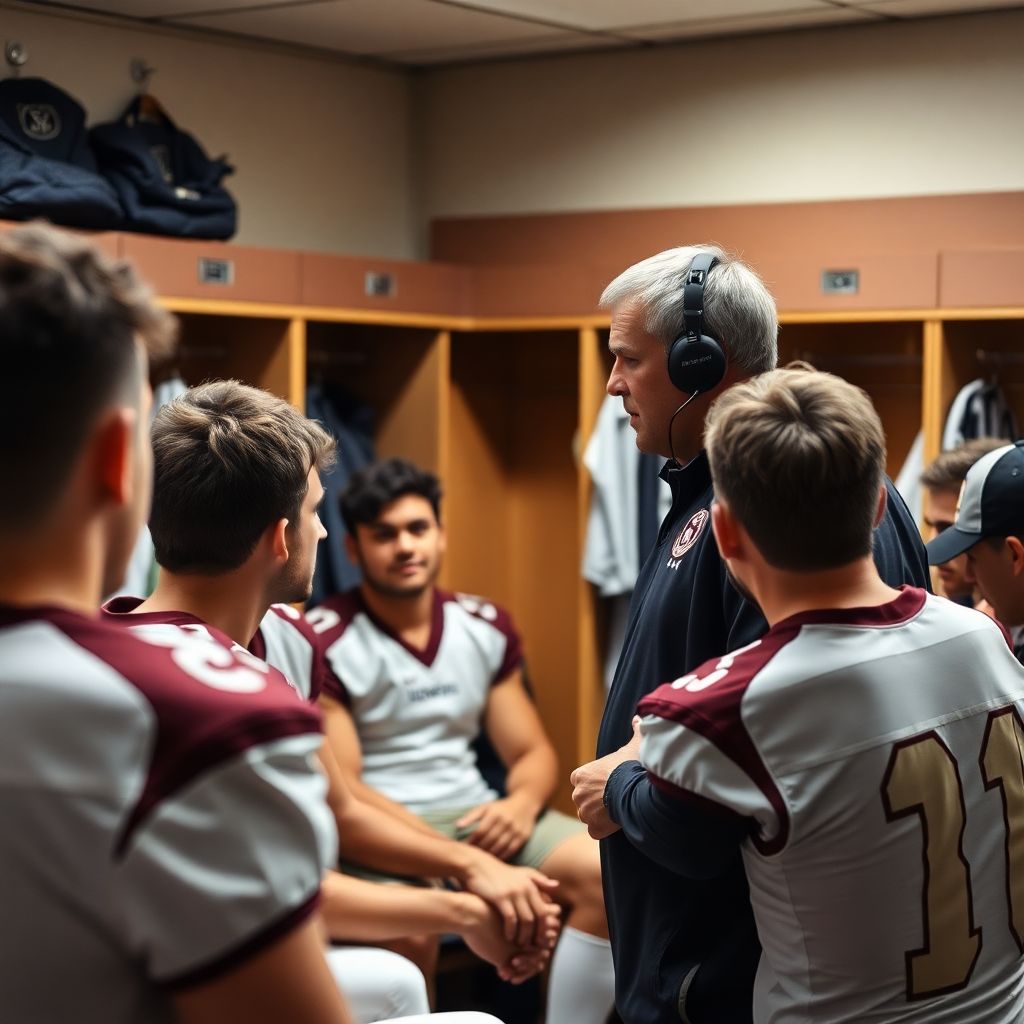
A philosophical coach in sport goes beyond motivation and tactics to help athletes and staff interpret effort, failure and success in meaningful ways. Compared with classic motivational leadership, this approach is slower to implant but more stable, with higher ethical demands and clearer long‑term impact on autonomy, resilience and team identity.
Core principles distinguishing the philosophical coach
- Works not only on performance, but on meaning: why we compete, train and sacrifice.
- Shifts from emotional speeches to structured dialogue and reflection rituals.
- Designs environments where values, decisions and behaviours are coherent and visible.
- Is explicit about power, ethical limits and psychological boundaries.
- Treats crisis, defeat and conflict as privileged learning moments, not only problems.
- Integrates leadership with education: every session communicates a worldview.
- Balances competitive pressure with long‑term development of persons, not just players.
Defining the philosophical coach: scope, roles, and limits
The philosophical coach is a sports coach who consciously uses ideas, questions and critical reflection to shape how a group understands itself and its mission. Their main resource is not rhetoric, but the capacity to transform narratives: from «we must win» to «this is how we want to compete and live together» within sport.
In this sense, liderazgo del entrenador deportivo stops being only a matter of motivating and organising, and becomes the art of architecting meanings: what counts as success, which sacrifices are acceptable, how we interpret injustice, luck or refereeing, and what remains non‑negotiable under pressure.
However, a philosophical coach is not a therapist, nor a substitute parent or spiritual guide. They use reflective tools inside clear performance and educational objectives. Personal trauma, clinical symptoms or family problems must be derived to specialised professionals; crossing this line is one of the main risks of this deeper style of leadership.
This redefinition has consequences for training. A short curso de coaching deportivo y liderazgo can introduce techniques, but building this identity usually demands longer processes such as a master en filosofía del deporte y coaching or sustained supervision, where the coach questions their own beliefs before trying to reshape those of others.
From motivation to meaning: theoretical foundations and models
Moving from classic motivational coach to philosophical coach involves a shift in how change is understood. Below are core mechanisms, from more accessible to more demanding in implementation and risk management.
-
Narrative reframing
The coach helps athletes re‑write their story: from «I always fail in decisive matches» to «under pressure I am still learning to implement my skills». This reduces learned helplessness and opens space for action without denying difficulty. -
Values‑based decision frameworks
Instead of «do whatever it takes to win», the team defines 3-5 guiding values (e.g. courage, respect, discipline) and uses them to resolve conflicts. The coach models how to argue from values, not from hierarchy or fear. -
Meaning‑centered motivation
Motivation is built on perceived significance («this matters to me and to us») rather than external rewards. Goals are connected to identity: who I am becoming by training this way, and who we are as a club or team. -
Critical thinking about sport culture
The group analyses messages from media, fans and federations (e.g. «only first place counts») and chooses which ones to accept or reject. This reduces manipulation by external pressure and helps protect athlete mental health. -
Dialogical leadership
Authority is exercised through well‑designed questions and listening, not only instructions. Athletes are invited to justify positions, anticipate consequences and reflect on the type of team they want to be part of. -
Embodied coherence
Philosophical leadership is transmitted via daily micro‑behaviours: punctuality, language after defeat, distribution of minutes, feedback style. The message «who we are» is carried by consistent patterns, not slogans.
Mini practice: three questions to turn a speech into a dialogue
To apply these foundations in the next training, replace a short motivational talk by this 10‑minute micro‑intervention:
- Ask: «What result would make today’s session meaningful for you, beyond the scoreboard?» Collect 3-5 quick answers.
- Ask: «What behaviour from us would express who we want to be as a team?» Write the key words on a board or in your notebook.
- Close with: «Name one small act you will try today to be closer to that identity.» After training, revisit and recognise concrete examples.
This simple structure is easy to implement and low‑risk. Deeper questioning about life goals or family issues should be avoided unless you have specific training and clear referral channels.
Dialogues, stories and questions: practical tools for building meaning
Philosophical coaching becomes real in the micro‑practices of each week. Below are typical scenarios where a coach can move from pure motivation to meaning construction, with notes on ease of use and main risks.
Scenario 1: Post‑defeat debrief focused on identity
- Practice: Instead of only analysing tactical errors, you ask: «What did this match reveal about our current identity? What are we proud of? What do we not accept as part of who we are?»
- Ease: Moderate; can be integrated into normal video or chalkboard reviews.
- Main risk: Sliding into blame or humiliation. Requires strict rules about respect and focusing on behaviours, not labels.
Scenario 2: Pre‑season workshop on shared values
- Practice: One 60-90 minute session where players in groups choose 3-5 core values and concrete behaviours that express them (e.g. value «respect» → action «no mocking teammates after mistakes»).
- Ease: High, especially if you already run team‑building activities; works well after a formación entrenadores liderazgo motivacional.
- Main risk: Values become decorative if staff do not live them in selection, punishment and reward decisions.
Scenario 3: Individual conversation after a benching decision
- Practice: The benching is explained not only tactically, but in terms of long‑term role and development: «How do you see your contribution to this project in the next months? What skills must grow for that to be real?»
- Ease: Medium; requires time and emotional availability from the coach.
- Main risk: Creating dependency if the player expects philosophical conversations before accepting any decision.
Scenario 4: Storytelling around club history
- Practice: Use stories of past teams, veterans or local community to illustrate the club’s way of competing and living adversity. Invite players to locate themselves inside that longer story.
- Ease: High; stories are natural in the locker room.
- Main risk: Romanticising the past to justify unhealthy practices («we have always overtrained»).
Scenario 5: Crisis meeting during a losing streak
- Practice: Instead of more slogans, you guide a structured reflection: «What are we learning about ourselves now that we could not learn in an easy season?» «Which non‑negotiables will we keep even if we continue losing?»
- Ease: Low; emotional climate is tense.
- Main risk: If mishandled, can amplify despair or conflict. Recommended only for coaches with stronger preparation in group facilitation.
Used with measure and clear boundaries, these tools push you beyond «cómo ser un entrenador líder motivador» and into the more demanding territory of meaning‑making leadership.
Architecting environments: designing rituals, routines and systems
Philosophical leadership is not only about what the coach says, but about how the environment is structured. This is where the coach becomes an architect of meanings, shaping daily experience so that the desired philosophy is lived rather than preached.
Advantages of environmental and ritual design

- Stability over speeches: Well‑designed routines (e.g. brief value check‑in at start of training) maintain direction even on emotionally bad days.
- Scalability: Systems (meeting formats, code of conduct, peer mentoring) can survive staff changes and be shared across age groups.
- Transparency: Decisions become more predictable, reducing perceptions of arbitrariness or favouritism.
- Alignment with development: Rituals around reflection, feedback and responsibility are powerful educational tools, especially in academies.
Limits and risks of this architectural approach
- Rigidity: Over‑designed rituals can become empty theatre that suffocates spontaneity and joy.
- Hidden workload: Creating and maintaining systems takes time and cognitive energy; if you are overloaded, quality drops quickly.
- Symbolic violence: Imposed rituals (forced confessions, public rankings) can invade privacy and humiliate athletes.
- Cultural mismatch: Imported practices from other countries or sports may clash with local norms and backfire.
Comparing approaches: motivational vs philosophical coach
| Aspect | Classic motivational coach | Philosophical coach as architect of meanings |
|---|---|---|
| Ease of implementation | High: quick speeches, slogans, emotional activation. | Medium‑low: needs planning, reflection time and consistent behaviours. |
| Typical short‑term effect | Energy spike, sometimes followed by rapid decay. | Gradual change in climate and decision patterns. |
| Main risks | Emotional dependence, tolerance of unhealthy sacrifices. | Overstepping psychological limits, ideological imposition. |
| Long‑term potential | Limited if not supported by structures and education. | Deep identity change and autonomous, resilient athletes. |
Checklist: basic elements of a meaning‑aligned environment
- Clear, visible team values with 1-2 practical behaviours attached to each.
- Regular, time‑bounded spaces for reflection (start/end of week, post‑tournament).
- Procedures that protect dignity in feedback, selection and sanction.
- Shared language for learning from mistakes («experiments», «iterations», «lessons»).
- Mechanisms for athletes’ voice (captain councils, anonymous suggestions, periodic surveys).
Assessing transformation: indicators, metrics and qualitative evidence
Because philosophical coaching is subtle, many coaches underestimate or exaggerate its impact. Below are frequent mistakes and myths when trying to evaluate this kind of leadership.
-
Myth: «If results improve, the philosophy is working»
Performance is influenced by many variables. A more honest indicator is whether behaviours coherent with declared values persist under pressure, even when results are bad. -
Mistake: ignoring athlete voice
Coaches often rely only on their own perception. Short, anonymous questionnaires and small group interviews give richer feedback about how players experience the environment. -
Myth: depth equals long meetings
Some believe philosophical leadership requires long, dramatic sessions. In reality, 5-10 minute, well‑framed dialogues repeated weekly can be more transformative than occasional marathons. -
Mistake: measuring only emotions
Feeling «motivated» after a talk says little about long‑term transformation. Pay attention to decision patterns: who takes responsibility, how conflicts are solved, how players react to unfair events. -
Myth: this is only for elite or academic contexts
Even grassroots coaches without a master en filosofía del deporte y coaching can apply basic principles: coherent values, respectful dialogue, reflective rituals. The sophistication can grow with your training, but the foundations are accessible.
Simple tools for ongoing assessment
- Monthly reflection pulse: Ask 3 questions anonymously: «Do you feel safe to express disagreement?», «Do you understand why key decisions are taken?», «Do you see coherence between our values and actions?» Track changes over the season.
- Behavioural indicators: Before the season, define 3-5 observable signs of your philosophy (e.g. players helping each other after errors). After each matchday, note 1-2 concrete examples, or absence, of each indicator.
Boundary cases: power, ethics and cultural sensitivity in leadership
Philosophical leadership intensifies the asymmetry of power: the coach not only controls minutes and drills, but also influences how athletes interpret life events. This makes ethical limits and cultural humility non‑negotiable.
Mini‑case: when meaning‑making goes too far
A young coach, freshly certified from a curso de coaching deportivo y liderazgo, starts weekly «deep conversations» with his youth team about family, school and personal fears. Players initially feel special and supported. Over time, some become uncomfortable: they sense that playing time is influenced by how «open» they are in sessions.
Parents complain that intimate issues are discussed without consent. The club intervenes: reflective time is reframed strictly around sport experience; the coach is supervised and redirected to further training on ethics and boundaries. Trust slowly returns, but the case illustrates how even good intentions, if not contained, can become intrusive and coercive.
For anyone asking cómo ser un entrenador líder motivador without crossing red lines, the lesson is clear: stay inside your competence; never condition opportunities on personal revelations; and where doubt exists, prioritise privacy, informed consent and collaboration with qualified professionals.
Practitioner concerns and concise clarifications
Is philosophical coaching realistic in amateur Spanish clubs with little time?
Yes, if you work with micro‑interventions: 5-10 minute dialogues integrated into sessions, simple rituals and clearer language around values. It is not about adding extra meetings, but about using existing spaces more intentionally.
Do I need formal university studies to apply these ideas safely?
Not necessarily, but structured learning such as a formación entrenadores liderazgo motivacional or similar helps. Whatever your path, seek supervision, read broadly and keep clear limits: you are a coach, not a therapist or saviour.
How do I start if my team is used only to fiery motivational talks?
Begin by adding questions to your usual speeches, then gradually design small reflection spaces. Explain the purpose clearly: to align behaviours with shared values and protect everyone from the volatility of pure emotion.
What if club management only cares about short‑term results?
Translate philosophical benefits into performance language: more autonomy, better decision‑making under pressure, lower internal conflict. Start with low‑cost changes and show behavioural improvements before pushing for deeper reforms.
How can I avoid imposing my personal worldview on players?
Use questions more than statements, invite disagreement and make explicit that certain areas (religion, politics, private life) are voluntary and not linked to selection. Encourage multiple perspectives and co‑created meanings.
Is this approach compatible with very authoritarian tactical styles?
Partially. You can maintain clear tactical authority while still giving voice in value definition, reflection on defeats and management of conflict. Extreme authoritarianism, however, contradicts the core of dialogical, meaning‑centered leadership.
What is the first concrete step to move towards philosophical leadership?
Schedule one short, recurring ritual per week (for example, a 10‑minute reflection at the end of the main training) where the team connects behaviours, results and values. Protect this space consistently for a full month before adding more complexity.