
The classic No.10 is disappearing because modern football demands more pressing, physicality and versatility than the old free playmaker usually offers, while economic and cultural pressures reward multi-role players. Coaches can still protect creativity by redefining the role, adapting structures, and adding defensive tasks without killing the player’s instincts.
Core functions of the classic No.10
- Receive between the lines and turn under pressure to connect midfield and attack.
- Dictate tempo in the final third with pauses, accelerations and changes of rhythm.
- Create advantages via last pass, through balls and disguised passes into the box.
- Occupy central pockets to attract rivals and free wide or deep teammates.
- Arrive late in the box to finish cut-backs or second balls.
- Coordinate combinations in tight spaces (wall passes, third-man runs, overloads).
Historical evolution of the No.10 role
The classic No.10 emerged as the team’s main creative hub: technically superior, with freedom to roam centrally, minimal defensive responsibility and maximum influence on the ball. In Argentina and Spain this figure was often called enganche or mediapunta, literally the link between midfield and forwards.
In early 4-3-1-2 or 4-4-1-1 systems, the No.10 operated as a pure enganche behind two strikers. The team structure was built to feed this player and protect him defensively, often with two holding midfielders. The evolución táctica del mediapunta clásico is closely tied to the disappearance of two-striker systems at elite level.
As 4-2-3-1 and later 4-3-3 spread, the central attacking midfielder role stayed but changed. The No.10 had to press, cover passing lanes and coordinate triggers. In Spain’s La Liga, many «10s» shifted wide or deeper, becoming interiors, false wingers or advanced No.8s to survive in enganche clásico fútbol moderno contexts.
This gradual shift explains the perceived desaparición del número 10 en el fútbol: the shirt number still exists, but the traditional function of a slow, untouchable playmaker with no defensive work is almost gone at top level, especially in high-intensity leagues.
Tactical reasons behind its decline
- Pressing and counter-pressing intensity: In 4-3-3 or 4-2-3-1 high presses, every player must close passing lanes and trigger pressure. A passive No.10 leaves a hole in the first line of pressure, making the block easier to break.
- Need for central compactness: Modern coaches demand narrow, compact blocks. A free playmaker not tracking midfielders creates central gaps that opponents can exploit with third-man runs or half-space rotations.
- Transition defence vulnerability: When the ball is lost, a static No.10 above the ball slows counter-pressing. Teams become exposed to direct counters through the middle, particularly if full-backs are high.
- Reallocation of creativity to wings: In modern 4-3-3, much creativity has moved to inverted wingers. They receive wider, with more space and fewer markers, reducing the need for a central, static creator.
- Data-driven valuation of off-ball work: Tracking data makes it easy to see pressing intensity, distances covered and defensive actions. Clubs now measure what the eye often forgave in classic 10s.
- Positional play (juego de posición): Structures like 3-2-5 or 2-3-5 in possession prioritise occupation of zones and triangles over total freedom. The 10 must respect height and width rules, limiting his old improvisation.
Mini-scenarios: how this looks in real matches
- 4-2-3-1 vs 4-3-3: Your team presses a 4-3-3 build-up. If the No.10 does not jump to the pivot and cover his shadow to one centre-back, the rival pivot will always be free, breaking your press with one pass.
- Counter after losing the ball: You attack with full-backs high and the No.10 between lines. When you lose the ball, the 10 walks. The rival No.6 runs past him into space, creating a 3v2 counter on your centre-backs.
- Block defending deep: In a 4-4-1-1 mid-block, the 10 does not drop onto the rival pivot. Your two central midfielders are overloaded 3v2, forced to step out, and the back line is constantly unprotected.
For coaches, these scenarios explain por qué ya no se usa el 10 clásico en el fútbol in its pure form: the tactical cost in transitions and pressing is too high unless the structure is heavily adapted.
Economic and market forces reshaping squads
Beyond tactics, the market strongly influences the rol del número 10 en el fútbol actual. Clubs want flexible players who can occupy several positions across the attacking line and midfield. A specialist No.10 who cannot play wide or as an interior has less transfer value.
- Squad spots and versatility: With limited non-EU slots and registration rules, clubs prefer attackers who can be No.10, winger and false 9. A one-role enganche is a luxury many squads cannot afford.
- Salary and amortisation logic: High-wage players are expected to play almost every game and in multiple competitions. A classic 10 that only fits specific systems is a risky investment for sporting directors.
- Academy profiling: Youth academies in Spain increasingly train «universal» attacking midfielders, comfortable pressing, running in behind and defending transitions. Pure, static playmakers are less produced, so fewer reach professional level.
- Analytics and recruitment models: Data models highlight pressing actions, high-intensity runs and defensive duels as predictors of success. Players who score poorly in these metrics often drop in recruitment shortlists, even if they are creative.
- Television and entertainment pressure: Clubs fear being physically outmatched in big televised games. They tend to choose more dynamic profiles, even at the cost of a bit of creativity, to avoid looking «soft» in transitions.
Cultural shifts and coaching philosophies
These tactical and economic realities have changed how coaches talk about the enganche and how they design training. The same evolution explains much of the enganche clásico fútbol moderno debate: it is less about whether the 10 is «good» or «bad» and more about fitting him safely into team principles.
Advantages of moving away from the classic 10
- Higher collective intensity in pressing and counter-pressing across the front three or four.
- Better central compactness, especially when midfielders are required to cover wide channels.
- More tactical flexibility to switch between 4-3-3, 4-2-3-1 and 3-4-3 without substitutions.
- Clearer training focus on collective automatism instead of individual inspiration.
- Easier integration of data and physical metrics into selection and game plans.
Limitations and risks of eliminating the classic 10
- Loss of spontaneity and unexpected passes that break low blocks.
- Over-reliance on wide players for creativity, making the team predictable if wingers are neutralised.
- Difficulty managing tight games where one player with different rhythm could change tempo.
- Young talents with high technical quality may be forced into roles that hide their best virtues.
- Supporters and dressing rooms can miss a symbolic leader who takes responsibility in the final third.
Modern positional equivalents and hybrid profiles
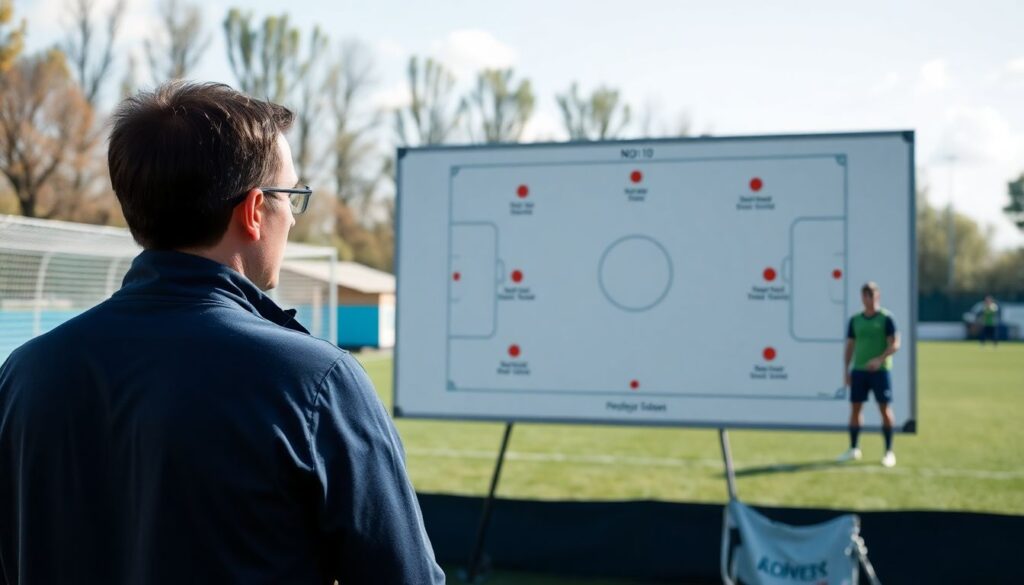
Instead of disappearing completely, the old mediapunta has been redistributed into several positions. Understanding these hybrid profiles helps coaches protect creativity while satisfying modern tactical demands and avoiding common mistakes when transitioning away from a classic No.10.
Comparison of creative roles in modern systems
| Role | Main zones | Typical systems | Key demands |
|---|---|---|---|
| Classic No.10 (enganche) | Central pocket between lines | 4-3-1-2, 4-4-1-1 | Last pass, low defensive work, free roaming |
| Attacking interior (advanced No.8) | Half-spaces, box arrivals | 4-3-3, 4-1-4-1 | Pressing, late runs, combination play |
| Inverted winger / inside forward | Half-space from wide starting point | 4-3-3, 4-2-3-1 | 1v1, shooting, diagonal passes |
| Second striker / false 9 | Between centre-backs and pivots | 4-4-2, 4-3-3, 3-4-3 | Drops to link play, presses centre-backs |
Typical misconceptions and coaching traps
- «The 10 is dead, we don’t need creative players»: Creativity is still decisive. The change is in where and how it appears: half-spaces, wings and deeper interiors, not just a free player in the central pocket.
- Forcing a gifted 10 to become a pure winger: Moving a playmaker to the touchline without support can waste his vision. He needs inside lanes to combine, underlaps from full-backs and interiors close by.
- Ignoring defensive learning curve: Converting a 10 into an interior or pressing 9 requires time. If you demand perfect pressing from day one and punish every mistake, you will kill his creativity and confidence.
- Removing freedom completely: Over-rigid positional play can turn former 10s into robots. They must still have micro-freedoms (for example, allowed to swap sides in the final third or drop a line to overload build-up).
- Copying elite models without context: Emulating top clubs that play without a classic 10, but lacking their physical level and automatisms, often creates sterile possession with no one assuming responsibility between lines.
Handled carefully, the transition can preserve the essence of the playmaker while making him compatible with pressing and positional rules, rather than accelerating the desaparición del número 10 en el fútbol within your own team.
Practical coaching drills and transition strategies
To move from a system centred on a classic 10 towards a more modern structure, coaches in Spain and elsewhere can follow safe, progressive steps that respect the player’s strengths while introducing new behaviours.
Stepwise transition plan from classic 10 to modern interior
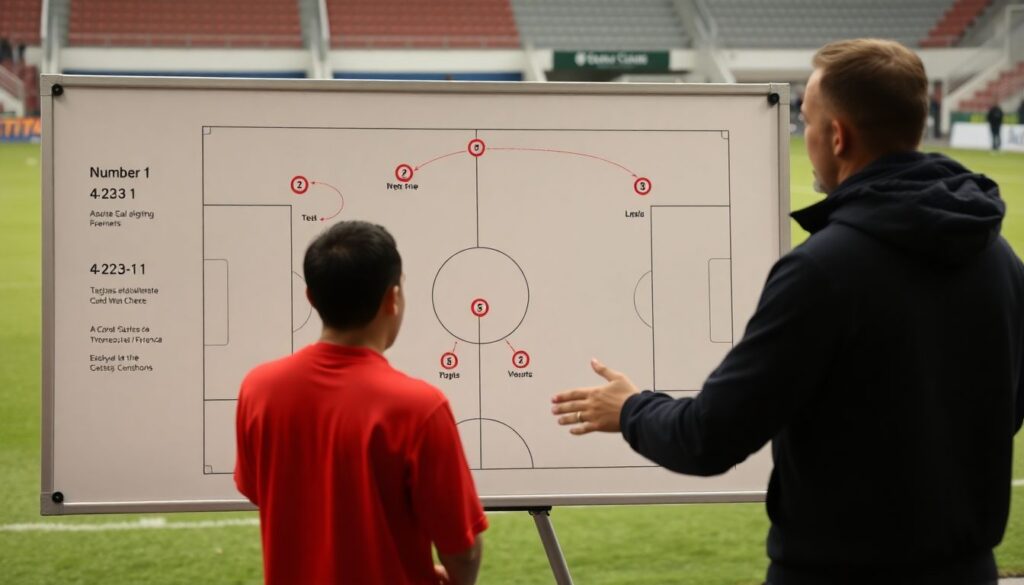
- Role audit in your current system
- Analyse where your 10 receives, where he loses the ball and his current defensive effort.
- Identify if he is closer to an interior (likes to drop) or a second striker (likes to stay high).
- Micro-adjustments before structural changes
- In your existing 4-2-3-1, give the 10 two clear pressing triggers (for example, back pass to centre-back, sideways pass to pivot) instead of generic «press more».
- Add one simple defensive rule in transitions: nearest five seconds of sprint towards the ball.
- Introduce hybrid positioning
- In possession, ask the 10 to start slightly in the right or left half-space, mirroring the role of an attacking interior in 4-3-3.
- Out of possession, maintain the old 4-4-1-1 shape so he is not overloaded with new tasks at once.
- Conditioned games for new behaviours
- Run 7v7+2 floaters where your former 10 must make at least one deep run into the box every attack.
- Reward goals that come from his third-man runs or regains after pressing, not only from his assists.
- Gradual formation shift
- Once the player is comfortable, move to a 4-3-3 with him as the advanced interior on his stronger foot side.
- Keep a «plan B» where he returns to central 10 position for specific phases (for example, last 15 minutes vs low block).
Example drill: protecting the playmaker within a pressing framework
Organisation: 8v8 in a 40x30m area, two mini-goals on each end. One team builds in 2-3-3 shape with a playmaker in the central pocket. The other defends in a 4-3-1 mid-block.
Rules: The playmaker’s team must find him between lines before finishing. After any loss, they have five seconds to recover the ball; otherwise, the defending team can counter to either mini-goal. Coach freezes play when the 10 is passive in transition and shows the safe sprint lines he should take.
This type of drill links the identity of the classic 10 with modern pressing demands, offering a realistic path to adapt without destroying his creative instincts and helping coaches answer practically por qué ya no se usa el 10 clásico en el fútbol in its old form, yet how to protect its essence.
Common practical doubts about replacing the No.10
Can a youth team still play with a pure classic No.10?
Yes, but with clear limits. At youth level in Spain, you can give one player more freedom in the central pocket, yet you should already introduce simple pressing rules and basic transition responsibilities to prepare him for senior football.
Is it safer to turn a classic 10 into an interior or into a winger?
Most often, interior is safer. It keeps him close to central spaces and combinations he understands. Turning him into a touchline winger works only if he has pace and 1v1 ability; otherwise, you may hide his strengths.
How do I protect my defensive block if I insist on using a 10?
Use a double pivot behind him and clear pressing rules for the front four. Ask the 10 to screen the rival pivot and to sprint back into midfield lines on loss of possession rather than waiting next to the striker.
Can data and analytics justify keeping a classic No.10?
They can, if his expected assists, key passes and deep progressions clearly outweigh his defensive weaknesses. However, you should still design a structure and pressing scheme that covers his flaws, especially in transition defence.
What is the main risk when removing the No.10 from my system?
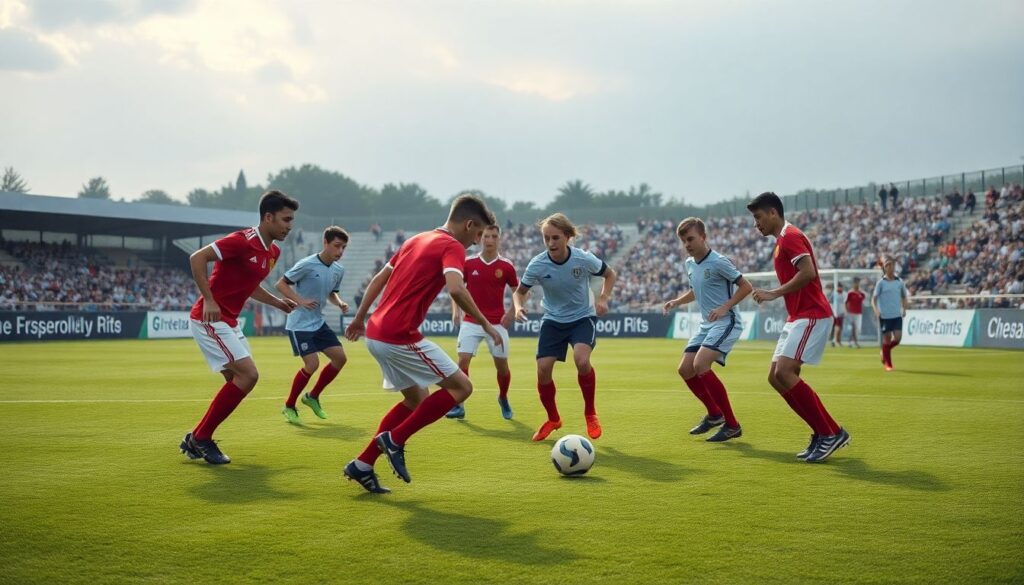
The main risk is losing your main reference point in the final third. If you take him out without redistributing creative tasks to interiors, wingers or full-backs, your team may circulate the ball but struggle to generate high-quality chances.
How quickly should I implement a new role for my 10 during the season?
Progressively. Start with micro-tasks over three to four weeks in training and games before changing his official position. Big structural changes during congested match periods often damage performance and the player’s confidence.
Is the No.10 shirt number still meaningful in modern squads?
Symbolically, yes. Many fans and players associate it with leadership and creativity. Tactically, though, the player wearing 10 might now be an interior, winger or false 9; the number no longer guarantees a traditional mediapunta role.