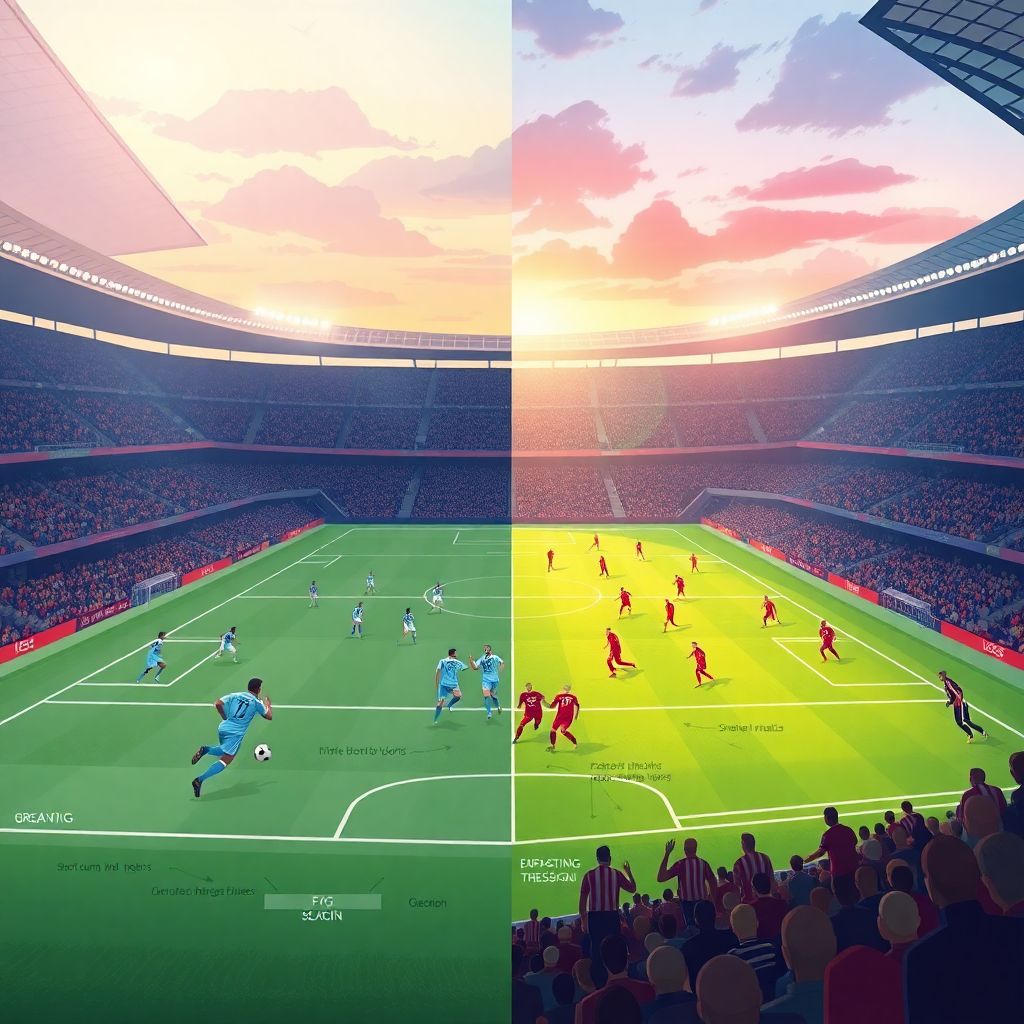
Beauty in football sounds romantic, almost mystical. Yet every weekend, millions of people argue online about which team actually plays “well”. One fan calls tiki-taka art, another calls it sterile. Someone worships catenaccio, someone else falls asleep. So, does objective beauty in football exist, or is it all just taste plus good marketing? Let’s unpack this in a practical, down-to-earth way.
—
How people usually define “beautiful football”
Two big camps: the aesthetes and the pragmatists
When supporters argue about fútbol bonito qué es, они редко спорят о фактах — чаще о приоритетах. Roughly, you see two big groups:
1. Those who value how the team plays (aesthetes).
2. Those who value what the team achieves (pragmatists).
Most of us are somewhere in between, but understanding the extremes helps you analyze games more clearly.
Long pass from theory to practice:
– The aesthete enjoys a clean build-up from the back, third-man runs, perfect body orientation between the lines. A 3–2 win with 600 passes and 15 combinations in the final third feels like a masterpiece.
– The pragmatist smiles when their team wins 1–0 with two shots all game. Good block, compact lines, a lethal counter: job done, beauty enough.
And here’s the twist: both can be watching the same match and walk away with opposite evaluations of how “beautiful” it was.
—
Case study: Guardiola’s Barça vs Simeone’s Atlético
Take a real clash of philosophies.
– Guardiola’s Barcelona (2008–2012) is often taught in academies as the textbook of “good football”: positional play, short passing, constant occupation of spaces. For many fans and coaches, this is the better candidate for *mejor estilo de juego en el fútbol* because it is both dominant and aesthetically pleasing.
– Simeone’s Atlético de Madrid (2014–2017), on the other hand, built its identity on suffering without the ball, brutal compactness, and ruthlessly efficient transitions.
Watch a Champions League tie between them:
– One side sees Barça’s endless circulation as art.
– Another side admires Atlético’s ability to survive waves of pressure and then strike with two passes.
Objectively, both are tactically sophisticated. But which one is “beautiful”? That’s where taste kicks in.
—
Objective elements vs subjective taste
What we can measure (more or less) objectively
Some aspects of “good play” really are measurable:
– Technical execution: first touch quality, pass accuracy under pressure, difficulty of skill.
– Tactical coherence: distances between lines, synchronized pressing, clear patterns in attack.
– Creativity and problem-solving: how a team breaks a low block, how it adapts to opponent changes.
– Rhythm and control: whether a team can dictate tempo and territory.
You might not agree that these *look* beautiful, but you can at least evaluate how well a team executes them.
Numbers help here. Modern analysts use:
– Packing metrics (how many opponents a pass takes out),
– xT (expected threat) and xG to judge how dangerous sequences really are,
– Tracking data to see how coordinated pressing and covering are.
A crisp diagonal pass that wipes out five pressing players isn’t just pretty; it’s also objectively valuable.
—
What remains stubbornly subjective
Some things can’t be pinned down to graphs:
– Do you prefer a slow positional attack or a wild end-to-end game?
– Does a 0–0 full of tactical details excite you, or feel boring?
– Do you enjoy long-ball, second-ball chaos, or does it look “ugly”?
Cultural background plays a huge part.
In Brazil, Argentina, or Spain, a crowd may boo their own team for winning “badly”. In Italy or Uruguay, a smart 1–0 in a tense away fixture may be applauded as high art. Same reality, different aesthetic lens.
So, objective beauty in football? You can isolate objective quality, but “beauty” always passes through taste.
—
Different approaches to “beautiful football”
Four main lenses to evaluate style
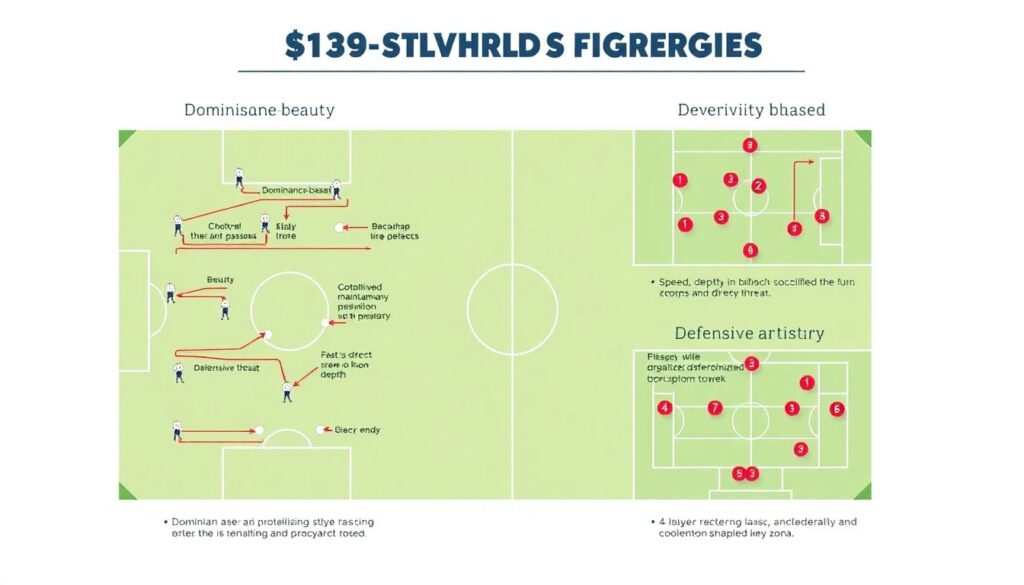
If you want a clearer framework — for coaching, analysis, or just smarter debate — you can compare styles of play using four lenses:
1. Dominance-based: Beauty is controlling the ball and space.
2. Verticality-based: Beauty is speed, depth, and direct threat.
3. Defensive artistry: Beauty is collective suffering, structure, and clean sheets.
4. Chaos and improvisation: Beauty is spontaneity and broken rhythm.
Let’s tie those to actual teams and eras.
—
Real-world cases for each lens
1. Dominance-based
– Case: Manchester City under Guardiola (2018–2024).
High possession, staggering positional patterns, constant overloads. For many analysts, that’s the clearest answer to “equipos famosos por jugar fútbol ofensivo y vistoso”. They suffocate you with the ball and keep you pinned in your box.
2. Verticality-based
– Case: Liverpool under Klopp (2016–2022).
The beauty here is in the punch: regaining the ball and charging at opponents before they can recover. Long diagonal to the winger, cut-back, finish. Fewer passes, more impact. It feels like rock music compared with City’s classical orchestra.
3. Defensive artistry
– Case: Italy at Euro 2021… but also classic catenaccio teams.
Even when Italy played more proactively in 2021, the cultural roots show: defensive line coordination, timing of covering runs, perfect anticipation. For connoisseurs of defending, a 1–0 with flawless back four movement is as beautiful as a 4–3.
4. Chaos and improvisation
– Case: Many South American league derbies.
The pitch is imperfect, the tempo insane, tackles fly in. Creative players improvise in tight spaces, combining street football skills with formal tactics. It might look messy to a strict positional-player, but it’s rich in emotion and individual genius.
None of these are “wrong”. They just optimize different parts of the game.
—
Role of technology in how we see beauty
Data, VAR and endless replays: how tech shapes taste
Technology doesn’t just change how teams play; it also changes how we experience beauty.
Analytics, VAR, 4K broadcasts, tracking cameras — all these tools alter what fans notice and value.
—
Pros of technology for appreciating “good football”
Long story short, tech can actually *teach* your eye:
– Better understanding of patterns
– High-quality videos of buenas jugadas y fútbol bonito with tactical overlays let you rewatch sequences slowly. You see the pre-assist run, the dummy, the block on a defender that opened the passing lane.
– Tools like WyScout and InStat (often used in clubs) provide clips filtered by “patterns of play”, so coaches and players can study not just the goal, but the whole construction.
– More objective evidence
– xG and other models show if what looks like domination is actually chance creation.
– Pressing metrics can prove a team isn’t just “running a lot”, but pressing in a cohesive, efficient way.
– Education for coaches and fans
– Modern libros y cursos sobre táctica y estética del buen juego en fútbol use data visuals and clip analysis to train coaches’ eyes. Over time, what looked “random” starts to look like structured movement.
In short, tech can move you from “I just know what I like” to “I know why I like this action”.
—
Cons of technology for aesthetics
On the flip side, tech can flatten the experience.
– Obsession with numbers
If you reduce games to xG charts, you can miss context: game state, opponent quality, psychological pressure. A heroic low-block display might look “bad” on the stats sheet but be incredibly sophisticated live.
– Fragmented watching
Watching only highlight reels can distort your sense of beauty. A 7-second clip of a backheel assist tells you nothing about the 20-minute positional work that created the space.
– VAR and rhythm
Stoppages for VAR checks break emotional flow. For many fans, the beauty of football includes the immediacy of celebration; tech delays that catharsis.
So use tech as a lens, not as a judge. Let it help you see more without replacing your own impressions.
—
How to choose your own criteria of “beautiful football”
A simple three-step method to clarify your taste
If you want to argue less emotionally and more clearly, set up your own hierarchy. Here’s a practical way:
1. Decide your top priority
– Is it control, excitement, creativity, or resilience?
– Pick just one primary value first.
2. Pick two secondary criteria
– Examples: “intelligent pressing” + “fluid combinations in the final third”, or “compact defence” + “efficient transitions”.
3. Build your “beauty checklist”
– Before a match, note what you will look for:
– Where do you want to see superiority (possession, transitions, box defending)?
– What would be a beautiful goal for you (from build-up, from counter, from set-piece creativity)?
Next time someone asks you which is the mejor estilo de juego en el fútbol, you’ll answer not with a club name, but with a profile: “I like high pressing, vertical attacks, and backs overlapping aggressively; that’s my beauty standard.”
—
Practical watching drill: train your aesthetic eye
Try this during a big game:
– First half: ignore the ball for five minutes. Watch the back four or the midfield line. How do they slide, cover, and shift?
– Next five minutes: focus only on the player between the lines (10, false 9, or advanced 8). How do they scan, move off the shoulder, time their runs?
– Final stretch: watch transitions only — note how many players join the attack, how quickly team shape transforms.
You’ll quickly see that “beauty” isn’t just the last pass. It’s the choreography of 7–8 players away from the ball that makes that pass possible.
—
Recommendations for fans, players, and coaches
If you’re mainly a fan
Keep the joy, but sharpen the analysis.
– Watch full matches, not only highlight compilations.
– Alternate: one game just to enjoy, another with notebook in hand to capture patterns.
– Compare two equipos famosos por jugar fútbol ofensivo y vistoso — for example, Napoli under Spalletti and City under Guardiola — and write down what *specifically* differentiates their attacking play for you.
Your arguments online will become less “your team is boring” and more “your team doesn’t create numerical superiority in the half-spaces, that’s why it looks flat”.
—
If you’re a player
Beauty for a player is tied to effectiveness in a role.
– Study your position with targeted clips. If you’re a full-back, don’t just watch dribbles; watch timing of overlaps, body positioning before receiving, and coordination with the winger.
– Use training footage: film small-sided games, then flag actions you feel proud of. Later check: were they aesthetically pleasing *and* tactically useful, or just flashy?
The sweet spot: plays that your coach loves in the meeting room and that also get “wow” reactions in the stadium.
—
If you’re a coach or analyst
You’re the main curator of “beauty standards” for your group.
– Define your non-negotiables. Is it compactness? Courage to play from the back? Aggressive pressing after loss?
– Show players not just goals, but full attacking sequences that match your ideal identity.
– Use a clear language: instead of “we must play nicer”, say “we want three-player combinations on the wing before crossing” or “we want to fix the back line and release runs from the opposite 8”.
Over time, your team will start to associate *beauty* not with tricks, but with executing your game model with clarity.
—
Trends in “beautiful football” by 2026
Hybrid styles instead of dogmas
Looking at top-level football leading into 2026, one clear trend appears: the most successful teams blend styles rather than worship one idea.
– They mix positional play with vertical surges.
– They accept periods without the ball and turn them into organized pressing traps.
– They combine rehearsed patterns with freedom zones where attackers improvise.
The era of pure ideology (“only tiki-taka”, “only long ball”) is fading. Fans are starting to admire teams that can switch registers mid-game, like a band changing genre within one concert.
—
More appreciation for defensive and off-ball beauty
Another shift: educated fans in 2026 talk more about off-ball work.
Thanks to tactical content, podcasts, and advanced broadcasts, supporters now notice:
– Staggered pressing shapes.
– Rotations to cover full-backs bombing forward.
– Subtle midfield screening of passing lanes.
The narrative of beauty is expanding: a perfectly timed defensive rotation can now get as much love in analysis circles as a nutmeg.
—
Women’s game and new aesthetic references
The growth of the women’s game has also diversified aesthetic standards.
– Teams like Barcelona Femení contribute modern templates of fluid positional play with quick combinations and intense pressing.
– International tournaments showcase a wide range of styles, from physically dominant, transition-based teams to technically refined, possession-heavy sides.
Fans exposed to both men’s and women’s elite football tend to develop more nuanced tastes, less attached to a single national or historical tradition.
—
So, does objective beauty in football exist?
Balanced answer for real-world debates
You can’t decree one eternal, universal definition of beautiful football. Cultural context, personal history, and even what era you grew up watching all shape your taste.
But you *can* talk about:
– Objective quality of execution.
– Coherence between a team’s idea and what happens on the pitch.
– Richness and variety of solutions to game problems.
From there, your job isn’t to prove others “wrong” about beauty, but to:
1. Make your own criteria explicit.
2. Recognize objective excellence even in styles you don’t love.
3. Use tools — matches, clips, analysis, even specialized education — to refine your football eye.
If you do that, the debate about “good football” stops being empty noise and becomes what it should be: a continuous, enjoyable exploration of a game that’s far deeper, and more nuanced, than just who ended up winning 2–1 on Sunday.