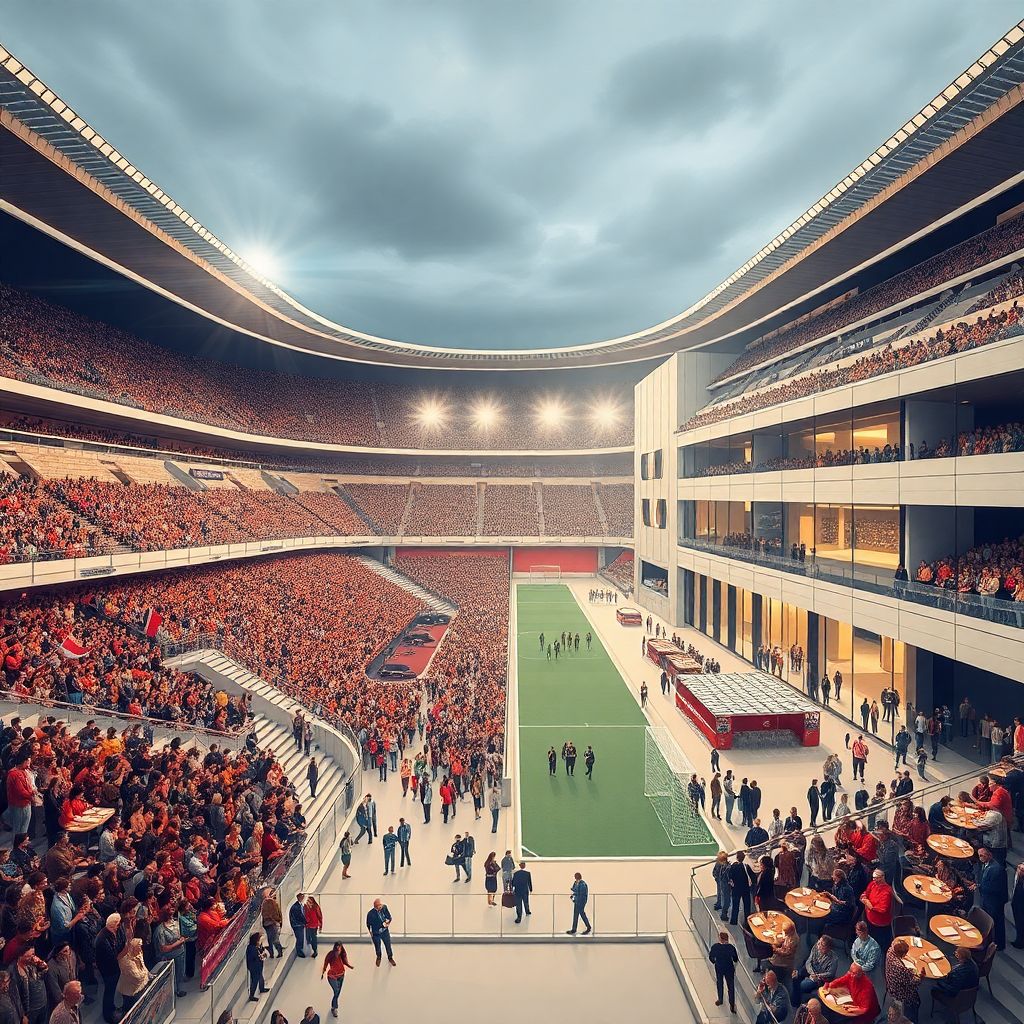
Football has always been more than 22 people chasing a ball. It’s a mirror of class, money and power. In a few generations it has shifted from cheap mass entertainment for factory workers to a segmented entertainment industry with corporate clients, tourists, and fans who can afford entradas fútbol vip. Understanding how this evolution works in practice helps clubs, cities and supporters make smarter choices, instead of just complaining that “modern football is ruined”.
From working‑class terraces to curated experiences
Historically, football stadiums were designed as high‑density, low‑comfort spaces: standing terraces, minimal services, almost no segmentation of audiences. Pricing was flat and access was largely local. Today, the same venue can host ultra‑exclusive hospitality zones, palcos de lujo en estadios de fútbol with private parking, fine dining and concierge services, sitting a few meters above sectors that still resemble the old working‑class stands. This spatial stratification converts a single match into coexisting micro‑worlds of class, each with its own rituals, price levels and expectations around safety, comfort and status.
In practical terms, this means the “average fan” no longer exists as a single category in club planning. Ticketing teams, urban planners and security coordinators design different access routes, communication channels and digital services for each class segment. The same ninety minutes of football function simultaneously as a mass event, a networking platform for executives, and an Instagram‑ready lifestyle product for tourists buying hospitality fútbol entradas premium. The sport didn’t simply become more expensive; it became more layered and algorithmically managed.
Comparing models: grassroots stadium vs luxury entertainment complex
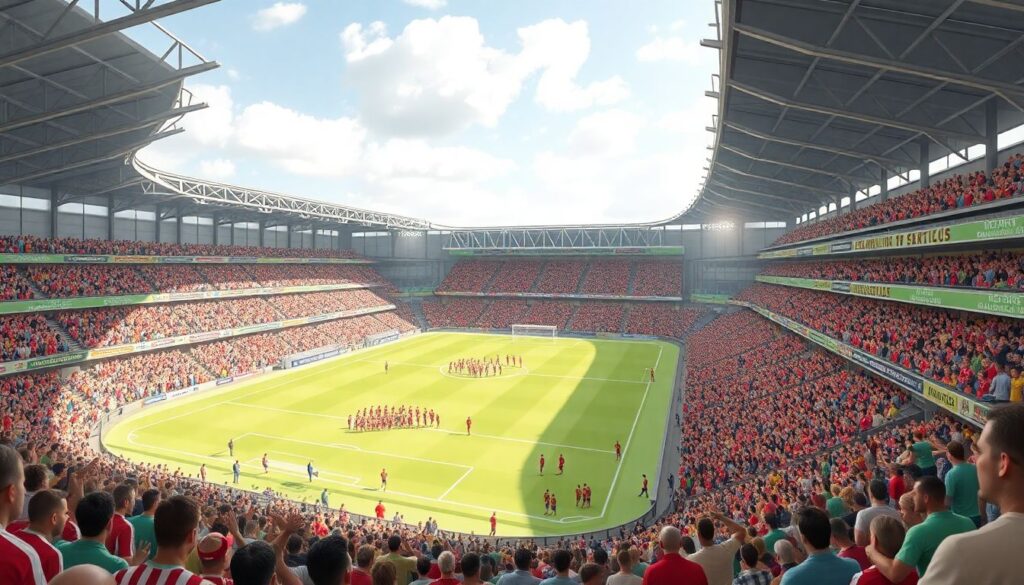
Current football infrastructure basically oscillates between two models. The first is the community‑centric or grassroots model, where the club treats the stadium as a civic asset. Pricing is moderate, standing areas or “safe standing” sectors are prioritized, and the matchday experience emphasizes collective identity over individual comfort. The second is the entertainment‑complex model: the stadium behaves like an airport plus shopping mall, with diversified revenue streams from retail, events and corporate boxes, and a clear focus on monetizing each spectator through data‑driven upselling.
Practically, these models differ in how they allocate investment and risk. Community‑centric clubs allocate budget to supporter liaison officers, local transport integration and inclusive ticket categories, keeping barriers to entry relatively low. Their downside is financial volatility: they are more vulnerable to bad seasons and broadcasting renegotiations. Entertainment‑complex clubs, in contrast, lock in long‑term contracts with sponsors, brands and corporate clients, selling not just seats but full experiencias fútbol de lujo across the season. This stabilizes cash flow but amplifies class segregation inside and around the stadium, as public space becomes semi‑privatized on matchdays.
How premiumization works at the micro level
The premiumization process usually begins with small reconfigurations: converting a central stand into a set of glassed‑in boxes, adding private lounges, or rebranding a section as “business club” with upgraded catering. Over time, these pilot zones expand, pushing traditional fans to the upper tiers or corners. Parallel to that, clubs integrate digital tools: dynamic pricing engines, CRM systems, and behavioral analytics to identify visitors likely to upgrade to entradas fútbol vip. Technology isn’t neutral here; it encodes a commercial logic that prioritizes the highest willingness to pay, systematically reshaping who can physically be in the stadium.
For city authorities and transport planners, these shifts matter too. Luxury hospitality areas require segregated flows for VIP guests, premium parking and controlled interaction with public space, while community sectors produce dense public transport usage and street‑level activity. The two logics can collide, for example when security perimeters for high‑spending guests disrupt traditional fan marches or local businesses that depended on working‑class crowds. Comparing these approaches helps stakeholders anticipate conflicts instead of managing them reactively.
Technologies that structure class in modern football
Several technological layers silently mediate who gets to enjoy which version of the game. The first is ticketing architecture: mobile‑only access, biometric gates and dynamic pricing algorithms. These systems optimize revenue and reduce fraud, but they also privilege users with stable internet, modern smartphones and digital literacy. Older supporters and low‑income fans can be unintentionally excluded when paper tickets disappear or when discount categories are hidden behind complex online flows that favor habitual e‑commerce users.
The second layer involves customer profiling and segmentation. Clubs use CRM platforms, data from app interactions and payment histories to classify spectators into value tiers. Fans who buy merchandise, click on sponsor campaigns and travel regularly for away games are tagged as high‑value and receive targeted offers for hospitality fútbol entradas premium or even cross‑sold viajes fútbol paquetes vip that bundle flights, hotels and match access. While efficient from a marketing perspective, this creates a feedback loop: those who already spend more get extra privileges and exclusive access windows, deepening class differences inside the fan base.
Pros and cons of key technologies
From a technical standpoint, cashless stadiums, dynamic pricing, and streaming platforms are the core tools driving the luxury turn. Cashless systems reduce queue time, improve accounting accuracy and integrate seamlessly with loyalty programs. However, they marginalize people without banking access or those wary of constant data tracking. Dynamic pricing maximizes occupancy and revenue by adjusting prices in real time, but it also injects volatility: lower‑income fans cannot reliably budget a season in advance when the same seat fluctuates dramatically depending on opponent and demand peaks.
On the media side, high‑resolution streaming and bespoke camera angles democratize access globally while simultaneously undercutting the incentive to attend physically. Clubs respond by making the in‑stadium experience more exclusive and “experiential”: live DJs, light shows, AR activations and curated food courts. This, in turn, increases operational costs that are offset by higher ticket brackets and segmented services. The pros are clear in financial statements: diversified revenues and better sponsor integration. The cons show up in survey data about fan alienation and the perceived loss of authenticity, particularly among long‑time supporters.
Choosing your approach: practical recommendations for clubs and stakeholders
Any club or city considering stadium renovation or matchday redesign faces a structural choice: how far to push premiumization without destroying the social base that sustained the sport for decades. The decision is not binary. It is entirely possible to host palcos de lujo en estadios de fútbol and still preserve affordable sections and local traditions, but this requires deliberate governance, transparent policies and a clear definition of non‑negotiable values. Below is a practical, step‑by‑step framework to navigate these trade‑offs beyond vague rhetoric.
-
Define socio‑economic thresholds and protected sectors. Before designing new VIP areas, clubs should quantify how many low‑price seats are required to keep local working‑class attendance viable. This can be codified as a minimum percentage of capacity reserved for accessible pricing, protected from dynamic pricing surges. Without hard thresholds, commercial pressure will gradually erode these areas, even if initial promises were made to “protect real fans”.
-
Segment technology, not just prices. Instead of offering only one heavily digitized access path, provide parallel channels: an advanced mobile app for tech‑savvy fans and a physical customer service desk for others. The goal is to avoid turning technology into a hidden class filter. Training stewards to assist with mobile ticket issues is as important as installing the scanners themselves, especially in mixed‑income fan bases.
-
Attach social obligations to premium products. When selling entradas fútbol vip or long‑term corporate packages, clubs can integrate a social clause: every premium contract automatically finances a quota of community tickets, youth projects or accessible away‑game buses. This keeps high‑end consumption tied to visible social benefits, mitigating resentment and demonstrating that luxury spend contributes to broader football ecosystems.
-
Co‑design hospitality zones with local stakeholders. Instead of copying generic international templates, engage supporter groups, neighborhood associations and local businesses in the design of hospitality fútbol entradas premium offerings. This can lead to menus using local suppliers, cultural references in interior design and matchday programs that involve community institutions. The resulting high‑end experiences feel rooted, not parachuted in.
-
Institutionalize fan representation in governance. To prevent drift toward pure luxury logic, clubs should guarantee structured input from elected supporter representatives on ticketing policy, stadium redevelopment and sponsor selection. Formal committees with access to data and the right to publish minority reports create a check against unchecked commercialization, maintaining the working‑class heritage as more than just a marketing slogan.
How individual fans can navigate the luxury turn

For supporters, understanding how class and technology intersect around football turns frustration into strategy. Instead of only lamenting rising prices, fans can map the full spectrum of available products: from early‑bird season tickets and group purchases to occasional splurges on curated experiencias fútbol de lujo for special occasions. The key is to read the fine print of membership schemes and loyalty programs, which often hide value in off‑peak matches, bundle discounts or referral bonuses that are not heavily advertised.
Practical tactics include forming small ticket cooperatives with friends or local fan clubs to share season cards and rotation schedules, thereby distributing costs while maintaining regular presence. Another strategy is to track when clubs usually release unsold corporate seats close to kick‑off at discounted rates, creating windows where high‑grade views become temporarily accessible. At the same time, supporters can pressure clubs through organized feedback, surveys and coordinated communication campaigns to keep a transparent pricing structure and protect youth and community categories.
Making sense of VIP travel packages
The rapid growth of viajes fútbol paquetes vip illustrates how class segmentation now extends across borders. Travel agencies and clubs collaborate to create all‑inclusive matchday trips targeted at international middle‑ and upper‑class consumers. These bundles typically include central hotels, airport transfers, bilingual guides and pre‑match hospitality zones that shield visitors from any friction or unpredictability. For a first‑time tourist, this is attractive; for the local ecosystem, it can divert spending away from independent businesses toward a closed value chain controlled by club and partners.
From a practical perspective, fans with some travel experience can often replicate much of the experience at lower cost by booking flights and accommodation independently and purchasing tickets directly from the club, especially for non‑marquee fixtures. However, those who prioritize convenience, security and guaranteed access to high‑demand games may still find value in curated packages. The crucial skill is to evaluate what exactly is being charged: logistical competence, exclusive seating categories, or simply a branding premium layered over easily accessible services.
Trends shaping football and class in 2026
By 2026, several converging trends are redefining the relationship between football and social stratification. AI‑driven demand forecasting is becoming standard in major leagues, allowing clubs to calibrate not only price but also ancillary services per segment. For example, predictive models can forecast which games attract international tourists versus local fans, adapting staffing, language support and marketing of high‑margin products like entradas fútbol vip accordingly. This increases efficiency but also risks entrenching stereotypes about who each game is “for”.
Another strong trend is the hybridization of live and digital experiences. Stadiums are deploying 5G‑based AR overlays, personalized in‑seat services and interactive sponsor activations. These technologies create an additional layer of class differentiation: only certain categories of seats may access full feature sets, turning connectivity into a premium amenity. At the same time, lower‑tier clubs increasingly rely on streaming micro‑subscriptions and community crowdfunding to survive, reinforcing a dual ecosystem where elite football behaves like global luxury entertainment while the rest retains a more explicitly working‑class character.
Sustainability, regulation and potential pushback
Environmental regulations and urban sustainability agendas are also influencing stadium design and matchday logistics. Pressure to reduce car usage pushes clubs toward better integration with public transport, bike infrastructure and shared mobility. If managed intelligently, this shift can reduce the symbolic gap between VIP and regular fans by making access flows more homogeneous. If mismanaged, it can result in privileged exceptions—private access roads and underground parking exclusively for corporate guests—while the majority copes with overcrowded transit, reinforcing visual markers of inequality in and around the venue.
Regulators and leagues are slowly reacting to public concern regarding affordability. Discussions on away‑ticket price caps, revenue‑sharing mechanisms and minimum accessibility standards are gaining traction. The outcome is uncertain, but the direction is clear: left entirely to market logic, football gravitates toward luxury segmentation; with coordinated policy and informed fan activism, it can balance its working‑class roots with the financial realities of global entertainment. The practical challenge for all involved is to treat class not as an abstract issue, but as a concrete design parameter in every decision about tickets, technologies and space.