
The coach as practical philosopher is a leader who uses ethical reflection, emotional self‑management and critical thinking to guide daily decisions on training, competition and relationships. In Spanish sport contexts, this role requires safe, realistic steps: clear values, ego management, transparent rules, and ongoing learning in leadership, ethics and communication.
Core Principles for Coaches as Practical Philosophers
- See every training and selection decision as an ethical choice, not only a tactical one.
- Make values visible: explain the why behind rules, rewards and sanctions.
- Train your own ego: notice when you protect your image instead of the team’s learning.
- Use structured reflection before and after key sessions or matches.
- Ask and listen: include players and staff in value discussions and rule‑setting.
- Invest in education such as a curso liderazgo deportivo ético para entrenadores to gain language and tools.
Defining the Coach as Practical Philosopher
Being a practical philosopher as a coach means treating everyday coaching problems as questions about good action, not just effective action. You use ethical reasoning, awareness of human limits and long‑term consequences to decide how you train, communicate, reward, punish and lead.
In this view, the coach is not a distant theorist but a professional who turns ideas about justice, responsibility, respect and excellence into concrete routines. Selecting a starting eleven, giving feedback to a substitute, or reacting to a referee error all become moments where your philosophy is visible to players and parents.
At the same time, there are clear limits. A coach is not a therapist, judge or parent replacement. You cannot solve every personal or social problem through sport. Safe practice means defining your role: you model integrity and manage the sport environment, while cooperating with families, clubs and, when needed, specialists.
In Spain, many coaches first meet these ideas through informal mentoring, libros sobre liderazgo ético para entrenadores deportivos or structured pathways such as a máster coaching deportivo liderazgo y ética profesional. These options give you vocabulary and frameworks, but the real test is how you act under pressure every week.
- Define in one sentence what kind of person you want your players to become.
- Write three non‑negotiable values for your team and place them in the locker room.
- Clarify for yourself what is inside and outside your professional role.
- Schedule one short reflection block per week to review decisions against your values.
Applied Ethical Frameworks in Coaching Practice
Ethical frameworks help you organise complex situations instead of reacting from mood or habit. Below are practical ways to translate theory into coaching routines, with attention to safety and realistic limits for an intermediate‑level coach in a club or academy.
-
Duty‑based thinking (rules first)
Decide what you must never do (humiliate, discriminate, ignore injuries) and what you must always do (protect health, tell the truth about roles). Example: a talented but half‑fit player insists on starting; duty to health and fairness guides you to limit minutes even under pressure from parents. -
Consequences focus (who is affected and how)
Before decisions, briefly map who could be helped or harmed: player, team, future squad culture, your own credibility. Example: changing rules for a star player may win this match but damage long‑term discipline and trust. -
Virtue focus (what character you build)
Ask which traits you are reinforcing: courage, patience, respect, resilience. Example: rotating captains in youth football can build responsibility in more players than always choosing the loudest leader. -
Justice and inclusion lens
Look at patterns across time: who gets extra attention, who is always last chosen, who is never given leadership chances. Safe practice means checking for biases about body type, origin or personality, and adjusting without promising identical outcomes for everyone. -
Care and relationship lens
Give weight to the quality of relationships and the emotional climate. Example: after a heavy defeat, you decide to protect the group’s confidence with constructive debriefing instead of harsh criticism, even if you are angry. -
Procedural fairness
Create and explain simple, consistent procedures: how playing time is decided, how conflicts are handled, how lateness is sanctioned. This lowers accusations of favouritism and supports psychological safety, especially with competitive parents and club boards.
Mini‑case: In a youth team, two friends skip training but expect to start on Saturday. Using duty and fairness, you apply the same consequence as for others: reduced minutes. You explain the rule and its purpose to the players and parents, protecting trust even if they disagree.
- Choose one ethical lens (duty, consequences, virtues, justice, care) to practise intentionally next month.
- Write down and communicate your rules for playing time and discipline.
- After each controversial decision, note who benefited, who was harmed, and what you would repeat or change.
Leadership Archetypes and Transformational Techniques
Practical philosophy in coaching becomes visible through your leadership style. You will naturally have preferences, but safe, ethical leadership means knowing your main archetype and its limits, then adding techniques so you can adapt to what the situation and athletes need.
Below are common archetypes, with context from Spanish clubs and academies where pressure from parents, directors and results is constant.
-
The Teacher‑Coach
Focus: clear instruction, step‑by‑step learning. Strength: structure and clarity. Risk: ignoring emotions. Example: in a formación online entrenador deportivo liderazgo y gestión del ego, this coach type learns to add short emotional check‑ins at the start of sessions instead of talking only about tactics. -
The Motivator
Focus: energy, confidence, enthusiasm. Strength: building belief and resilience. Risk: promising more than reality allows, neglecting technical detail. Safe step: link every motivational message to specific, trainable behaviours. -
The Strategist
Focus: game plans, analysis, match management. Strength: competitive edge. Risk: treating players as pieces, not people. Transformational move: involve key players in planning meetings to co‑create strategies, building ownership and understanding. -
The Guardian of Values
Focus: discipline, respect, culture. Strength: stable, predictable environment. Risk: rigidity and over‑control. Example: this coach co‑designs a short code of conduct with captains to combine firm standards with shared responsibility. -
The Developer
Focus: long‑term growth of each player. Strength: patience and individualisation. Risk: conflict with short‑term result demands from the club. Safe practice: agree explicit development goals and time horizons with directors at season start.
Transformational techniques that any archetype can use include: asking open questions in team talks, involving players in setting goals, sharing your own learning process after mistakes, and using peer feedback circles where players appreciate and challenge each other respectfully.
- Identify your dominant archetype and write two strengths and two risks.
- Test one new transformational technique in the next week’s sessions.
- Align with club expectations so your leadership style does not conflict with official goals.
Managing the Coach’s Own Ego: Strategies and Pitfalls
Ego is not only arrogance; it is the inner voice that wants security, recognition and control. For coaches under pressure, ego can protect confidence, but it can also distort decisions, damage relationships and create unsafe environments if it becomes the hidden boss of the team.
Safe ego management does not mean self‑erasure. It means seeing clearly when your need to win, to be right or to be admired is leading the show. External support such as consultoría para entrenadores deportivos en gestión del ego y valores can accelerate this self‑awareness by providing neutral feedback on your patterns.
Helpful strategies to keep ego in a healthy role
- Schedule regular debriefs focused on your own behaviour, not only the players’ performance.
- Invite one trusted assistant or senior player to give you honest feedback after matches.
- Practise pausing before reacting to referees, parents or directors; breathe, label your emotion, then respond.
- Share selected mistakes with the team to model learning, not perfectionism.
- Use education spaces (workshops, mentoring, online courses) to normalise talking about ego and values.
Common pitfalls and limits in ego management

- Using players to repair your own past failures (forcing styles or positions you wanted for yourself).
- Taking every criticism as a personal attack instead of information about processes or communication.
- Confusing authority with control: over‑managing every detail out of fear of losing respect.
- Trying to self‑diagnose deep emotional issues that may need professional psychological help.
- Public self‑humiliation disguised as humility, which can unsettle players and staff.
- Notice one recurring ego trigger (referees, parents, directors, star players) and plan a calmer response.
- Agree with staff on one signal they can use when they see your ego taking over.
- Set a boundary for what issues you will refer to qualified mental health professionals.
Decision-Making Tools: Moral Reasoning in Sessions
Moral reasoning in sessions means having a repeatable way to choose actions when rules, expectations and emotions collide. Without tools, coaches tend to react from habit or pressure, which can lead to inconsistent or unsafe practices even if their intentions are good.
Below are typical errors and myths that block sound moral reasoning on the pitch and in the locker room.
-
Myth: results justify any method
Believing that winning proves a decision was good ignores hidden harms like burnout, exclusion or cheating. Safe practice keeps minimum standards you will not cross, even in finals. -
Error: treating all players identically, not fairly
Fair does not always mean equal. For example, punctuality consequences may differ slightly by age or transport context, but your logic must be transparent. Explain your criteria to avoid perceived injustice. -
Myth: being ethical makes you soft
Clarity and consistency in rules often allow for harder, more demanding training because players trust that they will be treated with respect. Ethics supports, rather than weakens, competitive intensity. -
Error: deciding complex matters alone and in a hurry
Immediate solo decisions are sometimes necessary for safety (injuries, aggression), but non‑urgent dilemmas deserve time and consultation. Share grey‑area cases with staff or mentors before locking in future policies. -
Myth: experience automatically improves judgment
Repeating seasons without structured reflection just repeats the same biases. Learning spaces like a máster coaching deportivo liderazgo y ética profesional or peer supervision groups help turn experience into wiser decisions.
Simple safe tool: the three‑question pause. Before a controversial decision, ask: 1) Is it consistent with my stated values? 2) Would I be comfortable if this was recorded and shared publicly? 3) How will this affect trust over the season?
- Adopt one simple decision filter (such as the three‑question pause) and use it for all major choices this month.
- List two red lines you will not cross, even to win important matches.
- Plan in advance how you will communicate tough decisions to players and parents.
Embedding Reflective Practices into Coaching Systems
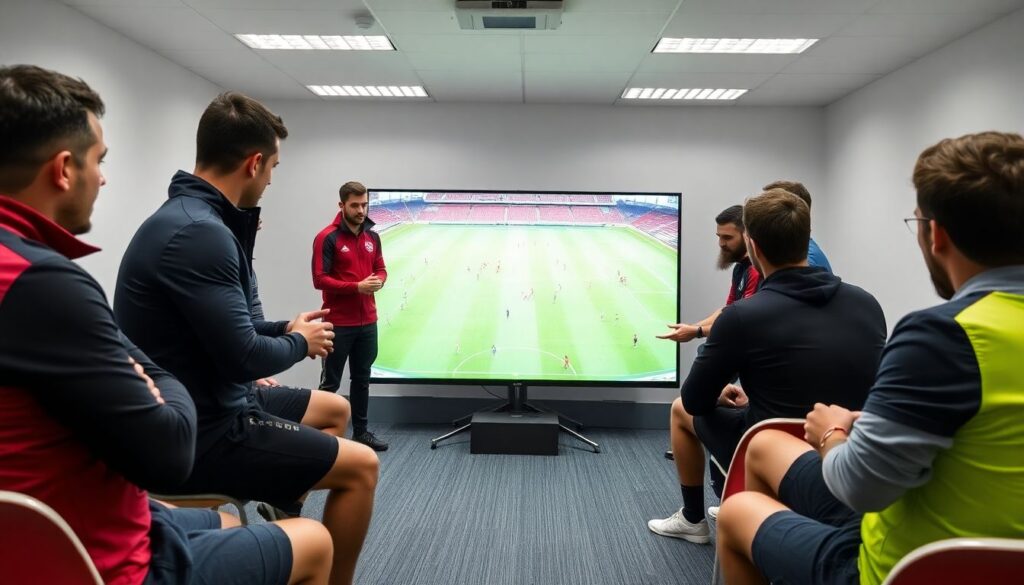
Reflective practice turns philosophy from occasional thinking into a stable system. Instead of only reflecting after crises, you build small, repeated habits that connect training plans, match reviews and personal development into a coherent, values‑based process.
Mini‑case from a Spanish club: A head coach of a U17 team creates a weekly reflection routine. Every Sunday night, they spend 20 minutes with assistant staff. They use three questions: What did we do well for learning and safety? Where did ego or pressure distort decisions? What concrete adjustments will we test next week?
They complement this with player reflection: once a month, athletes answer short prompts on paper about what they are proud of, where they feel respected or not, and what team value they want to improve. This data guides rule adjustments, communication changes and individual conversations, without turning the coach into a therapist.
Over time, the coach notices more stable discipline, fewer emotional explosions on the sideline and clearer conversations with parents. They also use external learning, such as a curso liderazgo deportivo ético para entrenadores or targeted consultoría para entrenadores deportivos en gestión del ego y valores, to refine the questions and tools used in these sessions.
- Fix a weekly time slot for a 15-20 minute staff reflection meeting.
- Use the same two or three guiding questions each time to create continuity.
- Include players in structured reflection at least once per month.
- Review and adapt your routines every season in light of new learning.
Overall Self‑Check for Coaches as Practical Philosophers
- Can I explain my core coaching values in clear, simple language to a parent or player?
- Do my rules and decisions show the same logic in easy and high‑pressure moments?
- Am I actively working on my ego triggers with support from staff or mentors?
- Have I built regular reflection routines into my weekly and seasonal planning?
- Am I using education and resources, from libros sobre liderazgo ético para entrenadores deportivos to formación online entrenador deportivo liderazgo y gestión del ego, to keep growing?
Common Practical Concerns and Solutions
How can I start acting as a practical philosopher without overwhelming my schedule?
Begin with one clear value and one weekly reflection slot of 10-15 minutes. Apply that value to a single type of decision, such as selection or discipline, until it feels natural, then expand to other areas.
What is a safe way to involve players in ethical discussions?
Use short, age‑appropriate conversations linked to real situations, like fair play or effort in training. Set boundaries: you listen and consider their views, but you keep final responsibility for safety and discipline decisions.
How do I balance club result demands with long‑term player development?

Clarify priorities with directors at the start of the season and put them in writing. When conflicts appear, show how development decisions support future competitiveness and protect the club’s image and values.
What if parents reject my ethical stance or accuse me of unfairness?
Respond calmly with your written values and procedures, explaining how they apply to the case. Avoid personal argument; invite a structured meeting and, if needed, involve a coordinator or director as mediator.
How can I work on my ego without exposing myself too much to the team?
First use private tools: journaling, supervision with another coach, or professional consulting. Share only selected learning points with players, focusing on how you are improving your behaviour, not on deep personal history.
Do I need formal studies to lead ethically as a coach?
Formal programmes help, but they are not mandatory. You can combine self‑study, peer dialogue and targeted workshops. Structured options like a máster coaching deportivo liderazgo y ética profesional or specialised short courses can accelerate and organise your growth.
Where are the limits of my responsibility for players’ personal lives?
You are responsible for creating a safe, respectful sport environment and for reacting appropriately when you detect risk. You are not a psychologist or social worker; serious issues should be referred to qualified professionals and communicated to families and clubs according to policy.