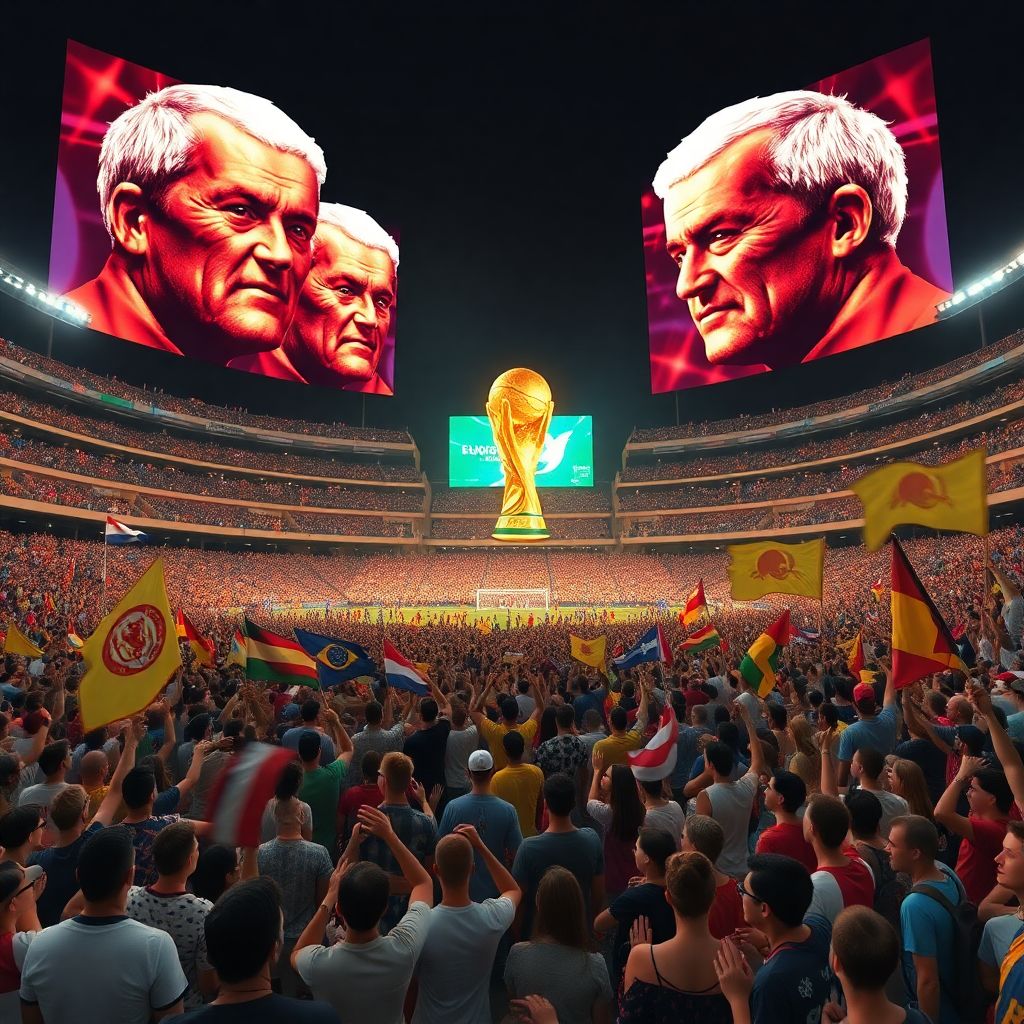
Football World Cups help nations tell simplified stories about who they are, turning victories, defeats and star players into shared myths. These tournaments rewrite history from below: ordinary fans, media and politicians select certain matches, rituals and images to symbolise the past, while ignoring messy realities and internal diversity.
Core Concepts: How World Cups Reframe National Narratives
- World Cups act as global stages where countries perform idealised versions of themselves for both domestic and international audiences.
- Specific matches become origin stories that condense long, complex histories into a few memorable moments and emotions.
- Governments and media amplify certain results, players and symbols to support political agendas or national unity projects.
- Fans co-create identity through chants, flags, camisetas de selecciones nacionales de fútbol originales and grassroots storytelling.
- Television, social media and betting markets fix some narratives as «common sense» while marginalising alternative memories.
- Even people without money for entradas mundial de fútbol 2026 participate through fan zones, local bars and community screenings.
Myths on the Pitch: Legendary Matches That Became National Origin Stories
Legendary World Cup matches become national myths when a single game is remembered as proof of a people’s character, destiny or moral worth. The mechanism is simple: a result is turned into a story, repeated for years and taught as a shortcut to «who we are».
Typically, these myths condense complex histories of colonialism, dictatorship, economic change or migration into ninety minutes. A comeback win can be reframed as evidence of a «never-say-die nation»; a controversial refereeing decision becomes a symbol of foreign injustice. The match itself matters less than the narrative built afterwards in schools, bars and media.
Such stories have clear boundaries. They highlight certain emotions-courage, sacrifice, unity-while erasing conflict, exclusion or dissent inside the country. Fans wearing camisetas de selecciones nacionales de fútbol originales at home or in fan zones may feel part of a continuous historical line, even if the myth ignores regional identities, migrant communities or political minorities.
These myths are powerful but selective. For every celebrated victory, there are forgotten defeats, boycotts or acts of resistance. Understanding football and national identity means asking whose memories become «official» and whose experiences are left outside the frame of the legendary match.
Politics in the Stands: Statecraft, Propaganda and Tournament Hosting
World Cups are tools of soft power: states use them to show modernity, hide conflicts and negotiate prestige. Several recurring mechanisms explain how politics enters the stands and shapes national narratives.
- Hosting as a showcase of modernity. Governments invest in stadiums, transport and security to present themselves as stable and advanced. The opening ceremony, cultural shows and VIP tribunes are designed to send a message to foreign media: this is a safe, organised country worthy of investment and tourism.
- Selective storytelling about the host nation. Official campaigns highlight landscapes, hospitality and unity while downplaying protests, labour conflicts or regional tensions. Even promotional offers such as paquetes turísticos mundial de fútbol con alojamiento y vuelos are designed around emblematic spaces that fit the desired image.
- Symbolic occupation of public space. Flags on buildings, official fan zones and controlled celebrations create a temporary feeling that the whole nation is united. In practice, some groups-migrants, political opponents, ultras-may be tightly policed or pushed outside prime spaces.
- Diplomatic gestures and tensions. Leaders attend key games, exchange shirts and appear with players to project closeness to «the people». Diplomatic boycotts, anthem booing or refusal to shake hands also become highly visible signals of international disputes.
- Economic promises for legitimation. Authorities justify huge spending with expectations of tourism, infrastructure and global visibility. When benefits fail to materialise, post-tournament disillusion can undermine the same national narrative that was built around the event.
- Regulated commercial nationalism. Sponsorships, official merchandise and regulated betting with the mejores casas de apuestas para el mundial de fútbol embed the flag and team colours into consumer culture, turning patriotism into a marketed experience.
Iconic Players as Symbols: From Individual Heroes to Collective Identity
Iconic footballers become national symbols when their personal stories are framed as miniature versions of the country’s history. Different scenarios show how this symbolic transformation works across contexts and social classes.
- Hero as embodiment of social mobility. A player from a poor neighbourhood who reaches a World Cup final can be used to support the idea of a meritocratic nation. Media emphasise effort and talent, often ignoring structural inequalities or barriers others still face.
- Star as bridge between regions or ethnic groups. In multinational or linguistically diverse states, a captain from a historically marginalised region may be presented as proof that «we are all one nation». This helps soften internal tensions, even if political conflicts continue outside the stadium.
- Player as diaspora connector. Footballers born abroad but playing for their parents’ country-common in Spain and across Europe-redefine what it means to belong. They can normalise hyphenated identities and give migrant communities a visible place in the national story.
- Rebel icon challenging official narratives. Some stars use celebrations, social media or public statements to criticise racism, sexism or authoritarianism. Here, identity construction becomes contested: fans might follow the player’s line instead of the government’s preferred message.
- Commercially amplified identities. Sponsorship deals, video games and global campaigns extend a player’s image far beyond the pitch. For fans who cannot travel on viajes organizados al mundial de fútbol, buying a shirt or following the star online becomes the main way to participate in national identity rituals.
- Post-retirement mythologisation. Retired legends are turned into pundits, federation officials or «wise elders». Their opinions about discipline, style and patriotism shape how new generations understand both football and the nation’s past.
Rituals and Chants: Cultural Performance, Memory and Belonging
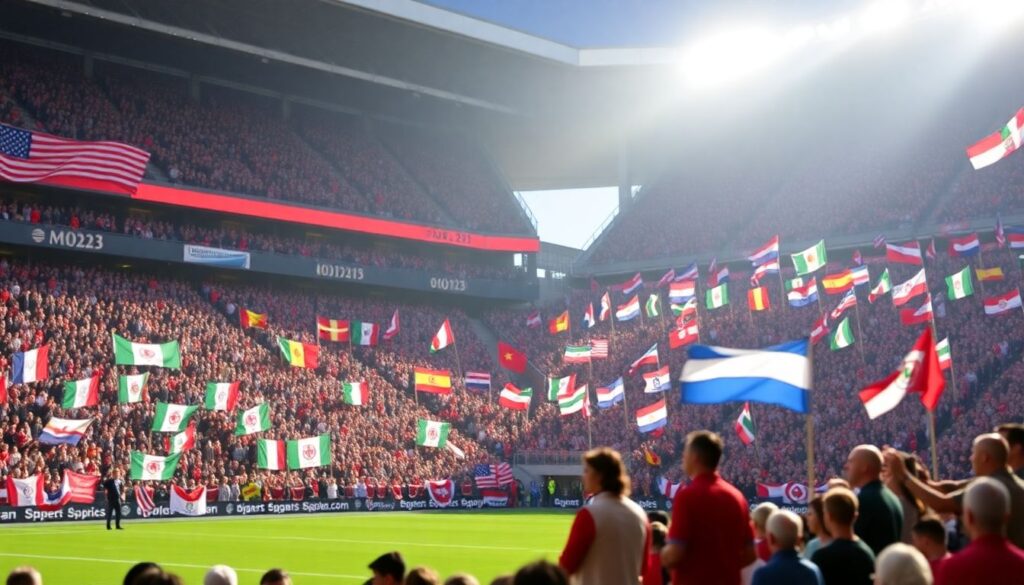
Collective rituals-chants, anthems, pre-match routines-transform abstract national symbols into lived experiences. They create temporary communities that feel intensely real, yet they also have limits and can exclude or silence certain voices.
Social and cultural strengths of football rituals
- Accessible emotional entry point. Singing an anthem in a crowded square or bar allows people with limited resources, who cannot afford entradas mundial de fútbol 2026 or full paquetes turísticos mundial de fútbol con alojamiento y vuelos, to experience national pride alongside others.
- Intergenerational transmission of memory. Families repeat chants and matchday routines, turning past tournaments into shared reference points. A song linked to a specific World Cup win can make that event feel present decades later.
- Integration of local and national identities. In Spain, club-based chants, regional languages and local flags often mix with national symbols in fan zones, showing that identities can overlap rather than simply compete.
- Space for creative reinterpretation. Fans adapt melodies, invent new lyrics or ironise political slogans. This creativity allows people to negotiate what the nation means without formal institutions.
Limitations, risks and exclusion mechanisms
- Pressure to conform. People who do not feel represented by the national flag, or who have complex regional loyalties, may be criticised if they do not sing or celebrate in the «right» way.
- Gendered and racialised spaces. Some fan cultures are hostile to women, LGBTQ+ supporters or racialised minorities, turning supposedly national spaces into environments where only certain bodies feel safe.
- Commercial capture of spontaneous rituals. Brands sponsor fan zones, organise «official» parties and link chants to products. What began as grassroots expression can become a tool for marketing and data collection.
- Instrumentalisation by political actors. Parties or leaders may try to dominate key ritual spaces-plazas, large screens, parades-using them as campaign stages and narrowing the acceptable range of national narratives.
- Exclusion through pricing. When core rituals move into expensive stadiums or VIP fan experiences, supporters with fewer resources are relegated to peripheral spaces, even though their emotional investment is equally strong.
Media, Memory and Mythmaking: How Coverage Rewrites the Past
Media coverage does not merely report World Cups; it actively scripts national memory. Common mistakes and myths emerge because journalists, brands and fans all seek simple, emotionally satisfying stories that fit pre-existing stereotypes.
- Myth of the eternally united nation. Coverage often frames tournaments as moments when «the whole country stops» and everyone supports the team equally. In reality, interest levels vary by class, region and migration status, and some citizens feel excluded or ambivalent.
- Over-personalisation of structural issues. Victories are attached to charismatic coaches or captains, while defeats are blamed on a single error. This hides deeper factors such as federation governance, grassroots investment or social inequalities in access to training.
- Selective use of archival images. Television repeats the same historical clips, turning a few moments into the entire remembered past. Alternative angles-fan protests, police repression, quieter forms of solidarity-disappear from the visual record.
- Confusion between marketing and tradition. Slogans invented for one campaign or product are later presented as ancient customs. Promotions by travel agencies or the mejores casas de apuestas para el mundial de fútbol can be mistaken for organic fan culture when they are actually carefully designed marketing tools.
- Neglect of low-budget experiences. Media prioritise stadium shots, VIP hospitality and spectacular viajes organizados al mundial de fútbol, overshadowing the majority experience of fans who watch in neighbourhood bars, public squares or at home.
- National exceptionalism. Every country tends to imagine its relationship with football as unique, ignoring similar patterns elsewhere. This narrows learning opportunities and reinforces self-centred narratives about virtue, suffering or destiny.
After the Final Whistle: Long-Term Social and Institutional Transformations
World Cups leave traces that outlive the final match, reshaping institutions, everyday practices and the stories nations tell about themselves. A brief, schematic example helps show how this works, including for people who experience tournaments from a distance.
Illustrative mini-case (hypothetical, Spain-focused):
- Pre-tournament narrative. Spain is portrayed as a divided country-regional tensions, economic uncertainty, fan violence. Media discuss whether the team can represent «everyone».
- Unexpected sporting success. The national team advances further than predicted, with key goals scored by players from different regions and migrant backgrounds. Cheap viewing options-neighbourhood screens, public TV-ensure fans without resources for entradas mundial de fútbol 2026 or official paquetes turísticos mundial de fútbol con alojamiento y vuelos still participate collectively.
- Ritual consolidation. A new chant born in grassroots fan spaces during the tournament becomes widely adopted. Local bars, not just corporate fan zones, emerge as recognised «national» spaces of celebration.
- Institutional response. Seeing the popularity of inclusive spaces, municipalities support community-based viewing areas in later tournaments instead of only promoting expensive viajes organizados al mundial de fútbol. Federations launch youth programmes in under-served neighbourhoods that produced the surprise heroes.
- Rewritten national story. In subsequent years, textbooks, documentaries and pundits recall the World Cup as a moment when Spain learned to imagine itself as plural yet cohesive. The focus moves slightly away from star individuals to collective effort and social diversity.
- Everyday normalisation. Mixed-supporter friend groups, fan clubs including migrants and women’s supporter associations reference that tournament as their origin point. National identity is not transformed overnight, but its boundaries silently shift.
This example illustrates the broader pattern: World Cups provide intense, compressed experiences where narratives, policies and daily practices can realign. Even those who only engage through TV, radio or small gatherings contribute to how the nation will remember, and thus reinvent, itself.
Practical Clarifications and Common Misconceptions
Is national identity through football only relevant if I travel to the World Cup?
No. Most identity work happens at home: in bars, living rooms, social media and local pitches. Even without money for viajes organizados al mundial de fútbol, your conversations, rituals and memories shape how the nation understands itself.
Do I need official merchandise to «properly» support my country?
Official shirts can be meaningful symbols, but they are not mandatory. DIY scarves, borrowed jerseys or simply sharing matches with others can express belonging, especially if camisetas de selecciones nacionales de fútbol originales are too expensive.
Are betting and commercial offers central to national identity in World Cups?
Betting and promotions from the mejores casas de apuestas para el mundial de fútbol amplify emotions and narratives, but they are add-ons, not the core. Identity is primarily built through shared stories, rituals and emotions, with or without money at stake.
How can fans with limited resources still live the World Cup collectively?
Low-cost alternatives include public screenings, community centres, local bars, friends’ homes or street gatherings. These spaces often produce stronger memories than stadiums and democratise access for those who cannot buy entradas mundial de fútbol 2026 or travel packages.
Do World Cups always strengthen national unity?
No. They can temporarily mask conflicts but also expose inequalities or political tensions. Identity may polarise if some groups feel excluded from celebrations or if public spending on stadiums clashes with social needs.
Are organised trips and tourist packages necessary to feel part of the event?

They are optional luxuries. Paquetes turísticos mundial de fútbol con alojamiento y vuelos offer intense experiences for a small minority, but the broader national story emerges from millions who participate through everyday, often low-cost practices.
Can football-based identities replace deeper political discussion?

They can open doors to conversation but should not replace it. Using football metaphors to discuss history or justice can be useful, yet serious issues need forums beyond ninety minutes and matchday emotions.