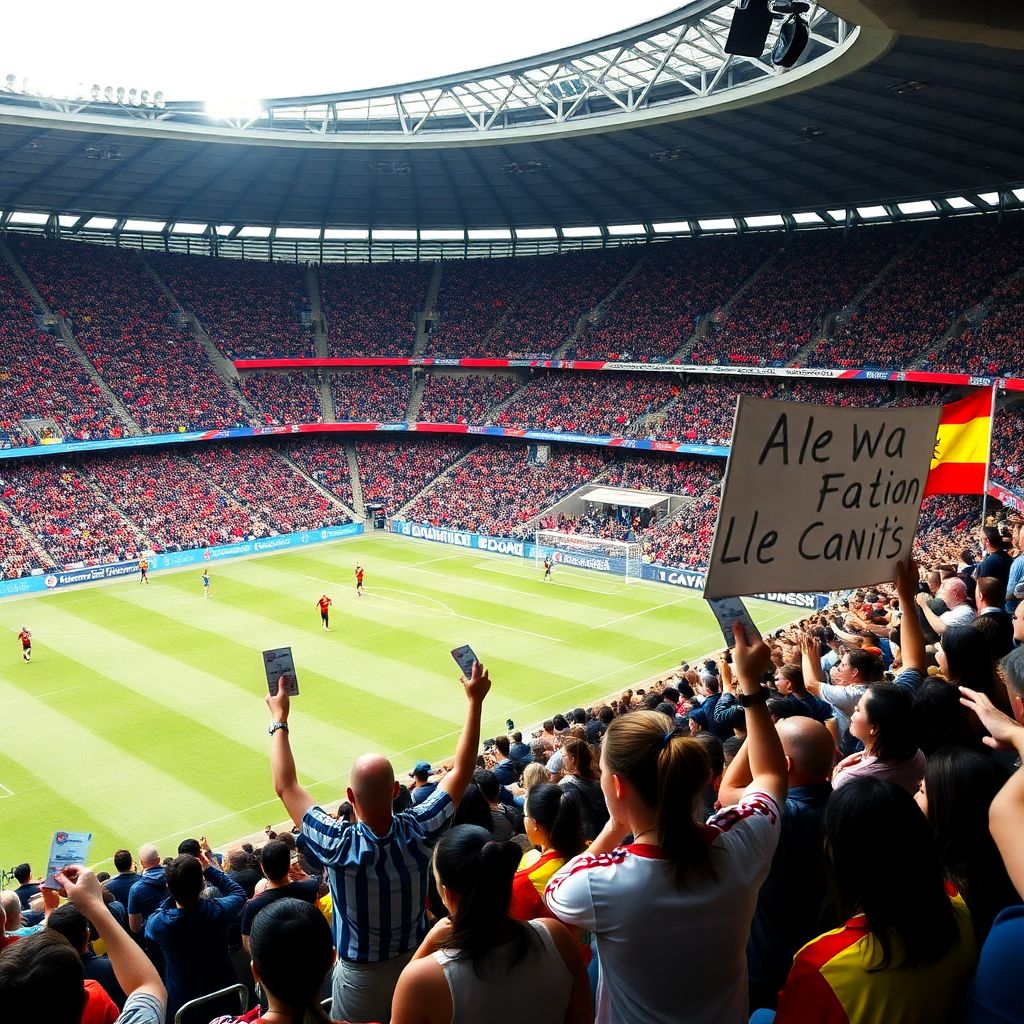
Women’s football is the same sport under different historical conditions: it has shared rules but faced bans, ridicule, lower pay and invisibility. Understanding its history in Spain means tracing early unofficial matches, federation resistance, media prejudice and recent professionalisation, while using everyday choices-tickets, shirts, language-to support a fairer story of the game.
Foundational Claims on Women’s Football
- Women’s football is not a «new» sport; it has a long but partially erased history in Spain and worldwide.
- Institutional decisions, not «lack of interest», explain much of the delayed growth and fragile structures.
- Media framing and everyday language still shape whether the public sees it as elite sport or charity cause.
- Players’ testimonies are primary historical sources, not side anecdotes.
- Legal actions and collective bargaining have been as decisive as goals and trophies.
- Progress must be measured structurally: contracts, calendars, facilities, youth pathways and sustainable economics.
Historical Erasure and Early Women’s Matches
Historical erasure in women’s football means that matches, teams and competitions existed but were ignored, mocked or badly archived. Early women’s matches often appeared as «curiosities» in newspapers, staged as charity events or carnival spectacles rather than serious sport. This created the illusion that female players arrived «late» to football.
In Spain, as elsewhere, grassroots women formed teams long before official recognition. They trained on marginal pitches, borrowed kits and often played on inconvenient dates and times that did not clash with men’s fixtures. Many games went undocumented or were reported with sexist language that focused on appearance instead of tactics or skill.
Because records are scattered, oral memories from players, relatives and local supporters become crucial. When a former midfielder remembers travelling by bus all night to play a single friendly, that story fills gaps left by empty archives and explains why today’s professional structures feel revolutionary to those who lived the amateur era.
Mini-scenario: you are preparing a school project for girls who want to join escuelas de fútbol femenino para niñas. Instead of starting the story with the latest World Cup, you interview a local pioneer, bring an old match poster, and show that their dream has roots, not just recent hashtags.
- Trace local histories: ask clubs, libraries and neighbours about early women’s teams and matches.
- Treat players’ memories as primary evidence, not nostalgic side notes.
- When you talk about «modern» women’s football, always ask: modern compared to which erased past?
Institutional Barriers: Federations, Bans, and Resource Allocation
Institutional barriers are the formal and informal rules that limited women’s football far beyond individual prejudice. They tend to be invisible in daily debate, yet they explain why structures are weaker, calendars unstable and careers shorter.
- Non-recognition and late affiliation: For decades, federations either ignored women’s teams or placed them in provisional committees. Without full status, leagues lacked solid calendars, promotion systems and clear regulations.
- Access to pitches and facilities: Many clubs gave women the worst training slots, forcing them to train at late hours or on damaged pitches. This structural decision directly affected performance and public perception.
- Economic priorities: Budgets flowed first to men’s teams. Women’s sections received leftover funds, second-hand equipment and minimal medical support. This produced the myth that women’s football was inherently «less profitable».
- Licensing and contracts: In some periods, women played without proper player licences or with semi-amateur status, even in top divisions. This weakened job security, insurance coverage and bargaining power.
- Competition design: Unstable formats-changing number of teams, groups and playoff structures-made it hard to build narratives and rivalries. The liga femenina de fútbol España calendario y entradas today still carries traces of those improvisations in how fixtures are scheduled and sold.
Mini-scenario: a fan wonders why it is harder to find fútbol femenino entradas partidos for a midweek match than for the men’s team. Instead of blaming «lack of demand», you explain how federation decisions on kick-off times, marketing budgets and ticketing platforms restrict visibility.
- Before judging attendance or level, check how federations allocate budgets, pitches and time slots.
- Read competition rules: unstable formats often signal deeper institutional resistance.
- Link today’s ticketing and scheduling problems to a longer history of under-recognition.
Media Representation, Language and the Shaping of Public Perception
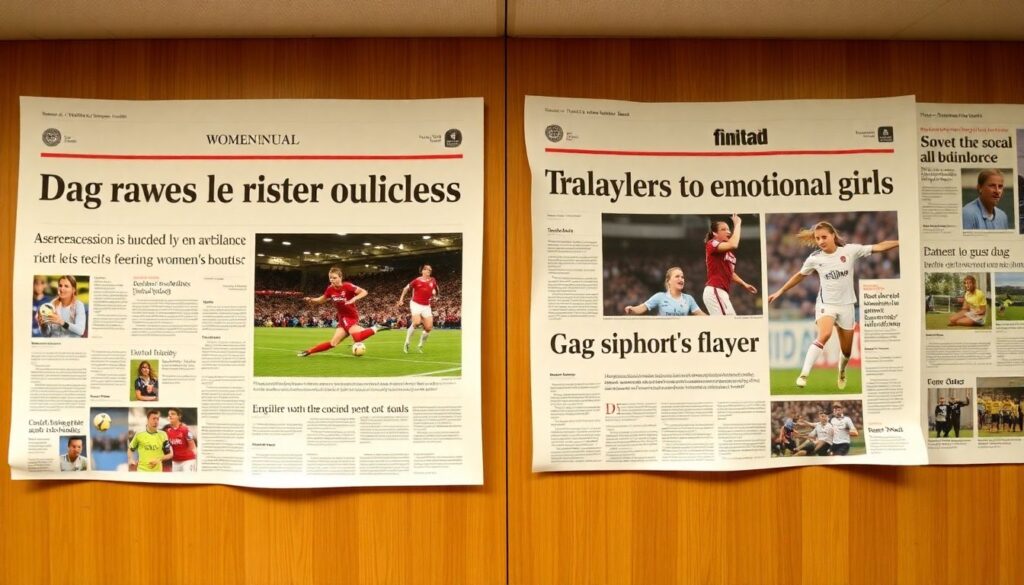
Media and everyday language decide whether women’s football appears as elite sport or as a side show. The same match can be narrated either as tactical excellence or as a surprise that «the girls» can actually play.
- Headline framing: Stories that highlight family roles, looks or emotions over tactical analysis reduce players to stereotypes. When coverage describes a striker as «pretty and hard-working» but ignores her pressing or movement, it signals unequal standards.
- Comparative language: Constantly calling women’s matches «the female version» of men’s games implies that men are the norm and women the deviation. Neutral terms («senior team», «national team») help rebalance the frame.
- Highlighting errors over quality: In some broadcasts, a single defensive mistake receives more attention than an entire match of good build-up play, reinforcing the myth of lower quality.
- Consumer narratives: When fans look for camisetas fútbol femenino selección comprar, media and brands can treat this as «niche» or as normal football consumption. The second option normalises women’s football as part of mainstream fandom.
- Digital platforms and clips: Short videos tend to show celebrations and «cute» moments more than tactical clips. Curating highlights that show pressing traps, set pieces and transitions educates the audience differently.
Mini-scenario: you run a regional sports blog. You create match reports of the women’s team using the same structure, stats and tone as you use for the men’s side, including expected goals and heat maps, and you naturally include links to equipaciones fútbol femenino personalizadas in your merchandising section instead of a separate «women’s corner».
- Review your own language: replace diminutives and «female version of» with neutral football terms.
- Ask broadcasters and media why tactical analysis is thinner in women’s coverage and demand parity.
- When you share clips, prioritise football content (pressing, passing patterns, finishing) over stereotypes.
Player Voices: Oral Histories, Working Conditions and Identity
Player voices reveal how structural inequalities feel in everyday life. Oral histories capture locker-room dynamics, travel conditions, second jobs and identity struggles that official reports gloss over. They show how a defender juggles a day job, unpaid training and family expectations, or how a goalkeeper negotiates being openly queer in a conservative environment.
Listening to players also complicates a simple hero narrative. Many professionals express pride in representing their country while criticising federations, clubs or sponsors. They can celebrate record crowds yet demand better pitches, contracts, childcare and medical teams. This complexity is essential to understand women’s football as labour, not just passion.
Mini-scenario: you design a local exhibition about the women’s game. Alongside photos and trophies, you include audio from former players describing playing in mixed boots, washing their own kits and buying their first official shirt when camisetas fútbol femenino selección comprar finally became possible.
Advantages of centring player perspectives
- Expose daily working conditions that statistics hide, such as unpaid hours or lack of physiotherapy.
- Give depth to debates on identity, including class, race, sexuality and regional belonging.
- Provide concrete stories that teachers, coaches and journalists can use to challenge clichés.
Limitations and cautions when using testimonies
- Individual stories may not represent all players; avoid turning one voice into a universal truth.
- Memories can blur timelines; cross-check key facts with documents whenever possible.
- Public exposure may risk backlash; always consider consent, anonymity and player safety.
- Record and archive interviews with retired and current players before those memories are lost.
- Balance inspiring stories with honest talk about fatigue, injuries and financial stress.
- Protect the narrators by discussing how and where their testimonies will be used.
Catalytic Moments: Campaigns, Litigation and Professional Recognition
Catalytic moments are episodes that suddenly change what seems possible in women’s football: collective bargaining victories, viral campaigns, legal cases and decisions to grant professional status. They condense years of quiet organising into visible breakthroughs.
- Myth: progress is a natural, linear evolution
Reality: players have often needed strikes, boycotts or public letters to obtain basic conditions such as written contracts, minimum wages or maternity protections. - Myth: «the market» rewarded women’s football spontaneously
Reality: legal recognition of professional leagues, TV deals and structured calendars came after pressure from players’ unions, not as a gift from above. - Myth: fandom is purely organic
Reality: when federations finally scheduled big games in main stadiums and marketed fútbol femenino entradas partidos properly, attendance surged, showing that visibility and investment matter. - Myth: campaigns are only symbolic
Reality: visibility campaigns often precede policy change. Social media pressure can push clubs to improve facilities, sign more staff or support escuelas de fútbol femenino para niñas. - Myth: professional status solves everything overnight
Reality: some players still face late payments, injuries without proper support or short-term contracts despite «professional» labels.
Mini-scenario: your city club launches a campaign with the slogan «same crest, same pitch». They schedule double-headers where the women’s match precedes the men’s, sell combined tickets, and promote liga femenina de fútbol España calendario y entradas on all platforms, treating the women’s side as co-owners of the club identity.
- When you see a big milestone, look for the years of organising and negotiation that led to it.
- Question stories that present improvements as generous gifts instead of hard-won rights.
- Support campaigns that connect visibility (stadiums, TV) with structural change (contracts, facilities).
Assessing Progress: Participation Data, Competitive Standards and Economics
Assessing progress in women’s football means looking beyond isolated big crowds or one-off tournaments. It involves participation at grassroots level, competitive standards across leagues and the economic ecosystem surrounding clubs, players and fans.
Instead of relying only on vague impressions, you can build a simple, repeatable assessment for your context. Think of it as a checklist that a local federation, club or school can run every season.
Illustrative pseudo-framework for a club in Spain:
For each season:
  1. Count girls enrolled in youth teams and local escuelas de fútbol femenino para niñas.
  2. Review stability of league calendars (few cancellations, clear fixture lists).
  3. Compare conditions: pitches, medical care and travel for women vs men.
  4. Analyse revenue sources: tickets, sponsors, merchandising (including equipaciones fútbol femenino personalizadas).
  5. Collect player feedback on workload, security and progression pathways.
Mini-scenario: a provincial federation wants to justify extra funding. Instead of generic slogans, they map how many clubs now run girls’ teams, how stable the women’s fixtures are, how fans react to new merchandising like equipaciones fútbol femenino personalizadas, and what obstacles remain for players who aim to reach the top division.
- Define clear, repeatable indicators: participation, stability, parity of conditions and income diversity.
- Compare men’s and women’s structures within the same club to reveal hidden inequalities.
- Use fan behaviour (season tickets, shirt sales, digital engagement) as evidence against «no interest» narratives.
End-of-Article Self-Check on Your Own Practices
- Do you present women’s football history as continuous, with pioneers and past matches, rather than as a sudden recent boom?
- When you talk about quality or audiences, do you link outcomes to institutional decisions, not to supposed «nature» or «preferences»?
- Have you consciously adjusted your language, coverage and purchasing choices (tickets, shirts) to normalise women’s football?
- Do you actively seek and protect player testimonies as valuable sources, not optional extras?
- Can you explain progress in your local context using concrete structures: calendars, contracts, facilities and youth pathways?
Persistent Doubts Addressed
Is women’s football really a recent phenomenon in Spain?
No. Women’s teams and informal matches have existed for generations, even if they lacked official recognition and serious media coverage. The perception of novelty comes from historical erasure, not from an actual absence of players or passion.
Why do some people still say there is «no interest» in women’s football?
Because they ignore how little was invested in visibility, marketing and facilities. When clubs promote fixtures properly, schedule them in good stadiums and make fútbol femenino entradas partidos easy to buy, audiences respond strongly.
Does supporting women’s football mean caring less about men’s football?
No. Supporting one does not exclude the other. Many fans follow both, buy season tickets for women’s matches and look for camisetas fútbol femenino selección comprar alongside men’s shirts. The key is demanding fair treatment and resources for all teams.
Are women’s leagues in Spain already fully professional?
Labels of «professional» do not always match daily reality. Some players still face short contracts, late payments or uneven medical support. Analysing the liga femenina de fútbol España calendario y entradas and club structures helps reveal how solid professionalisation really is.
Why focus so much on historical narratives and media language?
Because stories shape policy and budgets. If the dominant narrative says women’s football is a side project or a social cause, institutions feel less pressure to invest seriously. Precise language and accurate history support claims for better contracts and facilities.
How can families help daughters who want to play football?
By treating their interest as legitimate sport, looking for safe and well-run escuelas de fútbol femenino para niñas, and challenging sexist comments early. Attending women’s matches together and buying equipaciones fútbol femenino personalizadas sends a clear message of support.
What practical difference does buying women’s football merchandise or tickets make?
Each ticket and shirt signals demand. When fans regularly attend matches and purchase women’s team products, clubs and sponsors gain concrete evidence to invest more in facilities, youth development and professional contracts.