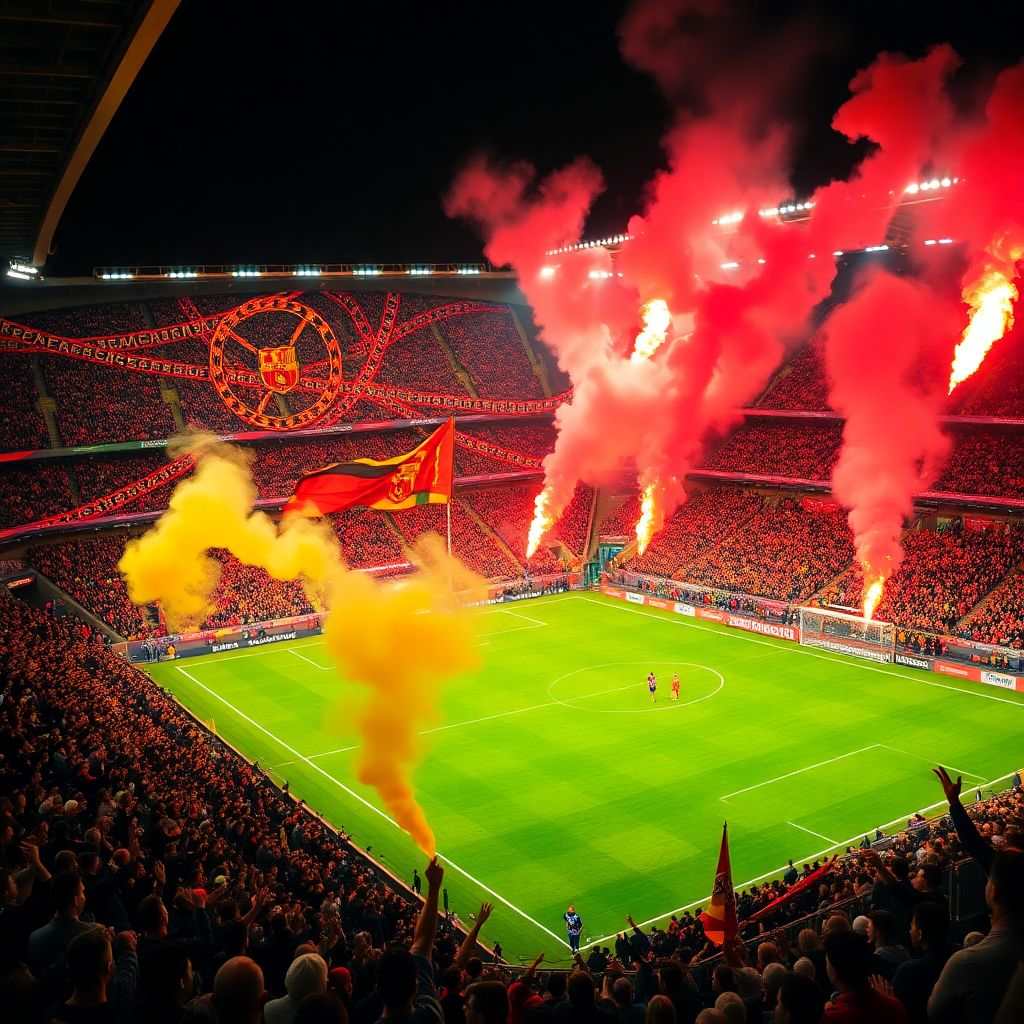
Ultras, barras and tifos are organized supporter cultures that turn football into a ritual of belonging and, at times, resistance. They mix singing, choreographies, banners and drums with strong group identity codes. Not all are violent or criminal; many focus on creativity, solidarity and defending local or club-based identities.
Debunking persistent myths about ultras, barras and tifos
- Myth: All ultras and barras bravas are violent gangs. In reality, most activity is routine support, with conflict concentrated in specific subgroups and moments.
- Myth: Tifos are spontaneous. Effective choreographies require weeks of design, fundraising and coordination, even when resources are minimal.
- Myth: You need a big budget. Many groups rely on reused fabric, hand-painted banners and shared drums instead of professional equipment.
- Myth: These groups only care about football. In many contexts they engage with neighbourhood struggles, anti-racist work or memorial practices.
- Myth: Buying entradas para partidos de ultras y barras bravas automatically makes you part of them. Membership involves long-term participation, not just attending a match.
- Myth: Camisetas y merchandising de barras bravas y ultras always mean radical politics. Often they signal style and belonging more than a precise ideology.
Origins and evolution of ultras, barras and tifo culture
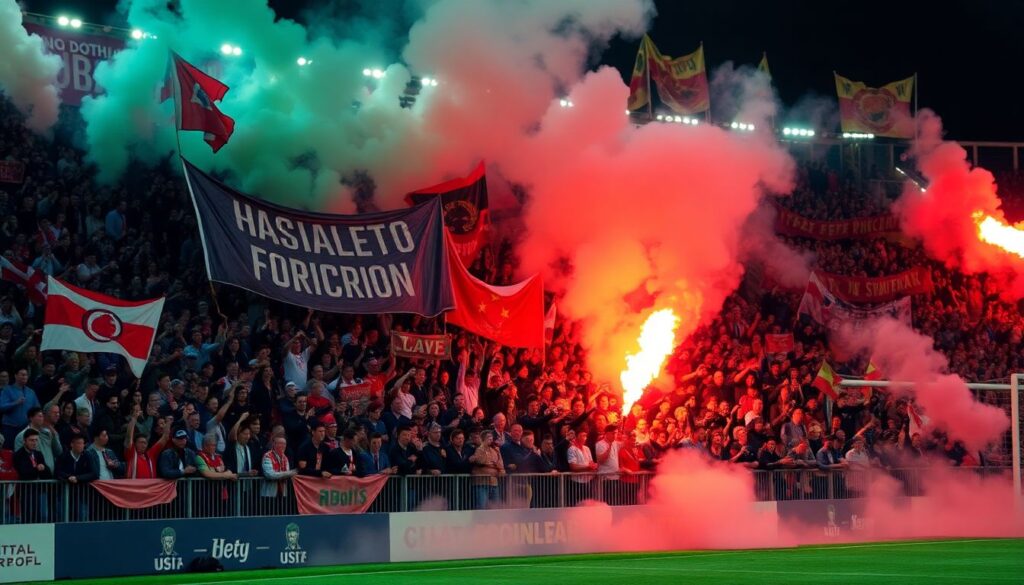
The term ultras comes from post-war Europe, especially Italy and later Spain, France and the Balkans. It defines highly organized, vocal and visually expressive groups located behind the goals. Their culture privileged permanent singing, pyrotechnics and collective banners as a distinctive way of being a fan.
In Latin America, barras bravas grew around similar logics of intense support but in different social conditions: strong class inequalities, fragile institutions and heavily politicized clubs. Drums, long flags, parades and street presence became central, while internal hierarchies and links with local power brokers sometimes deepened.
Tifo refers specifically to the visual performance in the stands: mosaics, giant banners, coordinated colour displays and choreographies. Tifo culture travels across regions: ultras in Europe, barras in South America and emerging groups in Africa or Asia exchange ideas online, reinterpreting practices according to their own histories and stadium regulations.
Today, these supporter cultures are transnational. Viajes organizados para seguir a ultras y barras de fútbol across borders, friendly tournaments and online forums create shared repertoires. At the same time, local rivalries, policing styles and club politics keep each group’s trajectory highly specific.
Rituals, symbols and mechanisms of collective belonging in stadiums
- Spatial anchoring: The group usually occupies a fixed sector (often behind the goal). This stable location becomes a home within the stadium, with its own rules, elders and newcomers.
- Chants and sonic power: Songs, drums and trumpets create a continuous soundscape. The venta de bombos y tambores para hinchadas de fútbol feeds this need, but many groups also share or repair instruments collectively to lower costs.
- Visual identity: Colours, scarves, flags and murals mark territory. Banderas tifos y material para animación en estadios turn abstract club symbols into lived experiences: a scarf raised at a key verse, a banner unfurled at kick-off.
- Dress codes and merchandise: Camisetas y merchandising de barras bravas y ultras are not just commercial items; they encode hierarchy, humour and memories of trips or conflicts. Low-budget alternatives include hand-painted shirts and group-made patches.
- Ritual time: Meeting hours before the game, marching to the stadium, repeating specific gestures at minute numbers or song cues creates a shared calendar that structures group life beyond the match.
- Initiations and micro-rituals: New members learn songs, rules and stories through practice. Helping with banners or carrying drums is often more valued than simply buying entradas para partidos de ultras y barras bravas in the best sector.
- Memory and storytelling: Names of deceased members, old victories and «classic» tifos are narrated as origin myths. These stories sustain belonging even when results on the pitch are poor.
Political dimensions: resistance, identity and mobilization
- Local and neighbourhood defence: In many Latin American and Southern European cities, barras and ultras act as informal guardians of barrios. They mobilize when stadiums are threatened by redevelopment or when ticket policies exclude low-income supporters.
- Anti-authoritarian and anti-racist stances: Some groups explicitly oppose police brutality, authoritarian regimes or racist behaviour in stadiums. Chants, banners and tifos can denounce discriminatory practices or celebrate migrant and working-class identities.
- Nationalism and territorial claims: Other groups align with nationalist or separatist projects, using flags and emblems to claim territory. In parts of Europe and Africa, football terraces have functioned as arenas for expressing contested national narratives.
- Social solidarity and welfare: Food drives, blood donations and community kitchens may be organized through supporter networks. Here, the same organizational tools used for viajes organizados para seguir a ultras y barras de fútbol are repurposed to move resources instead of people.
- Protest against commercialization: Tifos mocking football authorities, boycotts of certain games or refusal to sing for part of a match express resistance to rising ticket prices, scheduling changes or fan-unfriendly regulations.
- Ambivalent ties with formal politics: Parties and politicians sometimes court ultras and barras, offering favours in exchange for mobilization. This can turn supporter groups into powerful but also vulnerable actors in wider political struggles.
Organization, hierarchy and everyday practices within supporter groups
Supporter groups are not chaotic crowds. They are structured organizations with their own hierarchies, routines and internal conflicts. Understanding this internal architecture helps to see both their strengths (capacity to mobilize quickly) and their vulnerabilities (power concentration, gatekeeping, exposure to repression).
Collective strengths and possibilities for supporters
- Coordination capacity: The same networks that coordinate massive tifos and away trips can quickly organize petitions, charity actions or collective negotiations with clubs.
- Skill development: Members learn logistics, design, music, negotiation and conflict management. For younger supporters, this can be a first experience in collective responsibility.
- Mutual aid structures: Shared funds for fines or travel, collective purchases of banderas tifos y material para animación en estadios, and car-sharing to away games reduce individual costs.
- Alternative governance: Assemblies, informal councils and codes of honour create parallel political spaces where people experiment with decision-making different from official institutions.
- Visibility and bargaining power: A united curva can pressure clubs regarding horarios, pricing or security arrangements in ways that scattered fans cannot.
Internal limits, tensions and risks
- Rigid hierarchies: Long-standing leaders may monopolize decisions, control access to tickets and resources, or define who is «real» and who is not, limiting renewal.
- Gender and inclusion barriers: Many cultures remain male-dominated, with women, queer supporters or migrants facing extra scrutiny or marginal roles, despite slow changes in some contexts.
- Exposure to violence and criminal networks: Where state institutions are weak, alliances with local power brokers may pull groups into illicit economies, increasing risk for rank-and-file members.
- Dependency on club or political patrons: Discounts on entradas para partidos de ultras y barras bravas, free buses or direct payments can create clientelist ties that compromise autonomy.
- Burnout and resource strain: Sustaining high-intensity support every week is exhausting. Without mechanisms for rotation and care, core members can burn out or withdraw abruptly.
Tifo production: design, logistics and material repertoires
Tifo production is one of the clearest examples where myths about money and professionalism obscure what actually happens. In reality, most groups operate with tight budgets, improvising with local materials, voluntary labour and recycled fabrics while still achieving striking visual effects.
- Mistake: assuming only professionals can design tifos. Many of the most iconic choreographies began as sketches on paper or simple digital mock-ups shared in chat groups. Effective design depends more on clarity and contrast than on artistic virtuosity.
- Mistake: over-buying new materials. Instead of constantly purchasing brand-new banderas tifos y material para animación en estadios, groups often reuse old banners, sew together donated sheets or repaint existing cloths. For limited resources, focus on large blocks of colour rather than intricate details.
- Mistake: neglecting logistics. A brilliant design can fail if distribution, timing and communication in the stand are weak. Simple, rehearsed instructions and a few trusted coordinators are often more important than expensive gear.
- Mistake: ignoring stadium regulations. Large pyrotechnic displays or blocked exits can trigger bans and fines. Knowing local rules and negotiating exceptions with clubs or security may protect future activities.
- Mistake: equating scale with impact. Smaller, low-cost tifos can be powerful if tied to a clear message or emotional moment. Handwritten banners, coordinated scarves or phone lights can substitute for giant canvases when budgets are very limited.
- Mistake: forgetting sound. Visuals without synchronized chants or percussion lose part of their force. When funds for instruments are scarce, coordinated clapping patterns and vocal cues can partly replace large-scale venta de bombos y tambores para hinchadas de fútbol.
State, club and media responses: policing, regulation and contestation
Authorities, clubs and media construct ultras and barras as both assets (for atmosphere) and threats (for order). Policies range from collaboration and co-management of stands to heavy-handed policing, surveillance and blanket bans that often fail to distinguish between practices and actors.
A compressed example from a Southern European stadium helps illustrate typical dynamics and possibilities for alternative responses:
Case:
  Club: mid-table team in a major Spanish city
  Group: long-standing ultra group with mixed reputation

Timeline:
  1. Club raises prices and restricts flags & tifos.
  2. Group answers with silent protest, banners against directors,
     and a boycott of the first 15 minutes of home games.
  3. Media first frames them as troublemakers delaying kick-off.
  4. After several matches with a visibly empty and quiet curva,
     TV commentators and some players publicly note the lack of
     atmosphere and its impact on performance.
  5. Club opens negotiation:
       - partial rollback of price increase,
       - clear protocol for approving tifos,
       - joint committee with supporter reps and security.
  6. Result:
       - group commits to self-policing against racist or violent
         chants,
       - club recognizes the curva as a legitimate interlocutor.

Lessons:
  - Non-violent disruption (silence, absence) can be powerful.
  - Transparent rules on material and behaviour reduce arbitrary bans.
  - Dialogue does not erase conflict but channels it more constructively.
Clearing common misunderstandings about supporter rituals
Are ultras and barras always more authentic than other fans?
They perform a specific model of authenticity based on intensity and sacrifice, but that does not make other forms of support inferior. Families, casual fans and long-distance followers also sustain clubs in different ways.
Does buying group merchandise make me part of the barra or ultra group?
Wearing camisetas y merchandising de barras bravas y ultras may show sympathy, but membership usually requires regular participation, acceptance by existing members and contribution to collective tasks like tifo preparation.
How can small groups create tifos with almost no money?
Reuse old bedsheets, coordinate simple two-colour cards and time chants carefully. Focus on message and synchronization rather than size. Collaborative workshops in neighbourhood centres can replace professional studios.
Are organized trips only for hardcore or violent fans?
No. Viajes organizados para seguir a ultras y barras de fútbol often include families and older supporters. The key is clear internal rules, designated coordinators and agreements with bus companies or rail services.
Why do authorities sometimes ban drums, flags and banners?
Security agencies fear blocked views, fire risks or messages they consider inflammatory. Negotiating written protocols about allowed sizes, materials and wording can sometimes reopen space for banderas tifos y material для animación en estadios.
Is it possible to enjoy the atmosphere without joining an ultra group?
Yes. Many fans sit near the curva, follow chants and visual displays, and buy normal tickets rather than specific entradas para partidos de ultras y barras bravas. Participation is a gradient, not a binary.
Do supporter groups only act inside stadiums?
No. They organize charity drives, neighbourhood festivals, internal assemblies and commemorations. Stadium rituals are the most visible part of a broader social world built around the club.