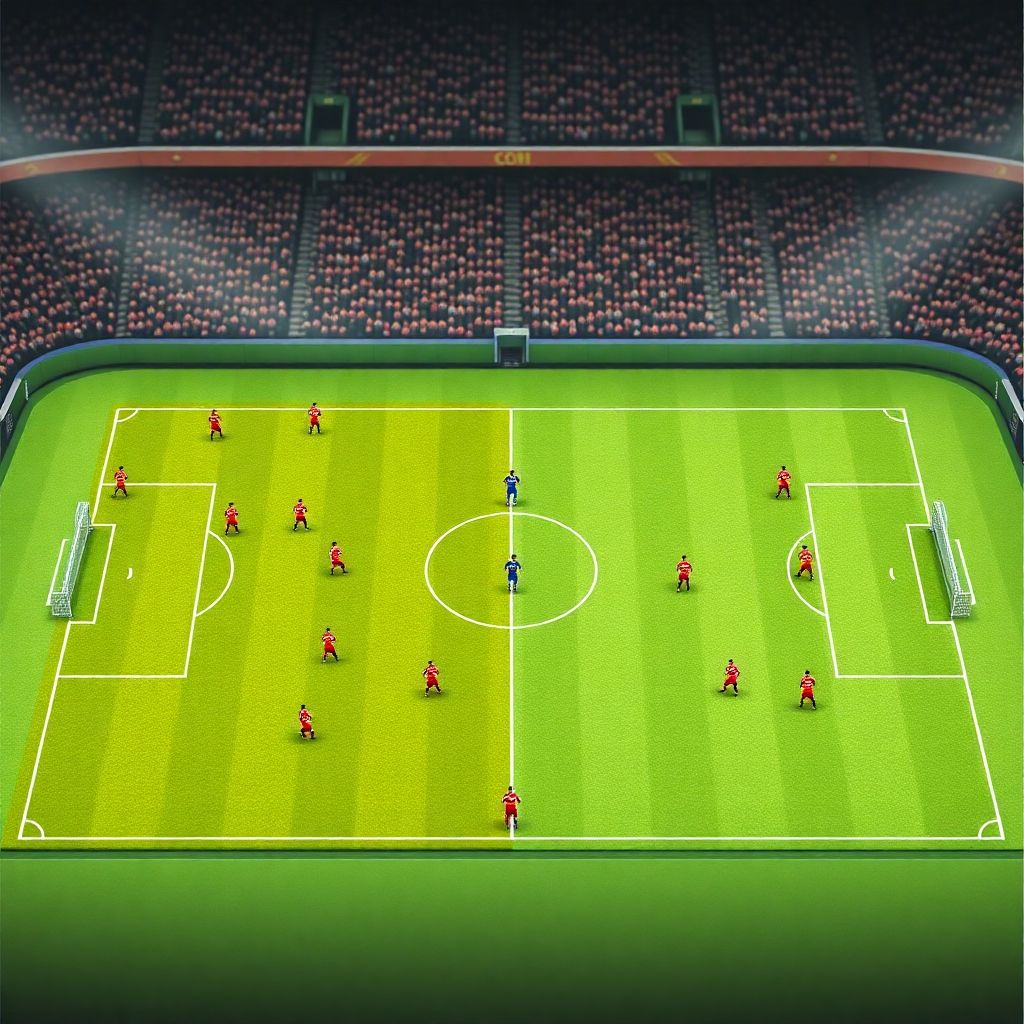
Tiki-taka, catenaccio and gegenpressing are three compatible but contrasting game philosophies: tiki-taka maximises control through possession, catenaccio minimises risk through compact defence, and gegenpressing maximises chaos in your favour through pressure after loss. The best option depends on your squad’s technical level, physical capacity, competitive context and club culture in Spain.
Foundational doctrines of tiki‑taka, catenaccio and gegenpressing
- Tiki-taka prioritises ball retention, positional play and short passing to dominate time and space, not just possession statistics.
- Catenaccio focuses on defensive structure, compactness and vertical counter-attacks, accepting long phases without the ball.
- Gegenpressing is built on collective pressing triggers, immediate ball recovery and fast attacks into destabilised defensive blocks.
- Tiki-taka demands technically strong, press-resistant players who understand rotations and positional zones in tight spaces.
- Catenaccio suits disciplined, patient squads comfortable in a low or medium block and strong in duels and aerial play.
- Gegenpressing requires high fitness, sprint capacity, synchronised pressing cues and direct forward options.
- Most Spanish teams benefit from a tailored hybrid, using tiki-taka in stable build-up and situational gegenpressing after loss.
The strategist’s lens: historical origins and cultural DNA
For a head coach, director deportivo or tactical nerd comparing tiki-taka, catenaccio and gegenpressing, use these criteria to choose the right backbone for your project:
- Squad technical baseline
In LaLiga and Segunda B contexts, favour tiki-taka if your midfielders are naturally comfortable receiving under pressure. If your group struggles with first touch and orientation, pure tiki-taka is risky, and a catenaccio-style compact block plus simple patterns may stabilise results. - Physical and conditioning profile
If GPS data shows strong high-intensity running and repeated sprint ability, gegenpressing can be central. If your best players are older or physically limited but tactically intelligent, a catenaccio táctica defensiva análisis often reveals that a tighter block with clear roles is more realistic. - Club identity and fan expectations
In many es_ES environments, socios expect proactive, on-ball football. A possession style aligned with the question tiki taka qué es y cómo aplicarlo will usually be better received than ultra-defensive setups, especially at home, even if results are similar. - League context and opponent archetype
In leagues where most rivals defend deep, pure catenaccio offers few counter opportunities. Instead, a tiki-taka framework with structured rest-defence and moments of gegenpressing is more efficient for breaking low blocks. - Time horizon of the project
Tiki-taka and sophisticated pressing structures require more training microcycles and a long-term process. If your mandate is short-term survival, a simplified defensive system plus clear transitions is often the fastest way to stabilise points. - Key talent around which you build
Creative mediapuntas and interiores thrive in tiki-taka; powerful central defenders and a top shot-stopper favour catenaccio; dynamic forwards who press and attack space fit gegenpressing best. Choose the system that amplifies your two or three best players. - Coaching staff expertise and resources
If your staff is comfortable designing gegenpressing entrenamiento y ejercicios with detailed pressing traps, you can press more aggressively. If staff are more experienced with block organisation and video analysis of defensive shape, catenaccio principles become safer to implement. - Training time per week
Amateur and semi-professional teams with few weekly sessions should avoid hyper-complex build-up structures. A lean version of tiki-taka plus basic counter-pressing, or a straightforward catenaccio block, is easier to automate.
Simple drill for the strategist’s overview: run a 7v7 + 3 neutrals possession game with touch limits and scoring zones. Track how many consecutive passes and controlled switches your team can execute before losing the ball; this indicates if a tiki-taka oriented project is realistic.
The coach’s playbook: formations, responsibilities and training patterns
The table below compares four practical variants you can choose as a head coach or grassroots trainer, including a balanced hybrid for Spanish amateur and semi-pro contexts.
| Variant | Suited for | Pros | Cons | When to choose |
|---|---|---|---|---|
| Pure tiki-taka (4-3-3 / 4-1-4-1) | Technically gifted squads; academies; teams dominating possession in their league. | Maximises control, reduces chaos, develops positional understanding; ideal for long-term club identity. | Vulnerable to high pressing if build-up is weak; needs training time and very good first touch in most positions. | Choose when you have creative interiors, a press-resistant pivot and time to train structured build-up. |
| Pure catenaccio (5-3-2 / 4-5-1 low block) | Underdog teams; squads with limited technique but strong defenders and goalkeeper. | Compact, hard to break; clearer roles; efficient for short-term survival and away games under pressure. | Limited attacking presence; demands constant concentration; fans may perceive it as negative football. | Choose when avoiding relegation is priority and your best players are centre-backs and keeper. |
| Aggressive gegenpressing (4-2-3-1 / 4-3-3) | Young, fit squads; teams comfortable without long possession phases. | Creates chances immediately after losses; disrupts opponent build-up; rewards work-rate and togetherness. | Very demanding physically; if press is broken, exposes back line; requires synchronised pressing cues. | Choose when fitness is your edge and you can invest in gegenpressing entrenamiento y ejercicios every week. |
| Balanced hybrid tiki-taka + gegenpressing | Intermediate-level squads; many Spanish regional and semi-pro teams. | Keeps identity with the ball while protecting against transitions; flexible; easier buy-in from players and board. | Conceptually demanding; risk of doing neither possession nor pressing at elite level. | Choose when you want possession as default but aggressive pressing immediately after losing the ball. |
Responsibilities by line for a hybrid tiki-taka + gegenpressing in a 4-3-3:
- Back four: wide positioning in build-up; immediate squeeze forward on loss to compress space and support counter-press.
- Pivot: main outlet under pressure; covers central lane on loss; leads communication of pressing or retreating.
- Interiors: create triangles, receive between lines; on loss, jump to nearest pass option to close inside channels.
- Wingers: maintain width, stretch block; activate pressing triggers on backward or square passes to opponent full-backs.
- 9: screen opposition pivot; start pressing cues; attack depth after regain.
Core drill for coaches: 6v4 build-up rondo in a 30x25m rectangle. The 6 play tiki-taka style; if the 4 win the ball, they have five seconds to score in mini-goals. Rotate roles so players learn both possession and immediate counter-pressing.
The analyst’s metrics: KPIs, data indicators and performance benchmarks
For performance analysts and data-inclined coaches, the choice between tiki-taka, catenaccio and gegenpressing should be validated through simple, trackable KPIs, not only intuition or mejores libros sobre tácticas de fútbol modernas.
- If your possession is high but chance quality is low, then:
- Reassess tiki-taka spacing; track progressive passes and entries into the final third, not only passes completed.
- Consider adding more direct gegenpressing transitions after recoveries instead of always re-circulating.
- If you concede many shots despite a low block, then:
- Your catenaccio táctica defensiva análisis should focus on block height, distances between lines and defending crosses.
- Measure allowed passes into your box corridor; if this stays high, your compactness is only theoretical.
- If your team tires early in the second half, then:
- You may be over-using gegenpressing; monitor high-intensity runs per player and adjust pressing windows.
- Switch to a mid-block for certain periods while maintaining pressing only on specific triggers.
- If your best players get few touches in valuable zones, then:
- Recalibrate roles: in tiki-taka, bring your creator closer to build-up; in catenaccio, design counters ending on that player.
- Track receptions between lines or in half-spaces per match as a decision metric.
- If your expected goals for and against stabilise but results do not, then:
- Stay with your chosen model; variance is normal. Avoid radical changes between philosophies every few weeks.
- Use rolling averages of xG, big chances and high regains to judge your system, not last weekend’s scoreboard.
Simple analytic exercise: tag three recent matches with events for ball recoveries within five seconds after loss, location of regain and outcome (shot, chance, foul, turnover). Compare these for matches where you applied more tiki-taka versus more gegenpressing emphasis.
The player’s discipline: technical skills, conditioning and mindset
For players and position coaches, use this quick checklist to decide which philosophy you personally should lean into and how to adapt your training.
- Assess your current strengths honestly
If you are technically secure and enjoy receiving under pressure, you fit tiki-taka demands. If you love duels, blocking shots and heading, you are naturally aligned with catenaccio principles. If you are a runner who presses and attacks space, gegenpressing suits you. - Choose one primary and one secondary identity
Decide: for example, primary tiki-taka with secondary gegenpressing. This helps you design weekly micro-goals instead of jumping between ideas with no direction. - Translate identity into drills
Tiki-taka players: daily positional rondos, one-touch combinations in tight spaces, oriented control. Catenaccio players: 1v1 and 2v2 defending in the box, clearances, blocking. Gegenpressers: repeated sprint training, pressing angle drills, reaction games. - Build your game intelligence
Regardless of style, study video. For tiki-taka, pause and predict where the free man will appear. For catenaccio, read when to step out or hold the line. For gegenpressing, anticipate second balls and pressing cues. - Develop a resilient mindset
All three philosophies demand mental toughness: tiki-taka requires patience and courage to play out; catenaccio needs concentration without the ball; gegenpressing demands acceptance of fatigue. Train focus with routines, breathing and pre-action cues. - Communicate with your coach
Share which drills help you most. Ask for feedback aligned with your chosen identity, or suggest attending a curso online de táctica fútbol tiki taka y gegenpressing together to synchronise concepts. - Evaluate progress monthly
Pick two metrics: for example, successful progressive passes (tiki-taka), duels won in your half (catenaccio) or high regains (gegenpressing). Track them on paper after matches and adapt training accordingly.
The opponent’s countermeasures: exploiting weaknesses and adaptive responses
From the perspective of opponents and pragmatic coaches, these are the most common mistakes when choosing and applying tiki-taka, catenaccio or gegenpressing.
- Copying elite models without matching resources
Trying to emulate peak Barcelona tiki-taka or Liverpool-style gegenpressing with amateur players and limited training time produces chaos and frustration. - Ignoring player profiles
Forcing a physically limited squad to press high or asking aerially weak defenders to defend endless crosses in a low block sets them up to fail. - Over-complicating build-up plans
Many coaches overload tiki-taka structures with too many rotations. Players then forget pressing roles and rest-defence, leaving huge spaces after losses. - Underestimating transition moments
Catenaccio is not just sitting deep; it lives from fast, planned counters. Tiki-taka is not only short passes but also structured rest-defence to stop counters. Gegenpressing fails if nobody covers depth. - Inflexible in-game behaviour
Some coaches insist on staying in a high press while the team is exhausted, or keeping a very low block when chasing a goal. A robust model allows changes of height and risk with simple in-game cues. - Misreading local conditions
On poor Spanish winter pitches, ambitious tiki-taka in your own box is dangerous. On very large artificial pitches, an extremely deep catenaccio block might allow unstoppable long shots and crosses. - Lack of clear communication to players
If players cannot summarise their role in one sentence in each phase (with ball, without ball, transitions), your tactical philosophy is still theory, not behaviour. - No feedback loop with analysis
Choosing a philosophy once and never confronting it with objective data or honest video review keeps you stuck, even if players work hard.
Practical countermeasure drill: run 10-minute phases in training where your team imitates the opponent’s style (e.g., deep catenaccio block) and then switch to your own model. Debrief what spaces appeared and how your philosophy can exploit them.
Implementing hybrid systems: practical steps for phasing and personnel
For most intermediate-level Spanish teams, pure tiki-taka is best for long-term identity and player development, pure catenaccio is best for short-term stability with underdog squads, and aggressive gegenpressing is best for young, fit teams; a balanced hybrid of tiki-taka plus situational gegenpressing is usually best for pragmatic, sustainable success.
Common practitioner queries and concise clarifications
Is tiki-taka realistic for amateur or regional teams in Spain?
Yes, but only in a simplified version. Focus on basic positional structure, short distances and one or two build-up patterns instead of complex rotations. Combine it with strong rest-defence and simple pressing cues after losing the ball.
When does a catenaccio-style low block make more sense than pressing high?
It makes sense when your squad is slower than opponents, physically limited or psychologically fragile after conceding space behind. A compact low or mid block reduces complexity and lets you defend zones instead of big spaces.
How can I start implementing gegenpressing without breaking my team physically?
Introduce short, high-intensity blocks of pressing in training and games, linked to clear triggers like a bad opponent touch or backward pass. Gradually extend the duration as fitness and coordination improve, instead of demanding full-game high pressing from day one.
What is a simple way to decide between 4-3-3 and 4-2-3-1 for a hybrid model?
If you have one clear pivot comfortable alone in front of the defence, 4-3-3 suits tiki-taka + gegenpressing. If you lack such a player, 4-2-3-1 with a double pivot offers more protection while still allowing pressing and counters.
Can I mix tiki-taka in possession with a catenaccio block without the ball?
Yes, but transitions are critical. If you play high-risk possession and then drop too deep after losing the ball, distances are huge. Design clear rules for when to counter-press and when to retreat to your block to avoid being stretched.
Which players benefit most from gegenpressing-focused football?
Dynamic forwards, energetic box-to-box midfielders and aggressive full-backs benefit the most. They get many opportunities to win back the ball high, attack open spaces and create chances quickly, even if the team does not dominate long possessions.
How important are books and online courses for understanding these tactics?

They are useful to organise your ideas and vocabulary, especially mejores libros sobre tácticas de fútbol modernas or a well-structured curso online de táctica fútbol tiki taka y gegenpressing. However, concepts must be adapted to your players, league and training time, not copied blindly.