
The historical No.10 has evolved from a free creator between the lines into a tactically conditioned piece integrated in pressing, structure and data-led decision making. From the enganche in South America to the mediapunta in Europe, the posición del 10 en el fútbol moderno mixes creativity with collective responsibility.
Core concepts behind the No.10’s historical shift
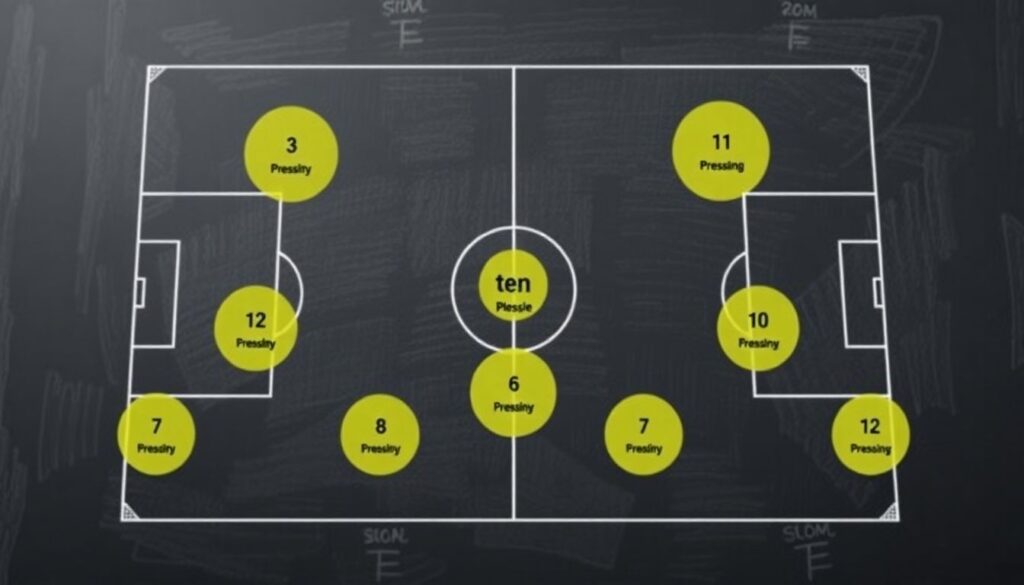
- The classical No.10 moved from a largely free role to a tightly choreographed position within collective pressing and compact blocks.
- The evolución del enganche en el fútbol is driven by higher intensity, zonal defending and better athletic preparation.
- Functions once reserved for the mediapunta clásico número 10 are now shared with interiors, wingers and even full-backs.
- Tactical flexibility created hybrid roles: false nine, inverted winger, advanced interior and box-to-box playmaker.
- Modern evaluation mixes eye test, video and data: reception between lines, progressive actions, counter-pressing and decision quality.
- Even in semi-professional or amateur contexts, coaches can replicate core No.10 principles with small-sided games and simple behavioural rules.
Roots and definition: the classical playmaker archetype
The historical No.10 is the advanced playmaker operating between midfield and attack, traditionally wearing shirt number 10. In many Spanish and Latin-American contexts this role is called enganche or mediapunta. Its essence: receive between lines, control tempo, and decide when, where and how to attack.
In the golden era, mejores números 10 de la historia del fútbol such as Pelé, Maradona, Platini, Zidane or Riquelme were allowed huge freedom. The team was often built around them: less defensive workload, maximal influence on the ball, supported by runners and destroyers behind.
Practically, the classical No.10 in a 4-3-1-2 or 4-4-1-1 had three core behaviours:
- Drift into pockets between opposition midfield and defence.
- Turn under minimal pressure and play vertical passes or shots.
- Conserve energy out of possession, pressing selectively rather than systematically.
In Spanish terminology, there are subtle diferencias entre mediapunta y enganche táctica. The enganche is often more static and purely creative; the mediapunta tends to attack the box more and press a bit more. For coaching purposes, both share the same central idea: they connect midfield and attack with vision and timing.
| Role label | Typical zone | Primary tasks | Defensive expectation |
|---|---|---|---|
| Enganche | Central, between lines | Final pass, rhythm control | Low, situational pressing |
| Mediapunta | Central/half-spaces, close to striker | Arrivals in box, link play, shots | Medium, first line of press |
| Interior playmaker | Half-space, deeper | Progression, switches, combinations | High, box-to-box work |
Mid-century expansion: creative autonomy and tactical latitude
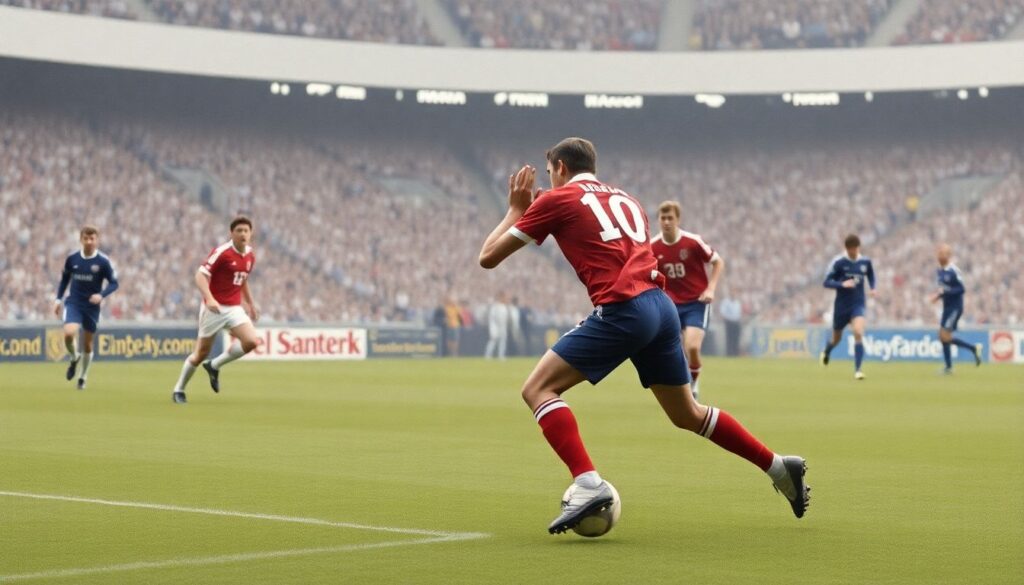
From the mid-20th century to the early 2000s, the No.10 gained unprecedented creative autonomy. Systems like 4-3-1-2, 4-4-1-1 and 3-4-1-2 created a protected central pocket where the star could operate almost as a director.
- Tempo control
Playmakers such as Rivelino or Cruyff dictated speed: slowing the game to draw pressure, then accelerating with a vertical pass. Coaching implication: build rondos and positional games where the No.10 has extra time touches and must decide when to play one-touch, two-touch or carry. - Directional freedom
Icons like Maradona or Zidane could roam horizontally and vertically, connecting both wings. Practically, coaches allowed them to break from the default zone if another player (full-back, interior) filled the vacated space. - Asymmetry as a weapon
Many teams overloaded the side of the No.10. For example, a left-sided enganche with an overlapping full-back and an inside forward created triangles. To reproduce this with limited resources, lock your best passer on one side and instruct the nearest winger and full-back to support inside. - Protection without the ball
Defensive specialists behind the No.10 absorbed workload. Think of Makelele behind Zidane, or Gattuso-Pirlo-Seedorf behind Kaká. In semi-pro teams, this can be one clear rule: when the No.10 presses late, the six stays; when the No.10 rests, an interior jumps. - Set-piece influence
No.10s were often main free-kick and corner takers, further increasing their impact. Training implication: concentrate set-piece reps on your playmaker but also develop a secondary taker to avoid predictability.
Tactical countermeasures: pressing, compactness and role restriction
As collective pressing and athletic standards rose, teams designed systems specifically to neutralise the enganche. Two pressing lines, compact blocks and aggressive screening of central spaces made the «free artist» model less sustainable, especially in elite European football.
- High pressing with cover shadows
Strikers and interiors block the passing lane into the No.10 rather than man-marking him. Coaching takeaway: teach forwards to use their body position to hide the mediapunta clásico número 10 from the ball-carrier. - Double pivot screening
4-2-3-1 and 4-4-2 with a dropping striker place two midfielders in front of defence, denying vertical passes. The No.10 is forced wide or deeper, away from his danger zone. - Compact low blocks
Defences keep 10-15 metres between lines, effectively squeezing the pocket. No.10s receive back to goal and under pressure, limiting their ability to turn. - Physical duels and rotational fouling
Hard pressing and small fouls disrupt rhythm. The playmaker tires faster, especially if he is also asked to defend more. - Role redefinition by coaches
Managers like Mourinho, Guardiola or Klopp demanded intense work from all attackers. The posición del 10 en el fútbol moderno became more about coordinated pressing triggers and less about pure inspiration.
Mini-scenarios to apply this defensively:
- Amateur 4-4-2 vs classic No.10: train your strikers to press centre-backs diagonally, cutting the lane to the playmaker, while your double pivot stays tight and narrow.
- Budget 4-2-3-1 vs creative mediapunta: instruct your holding midfielder closest to the ball always to be «touching distance» from the No.10 when the opponent plays centrally, and allow your wide players to collapse inside.
Hybridization: false nine, mezzala overlap and modern playmaker hybrids
To survive in the new context, the No.10 morphed into hybrid roles. Lionel Messi as false nine, David Silva as half-space interior, or Thomas Müller as Raumdeuter all express playmaker qualities without the classical «free» enganche position.
Modern coaches often hide their creative player in different lines or zones: as a winger coming inside, as a deeper regista, or as a striker dropping off. This helps avoid tight marking and integrates them into pressing schemes.
Advantages of the modern hybrid No.10
- Harder to mark because starting positions vary (wing, nine, interior).
- Better pressing structures, since all attacking players have clear defensive tasks.
- More runners beyond the ball, not only the playmaker serving passes.
- Flexibility to change shapes in-game (e.g., from 4-3-3 to 4-4-1-1) without substitutions.
- Adaptability for squads with limited specialist talent; creativity can come from the best passer available, not necessarily a traditional No.10 profile.
Limitations and trade-offs of hybrid roles
- The creative player receives fewer touches in central premium zones compared to a pure enganche.
- Some «artists» struggle with defensive intensity or wide tracking duties.
- Over-structured systems may reduce improvisation, especially under pressure.
- At lower levels, complex rotations between false nine, mezzala and winger are harder to coach and synchronise.
Performance criteria: physical, technical and data-driven expectations
Modern evaluation of No.10s combines physical output, technical quality and decision-making, often backed by data. Even without full analytics, coaches can approximate these criteria with simple counts (progressive passes, turnovers, high-intensity efforts).
- Myth: the No.10 does not need to defend
Reality: at most levels, a «walking» playmaker is a liability. Set a minimum rule: immediate 5-second counter-press after loss in his zone. - Myth: more touches equal more influence
Reality: quality and location matter more. Track how many receptions your playmaker has between lines and facing forward, not just total touches. - Mistake: isolating the playmaker from team structure
When the No.10 roams without coverage, he destabilises rest defence. Always pair his freedom with clear compensations from sixes or interiors. - Mistake: confusing luxury with responsibility
Greats among los mejores números 10 de la historia del fútbol carried huge responsibility in big moments, not just tricks. Build game-like drills where the playmaker must choose between risky pass, shot or reset with scoreboard pressure. - Myth: data kills creativity
Using basic data (lost balls in central zones, successful progressive passes) helps refine decision-making without restricting originality.
From concept to pitch: coaching methods and tactical templates for the contemporary No.10
Coaches with limited resources can still develop a functional modern No.10 using simple structures and small-sided games. The key is to link conceptual ideas (finding pockets, playing forward, pressing triggers) to repeatable habits on the pitch.
Practical template: 4-2-3-1 with a responsible mediapunta
Base idea: use a mediapunta as central «3» who presses as a second striker and attacks the box like a third forward. Suitable for intermediate teams in Spain with standard athletic level.
- Starting positions
- No.10 stays between opposition pivots, slightly on the strong side of the ball.
- Wingers stay high and narrow in the half-spaces to combine.
- Double pivot staggered: one behind the ball (holding), one slightly higher (support).
- In-possession rules
- If the six receives under no pressure, No.10 checks into the pocket between opposition lines.
- If the ball goes wide, No.10 moves to the near half-space to form a triangle with winger and full-back.
- On the opposite side, far winger attacks the far post while No.10 attacks the penalty spot.
- Out-of-possession rules
- When the striker presses a centre-back, No.10 jumps to the nearest pivot, forcing play wide.
- When the ball is wide, No.10 drops next to the closest pivot to form a 4-4-2 block.
Low-budget training routine for evolving the enganche
This micro-cycle suits amateur or youth teams working on the evolución del enganche en el fútbol towards a modern, responsible playmaker.
- Day 1 – «Pocket awareness» rondos
- 6v3 in a rectangle, with the No.10 fixed inside, playing for the team in possession.
- Constraint: the No.10 must receive facing forward and play a vertical pass within three touches.
- Day 2 – Half-space finishing
- 7v5 in one half: back four, two pivots, No.10 vs five defenders.
- Objective: No.10 combines in half-space and finishes or assists in under eight seconds.
- Day 3 – Counter-pressing trigger
- 8v8 on reduced pitch: every time the No.10 loses the ball in central zone, his team has five seconds to recover or concedes a point.
- Emphasis: sprint reaction, pressing angle, blocking inside pass.
Even without GPS or full video, simple tracking sheets (receptions between lines, progressive passes, immediate presses after loss) help you measure and communicate progress to your mediapunta and other creative players.
Practical clarifications on deploying the No.10 in modern systems
How is a mediapunta different from a traditional enganche tactically?
The mediapunta usually attacks the box more, presses higher and accepts more running, while the enganche stays central and prioritises final passes. Functionally, the mediapunta is closer to a second striker; the enganche is closer to a pure playmaker.
Can a team without a «genius» still play with a No.10?
Yes. Redefine the role as your best decision-maker between lines, even if he is more dynamic than artistic. Focus on simple rules: receive between lines, play forward when safe, and press immediately after loss.
Which formations best protect a classic No.10 in today’s game?
4-2-3-1 and 4-3-1-2 still suit a protected No.10, provided the double pivot or three-man midfield covers his defensive gaps. At lower levels, a narrow 4-4-1-1 can also work if wingers are disciplined.
How do I coach a false nine as a modern No.10 alternative?
Teach the striker to drop between lines when centre-backs have the ball, then spin behind after laying it off. Pair him with aggressive wingers attacking the channels, so central overloads translate into depth runs.
What physical profile is ideal for the contemporary No.10?
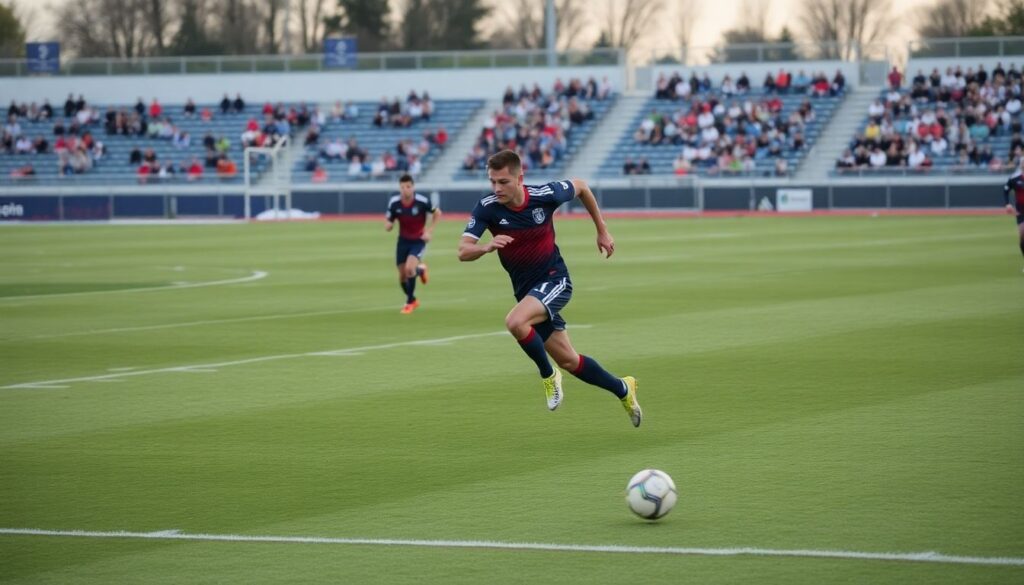
Acceleration over long-distance endurance, agility to turn in tight spaces, and enough strength to protect the ball. At semi-pro level, prioritise ability to repeat high-intensity sprints over pure top speed.
How can I measure my playmaker’s impact without advanced data?
Use simple tallies per match: receptions between lines, progressive passes completed, key passes, shots from central zones, and successful counter-presses within five seconds of loss. Compare these over several games rather than focusing on a single performance.
Are wide playmakers a good option if I lack a central No.10?
Yes. Invert your most creative winger into the half-space and allow a full-back to provide width. This recreates many No.10 behaviours while keeping your structure compact and easier to coach.