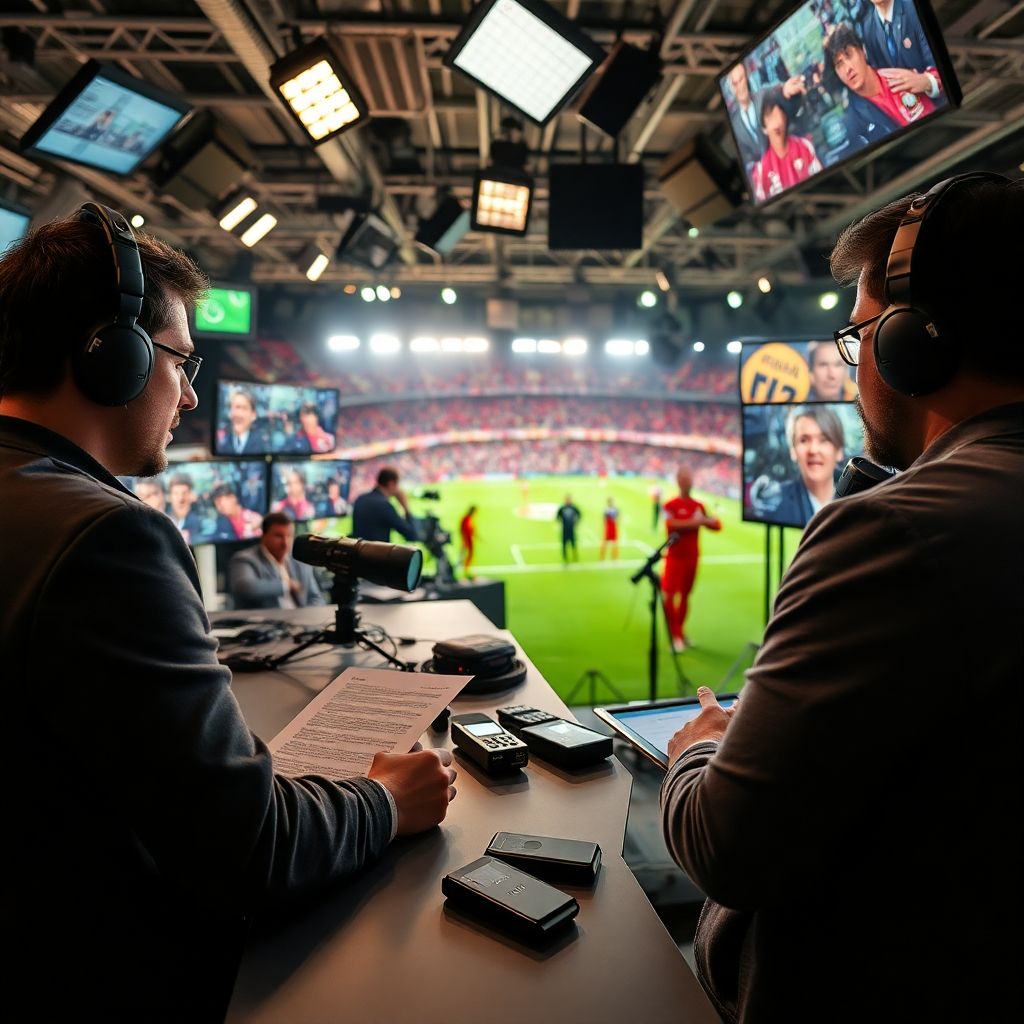
Sports media narratives are selective stories built around real events, but simplified into heroes, villains and dramatic arcs. In the Spanish context, especially in football coverage, these relatos organise complex seasons into emotional episodes, influenced by club rivalries, audience demand, newsroom routines and the business models of the mejores periódicos de deportes online.
Core claims and journalistic frames
- Relatos are narrative frames that reduce complex realities into easy-to-follow stories about conflict, redemption or failure.
- They are shaped by commercial pressure, audience expectations and limited newsroom resources, not only by facts.
- Transfers, clásicos and crises around big clubs amplify hero-villain storytelling in the prensa deportiva española últimas noticias.
- Verification practices exist, but often arrive late and are weaker than promotional and click incentives.
- Relatos influence fan identity, public debates and sometimes club decisions, showing the impacto de la prensa deportiva en la opinión pública.
- Readers can learn to separate evidence from narrative by checking sources, language and missing perspectives.
How sports media constructs narratives
In sports journalism, a relato is a recurring storyline that explains why a team wins or loses, who is responsible and what it says about a club’s supposed identity. It goes beyond reporting scores and line-ups; it connects isolated matches into a larger myth about greatness, decline, betrayal or rebirth.
Spanish football coverage offers clear examples. A young forward who scores in two big games can quickly become the «new leader» of a generation, while an ageing defender is framed as the symbol of decline. On many sports portals, especially those chasing clicks with titulares about the prensa deportiva española últimas noticias, the same storyline is repeated across match reports, opinion columns and talk shows.
Newsrooms build these narratives through selection and emphasis: which quotes to highlight, which stats to ignore, whose perspective to prioritise. Even without bad intentions, tight deadlines and dependency on club communication staff make it easier to follow an existing relato than to question it with an análisis crítico medios de comunicación deportivos.
Quick checklist: recognising when a story is becoming a relato
- Ask whether the same label for a player («genius», «disaster») appears across multiple articles regardless of recent performance.
- Notice if complex tactical or financial issues are reduced to a single «culprit» person.
- Check if an alternative explanation (injuries, schedule, budget) is missing or mentioned only briefly.
Mechanisms of myth‑making: sources and incentives

Narratives do not appear by magic; they are produced through routines and incentives that reward drama. Key mechanisms include:
- Selective sourcing: Heavy reliance on club press officers, agents and a small circle of «insiders» encourages repetition of flattering or strategic leaks.
- Headline pressure: Editors favour stories that fit popular clichés (warriors, mercenaries, eternal promises) because they are easier to sell to large online audiences.
- Time constraints: With rolling updates and live blogs, there is little time to rewatch matches or cross-check rumours, so first impressions become lasting myths.
- Audience segmentation: Some outlets lean toward certain clubs; this can unconsciously colour who becomes hero or villain in their coverage.
- Platform algorithms: Social networks reward outrage and exaggeration, pushing journalists to frame decisions or gestures as dramatic turning points.
- Business models: Free sites depend on page views, while a suscripción prensa deportiva digital may encourage deeper analysis but still needs attention-grabbing hooks.
Quick checklist: tracing the forces behind a narrative
- Identify whose voices are quoted: players, coaches, agents, anonymous «sources close to the club» or independent analysts.
- Compare coverage of the same event in at least two mejores periódicos de deportes online to see how incentives differ.
- Notice whether corrections or follow-ups appear when early dramatic claims turn out to be exaggerated.
Rhetorical devices that turn players into heroes or villains
Sports writers and presenters use specific language tricks that turn individuals into symbols. Recognising these devices helps distinguish information from fabrication:
- Epic metaphors: Describing a player as a «gladiator», a «general» or the «saviour of the nation» turns a normal performance into a moral epic, even in routine league matches.
- Over-personalisation: Complex outcomes (tactics, fitness, refereeing) are reduced to one star’s «character» or alleged laziness, making failure a matter of personality, not context.
- Moral framing: Contract disputes are written as loyalty dramas («betrayal», «love for the badge»), ignoring negotiation realities and power asymmetries.
- Selective memory: A striker’s missed penalty in a derby can erase months of good form in the narrative, or one great night can «wash away» a season of poor displays.
- Binary labelling: Players quickly move from «future Ballon d’Or» to «flop» in headlines, especially when the prensa deportiva española últimas noticias needs quick angles after a defeat.
- National and regional scripts: Spanish, Catalan or Andalusian identity is sometimes used to frame behaviour (bravery, coldness, passion) in stereotypical ways.
These devices do not always mean bad faith; they are shortcuts that make stories vivid but can distort reality. For readers with limited time or access, relying only on these shortcuts instead of watching full matches or reading diverse sources reinforces myths.
Quick checklist: spotting hero-villain rhetoric
- Underline emotional or epic words in an article and ask whether they describe facts or project intentions and values.
- Look for sudden shifts in tone about a player after one high-profile match; question the stability of such judgments.
- Compare the language used for similar mistakes by different players to check for bias (age, nationality, club).
Separating evidence from storytelling: verification practices

Responsible sports reporting tries to balance excitement with verification. In practice, verification means more than checking the score; it includes watching full games, using trustworthy stats, and confirming transfer information with multiple independent sources, not just a single agent or club insider.
However, verification competes with low budgets and speed. Not every newsroom has data specialists or video analysts, and smaller regional outlets in Spain may rely on wire copy and club press releases. For fans without money for multiple subscriptions or advanced tools, learning simple verification habits is a realistic alternative.
Verification tools and strengths
- Use of public data platforms (shots, xG, pressing metrics) to check whether a player’s narrative matches performance trends.
- Cross-checking transfer rumours across outlets with different editorial lines before treating them as confirmed.
- Rewatching key moments via open highlights instead of relying only on still images or viral clips.
Limitations and common weak points
- Dependence on club-controlled interviews and behind-the-scenes content that are closer to marketing than journalism.
- Lack of time and staff to investigate structural issues like finances, academy policies or governance.
- Paywalled data and analysis that make deeper verification harder for readers who cannot afford a suscripción prensa deportiva digital.
Quick checklist: reader-level verification with limited resources
- Use free highlight packages and basic stats pages to test whether a narrative about a player’s form is plausible.
- Wait 24 hours before fully believing transfer «bombshells», especially when sourced to unnamed insiders.
- Seek at least one análisis crítico medios de comunicación deportivos (blogs, podcasts, newsletters) that is not tied to your club.
Consequences for athletes, clubs and public opinion
Hero-villain narratives do not stay on paper; they affect careers, locker rooms and even policy debates. When a player is consistently framed as selfish or problematic, sponsors, coaches and national-team selectors may distance themselves, regardless of objective performance data.
At club level, presidents and boards monitor front pages and trending topics. Repeated calls in the press for «hand of steel» or «cleaning the locker room» can push leaders toward symbolic decisions-like firing a coach after one bad run-to satisfy a storyline rather than a strategic plan.
For society, the impacto de la prensa deportiva en la opinión pública goes beyond football. Debates around racism in stadiums, women’s sports or public spending on facilities are filtered through existing relatos of «real fans», «political correctness» or «modern football against tradition». Simplified frames can block nuanced reforms.
- Myth: the press only reflects what fans already think. In reality, sustained campaigns can normalise certain views and change expectations.
- Myth: criticism always makes players stronger. Constant vilification can damage mental health and performance, especially for younger athletes.
- Myth: clubs ignore media pressure. In practice, many communication strategies and signings are shaped to manage or exploit narratives.
- Myth: only big national outlets matter. Local radio, YouTube channels and fan accounts often amplify and radicalise relatos started in mainstream media.
Quick checklist: evaluating consequences before sharing a story
- Consider how sharing a harsh opinion piece might affect a specific player or group, especially in smaller leagues.
- Ask whether a proposed «solution» in an article is symbolic (firing someone) or structural (changing processes).
- Reflect on whether your own view of a player or coach is based on direct observation or mostly on second-hand narratives.
Ethical standards and remedies in sports reporting
Ethical sports journalism seeks accuracy, fairness and independence, even when covering entertainment. This means separating commentary from news, signalling speculation clearly, avoiding discriminatory language and giving subjects a chance to respond to serious allegations. It also involves acknowledging mistakes instead of quietly editing them away.
When resources are limited, full investigative projects may be unrealistic, but basic remedies are still possible: simple fact-checking checklists in newsrooms, internal bans on certain sensationalist labels, and transparent corrections pages. Readers can support outlets that follow such practices, including smaller local sites or newsletters that offer slow, contextual coverage instead of permanent outrage.
Consider a mini-case: A rumour appears that a player «rebels» against the coach. An ethical workflow could look like this pseudo-code:
If (only one anonymous source) then

  publish as comment, not as confirmed news;

  seek response from player's camp and club;

  update headline once additional, named sources or documents appear;

else

  clearly mark what is confirmed, disputed or speculative.
Quick checklist: supporting better ethics with few resources
- Prioritise outlets that differentiate news, opinion and rumour in their layout and headlines.
- Value longer, contextual pieces-even if less frequent-over constant «breaking» items about minor issues.
- As a reader, reward corrections and transparent explanations of errors instead of mocking them.
Reader self-audit: am I consuming relatos or reporting?
- Do you regularly compare at least two different sources (national and local) before forming a strong opinion about a controversy?
- Can you explain your view of a player using specific matches and actions, not just media labels?
- Have you recently changed your mind about a narrative after checking data, rewatching highlights or reading a deep-dive?
- Do you follow at least one outlet or creator focused on análisis crítico medios de comunicación deportivos, not only club-aligned channels?
Clarifications on common doubts and misinterpretations
Is every emotional sports article a sign of manipulation?
No. Passion is part of sports, and good writing uses emotion. Manipulation appears when emotion replaces facts, alternative views are ignored and labels (hero, traitor, clown) become more important than verifiable information.
Can small local outlets be more reliable than big national brands?
Yes, especially for daily training reports, youth teams and local context. However, they may depend more on club relations. Comparing them with national coverage of the same issue helps balance proximity and independence.
How can I follow prensa deportiva española últimas noticias without being trapped in narratives?
Alternate fast-consumption sources (live blogs, social networks) with slower formats like long reads, tactical analysis and podcasts. Even with limited time, dedicating one deeper session per week offers a corrective to daily hype.
Is paying for a suscripción prensa deportiva digital always better than using free sites?
Not always, but subscriptions often fund longer investigations and more diverse coverage. If budget is tight, share a subscription with friends or mix one paid outlet with carefully chosen free blogs and public-service broadcasters.
How do I explain media narratives to younger fans or kids?
Use simple examples: show two headlines about the same match and ask what is similar and what is different. Emphasise that even adults can be wrong and that changing your mind with new information is a strength.
Do analytics and data automatically eliminate biased relatos?
No. Stats can be cherry-picked to support a preferred story. What helps is transparent methodology, open data sources and explanations of uncertainty, combined with video and contextual knowledge.
Are fan-made channels part of the problem or the solution?
Both. Some reproduce the harshest hero-villain patterns, while others offer nuanced, critical perspectives. Check how they handle disagreement, corrections and sources to decide whether they improve or worsen the information ecosystem.