
Kids, academies and the global market: what are we really building?
When parents look at glossy brochures of international academies, it’s easy to feel we’re shopping for future stock options, not nurturing human beings. Brochures talk about “ROI on education”, “early leadership pipelines”, “global competitiveness”. Behind the marketing, a hard question hides in plain sight: are we educating kids to live meaningful, autonomous lives, or are we quietly shaping them as future assets for the global market? The tension is real: families want financial security for their children, but they also want empathy, curiosity and inner freedom. The challenge is not to reject business preparation, but to put it in its proper place: as one tool in a much larger human toolkit, instead of the central purpose of childhood.
From human beings to “human capital”: how we got here
Over the last 20–30 years, education has absorbed the language and logic of business. Schools promise “outcomes”, “KPIs”, “benchmarks” and “placement statistics” as if children were financial products. academias de alto rendimiento académico para niños con proyección global sell the dream of a frictionless path into elite universities and multinational jobs, reducing learning to an efficiency race. At the same time, the economy really has changed: automation eats routine jobs, and global competition is tough. So parents understandably worry: will my child be left behind if we don’t play this game? The trap lies in believing that more pressure, more early specialization and more branding will automatically create a fulfilled adult. In reality, the data on burnout, anxiety and loss of intrinsic motivation among high‑performing teens suggest the opposite.
Inspiring examples: when global education still feels deeply human
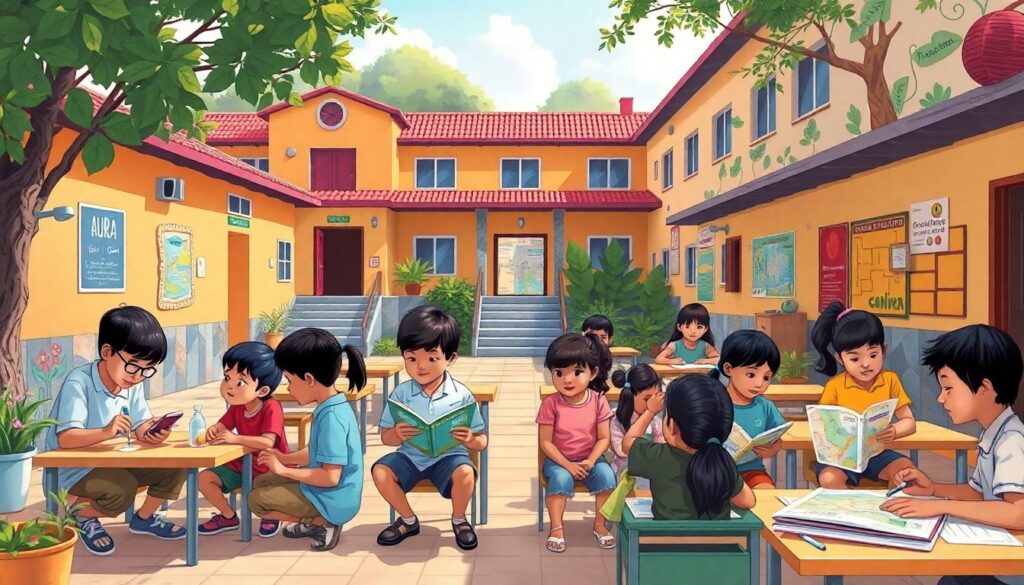
There are academias para niños con enfoque bilingüe y preparación internacional that consciously resist turning childhood into a corporate boot camp. One Latin American school, let’s call it Aurora, runs a bilingual Spanish–English curriculum tied to the local community. Kids as young as 8 investigate issues like water quality, small family businesses or urban gardens, interviewing neighbors in two languages. Yes, they learn presentation skills and basic economics, but the focus is on listening, empathy and real‑world questioning. Another case from Scandinavia: a public school opened a “global lab” where 11–14‑year‑olds run micro‑projects with partner schools in Kenya and India. Instead of ranking kids by test scores, teachers assess collaboration, resilience and ethical reflection. Alumni data show a significant share later enter business and tech, but also social work, arts and public policy. These examples show that preparing for a global market does not require ignoring values, mental health and civic responsibility.
Real case: a “mini‑MBA for kids” that had to change course
A private after‑school center in Spain launched what it proudly called a “mini‑MBA” for 10–14‑year‑olds. The program looked impressive on paper: business plan writing, pitching to investors, basic accounting, even personal branding on social media. Parents loved the idea, enrollments soared. But by the second year, problems surfaced. Many kids started seeing every hobby as a potential startup; some were anxious because their “ventures” didn’t grow fast enough. Teachers noticed that creativity was narrowing: students focused on what could be monetized and avoided projects that didn’t promise quick “market traction”. After an external evaluation, the founders radically rebuilt the concept. They cut competition‑heavy pitch days, added modules on ethics, sustainability and failure, and brought in social entrepreneurs and artists alongside startup CEOs. Three years later, the same center reports fewer “Instagram CEOs” and more balanced teenagers who understand money as a tool, not an identity. This shift—from fabricating market assets to educating reflective young people—made the program healthier without making it less rigorous.
What actually works in business‑oriented education for kids
Around the world, mejores colegios privados para niños con formación en negocios y liderazgo are quietly updating their models. The pattern in successful cases is clear: they don’t mistake early exposure for early specialization. One well‑known Hong Kong school studied its graduates over a decade. Those who took entrepreneurship electives but also art, philosophy and community service turned out more adaptable, less prone to burnout and ultimately more successful in diverse careers than peers who followed a pure “business fast track”. Another example from a US charter network: they integrated “design thinking” into science and humanities instead of isolating it as a separate “startup” course. Kids prototype solutions for real school problems—waste reduction, peer conflict, inclusive playgrounds. Some projects later become small enterprises, but the main metric is learning depth and social impact. The thread across these stories is that business skills serve curiosity and responsibility, not the other way around.
Designing healthy programs: recommendations for parents and educators
If you’re evaluating programas educativos para niños orientados al emprendimiento y finanzas, start by asking what the program assumes about childhood. Does it see kids primarily as future workers, or as present‑tense people with rights to play, wonder and rest? Look for curricula where financial literacy is taught alongside emotional literacy: budgeting and investing paired with discussions about generosity, inequality and long‑term well‑being. Pay attention to assessment: if every project is graded in terms of “market potential”, that’s a red flag. Strong programs let kids experiment, pivot and even abandon ideas without stigma. Another key indicator is who kids meet: are guest speakers only startup founders and bankers, or also social workers, activists, scientists and artists? A genuinely global education exposes children to multiple definitions of a “good life”. Finally, watch how teachers talk about failure: when it’s framed as data and growth rather than shame, kids build inner resilience instead of fragile perfectionism.
Case study: turning a student company into a community lab
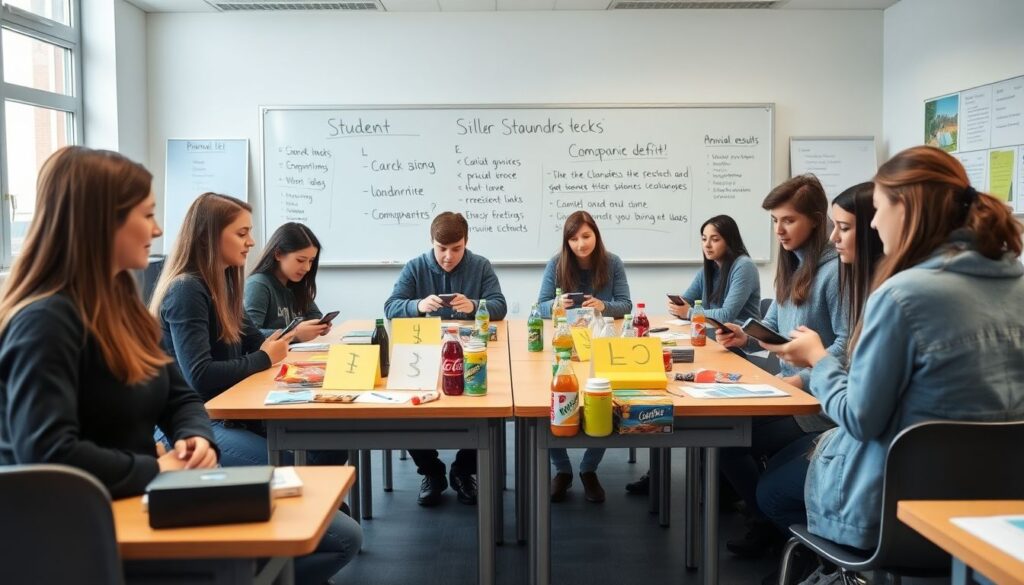
Consider a concrete story from a European secondary school where 15‑year‑olds had to create a student company. Initially, the goal was conventional: generate profit, distribute dividends, present annual results to parents. Unsurprisingly, teams rushed to sell snacks and phone accessories—low creativity, quick cash. A new principal shifted the rules: profits had to be reinvested in community benefit, and impact would count as much as revenue. Within two years, the nature of projects changed. One team designed low‑cost tutoring for migrant kids using bilingual volunteers; another created a bike‑repair service combining mechanics and environmental education. Students still learned accounting, marketing and negotiation, but their self‑description changed. Instead of saying “We’re little entrepreneurs making money,” they began to talk about solving problems they cared about. When these graduates later entered universidades and escuelas de negocios para jóvenes y adolescentes con formación práctica en mercado laboral, they arrived with a much broader sense of purpose and a stronger ethical compass. The market didn’t disappear from their horizon—but it stopped being the only horizon.
Global projection without losing the soul of learning
In a hyper‑connected world, pretending kids won’t face global competition is naive. The real question is how to help them develop “global projection” without flattening their identities. academias para niños con enfoque bilingüe y preparación internacional can do this well when they root bilingualism not just in exam prep, but in genuine intercultural dialogue: reading authors from different continents, debating climate justice, collaborating on joint projects with partner schools abroad. Similarly, academias de alto rendimiento académico para niños con proyección global don’t have to be pressure cookers. Some Japanese and Canadian schools now limit homework in lower grades, introduce mindfulness and outdoor education, and bring in psychologists as core staff, not emergency support. These systems aim for depth over constant acceleration. Students still access top universities, but with fewer psychosomatic issues and a healthier relationship to achievement. The lesson: high performance and humane conditions are not enemies; they require deliberate design.
Practical resources to build balanced, business‑aware kids
Parents don’t have to wait for the perfect institution to appear. There are accessible resources to introduce business thinking in a human‑centered way at home. Age‑appropriate books on money can open conversations about saving, giving and conscious spending. Simple family practices—like involving kids in planning a vacation budget or comparing prices at the supermarket—build financial literacy without pressure. Online platforms offer project‑based courses where children design small initiatives around causes they care about, from animal shelters to recycling, instead of chasing the next “unicorn” idea. For older kids, short workshops from reputable escuelas de negocios para jóvenes y adolescentes con formación práctica en mercado laboral can be powerful, as long as parents discuss with them not just “how to win”, but also what success means and how to protect mental health. Mentors from diverse fields—nurses, engineers, social entrepreneurs, craftsmen—anchor kids in the reality that valuable work takes many forms, not only high‑status corporate roles.
So, educate people or manufacture market assets?
The choice between educating full human beings or manufacturing future market assets is, in practice, a daily series of small decisions. It shows up when a teacher praises a child only for grades and not for kindness; when a school markets itself purely through university placement statistics; when parents brag about their 10‑year‑old’s “startup” but never mention whether the child sleeps well or has real friends. We don’t need to demonize business education, nor pretend money doesn’t matter. What we need is a clear hierarchy of values: the economy exists to serve people, not the other way round. When academies, families and communities keep that order in mind, business skills become what they should be—a set of useful tools in the hands of curious, ethical, emotionally grounded young people. Then the global market gains not just “human capital”, but actual humans capable of reshaping that market in more just and sustainable ways.