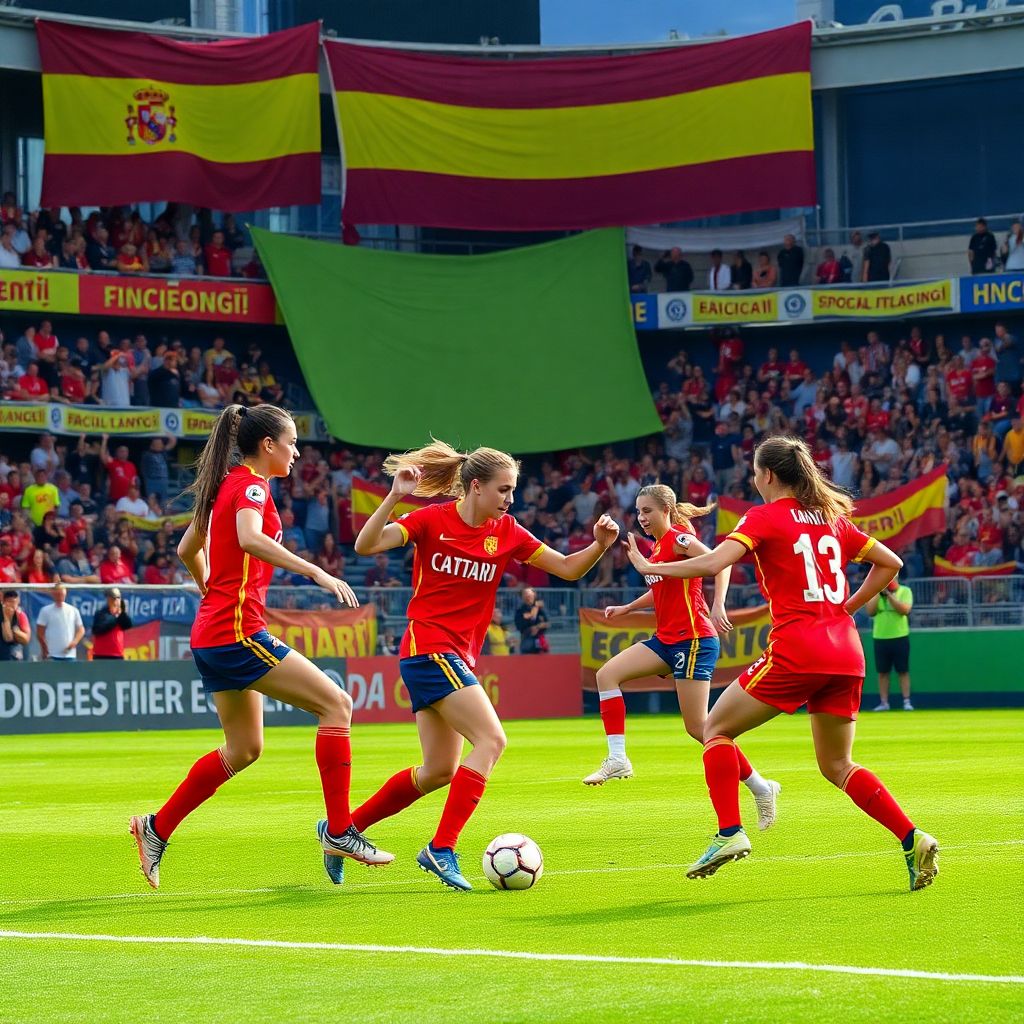
Women's football is both a sport and a cultural struggle: a long fight for recognition, resources and respect inside a historically male football ecosystem. It covers barriers, milestones, professionalisation, fan culture and policy tools that reshape how we play, watch, fund and talk about the women's game, especially in contexts like Spain.
Core concepts and defining terms
- Women's football: organised football played by women and girls, from grassroots to elite, with its own competitions, labour conditions and fan cultures.
- Recognition gap: distance between the real sporting quality of women's football and the visibility, pay, facilities and media attention it actually receives.
- Structural inequality: systematic patterns in funding, governance and media that favour men's football even inside the same clubs and federations.
- Professionalisation: process of securing contracts, social protection, stable calendars and career pathways for women players, coaches and staff.
- Cultural resistance: stereotypes, jokes and biased coverage that devalue the women's game and limit attendance, sponsors and youth participation.
- Transformative policies: rules, incentives and monitoring that push clubs, leagues and media to close gaps in pay, facilities, visibility and decision-making.
Historical barriers and milestones in women's football
The modern history of women's football is defined by prohibition, tolerance and, finally, partial recognition. For decades, many federations informally or formally blocked mixed-gender play, refused access to stadiums and limited registration for women's clubs, making organised competition almost impossible.
In Europe and in Spain, informal women's teams often played charity matches or friendlies in marginal time slots, with little documentation and no stable leagues. This "invisible" period is a barrier in itself: without records, it is harder to claim tradition, negotiate with federations or show a continuous fan base.
Key milestones are usually: the first official national competitions, the creation of a national team, integration into the national federation, and the launch of a top women's league. For Spain, the consolidation of the top tier and the growth of the liga fútbol femenino España horarios y precios published alongside men's fixtures signalled a shift from improvisation to planning.
Each milestone moves the women's game from being "tolerated" to being a formal part of the football system. Yet history also shows that recognition can be fragile: financial crises, governance changes or scandals can easily be used as excuses to recentralise power and resources in the men's side.
Structural inequalities: funding, media and governance
Structural inequalities explain why progress is uneven even when big matches fill stadiums. They are less about individual bad intentions and more about systems and incentives that routinely prioritise men's football in budget, scheduling and visibility.
- Funding allocation inside clubs
Problem: Shared-club structures often reinvest commercial income from women's success back into men's squads, leaving women's teams underfunded.
Intervention: Ring-fence a minimum percentage of club revenue (including ticketing and merchandising from women's matches) for women's football operations and youth academies.
Expected outcome: Predictable budgets for women's squads, improved facilities and more sustainable planning beyond one-off star signings. - Media rights and exposure
Problem: Central media deals bundle women's football as "extra content", making it easy for broadcasters to bury games in poor slots or secondary platforms.
Intervention: Negotiate standalone media packages with clear minimum match broadcasts and promotion commitments for women's competitions.
Expected outcome: Regular TV and streaming presence that supports higher attendance and more informed public debate. - Stadium access and scheduling
Problem: Women's teams are often pushed to training pitches or inconvenient hours, which directly damages attendance and brand value.
Intervention: Adopt transparent scheduling criteria: a fixed quota of women's fixtures per season in main stadiums, and coordination so fans can buy fútbol femenino entradas partidos well in advance.
Expected outcome: More family-friendly attendance, better matchday experience and stronger sense of club identity that includes the women's side. - Governance representation
Problem: Decision-making bodies in federations, leagues and clubs remain heavily male, with limited expertise in women's sport governance.
Intervention: Introduce minimum representation of women and people with women's football experience on key committees and boards, plus specific commissions for the women's game with real voting power.
Expected outcome: Rules, calendars and disciplinary systems that reflect the realities and priorities of women's competitions. - Grassroots access and coaching
Problem: Girls have fewer local teams, fewer qualified coaches and limited visibility of pathways from escuelas de fútbol femenino inscripción y precios through to elite level.
Intervention: Co-fund community programmes, school-club partnerships and subsidised coaching licences for women in low-resource areas.
Expected outcome: Denser grassroots network, more qualified role models and a larger, more diverse talent pool for clubs and national teams. - Commercialisation and betting
Problem: Sponsorship and apuestas fútbol femenino casas de apuestas deals may enter before basic integrity systems are ready, increasing manipulation risk and reputation damage.
Intervention: Establish integrity frameworks, clear sponsorship guidelines and monitoring before aggressively promoting betting products around women's leagues.
Expected outcome: Safer commercial growth, with trust in competition fairness protected from the start.
Applying the structural analysis with limited resources
Even small clubs, municipalities or fan groups can act without large budgets:
- Document and publish how many training hours and which pitches women's teams get compared with men's sides, then negotiate low-cost changes like swapping slots.
- Coordinate local media (community radio, blogs) to ensure every home match receives basic previews and reports, even when national broadcasters ignore it.
- For merchandising, start with pre-order campaigns instead of full stocks so that supporters can get camisetas fútbol femenino comprar online with minimal upfront risk.
Tactical evolution and athletic standards in the women's game
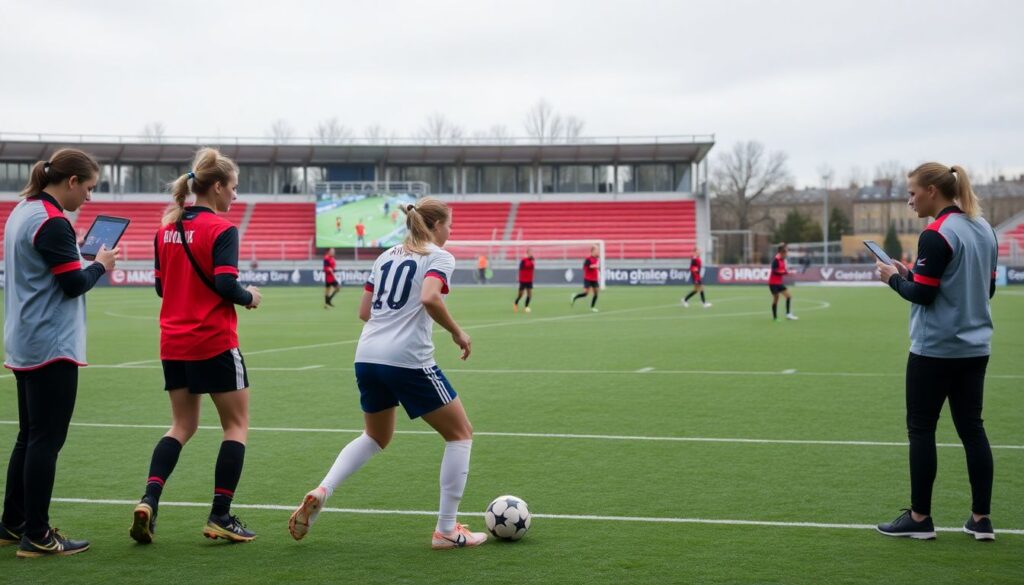
Tactically, women's football has evolved from being framed as "slower" or "less physical" to a game with diverse systems, pressing models and positional rotations. This evolution is tied not only to fitness, but to access to specialised coaching, video analysis and data support.
- High pressing and collective organisation
Scenario: Top clubs introduce intense pressing schemes in women's squads similar to men's, but adapt them to squad depth and travel demands.
Practice link: Coaches design load-managed microcycles so that physical standards rise without increased injury rates. - Set-piece sophistication
Scenario: Leagues with limited resources focus on dead-ball situations where tactical preparation can compensate for smaller budgets.
Practice link: Simple video sessions and repeatable training patterns improve expected goals from corners and free kicks without new signings. - Role of versatile players
Scenario: Rosters are smaller than in big men's teams, so players often cover multiple positions and tactical roles across a season.
Practice link: Training plans emphasise decision-making and spatial understanding over narrow specialisation. - Data-informed training
Scenario: Even semi-professional sides use basic GPS, well-kept match logs or open-source tools instead of expensive analytics platforms.
Practice link: Staff track sprint counts, high-intensity actions and recovery times to adjust workloads for part-time players. - Integration of youth and senior game models
Scenario: Clubs align tactical principles from academies to first team, so girls experience a coherent game model from early ages.
Practice link: Shared playbooks and simple video clips create continuity even when resources limit full-time youth staff.
As athletic standards rise, myths about "lower quality" become harder to sustain. However, without parallel improvements in pitch quality, medical support and scheduling, performance ceilings remain artificially low, especially in leagues still transitioning to full professionalism.
Pathways to professionalisation: clubs, leagues and development systems
Professionalisation determines whether women can realistically build a career in football. It affects contracts, pensions, insurance, maternity protection, training loads and the viability of planning life around sport. In Spain and similar contexts, these debates take place inside existing club structures and national labour laws.
Benefits of structured professional pathways
- Ability for players to commit to full-time training without holding multiple jobs.
- More predictable liga fútbol femenino España horarios y precios, which helps fans, broadcasters and sponsors to plan.
- Better medical and psychological support, reducing long-term health risks.
- Stability that allows clubs to invest in youth systems, mentoring and second-career planning.
- Increased bargaining power for women's teams when negotiating facilities and stadium access.
Constraints and risks in professionalisation processes
- Unequal club resources, where a few "superclubs" dominate while smaller teams struggle to meet minimum standards.
- Legal grey zones where players are called "amateur" while meeting professional obligations without equivalent rights.
- Overdependence on a single sponsor, broadcaster or political decision that can reverse progress overnight.
- Ticket pricing that imitates men's elite football too quickly, excluding families and new audiences buying fútbol femenino entradas partidos for the first time.
- Pressure to accept commercial deals (for example around apuestas fútbol femenino casas de apuestas) that clash with long-term ethical or fan-culture goals.
For clubs or federations with limited budgets, phased professionalisation is often more realistic: start with minimum contract guarantees for a core of players, shared medical services, and targeted support for travel and accommodation, then scale up as income grows.
Cultural resistance and fan engagement: reshaping narratives
Cultural resistance often appears in jokes, online harassment, dismissive commentary and the assumption that women's football is "subsidised" entertainment rather than sport in its own right. These stories filter into how parents choose sports for daughters, how media assign space and how sponsors weigh risk.
- Myth: "Nobody watches women's football"
Reality: Attendance is highly sensitive to marketing, scheduling, pricing and venue quality. Where games are treated as major events, crowds often follow.
Typical mistake: Evaluating potential based on poorly promoted weekday matches in remote facilities. - Myth: "Quality is lower, so investment is charity"
Reality: Quality is tied to coaching, facilities and stability, all of which depend on investment.
Typical mistake: Using current gaps as justification to block the very resources needed to close those gaps. - Myth: "Women's teams are a cost centre"
Reality: Shirts, matchday experiences and digital content create new revenue streams and fan touchpoints.
Typical mistake: Ignoring demand data from camisetas fútbol femenino comprar online sales or social media engagement. - Myth: "Girls are not interested in playing"
Reality: Interest is suppressed when there are no local teams, changing rooms, or clear information about escuelas de fútbol femenino inscripción y precios.
Typical mistake: Assuming lack of sign-ups is natural, rather than a product of invisible barriers. - Myth: "We must copy men's football culture"
Reality: Women's football can build more inclusive, family-friendly and community-based environments.
Typical mistake: Importing aggressive ultra-culture or pricing models that undermine this distinctive potential.
Fan engagement strategies that emphasise player access, mixed-gender supporter activities and visible alignment with local communities help to create a culture where women's football is not an add-on, but a central part of the club identity.
Policy interventions and measurable metrics for change
Policy is where cultural and structural debates turn into concrete rules and incentives. Without metrics, even well-meaning policies risk being symbolic only. Clubs, leagues and public institutions need simple, trackable indicators that link action to outcomes.
Mini-case: a low-budget municipal programme
Imagine a medium-sized Spanish city with limited funds but strong grassroots demand. Instead of building a new elite stadium, the municipality and local clubs agree on targeted measures for women's football:
- Diagnosis
Audit reveals: few girls' teams, no female coaches in local clubs, and women's matches rarely announced compared with men's fixtures. - Interventions
- Reserve prime-time training slots for at least one girls' team in each municipal facility.
- Offer partial fee waivers for girls in grassroots programmes, with transparent escuelas de fútbol femenino inscripción y precios info on municipal portals.
- Fund basic media support: standardised match posters, social posts and a simple city-wide calendar featuring both men's and women's fixtures.
- Subsidise a limited number of coaching licences specifically for women.
- Expected outcomes and metrics
- Number of registered girls in local clubs per season.
- Number and percentage of women coaches with formal licences.
- Average attendance at women's matches after better promotion of fútbol femenino entradas partidos.
- Number of women's fixtures played on main pitches or in premium time slots.
This kind of programme shows that transformation does not always require elite budgets or national reforms. With clear priorities, transparent indicators and collaboration between clubs, schools and municipalities, limited resources can still drive meaningful cultural and structural change in women's football.
Common practitioner questions and concise answers
How can a small club support women's football with almost no budget?
Share facilities fairly, prioritise access to main pitches for key women's games, and coordinate basic local promotion. Use pre-orders for merchandising and volunteers for media coverage instead of waiting for big sponsors.
What is the first structural change to target in an established men's club?

Introduce transparent internal budgeting: make visible how much is spent on women's and men's programmes, then agree on minimum percentages for the women's side. This creates a baseline for all other decisions.
How do we avoid harmful commercial deals around betting in women's football?
Define ethical guidelines before negotiating: which products and advertising formats are acceptable, how integrity will be protected and where revenue will go. Engage players and fan groups in this discussion.
Are low ticket prices always the best strategy for women's games?
Not always. Prices should balance accessibility and value perception. Family packs, group discounts and targeted free passes for schools often work better than permanently undervaluing the product.
What role can schools play in changing football culture?
Schools can normalise girls playing football, host mixed tournaments, invite women players for talks and provide clear information on nearby clubs and programmes. This reduces social pressure and logistical barriers for families.
How can coaches adapt high-intensity tactics to semi-professional players?
Use shorter, focused pressing phases, monitor workload with simple tools and plan rest around players' jobs or studies. Tactical ambition should match recovery realities, not idealised full-time models.
Why is governance representation so critical for women's football?
Without people who understand the women's game in decision-making roles, calendars, facilities and regulations will default to men's priorities. Representation aligns institutional rules with on-field realities.