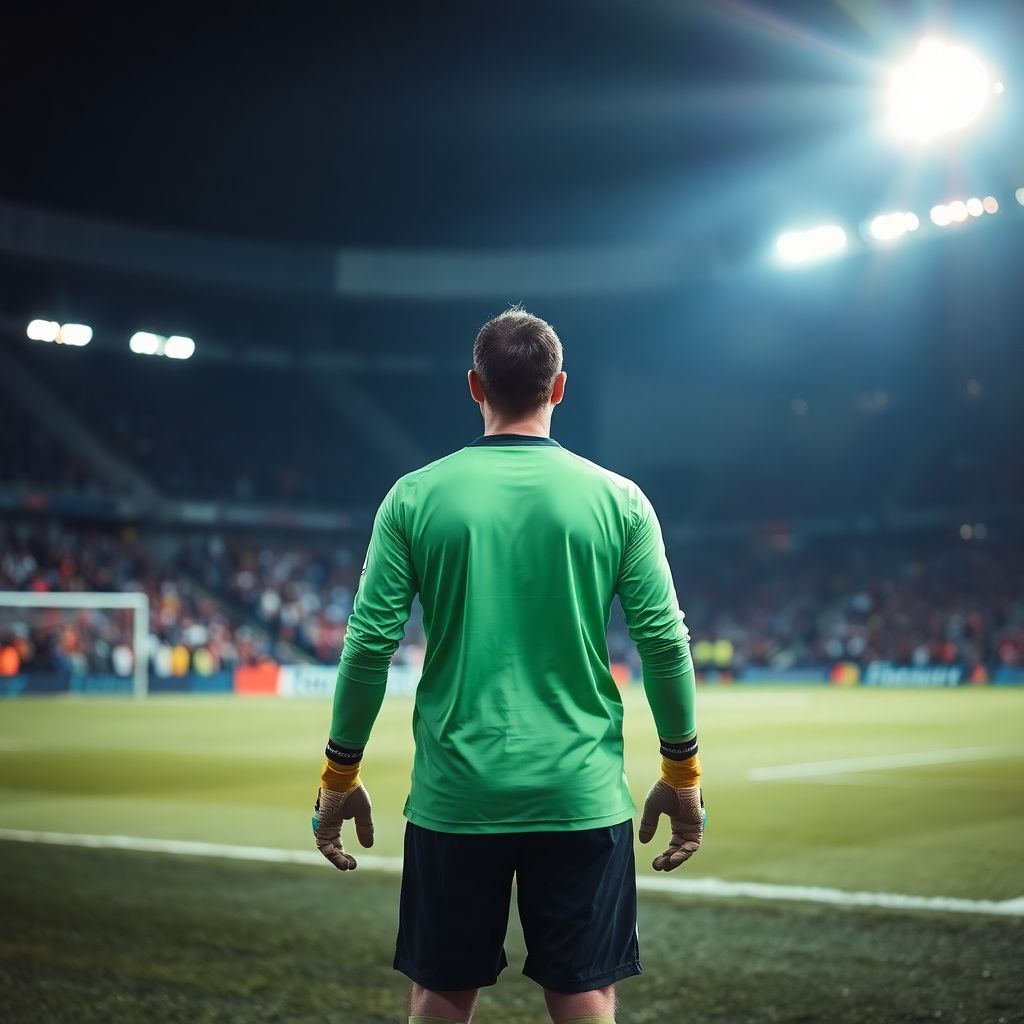
The philosophical role of the goalkeeper combines radical visibility and deep solitude: one mistake defines the narrative, while dozens of good actions are ignored. The keeper embodies responsibility, negotiating fear of the definitive error through decision-making, courage and meaning-making, turning pressure into a personal ethic rather than a purely technical task.
Core Philosophical Claims about the Goalkeeper
- The goalkeeper is the clearest symbol of responsibility in football: one action can redefine an entire match and personal identity.
- Solitude in goal is less physical than existential: you are alone with your decisions even inside a crowded stadium.
- Fear of the final mistake cannot be deleted; it must be given direction and purpose.
- Good goalkeeping is moral agency under pressure: choosing the least-worst option in seconds, then accepting consequences.
- Mental training is at least as important as technical drills, especially where resources, coaching and facilities are limited.
- For keepers with few means, structured self-reflection and simple routines can substitute part of high-cost psychological support.
Debunking Myths: The Idealized Goalkeeper
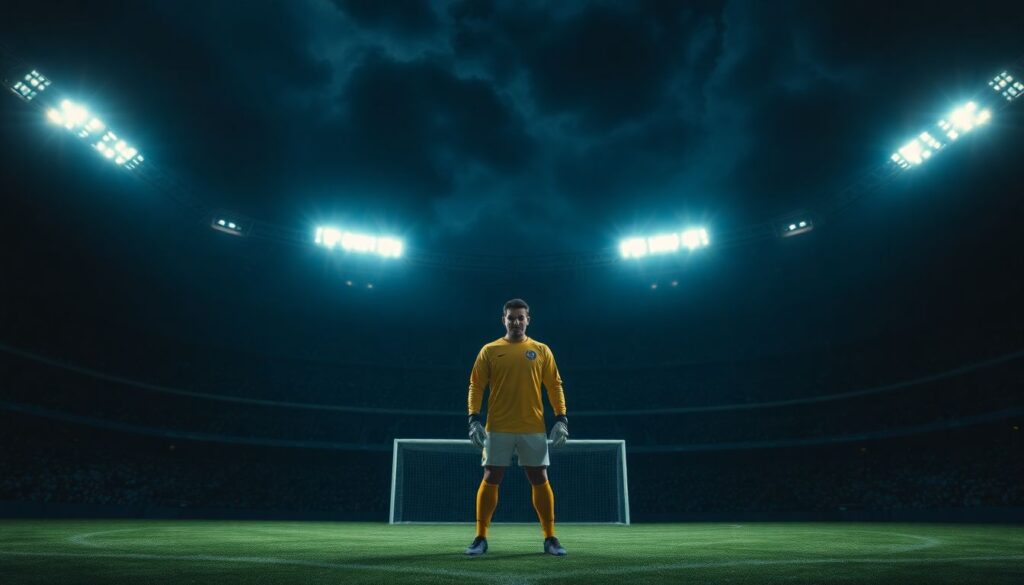
The first myth says the ideal goalkeeper is fearless, almost inhuman, immune to doubt or error. Philosophically, this is false and dangerous. The real role is not to eliminate fear, but to coexist with it and still act decisively.
A goalkeeper is a player whose actions are maximally visible and minimally reversible. Unlike outfielders, most of their decisive interventions are binary: stop or goal, catch or spill, stay or come out. This makes the position a living example of what existential philosophers call decision under radical uncertainty.
The second myth imagines an omnipotent figure who «must save everything». In reality, the concept of a goalkeeper must be bounded. A realistic definition: a specialist who manages space, angles and time in a limited zone, accepting that some shots are unsavable and that justice and outcome often diverge.
From a Stoic angle, the goalkeeper’s domain is what can be controlled: technique, positioning, communication, mental preparation. What cannot be controlled (deflections, referee mistakes, weather, perfect shots) must be acknowledged without self-destruction. The philosophical task is to protect identity and meaning even when the scoreboard feels unfair.
Solitude as a Philosophical Condition in the Net
A common myth says the goalkeeper is isolated only because they stand far from the team. The deeper solitude is not geographic but psychological: no one fully shares the experience of being blamed for a single action. Yet this solitude can be understood and managed.
- Spatial separation: Standing 30-50 metres from the nearest teammate during long attacks creates time to think. This is where rumination, fear of error and overthinking grow if the mind is untrained. Existential thinkers would call this an encounter with oneself.
- Asymmetric accountability: A striker can miss several chances and still be the hero with one goal. A goalkeeper can be brilliant for 89 minutes and turned into a «villain» in one second. This asymmetry intensifies the sense of standing alone in front of judgement.
- Different time horizon: Outfield players are in constant action; keepers oscillate between boredom and crisis. Philosophically, they live in anticipation: waiting for something that may or may not happen. Managing this waiting is a form of practical mindfulness, not passive suffering.
- Inner dialogue: In quiet moments the goalkeeper’s main companion is their own self-talk. Sport psychology calls this inner dialogue; philosophers call it consciousness. Training this voice is as crucial as cross-taking drills. Low-resource keepers can use simple breathing plus cue-words as a basic form of entrenamiento psicológico para porteros de fútbol.
- Symbolic role in the team: Many squads subconsciously project security or anxiety onto their keeper. The goalkeeper becomes a symbol: if they look calm, the team feels safe. This symbolic weight amplifies both solitude and influence.
- Boundary between safety and risk: The goalkeeper literally stands on the line between disaster and survival. This boundary position mirrors ethical life: we often act knowing that both success and failure are possible and public.
Responsibility under Pressure: Ethical Dimensions of the Position
The popular myth says responsibility simply means «not making mistakes». In ethics, responsibility is not perfection; it is ownership. For a goalkeeper, that means accepting that you will sometimes be the visible cause of defeat and still choosing to step into the arena.
- Penalty shoot-outs: In penalties the keeper symbolises sacrificial responsibility. Everyone is watching, the outcome is binary. From a virtue ethics perspective, bravery here is not about guessing correctly every time, but facing the moment without escaping or theatrically blaming others.
- High defensive lines and sweeper-keepers: Modern systems push goalkeepers far from the line. When they sweep behind the defence, they take on shared responsibility for tactical risk. Decisions to come out or stay become ethical choices about protecting teammates as well as the goal.
- Playing injured or fatigued: Keepers sometimes hide pain to avoid losing their spot. Philosophically this raises a conflict between responsibility to self and to the team. Mature responsibility understands limits: choosing to rest can be more ethical than heroically risking severe damage.
- Building out from the back: When a goalkeeper is asked to start play under pressure, a misplaced pass can lead directly to a goal against. Here responsibility involves negotiating coaching instructions with personal judgement. Practical prudence (phronesis) is choosing when to follow the plan and when to clear long.
- Leadership after conceding: After a goal, everyone looks at the keeper. An ethical response is not theatrical self-blame or shouting at others, but a brief, honest communication: acknowledging reality, setting the next focus, and protecting younger teammates from collapsing.
The Fear of the Final Mistake: An Existential Reading
The dominant myth claims champions feel no fear. Experience and philosophy both say the opposite: courage is acting while feeling fear. For goalkeepers, the fear of the definitive error is not a bug of the position; it is the central condition to be navigated.
Existential thinkers describe human life as a sequence of irreversible choices. Goalkeeping turns this into a visible metaphor: once you dive, you cannot undive; once you stay, you cannot retroactively come out. The fear you feel is the price of freedom to choose, not a sign of weakness.
Constructive functions of this fear

- Sharpened attention: Moderate fear raises alertness, making you read cues faster and react sooner.
- Respect for risk: Anxiety about the final mistake pushes you to study opponents, work on positioning and improve decision-making.
- Motivation to prepare: Knowing how painful public failure can be gives meaning to extra training, video analysis and mental routines.
- Humility against overconfidence: Fear reminds you that no one is untouchable. This protects against reckless showboating in dangerous zones.
Limitations and dangers when fear dominates
- Paralysis in 1v1 situations: Excessive fear can lead to freezing, staying half-way and giving the striker all the advantage.
- Ultra-defensive style: You might refuse to intercept crosses or come off your line, hiding in the goal to avoid visible errors.
- Chronic self-blame: Philosophically, this becomes an identity problem: «I made a mistake» turns into «I am a mistake».
- Avoidance of big challenges: Some keepers stay in lower levels or smaller clubs, not for lack of talent but to escape the risk of public failure.
Decision-Making, Skill and Moral Agency in Critical Moments
A frequent myth says big decisions are mostly instinct. In reality, what looks like instinct is usually trained recognition mixed with personal values. Every dive, claim and pass expresses what kind of risk you are willing to carry for the team.
- Confusing responsibility with perfectionism: Many keepers treat every goal as a moral failure. Ethically, your duty is to give the best available response, not to guarantee an impossible outcome.
- Believing that technical work alone is enough: Footwork and handling are essential, but without simple decision rules (for example, zones to claim crosses), skill turns into hesitation. From a game-theory view, clear strategies outperform improvisation under pressure.
- Overriding your read to obey noise: Sometimes you sense you should stay, but the crowd, bench or defence shouts «out!». Moral agency means owning the final decision. Listening is good; outsourcing your judgement is not.
- Interpreting luck as identity: Deflected goals, strange bounces or referee errors often shape games. Calling yourself a «disaster» because of random events destroys confidence and ignores the role of chance, a central topic in philosophical discussions of responsibility.
- Myth of the lonely genius: Some keepers reject help, analysis or mentoring, trusting only their feelings. This romantic image hides the fact that good agency includes learning from coaches, teammates and, when possible, a psicólogo deportivo especializado en porteros de fútbol.
Mental Practices to Reduce Isolation and Mitigate Catastrophic Error
The last myth says mental strength is innate and untrainable. Treating it like a skill is more accurate and more democratic, especially for keepers without access to expensive academies or private coaching.
Below is a simple, low-cost framework that any goalkeeper can adapt, whether you have access to a curso online de coaching mental para porteros or only a notebook and a ball.
Step-by-step routine for match days
- Define your controllables: Write down 3-5 actions you fully control today (for example: «clear communication», «quick reset after each action», «aggressive starting position on crosses»). This mirrors Stoic practice of separating what depends on you.
- Pre-game grounding (2-3 minutes):
- In the dressing room, sit, close your eyes, inhale through the nose for 4 seconds, exhale for 6 seconds.
- Repeat 8-10 times while silently saying a cue word such as «calm» or «ready».
- In-game reset after mistakes:
- Allow yourself one short emotional reaction (3-5 seconds).
- Touch the post or the penalty spot as a physical «reset» signal.
- Verbally name the next task: «next cross», «next build-up».
- Post-game debrief (even alone):
- Divide the game into three lists: «kept us in the match», «standard actions», «learning points».
- For each learning point, write one concrete adjustment, not self-insults.
- Micro-learning between matches: If you cannot afford formal entrenamiento psicológico para porteros de fútbol, use free resources: podcasts, simple guided breathing apps, or public charlas motivacionales para porteros sobre miedo al error y responsabilidad. For deeper structure, low-cost libros sobre la mente del portero y la presión en el fútbol can serve as self-guided manuals.
Mini-case: transforming a catastrophic error
Imagine a keeper in a regional league in Spain who lets a simple back-pass slip under their foot in the 90th minute. Teammates collapse, the crowd insults. On Sunday night, the goalkeeper wants to quit.
Instead, they apply the above structure:
- They watch the clip twice: once for facts, once for emotions.
- They define one technical adjustment (check pitch and body shape before receiving) and one mental cue («scan, set, receive»).
- They train receiving back-passes for 10 minutes after each practice that week.
- Before the next match they run the breathing routine and repeat the cue word.
- One month later, the same situation appears. This time the keeper calmly adjusts the first touch and safely clears under pressure.
With limited money and no access to a formal curso online de coaching mental para porteros, this simple cycle turned an existential crisis into growth. If later they can consult a psicólogo deportivo especializado en porteros de fútbol, the work will be deeper, but the foundation was already laid by structured self-reflection.
Clarifying Practical Doubts about Solitude, Responsibility and Error
Is feeling lonely in goal a sign that I cannot handle the position?
No. Feeling lonely is a normal response to asymmetric responsibility. The key is to turn solitude into a workspace: use routines, communication with defenders and short breathing practices so that the time alone becomes preparation instead of rumination.
How can I deal with guilt after a decisive mistake?
Distinguish error from identity: you made a bad play; you are not a bad person. Review the clip, extract one technical and one mental lesson, then deliberately close the episode. This ethical closure stops endless self-punishment and protects long-term confidence.
What if my coach or teammates always blame me publicly?
External blame does not always reflect true responsibility. When emotions are lower, ask for a calm conversation and use video to analyse the situation. Set clear team rules for defensive responsibility so you are not the default scapegoat.
Can I train the mind without paying for specialists?
Yes. You can build a simple programme with breathing, self-talk scripts, written debriefs and deliberate practice of pressure situations. Free or cheap books and videos can offer structure; if someday you add professional help, your base will already be strong.
Should a goalkeeper always accept maximum risk to be a hero?
No. Philosophical responsibility is not chasing glory but choosing the most reasonable risk for the team. Sometimes that means staying on your line, passing short instead of dribbling, or accepting a corner rather than forcing a risky catch.
How do I know if fear is helping or hurting my performance?
If fear sharpens focus and disappears once the game starts, it is probably useful. If it causes freezing, avoidance of crosses or obsessive worry days before matches, it is becoming harmful and you should prioritise mental routines and, if possible, guidance.
Is it ethical to hide injuries to keep playing?
Usually not. You have responsibilities to your future self and to the team. Playing seriously injured risks long-term damage and can harm performance. Honest communication allows informed decisions instead of silent self-sacrifice.