
The figure of the football «mercenary» describes a player perceived as moving mainly for money, regardless of club identity or fan feeling. In the era of fichajes millonarios fútbol 2025 últimos traspasos, loyalty is less about staying forever and more about how transparently players, agents and clubs manage ambition, contracts and communication.
Essential Concepts Summed Up
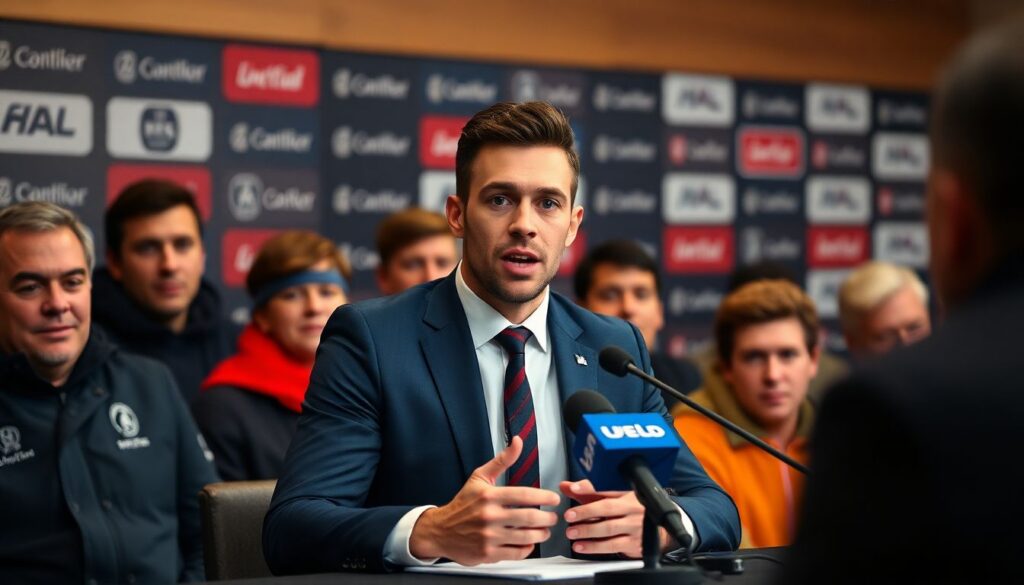
- The «mercenary» label usually mixes three elements: money-first decisions, weak emotional attachment to clubs, and clumsy communication with fans.
- Loyalty today is realistic: fulfilling contracts, honest explanations and professional behaviour matter more than staying a whole career.
- Economic forces in the mercado de fichajes hoy en vivo rumores y traspasos reward short cycles, aggressive agents and rich clubs.
- Players balance salary, sporting project, personal life and identity; money is central, but rarely the only variable.
- Clubs can reduce «betrayal» narratives with smarter contracts, clear roles and consistent messaging around transfers.
- Fan culture, media framing and institutional rules jointly decide who is praised as loyal and who is attacked as a mercenary.
Defining the ‘Mercenary’ in Contemporary Football
In contemporary European football, «mercenary» is an informal, emotional label fans and media apply to players who seem to prioritise money over club, community or sporting project. It appears most often around star names linked with mejores jugadores fichados por dinero clubes ricos europa, especially when they leave a local or historic team.
Practically, three traits tend to trigger the word:
- Frequent transfers following higher salaries rather than clear sporting progression.
- Public declarations of love for a club shortly before forcing an exit.
- Perceived disinterest on the pitch once a new deal or move is secured.
This makes «mercenary» different from a normal professional, who also cares about salary but is seen as honest, consistent and competitive, even when moving between equipos que más pagan fichajes millonarios ranking actual. The same transfer can look loyal or mercenary depending on timing, explanation and behaviour before and after the move.
| Label | Main Perception | Typical Behaviour Pattern |
|---|---|---|
| Loyal one-club icon | Emotionally tied to club, sacrifices options | Long stays, renewals below market, public defence of colours |
| Professional mover | Career-driven but respectful | Few, logical transfers, clean exits, honest interviews |
| «Mercenary» | Money-first, low attachment | Many clubs, exits via pressure, contradictory statements |
Example: a player leaving a mid-table La Liga club to join a Champions League side in another country on a similar wage is usually accepted as career progression. The same player doubling salary at a struggling super-rich project with no clear plan may be framed as a mercenary move.
Economic Forces Fueling Billion-Dollar Transfers
Behind the individual story of each so-called mercenary, there is a clear economic system driving fichajes millonarios fútbol 2025 últimos traspasos. Understanding this system helps fans read headlines and behaviour with more realism and less moral shock.
- Revenue concentration in super-clubs
TV money, global sponsorships and matchday income are concentrated in a small group of rich clubs in Europe and, increasingly, a few leagues outside Europe. These clubs can easily outbid others on transfer fees and wages. - Agent incentives
Agents are paid on commissions, usually linked to salary size and transfer value. Their business model naturally pushes towards frequent renegotiations and moves, which feed the mercado de fichajes hoy en vivo rumores y traspasos cycle all year round. - Short career windows
Players have a limited number of peak years. Maximising earnings over a decade can mean one or two huge contracts, often at clubs known as equipos que más pagan fichajes millonarios ranking actual. - Contract length and amortisation
Accounting rules encourage paying big transfer fees and spreading them across long contracts. This favours headline-grabbing deals, especially for younger stars, whose resale value can justify even higher initial spending. - Soft power and prestige projects
Some owners use football clubs as image or geopolitical tools. They accept overpaying in transfers and wages to attract mejores jugadores fichados por dinero clubes ricos europa, shifting the market ceiling upward for everyone. - Media and platform economy
Clicks, subscriptions and audience attention rise with each big rumour. This constant focus on noticias fichajes fútbol lealtad jugadores cambio de equipo increases pressure on players and clubs to act – and to dramatise normal negotiations.
Practical Mini-Scenarios Based on the Mechanics
To turn this into concrete reading habits, use these scenarios whenever you see a big rumour or transfer:
- Rumour from a rich club appears
Ask: Does the player’s agent need a new contract or commission? Is the current club negotiating renewals? Often, «interest» is leverage, not a real project. - Last year of contract
If a key player declines to renew, assume a move is likely. Calling them mercenary too early is risky; they may be negotiating sporting guarantees rather than just money. - Sudden wage jump
When a player triples their salary at a weaker sporting project, you can realistically classify the move as money-led without needing to moralise every detail. - Rich league vs top competition
If a footballer leaves a Champions League side to join a less competitive league with much higher wages, recognise the trade-off: personal financial security versus sporting legacy.
Applying these mini-scenarios keeps your reaction grounded: instead of shouting «mercenary» in the comments, you can identify which structural motive is really in play.
Reframing Loyalty: Definitions, Indicators and Misconceptions

Loyalty in the era of fichajes millonarios is no longer about never changing club. Players, clubs and fans in Spain and across Europe need more practical definitions that fit a market dominated by big contracts and constant noticias fichajes fútbol lealtad jugadores cambio de equipo.
Useful ways to measure loyalty today include:
- Contractual loyalty
Respecting the signed deal: training professionally, not faking injuries, avoiding public wars through media. Asking for a transfer is compatible with loyalty if done through internal channels and within contractual rules. - Transparent communication
Players who speak honestly about ambition and possible exits are often later judged as more loyal than those who declare eternal love one week and force a move the next. - Context of departure
Leaving a club in financial need for a good fee can be loyal; walking out for free after refusing reasonable offers might be perceived as the opposite, even if the law allows it. - On-pitch commitment until the last day
Intensity, leadership and professionalism in the final season before a move show respect, even if the destination is one of the equipos que más pagan fichajes millonarios ranking actual. - Connection with local culture and fans
Learning the language, staying in the city, engaging with community projects: these actions build a bank of trust that softens the blow of eventual exits.
Common misconceptions are that loyalty means rejecting all higher offers, or that a youth academy graduate must stay forever. In practice, a player can be loyal across several clubs if they leave and arrive with clarity, respect and consistent effort.
Player Motivations: Money, Career Strategy and Personal Identity
When a player moves to a new club, motivations sit on three axes: financial security, sporting development and personal/identity factors. Money is visible and easy to attack; internal doubts about coach, role, family or mental health are usually invisible, so fans fill the gaps with the «mercenary» story.
Thinking in structured lists helps you judge situations more fairly and discuss fichajes millonarios fútbol 2025 últimos traspasos without falling into clichés.
Typical Advantages Driving a Money-Heavy Move
- Financial security for extended family, especially for players from modest backgrounds.
- Better infrastructure, medical support and training facilities at rich clubs.
- Global exposure, which increases sponsorships and post-career opportunities.
- Shorter path to individual awards and recognition if joining an elite team.
- Ability to negotiate exit clauses and bonuses that protect the player’s interests.
Limitations and Risks Players Must Weigh
- Reduced playing time in squads full of stars, harming form and national team chances.
- Hostile fan reception if perceived as choosing money over club identity.
- Instability for family: new language, culture and school changes every few years.
- Dependence on one big contract; an injury or coach change can quickly end the project.
- Long-term reputation damage: once called a mercenary, every future move is judged harsher.
For a practical reading, ask two questions every time you see a player moving to mejores jugadores fichados por dinero clubes ricos europa: does the sporting project clearly improve, and does the financial jump reflect realistic career security? If both answers are yes, the move is often more rational than mercenary.
Club Responses: Contract Design, Incentives and Narrative Management
Clubs are not passive victims of the mercado de fichajes hoy en vivo rumores y traspasos. Their decisions on contracts, communication and internal culture strongly influence whether players stay, how they leave and how fans perceive their loyalty or «betrayal».
Typical mistakes and myths clubs should avoid:
- Overusing short contracts without a renewal plan
Letting key players enter the last contract year creates panic, fan anger and weak bargaining positions. Strategic renewals two seasons before expiry reduce both mercenary talk and financial losses. - Performance bonuses that ignore team success
Paying only for individual numbers can encourage stat-padding and self-interest. Balanced incentives (minutes, team results, behaviour) reward loyalty and commitment to the group. - Public blame games after failed negotiations
Directors often frame players as greedy to protect themselves. This may win a press conference but damages the club’s credibility with current and future signings. - Romantic narratives without structural support
Talking about «family» and «values» while sacking coaches every few months and rotating squads heavily confuses players. Clear long-term sporting projects attract professionals who value more than salary. - Ignoring fan education
Clubs rarely explain the economic logic of transfers. Simple, honest briefings about why a sale or renewal happened help fans interpret noticias fichajes fútbol lealtad jugadores cambio de equipo with less suspicion.
Clubs that treat players consistently, pay on time, and offer coherent roles often experience fewer forced exits, even when they cannot compete with equipos que más pagan fichajes millonarios ranking actual on pure wages.
Wider Impact: Fan Culture, Media and Institutional Trust
The discourse around mercenaries and loyalty shapes how supporters in Spain and the rest of Europe relate to their clubs, the league and the game itself. Media narratives, social networks and institutional rules combine to create either cynical or trusting environments.
Mini-case for application:
Imagine a captain at a mid-table La Liga side. In May, local press leaks interest from a super-rich foreign club known for fichajes millonarios fútbol 2025 últimos traspasos. Social media explodes, calling him a mercenary before any offer arrives. The club says nothing.
Step-by-step, this is how the story can evolve in practice:
- Agents use the leak to negotiate a better wage; the player stays silent, fearing backlash.
- Fans interpret silence as confirmation, turn against the captain in the final league matches.
- The club finally issues a vague statement, trying to calm the situation without clarifying their own contract position.
- Trust collapses: regardless of the final decision, part of the stadium now sees the captain as a mercenary.
If, instead, the club had quickly explained the contract context, and the player had stated that he would consider offers only after finishing the season, fan focus would have stayed on the pitch. The same economic reality, but with fewer accusations and more institutional trust.
Quick Clarifications on Typical Concerns
Does moving for a higher salary automatically make a player a mercenary?
No. Players are workers with short careers and the right to seek better pay. The «mercenary» tag usually appears when the move clearly sacrifices sporting ambition or contradicts previous public declarations of loyalty.
How can fans in Spain read transfer rumours more intelligently?
When following mercado de fichajes hoy en vivo rumores y traspasos, always ask who benefits from the news: player, agent, selling club or buying club. Treat early headlines as negotiation tools, not as final truth about intentions or loyalty.
Is staying at one club always the most loyal choice?

Not necessarily. A player can stay for comfort while giving minimal effort, which is not loyal in practice. Another might change clubs but show full commitment and respect at each step, which better fits a modern definition of loyalty.
Why do rich European clubs get so many accusations of «buying» loyalty?
Because they often sign mejores jugadores fichados por dinero clubes ricos europa, they become the visible face of football’s financial inequality. Fans from other teams project frustration about the system onto these clubs and their players.
What can a club do to keep its stars without overpaying?
Offer clear roles, competitive but sustainable wages, performance-based bonuses and honest communication about sporting plans. Players are more likely to stay if they trust the project, even when equipos que más pagan fichajes millonarios ranking actual can offer higher pure salary.
How should young players think about loyalty early in their careers?
Focus on environments that guarantee minutes, good coaching and stability. Signing too early for a giant because of money can damage development; long-term loyalty often starts by choosing the right first step, not the richest badge.
Are fans hypocritical when they demand loyalty but want constant new signings?
There is a tension: supporters celebrate fichajes millonarios for their own club while criticising exits. Being aware of this double standard helps create more balanced discussions about noticias fichajes fútbol lealtad jugadores cambio de equipo.