Football and social class interact through three channels: who can afford to play, who has time and money to watch, and who captures value from media, betting and sponsors. If you treat football as class-neutral, then you miss how costs, geography and institutions quietly filter talent, fans and profits.
Core arguments at a glance
- If you look only at star players, then you overestimate how equal football is; most low-income kids face invisible financial and geographic barriers.
- If you equate stadium attendance with fandom, then you miss how pay‑TV, streaming and social media sort fans by income and time.
- If you assume clubs earn most from ticket sales, then you ignore how derechos de televisión fútbol precios y contratos reshape who really gets rich.
- If you think merit alone decides careers, then you underestimate how scouting networks and academy fees gate social mobility.
- If community programs copy elite models, then they often reinforce class gaps instead of reducing them.
- If regulators ignore casas de apuestas deportivas fútbol mejores cuotas y bonos, then betting money pulls the game further away from grassroots priorities.
Debunking common myths about football and class
Social class in football describes how income, education, job security and neighborhood shape who plays, who watches and who earns from the sport. It does not mean only poor people play or only rich people run clubs; it maps unequal chances and uneven rewards along the football pipeline.
If you believe football is automatically a working‑class game, then you miss that elite academies, private coaching and travel costs skew serious youth development toward families with stable income. If you believe it is now only for the middle class, then you ignore informal street and community football that remain heavily working‑class.
If you see top salaries and think «any kid can escape poverty through football», then you confuse rare success stories with the everyday reality of short contracts, injuries and early dropouts. Most players, even professionals, never reach the level where cuánto ganan los futbolistas de élite salarios y contratos become relevant.
If you treat stadiums, bars and streaming audiences as socially mixed spaces, then you overlook how ticket prices, working hours and housing patterns filter fans. Class in football is therefore about probabilities: who is statistically more likely to access high‑quality pitches, safe stadiums and profitable jobs around the game.
Historical access: who played and how opportunities changed
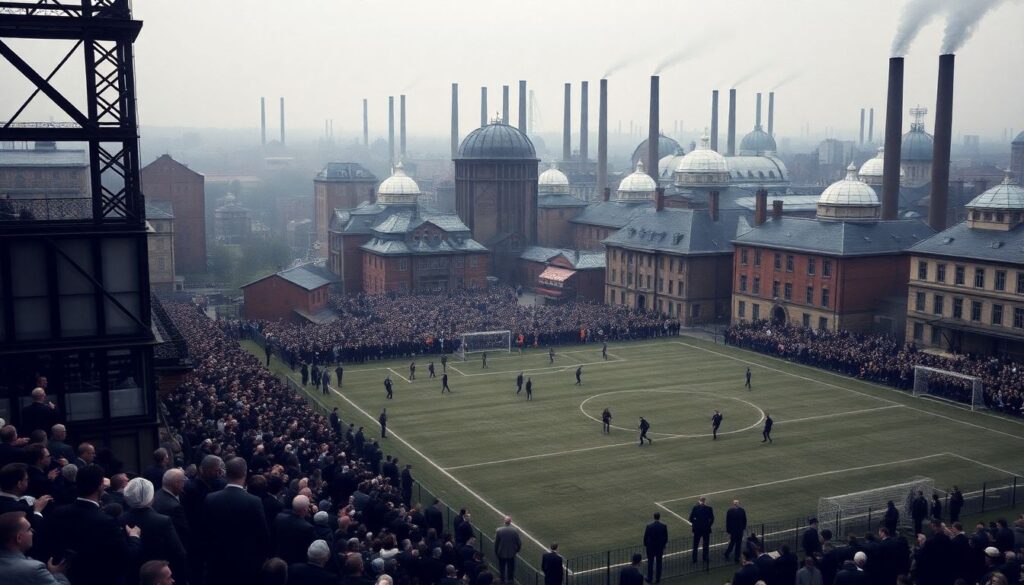
- Early industrial era: If you look at football’s origins in Europe, then you see a split: elites formalised the rules through schools and clubs, while workers adopted the game in factories and neighborhoods, turning it into a mass pastime.
- Urbanisation and cheap pitches: If cities invest in public fields and transport, then low‑income youth can join organised leagues; if not, football drifts from open community spaces into fee‑based clubs and private schools.
- Professionalisation of leagues: If leagues become professional but keep wages modest, then the game stays close to workers’ realities; when TV money and global sponsors arrive, then elite clubs shift toward corporate entertainment.
- Academy systems and scouting: If academies charge substantial fees or require long unpaid trials, then talented kids from poorer families drop out; if there are scholarships and local scouting, then football becomes a more realistic ladder of social mobility.
- Digital broadcasting and streaming: If watching top football requires pay‑TV subscriptions, then viewership stratifies by income; if some matches stay on free‑to‑air TV, then cross‑class shared rituals survive longer.
- Global migration of players: If clubs rely on importing cheap talent, then local pathways shrink; if they invest steadily in community structures, then young players of all classes see credible routes to the professional level.
Fans, identity and viewership: class patterns in attendance and fandom
If you want to understand class and fandom, then you need to separate three layers: going to the stadium, watching on screens and participating through merchandise, betting or social media.
- Stadium attendance: If ticket prices rise faster than wages, then traditional working‑class season‑ticket holders are gradually replaced by tourists, corporate guests and higher‑income locals. If clubs freeze prices in certain sections, then they protect their historic base.
- Broadcast and streaming audiences: If derechos de televisión fútbol precios y contratos push matches onto premium channels, then high‑income fans keep live access while others shift to radio, highlights or unofficial streams. If regulators demand some free matches, then shared big‑match nights remain more class‑mixed.
- Digital‑only fandom: If you cannot afford entradas для partidos de fútbol de primera división comprar online, then you may still follow clubs intensely via social media, local bars and public screenings, creating a low‑cost but committed fan identity.
- Merchandise and branding: If clubs focus merchandise on expensive official shirts, then visible fandom becomes a marker of income; if they also offer low‑cost items and local collaborations, then they lower the price of belonging.
- Betting engagement: If fans treat casas de apuestas deportivas fútbol mejores cuotas y bonos as entertainment, then their financial risk can stay limited; if they rely on betting to «supplement income», then class‑linked vulnerabilities deepen.
- Local vs global club choice: If local communities feel priced out or ignored, then young fans may adopt global super‑clubs instead; if local clubs keep inclusive prices and credible sporting projects, then they retain cross‑class support.
Money flows: who profits across the football economy
If you follow the money in football, then you see three main flows: into clubs (tickets, TV, sponsors, transfer profits), into players and staff (wages, bonuses, rights) and into surrounding industries (media, betting, retail, tourism). Social class shapes who can participate in and capture each flow.
If you only look at club balance sheets, then you miss how broadcasters, agencies and sponsors may extract more value than local communities ever see. To clarify patterns, the table below contrasts who plays, who watches and who profits in different contexts.
| Context | Who mainly plays | Who mainly watches live | Who captures most profits |
|---|---|---|---|
| Elite first division, big city | Mixed, but academy players skew to families with resources for fees and travel | Higher‑income locals, tourists, corporate clients | Clubs, broadcasters via derechos de televisión fútbol precios y contratos, major sponsors and agencies |
| Lower divisions, regional towns | Local working‑ and lower‑middle‑class players balancing jobs and football | Local cross‑class fans, families and grassroots groups | Smaller clubs and local businesses; limited TV and sponsor income |
| Informal community & school football | Mainly children and youth from nearby neighborhoods | Parents, friends, teachers and local volunteers | Almost no direct profit; social value dominates over financial gain |
| Global TV and streaming audience | Not applicable (spectators only) | International fans with access to pay‑TV or broadband | Broadcasters, leagues, platforms and big brands through marketing deportivo en el fútbol patrocinio de equipos |
| Sports betting ecosystem | Not applicable (events used as betting products) | Bettors across classes, often concentrated among financially stressed groups | Betting operators promoting casas de apuestas deportivas fútbol mejores cuotas y bonos, plus affiliate media |
Benefits of current money flows
- If TV deals are large and relatively stable, then top clubs can invest in facilities, youth academies and high‑level coaching that may open some doors for talented low‑income players.
- If marketing deportivo en el fútbol patrocinio de equipos is diversified beyond luxury brands, then sponsors can subsidise community initiatives, ticket discounts and women’s football.
- If clubs share revenues within leagues, then smaller, community‑rooted teams can survive and maintain affordable access for local fans.
- If digital platforms broaden distribution, then fans in rural or lower‑income regions can follow leagues without travelling long distances.
Limitations and class biases in money distribution
- If most income comes from global TV and premium hospitality, then clubs prioritise high‑spending audiences over traditional fans with lower incomes.
- If cuánto ganan los futbolistas de élite salarios y contratos consume a big share of budgets, then mid‑level professionals, women’s teams and youth setups may be underfunded.
- If sponsors chase image over inclusion, then community projects become branding exercises instead of real tools against inequality.
- If betting revenue is treated as a harmless supplement, then regulators may ignore how losses hit lower‑income bettors hardest.
Institutions, scouting and social mobility: gates and ladders
- Myth: talent always finds a way. If you assume scouts will magically discover every gifted child, then you excuse the lack of structured outreach in poorer areas. In reality, if clubs do not invest in local networks, then distance and transport costs quietly filter out many talents.
- Myth: academies are pure meritocracies. If academy selection relies on long unpaid trials, travel at odd hours and parents’ flexibility, then families with insecure jobs or low incomes are at a systematic disadvantage, even when ability is equal.
- Myth: short careers are compensated by big wages. If you plan as if all professionals earn like stars, then you ignore those on precarious contracts in lower divisions. If unions and leagues do not enforce minimum standards, then football can reinforce rather than reduce class insecurity.
- Myth: education can wait until the career is over. If clubs neglect schooling during academy years, then players who do not reach the top are left with weak qualifications. If education is built in from the start, then football becomes a potential ladder, not a trap.
- Myth: community clubs are automatically inclusive. If membership fees, kit costs and transport are high, then «community» clubs may actually be middle‑class enclaves. If funding covers basic costs and loans equipment, then participation broadens across classes.
Comparative case studies: leagues, clubs and community outcomes
If you compare different approaches, then you can see how policy and club decisions convert the same sport into very different class dynamics. Below is a stylised mini‑case highlighting how simple «if…, then…» choices redirect outcomes.
Mini‑case: Two hypothetical first‑division clubs in Spain
Club A: maximising short‑term revenue
- If Club A raises prices for entradas para partidos de fútbol de primera división comprar online each season and focuses on VIP boxes, then its stadium gradually fills with tourists and higher‑income fans, while long‑time working‑class supporters drift to bars or stay home.
- If Club A locks most matches behind premium TV by chasing the highest derechos de televisión fútbol precios y contratos, then local low‑income fans rely on highlights and illegal streams, weakening everyday contact with the club.
- If Club A structures marketing deportivo en el fútbol patrocinio de equipos around luxury partners only, then shirt prices and branded items rise, turning visible fandom into a privilege signal.
- If Club A signs older stars on huge deals because cuánto ganan los futbolistas de élite salarios и contratos attract global attention, then academy budgets stay tight and scholarships for poorer kids are limited.
- If Club A promotes aggressive casas de apuestas deportivas fútbol mejores cuotas y bonos across its channels, then some struggling fans experience heavier betting losses, deepening local inequality.
Club B: prioritising community inclusion
- If Club B caps basic ticket prices and reserves sections for local residents, then stadium crowds stay socially mixed and matchday remains a cross‑class ritual.
- If Club B negotiates TV deals while insisting that a portion of matches remain widely accessible, then fans who cannot afford subscriptions still feel part of the club’s weekly rhythm.
- If Club B designs marketing deportivo en el fútbol patrocinio de equipos with local firms and public institutions, then parts of sponsorship income can fund free‑to‑play youth tournaments in low‑income neighborhoods.
- If Club B channels a fixed share of revenue into open, scholarship‑heavy academies, then talented players from any background see clearer ladders, even if very few ever reach the elite level of cuánto ganan los futbolistas de élite salarios y contratos.
- If Club B limits betting partnerships and promotes financial literacy instead, then fans receive a different message about risk and money around the game.
Implications for policy and local action
- If policymakers want football to support social mobility, then they should condition public funding and stadium deals on inclusive ticket pricing, grassroots investments and transparent academy practices.
- If leagues and federations aim to reduce class gaps, then they need revenue‑sharing rules, minimal education standards for youth players and oversight of sponsorship categories, especially betting.
- If community groups care about who benefits from football, then they should track club decisions on prices, TV access and local partnerships, and push for «if you raise prices, then reinvest in access» commitments.
Practical questions readers ask about class and the game
How does social class actually change a child’s chance to become a professional footballer?
If a family has limited money and unstable work, then travel, equipment and academy fees are harder to cover, reducing exposure to scouts. If clubs offer scholarships, local training centres and support with schooling, then these class barriers become smaller but rarely disappear entirely.
Are stadiums still working‑class spaces in top divisions?
If ticket prices and hospitality packages keep rising, then top‑division stadiums tend to shift toward middle‑ and upper‑income spectators. If clubs freeze prices in certain areas and offer low‑income discounts, then they can keep a visible working‑class presence in the stands.
Do TV and streaming deals help or harm lower‑income fans?
If TV rights push almost all games behind expensive subscriptions, then lower‑income fans lose regular live access. If leagues combine premium packages with some free‑to‑air matches and public screenings, then TV money can coexist with broad, cross‑class viewership.
Why do elite players earn so much while many others struggle?
If a player reaches global‑star level, then scarcity of talent and worldwide marketing power drive cuánto ganan los futbolistas де élite salarios y contratos very high. If you look at lower divisions, then short contracts and modest wages mean many professionals remain close to average income or below.
Is betting making class inequality around football worse?
If betting is marketed aggressively, including casas de apuestas deportivas fútbol mejores cuotas y bonos, then financially stressed fans are more likely to chase quick wins and suffer losses. If regulations limit promotion and require clear warnings, then class‑linked harm can be reduced but not fully removed.
Can community football really improve social mobility?
If community programmes combine low‑cost access, good coaching and support for education or jobs, then they can widen horizons and networks for young people. If they only offer occasional tournaments without follow‑up, then they mainly provide recreation, not long‑term mobility.
What should clubs in Spain do if they want to stay socially rooted?
If Spanish clubs want to remain connected to all classes, then they should link ticket policies, academy access and sponsorship choices to clear inclusion goals, not only financial targets. Small steps like transparent pricing and shared decision‑making with fan groups can shift incentives over time.