
Fútbol femenino and the long fight for recognition

Women’s football has grown explosively in the last decade, yet it is still navigating a sport designed for male bodies, male interests and male business models. Stadiums are fuller, FIFA World Cups break audience records and the liga profesional fútbol femenino España is finally recognized as fully professional, but structural gaps remain: lower salaries, scarce medical support, fewer training fields and infantilizing media narratives. Experts in sports sociology underline that the central problem is not “lack of interest” but a century of exclusionary rules, from early bans on women’s teams to today’s unequal distribution of TV rights. Understanding this historical debt is the first step before asking what we, as fans and citizens, can practically do to speed up change.
Essential “tools” to support women’s football
You don’t need a lab coat to influence this field, but you do need a set of very concrete tools: critical information, purchasing power, digital presence and voting power as a citizen or club member. Sports economists stress that each of these acts as a micro‑investment that signals demand. When you buy fútbol femenino entradas partidos, follow clubs on social networks or write to local media asking for coverage, you’re sending measurable data that sponsors and broadcasters track obsessively. Add to that one more tool, often underestimated: the ability to have uncomfortable conversations with friends, colleagues or relatives who still see women’s football as a curiosity rather than a serious, elite sport requiring the same tactical complexity and physical preparation as the men’s game.
Digital and material tools in everyday life
On the digital side, your main resources are streaming platforms, social networks and specialized media that already take women’s competitions seriously. Knowing dónde ver fútbol femenino en directo online avoids the common excuse of “it’s never on TV”. Subscribe to channels that regularly broadcast games, interact with live chats and share highlights; this boosts algorithms in favor of women’s leagues. On the material side, think about where your money goes: when you decide between two jerseys, choosing camisetas oficiales fútbol femenino comprar is a concrete, traceable signal for brands. Sports marketing experts repeatedly show that even modest but consistent demand can shift sponsorship strategies in just a few seasons.
Step‑by‑step: becoming an active ally, not just a passive fan
Supporting women’s football is a process, not a single gesture. Sociologists who study sports fandom suggest treating it like learning a new language: you advance through levels. Start with curiosity, move to regular practice, then reach the point where you can explain and defend what you’ve learned to others. This approach helps avoid the common pattern of “one viral game and then silence”. Each stage deepens your knowledge of players, tactics, club politics and economic realities. Over time, you become part of the environment that makes it harder for institutions and sponsors to keep ignoring the women’s game, because your expectations rise and your tolerance for symbolic gestures without structural change drops.
- Pick a team and a league to follow consistently, ideally a nearby club or the liga profesional fútbol femenino España, so you can connect with local debates and attend matches.
- Plan your year: mark key fixtures, cups and international tournaments, and set aside budget for at least a few fútbol femenino entradas partidos instead of only men’s games.
- Curate your feeds: follow players, journalists and analysts who cover women’s football, and share their work rather than just viral clips.
- Move from consumer to participant: join supporters’ groups, online forums or local initiatives that lobby for better fields, equal pay or youth academies for girls.
- Use your institutional voice: if you’re a club member, parent, teacher or local official, push for concrete policies—field time parity, medical staff, transparent contracts.
From the stands to the screen: everyday decisions
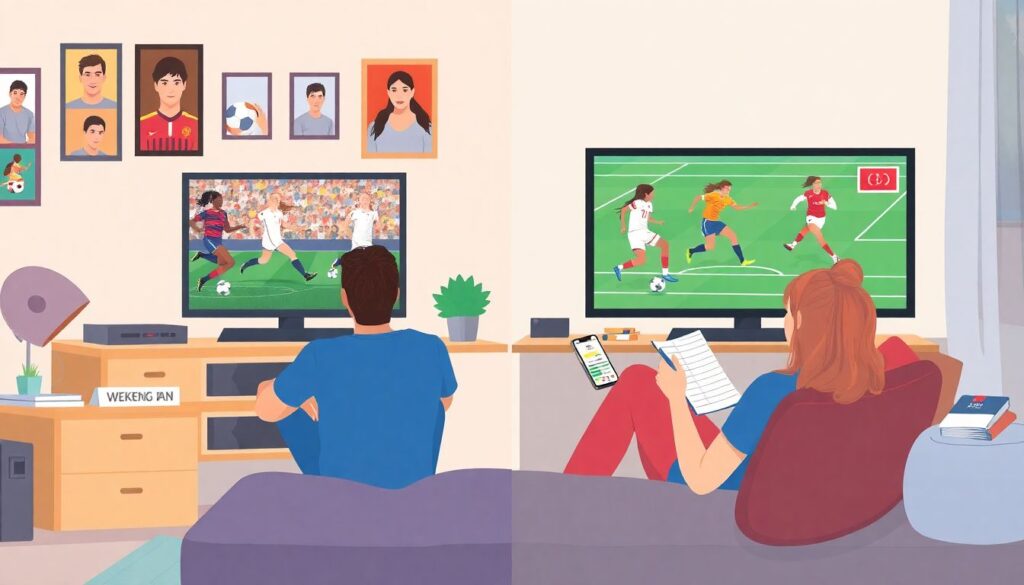
Expert recommendations converge on one simple idea: switch part of your routine, not your whole life. If you already watch weekend football, dedicate one of those slots to a women’s match and learn to recognize playing styles, not just individual stars. When you place bets—if you choose to—include apuestas deportivas fútbol femenino, but do it responsibly and as a way to create market data, not as speculative gambling. Media scholars warn that betting companies often drive coverage decisions; if they detect interest, broadcasts tend to follow. At the same time, resist the temptation to compare every play directly with men’s football; treat it as its own high‑performance ecosystem with distinct rhythms and tactical nuances.
Troubleshooting: common obstacles and how to respond
One recurring obstacle is the widespread claim that “no one is interested” in the women’s game. Data contradicts this: attendances and TV audiences have risen sharply wherever investment has been stable for at least a few seasons. When someone repeats that myth, experts suggest asking a simple question: “How many games have you actually watched this year?” This shifts the conversation from vague opinions to observable behavior. Another issue appears at home: relatives may ridicule your interest or reduce players to their looks. Psychologists recommend answering with calm, specific counterexamples—titles won, tactical analyses, injury statistics—rather than abstract moralizing. Grounded facts tend to be more effective than indignation in slowly changing entrenched attitudes.
Dealing with backlash and sexist stereotypes

Players and coaches report that online abuse skyrockets after big tournaments, often punishing women for simply occupying visible space. As a fan, you can treat comment sections like a troubleshooting environment: when you see sexist jokes or myths (“they’re slower, so it’s boring”), respond with contextual information—pitch sizes, training hours, injury research—backed by reputable sources. Media experts advise using the “two links rule”: if you correct someone, add at least two references so others reading the thread can verify. At the same time, protect your own boundaries; block accounts that harass, report threats, and prioritize constructive discussions. The goal is not to win every argument but to shift the overall tone from mockery to informed debate.
When institutions don’t keep up
Even when federations declare support for women’s football, budgets, facilities or medical coverage often lag behind. Troubleshooting here means learning how sports governance actually works in your country. Who negotiates TV rights? Who appoints national coaches? Experts in sports law suggest simple actions: read your federation’s annual report, attend open meetings if available, and ask specific questions about women’s programs. Vague slogans are easy to dodge; detailed queries about contracts, youth academies or maternity policies are harder to ignore. If your club lacks a women’s section or gives it minimal resources, coordinate with other fans to send collective letters, propose motions at assemblies or, if necessary, redirect your season‑ticket money to organizations that genuinely invest in girls and women.
Expert recommendations for the next decade
Looking ahead, specialists tend to agree on a few priority lines. First, protect the calendar and health of players: without proper medical care and sensible scheduling, the elite level will be unsustainable. Second, guarantee stable, long‑term broadcasting deals so people always know dónde ver fútbol femenino en directo online, instead of chasing sporadic streams. Third, invest in coaching education and youth systems that treat girls as future professionals, not as a side project. And finally, diversify leadership: sports sociologists insist that as long as boards, federations and media desks are overwhelmingly male, the sport will reproduce old biases. Fans, journalists and clubs share a common task: to turn the current boom into a durable, equitable ecosystem rather than a passing trend.