Understanding VAR as the New Sports Panopticon
Video Assistant Referee (VAR) isn’t just a bunch of cameras helping referees; it’s a perfect symbol of how control and surveillance now shape modern sport. Every angle, every movement, every off‑the‑ball shove can be frozen, zoomed and dissected in slow motion. Where we once had a single referee and a couple of assistants making fast judgments, we now have a mini control room, advanced optics and data pipelines that turn matches into monitored environments. This shift doesn’t just tweak the rules; it changes how players behave, how fans experience emotion, and how clubs think about risk. Seen that way, VAR is less a gadget and more a frontier: the place where fair play, commercial pressure and technological obsession collide.
Necessary Tools: What You Need to Build a “Controlled” Match
If you want to treat VAR as a structured system rather than a mysterious black box, you need to see the toolkit behind it. First, there are the cameras: high‑frame‑rate units spread around the stadium, each calibrated for angle, color and timing, forming the raw eyes of the system. Then you have the servers and capture cards that digest those feeds and keep latency minimal, because a decision that arrives thirty seconds late can kill the rhythm of the game. On top of that sits the specialized software of analysis: here, solutions marketed as software de análisis arbitral y VAR para clubes bring together replay control, angle comparison and drawing tools so that officials can reconstruct incidents in seconds instead of minutes. Around all this, networking gear, fiber, backup power and isolation from public Wi‑Fi form the “invisible shield” that prevents interruptions. And finally, beyond hardware and code, you need trained human operators who understand both the sport and the tech well enough to interpret what they see instead of just pressing buttons.
Step‑by‑Step: How to Integrate VAR Without Destroying the Match
To integrate VAR into a competition without turning every weekend into a lab experiment, you can follow a staged, almost project‑management process.
1. Define your philosophy before buying gear. Decide whether your competition aims for maximum accuracy, minimum interruption, or a balance. This will shape how often VAR can intervene, which incidents it covers, and what kind of replays reach the broadcast feed. If you jump straight to shopping for equipos de análisis VAR para estadios, you risk letting vendors decide your standards instead of your own governance.
2. Map your stadiums technically. Create a blueprint for each venue: ideal camera positions, cable runs, power redundancy, and acoustic isolation for the VAR room. In older grounds this often means creative mounting solutions and negotiations with broadcasters.
3. Pilot quietly. Run VAR in “shadow mode” in real matches: operators review incidents but do not communicate with on‑field referees. Compare their conclusions with the live decisions, quantify how often VAR would have changed outcomes, and record how long it takes to reach a verdict. This dataset is your reality check before going live.
4. Introduce clear protocols. Specify how the main referee requests a check, how long the VAR team can take, and what categories of decisions are non‑negotiable (goals, penalties, red cards, mistaken identity). Put these rules in writing and update them after each season’s review instead of improvising week to week.
5. Communicate to fans and players. Before launching, explain in simple language what VAR can and cannot do. Use examples from your pilot phase to show typical situations. When people know the limits, they blame the system less for things it was never designed to fix.
Rethinking Control: Unconventional Uses and Creative Alternatives
If VAR is already here, the interesting question is not “for or against,” but “how do we bend it into something healthier?” One unconventional idea is to repurpose part of the infrastructure for positive player development instead of only for punishment. Clubs can use the same video streams and tagging tools to build fair‑play analytics: track not just fouls, but clean tackles, self‑reporting of handballs, or gestures of sportsmanship, and tie them to bonuses or internal awards. Another twist is to give a slice of power back to the teams: once or twice a match, a coach could trigger a “challenge,” similar to tennis, where the referee must consult VAR; outside those challenges, VAR intervenes only for truly clear and obvious errors. This caps intrusion and forces coaches to think strategically. You can also experiment with delayed transparency: after the game, publish anonymized clips of controversial calls, alongside the audio between VAR room and referee. That turns a closed surveillance tool into an educational window about how decisions are made, reducing conspiracy theories instead of feeding them.
Tools of Control: Surveillance Systems and Matchday Logistics
Once a club embraces VAR, it often discovers that the same infrastructure can support broader monitoring. Systems marketed as sistemas de videovigilancia deportiva profesionales rarely stop at the penalty area; they cover access gates, fan zones, players’ tunnels and VIP areas. This bundling of security and refereeing tech reinforces VAR’s symbolic role as a control system, but it can also be managed responsibly. You can separate data domains: keep competition‑related footage in one controlled environment with strict retention limits, and general security feeds in another, governed by local privacy laws. When planning entrances and crowd flows, those same cameras can help detect bottlenecks in real time and guide stewards to redirect people, turning surveillance into crowd safety. At the same time, you should be transparent in your privacy policy and signage, stating exactly what is recorded, for what purpose and for how long, so that the promise of fair sport does not quietly become an excuse for blanket monitoring of everyone in the stadium.
Money, Access, and the Hidden Cost of Precision
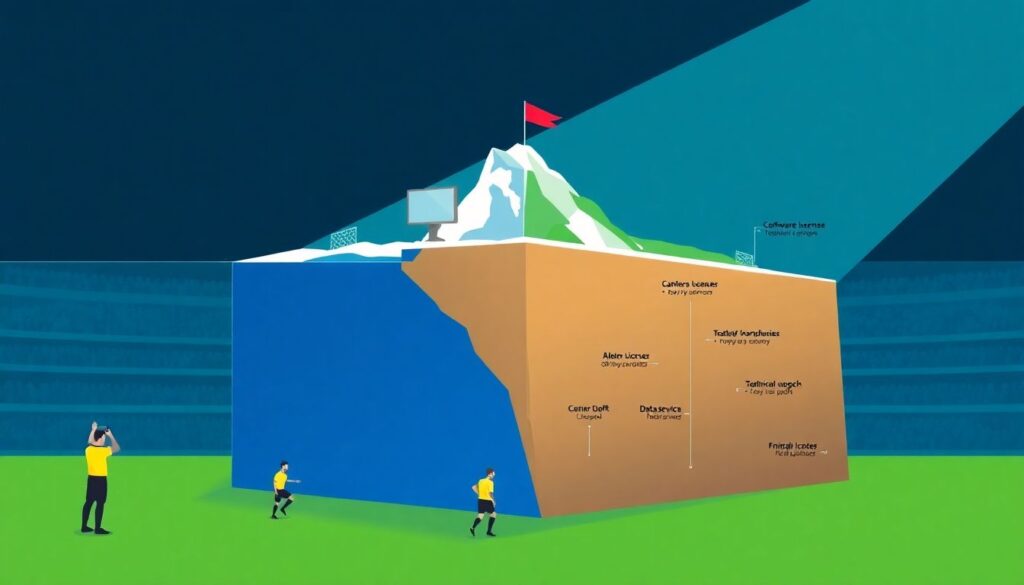
The financial side of VAR is often underestimated, reduced to equipment invoices instead of total ecosystem costs. When clubs or leagues start researching tecnología VAR precio implementación, they quickly discover that cameras and monitors are just the visible tip. Behind them lie annual software licenses, data storage, training sessions, maintenance visits and upgrades every few years as broadcast standards change. Smaller competitions risk locking themselves into systems they can barely afford, which in turn may reduce budgets for youth development or grassroots projects. One unconventional solution is shared infrastructure: regional associations can co‑own a mobile VAR unit with modular cameras and a van‑based control room, rotating it between stadiums. Another option is scaling the system according to competition level: top tiers get full VAR with offside lines and multiple angles, lower tiers use a lighter version focused only on goal decisions. This graded approach acknowledges that total surveillance is neither necessary nor desirable everywhere.
Fan Experience, Tickets, and the New Ritual of Waiting
For supporters in the stands, control and vigilance become tangible the moment play stops and everyone stares at the giant screen waiting for a verdict. The whole rhythm of celebration changes: you can no longer fully trust the first explosion of joy after a goal because you know that somewhere, someone is drawing offside lines. When clubs sell entradas partidos con VAR, they are not just selling a sporting event; they are selling a hybrid between a match and a live review show. One way to make this tension more bearable is to design the in‑stadium experience around clarity: use simple graphics and short text explaining what is under review instead of vague “checking possible penalty.” You can also involve fans by allowing them to rewatch key incidents through the club’s app after the final whistle, turning frustration into discussion. A bolder, non‑standard idea is to set a strict time cap—say, thirty seconds—after which, if no conclusive evidence appears, the original decision stands by rule. That preserves the value of the human referee and forces the system to accept uncertainty instead of trying to engineer it away.
Troubleshooting: When the Eye in the Sky Starts Glitching
No matter how sophisticated your installation is, things will go wrong, and how you react can either calm or inflame everyone involved. Start with technical rehearsals before every match: operators should check each camera feed, review storage capacity, verify intercom quality and run through a simulated incident to test latency. If a camera fails mid‑game, have predefined fallback layouts so the VAR can still cover critical zones instead of scrambling improvisations. Communication glitches between referee and booth need a low‑tech backup, such as prearranged hand signals or a secondary radio channel, to avoid long, confusing pauses. On the governance side, create a public post‑match report template: list each VAR intervention, the reason, the available angles and the final logic behind the call. This habit turns troubleshooting into a culture of accountability. For fans and media, the message should be consistent: VAR is an aid, not an oracle, and when the system lacks a decisive angle, the protocol must favor transparency over pretending to certainty. Over time, that honesty may matter more than the marginal gains in accuracy.