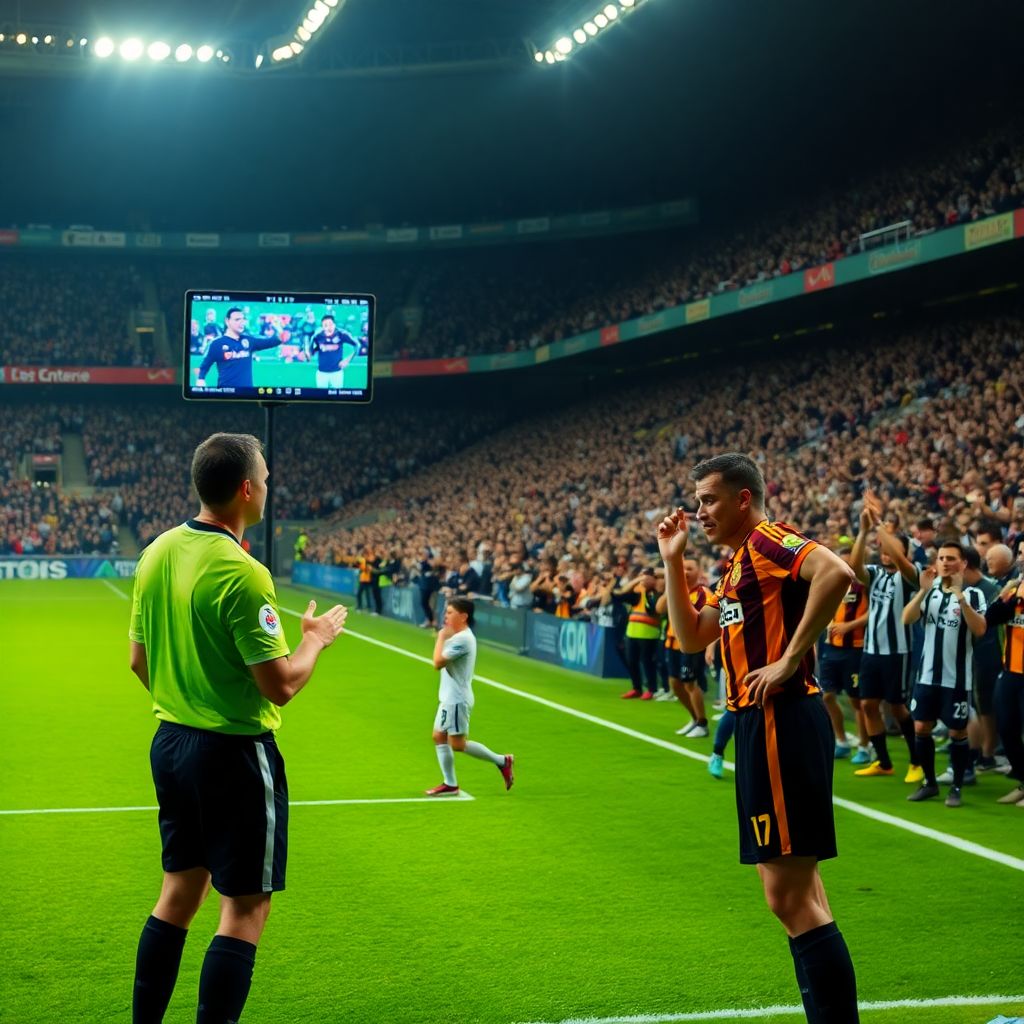
VAR is a video assistance system that supports referees on clear and significant errors, without replacing on‑field authority. It reduces some injustices but cannot eliminate controversy, because football’s essence includes interpretation, rhythm and emotion. The real debate is how much technological justice we accept before the game stops feeling like football.
Verdicts of VAR: concise conclusions
- VAR is a support tool, not an infallible court that «kills» all controversy.
- It corrects some clear errors, but interpretive decisions remain and keep debate alive.
- The trade‑off is precision versus rhythm, emotion and spontaneity of football.
- Implementation quality (cameras, training, protocols) matters more than the concept itself.
- Lower‑resource leagues can use lighter, cheaper variants instead of full «elite» VAR.
- Transparency (audio, explanations) is key for fans, broadcasters and betting operators.
How VAR Works: systems, protocols and decision flow
Video Assistant Referee (VAR) is defined by football laws as an additional match official who uses broadcast‑style video feeds and replay tools to help the referee avoid clear and obvious errors in specific, predefined situations. The on‑field referee remains the only person who can take or change a decision.
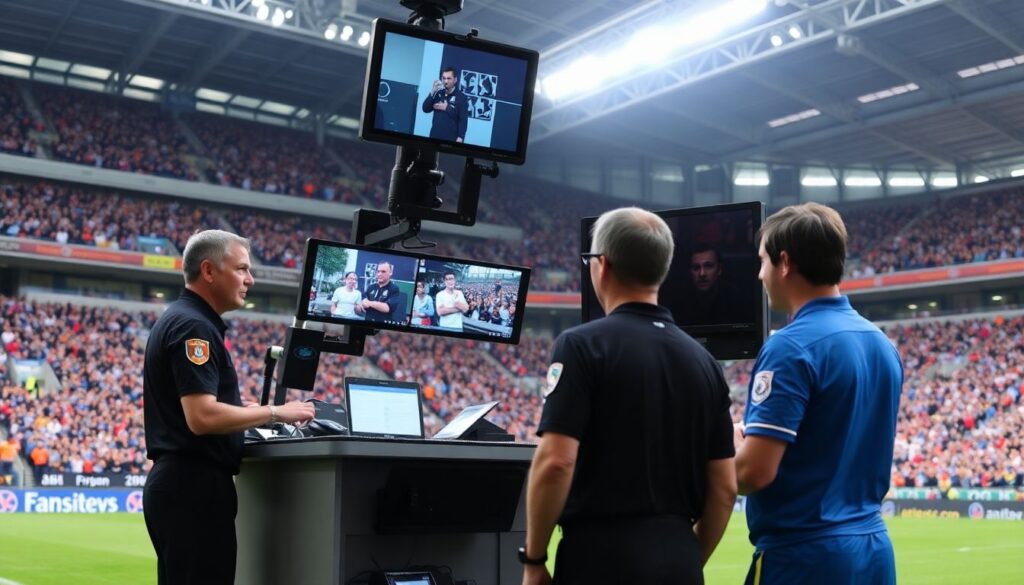
Technically, the VAR team operates in a remote room, receiving several synchronized camera angles. When a check is triggered, they review the incident and communicate via headset with the referee. Many fans now buy entradas partidos con VAR en vivo precisely because they expect big calls to be re‑examined in this hidden control room.
The decision flow follows a strict protocol: silent check, recommendation only if there is a clear error or serious missed incident, then either a referee review on the pitchside monitor or a simple confirmation over the headset. This limited scope is crucial: VAR is not allowed to re‑referee every contact, only the game‑changing ones.
For competitions with fewer resources, «VAR‑light» models use fewer cameras and simpler replay tools, or share a centralised video hub across several matches. This keeps costs manageable while still correcting the most obvious injustices.
Decisions VAR Targets: offside, penalties, violent conduct and more
- Goals and attacking offences: VAR checks every goal for attacking fouls, balls out of play and offsides in the immediate build‑up. Example: a slight offside in the pass before a spectacular strike that fans in the stadium never noticed.
- Penalty awards and non‑awards: Incidents inside the area, including fouls, handballs and simulation. The system intervenes if the penalty decision is clearly wrong, not just debatable.
- Direct red cards: Serious foul play, violent conduct or spitting. VAR helps when the referee’s view was blocked and a dangerous tackle was missed entirely.
- Mistaken identity: When the referee cautions or sends off the wrong player. VAR can correct the name and number, preserving basic fairness.
- Objective boundaries: In some tournaments, additional tools like goal‑line technology support VAR, while semi‑automated offside lines help on extremely tight situations, especially in elite leagues and international tournaments.
- Non‑reviewable decisions: Free‑kicks in midfield, throw‑ins or second yellow cards remain outside VAR’s reach, which explains why post‑match discussions – and anger – still exist.
Accuracy vs Ambiguity: technical limits and interpretive gaps
VAR improves accuracy mainly on objective aspects: whether a foul happened inside or outside the box, whether contact with the hand occurred, or whether the ball fully crossed the line. Yet technology never sees everything – camera angles can be blocked, frame rate is limited and there is always a «first contact» frame to interpret.
Offside shows the mixed nature of VAR. The lines look exact on TV, but the exact frame of the pass and the position of the body parts still require human judgement. That is why debates in mejores casas de apuestas fútbol con VAR and among TV pundits continue: an offside given by a centimetre feels mathematically correct but emotionally harsh.
«Clear and obvious error» is another ambiguity. What is obvious for one referee, competition or country may not be for another. In Spain, fans following La Liga with a suscripción streaming fútbol con VAR incluida see different thresholds compared with, for example, some European competitions, and this perceived inconsistency fuels narratives of bias.
Technology also cannot read intent. Handball, for instance, mixes factual elements (arm position, deflection) with subjective ones (natural posture, deliberate movement). VAR can slow the play down and zoom in, but the final call on intent always reflects a human interpretation of an imperfect image.
Effects on Match Rhythm, Coaching and Fan Experience
The presence of VAR changes how matches feel and how they are managed. Coaches adapt their risk calculations, players adjust behaviour in the box and fans experience goals differently, often waiting for confirmation instead of pure, instant celebration.
Positive impacts for the competition ecosystem
- Reduction of obvious injustices: Fewer goals from clear offsides or missed red‑card incidents, especially in televised matches that influence league titles or relegation.
- Support for referees: Lower psychological pressure on a single human being who previously had to decide complex episodes in real time without replays.
- Strategic clarity for teams: Defenders know that cynical off‑the‑ball fouls are more likely to be punished when cameras cover every corner of the pitch.
- Richer broadcast products: Broadcasters can offer multi‑angle replays, expert breakdowns and packages viajes para ver partidos de fútbol con VAR en Europa that highlight «behind the screens» experiences.
Costs and tensions in the football experience
- Interruptions and emotional delay: Long checks break rhythm. Fans hesitate to celebrate, wondering if a hidden line will invalidate the moment.
- Over‑reliance on screens: Referees may subconsciously wait for VAR to «save» them, slightly weakening on‑field authority and presence.
- Fan distrust and opacity: When audio and reasoning are not shared, supporters suspect manipulation instead of appreciating the correction process.
- Access gap between tiers: Top leagues, where camisetas oficiales equipos liga española VAR temporada actual are sold worldwide, enjoy full systems, while grassroots football cannot match that level, creating perceived two‑speed justice.
Regulatory and Ethical Questions: authority, consistency, transparency
Debates around VAR often mix real issues with myths. Understanding these helps separate legitimate criticism from nostalgia and conspiracy theories.
- «VAR must change every close call» – Incorrect. Protocols limit interventions to clear and obvious errors. Fans expect total perfection, while regulations intentionally accept a grey area to protect flow and authority.
- «Technology removed subjectivity» – Incomplete. Cameras add information but do not remove interpretation. Foul intensity, intent and natural arm position remain subjective, even in slow motion.
- «Controversy is dead» – Misleading. Discussions have shifted from «the referee missed it» to «why did VAR not intervene?» or «why is this handball and that one not?». Talk shows, betting forums and bar conversations remain very alive.
- «VAR favours big clubs» – Unproven as a law of nature. Perception biases and media focus on high‑profile matches create narratives, but the system’s design does not inherently favour one badge.
- «Smaller leagues cannot use VAR ethically» – Too pessimistic. Lighter, transparent models and clear public communication can work with limited cameras and budgets, provided expectations are managed honestly.
Designing Better Models: timing, thresholds and hybrid solutions
Designing VAR for fairness means tuning three elements: when to intervene, how strong the evidence must be and which tools are realistic at a given competition level. The right balance depends on budget, infrastructure and cultural tolerance for interruption.
Imagine a mid‑level European league with limited TV income. Full elite VAR is too expensive, but the federation still wants more justice. Instead of copying top leagues, they deploy a hybrid model: only three angles per goal, no semi‑automated offside, and a strict rule that checks must finish within a short, predefined time. This preserves rhythm while correcting only the most visible errors.
For amateur or youth competitions, cheaper alternatives include additional assistant referees behind the goals, tactical use of one fixed high camera per half or even post‑match review panels for disciplinary sanctions. These options lack the glamour of entradas partidos con VAR en vivo, but they protect the game’s essence in environments where full technology is unrealistic.
Operational checklist for organisers and stakeholders
- Define clearly which decisions VAR (or its lighter alternative) will and will not touch.
- Set intervention thresholds that protect both justice and match rhythm, and communicate them publicly.
- Choose technology levels aligned with real budgets instead of copying richer leagues blindly.
- Plan transparent communication: explanations, referee education and fan‑friendly content around VAR.
- Regularly review incidents to adjust protocols, not just to blame individuals.
Practical clarifications and quick answers
Does VAR really eliminate all controversy in football?
No. VAR reduces some clear injustices but leaves many interpretive decisions intact. The centre of debate simply moves from missed incidents to questions about thresholds, consistency and referee interpretation of video evidence.
Why do VAR checks sometimes take so long?
Because officials must find the best angles, synchronize frames and discuss the decision within protocol. Poor camera coverage, complex incidents and communication delays can extend checks, especially in competitions with fewer technical resources.
Is it still worth going to the stadium if VAR might cancel my team’s goal?
Yes. Stadium experience remains unique: atmosphere, collective emotion and live tension when the referee goes to the monitor. Many fans actually enjoy the extra drama, and some travel packages explicitly highlight matches with VAR as part of the modern spectacle.
How does VAR affect football betting and live odds?
VAR introduces short periods of uncertainty in live betting, as goals may be cancelled or penalties awarded after review. Professional operators adjust markets and suspend odds during checks in competitions where VAR is used.
Can smaller leagues or youth tournaments realistically implement VAR?
Often not in its full elite form. However, they can adopt cheaper alternatives such as fewer cameras, shared central hubs, additional assistant referees or post‑match video review for disciplinary purposes instead of real‑time intervention.
Why do some fans feel VAR damages the essence of football?
They associate essence with spontaneity, continuous flow and acceptance of human error. When celebrations are delayed and replays dominate the narrative, these fans feel the emotional rhythm of the game is weakened.
Will future technology finally make all decisions perfectly objective?
Technology will improve detection and offside lines, but elements like intent, intensity and fairness in context will always require human judgement. Football is not only geometry; it is also culture, interpretation and shared emotion.