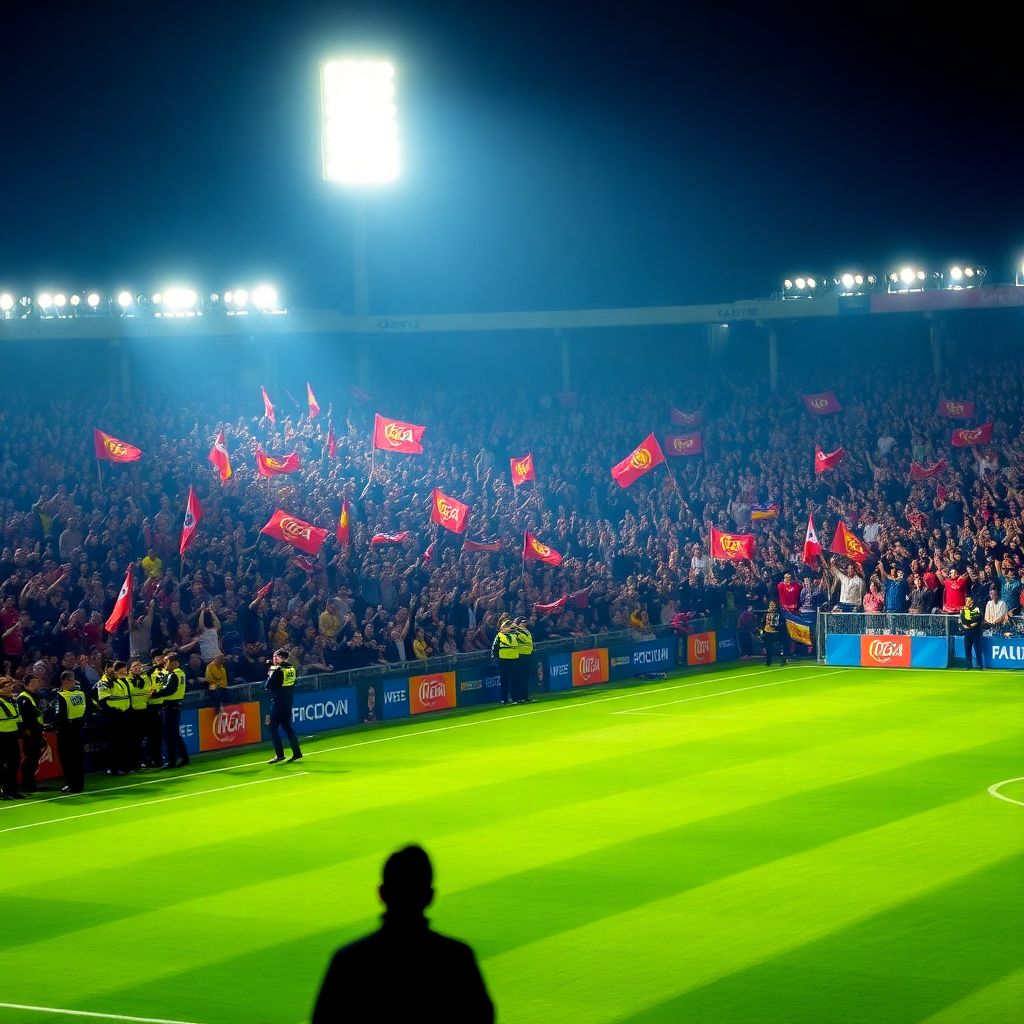
Ultras and barras bravas are highly organized football supporter groups whose identity mixes passion, territorial pride and, sometimes, systematic violence. Understanding their history, symbols, internal rules and relations with clubs and police helps design realistic strategies that reduce risk while preserving positive forms of fan belonging, even in contexts with very limited resources.
Core concepts: identity, violence and group dynamics in the stands
- Ultras and barras bravas are structured supporter groups with stable leadership, resources and collective rituals, not just noisy fans.
- Identity is built through colours, songs, banners and shared stories that turn the stand into a symbolic territory.
- Violence is not random: it is often planned, ritualised and linked to status, rivalry and control of space or benefits.
- Belonging offers protection, recognition and meaning, especially to young men with few other sources of status.
- Clubs, police, municipalities and neighbourhood actors all shape whether a group leans more towards support or criminality.
- Effective prevention combines regulation, transparent club governance and low‑cost community work in and around the stadium.
Historical emergence of ultras and barras in Latin American football
Ultras and barras bravas in Latin America are supporter collectives inspired by earlier European ultra groups and local traditions of carnival, neighbourhood gangs and political militancy. They differ from ordinary fans by their high organisation, permanence and capacity to mobilise both passion and intimidation.
In many countries, early barras emerged around the biggest clubs, occupying specific terraces and coordinating drums, flags and chants. Over time, some became intermediaries between club directors and the street, managing tickets, travel and sometimes clientelist political arrangements. This gave them resources, influence and, in some cases, impunity.
While each country has its own trajectory, common factors include economic inequality, weak formal youth structures and the centrality of football as an identity marker. For many members, the barra becomes a second family, offering clear roles and recognition that may be absent in work, school or home environments.
Public debate is often shaped by media narratives, from the sensationalist style to more nuanced formats such as any serious documental violencia en las gradas barras bravas that tries to connect match‑day incidents with broader social dynamics. Likewise, a well‑researched libro sobre ultras y barras bravas fútbol can show how these groups evolve across decades, not just from one scandal to another.
Symbols, chants and rituals: how collective identity is built
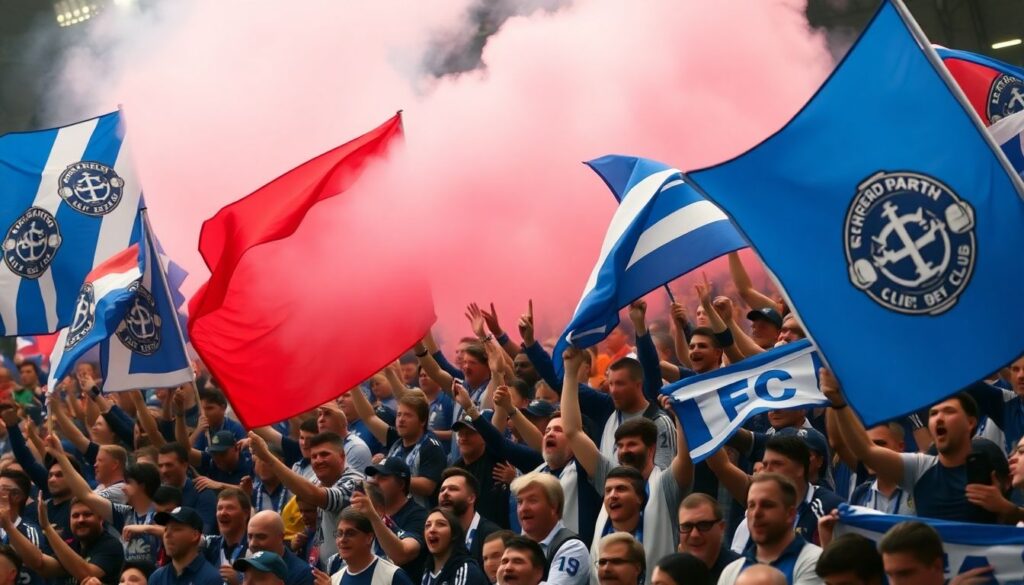
Symbolic practices are the main tools through which ultras and barras build a sense of belonging and difference from other fans. They turn individual supporters into a disciplined, emotionally synchronised group.
- Colours, crests and flags. Club colours and badges are expanded into giant flags, painted murals and coordinated clothing. Even commercial products, like camisetas ultras y barras bravas tienda online, reinforce insider codes through specific phrases, numbers or symbols.
- Chants and drums. Repeated songs create emotional peaks, coordinate movement and transmit norms such as bravery, loyalty or hatred of rivals. Drums and trumpets give a military or carnival rhythm to the stand.
- Banners and graffiti. Visual messages claim territory, commemorate dead members, insult rivals or pressure club officials. They are often placed in strategic neighbourhood and stadium locations.
- Match‑day processions. Marching from the barrio to the stadium together, often with fireworks and alcohol, prepares members psychologically for confrontation and solidarity.
- Ritualised aggression. Postures, gestures and even controlled clashes work as performances of courage and superiority, watched by both friends and enemies.
- Online presence. Social networks, clips from a documental violencia en las gradas barras bravas or self‑produced videos amplify the group’s image, attract recruits and frame incidents as heroic feats.
These mechanisms are not exclusive to violent groups. Any fan organisation also uses songs, symbols and shared narratives. The difference lies in what values are promoted and how far members are pushed toward confrontation, both inside and outside the stadium.
Recruitment, initiation rites and internal hierarchy
Recruitment, initiation and hierarchy explain how ultras and barras bravas reproduce themselves over time, and why it is so hard for individuals to leave once deeply involved.
Scenario 1: Neighbourhood entry. A teenager grows up near the stadium. Older relatives or friends already attend with the barra. The first step is travelling in the same bus or standing near the group. Gradually, he is invited to help with banners, drums or logistics. Inclusion is based on presence and obedience.
Scenario 2: School or workplace connection. A co‑worker or classmate shares videos, stories and maybe a libro sobre ultras y barras bravas fútbol, presenting the group as a place of respect and adventure. Invitations to away games and parties follow, binding the new member through shared experiences and secrecy.
Scenario 3: Initiation through risk. Full membership may require specific acts: participating in a fight, travelling to a dangerous away game, or confronting police. These tests show loyalty and courage. They also compromise the recruit, making it harder to cooperate later with authorities or leave the group.
Scenario 4: Structured hierarchy. Many barras use a pyramid model: a core leadership that negotiates with club officials and politicians, middle managers for logistics and security, and a base of regular members and sympathisers. Access to resources such as entradas partidos con hinchadas ultras y barras, travel or informal income is often controlled from the top.
Scenario 5: Exit and punishment. Leaving can bring sanctions: exclusion, harassment, debts or, in extreme cases, physical retaliation. This maintains discipline but also ties members to the group even when they want to distance themselves from violence.
Patterns of organized violence, rivalry and territoriality
Organised violence in the stands follows recognisable patterns linked to rivalry, territory and resource control. Understanding these patterns is necessary to design realistic interventions, especially when budgets for security and social programmes are very limited.
- Potential benefits when controlled and redirected.
- Channelling competitive energy into creative displays (tifos, choreographies, music) can reduce direct confrontations when accompanied by clear sanctions.
- Including barra representatives in monitored dialogue platforms helps anticipate risk matches and adapt policing without relying only on repression.
- Structured, low‑cost fan projects (tournaments, mural painting, media workshops) can reframe prestige around creativity instead of violence.
- Neighbourhood‑based mediation between rival groups sometimes transforms total hostility into regulated coexistence, especially around shared community spaces.
- Serious limitations and dangers.
- Violence can spread from stadiums to public transport and neighbourhoods, affecting non‑involved citizens and local businesses.
- Income from resale of entradas partidos con hinchadas ultras y barras, parking or informal trade may connect barras to wider criminal networks.
- Police abuses or arbitrary bans without due process can strengthen extremist narratives of persecution and martyrdom.
- Short electoral cycles encourage politicians to make quick pacts with leaders rather than invest in long‑term prevention.
Relations with clubs, law enforcement and community stakeholders
Relationships between barras, clubs, authorities and communities are full of ambiguity, myths and repeated mistakes. Clarifying expectations and roles is essential for safer stadiums.
- Myth: barras only respond to force. Many leaders are pragmatic and respond to incentives, clear rules and predictable sanctions. Pure repression without communication often moves violence away from the stadium into less controllable spaces.
- Mistake: informal privileges for short‑term peace. Free tickets, travel money or merchandise in exchange for a calm stand can create long‑term dependency and undermine club governance.
- Myth: every ultra is a criminal. Membership is diverse. Some participate mainly in songs and banners, others in serious crimes. Blanket criminalisation pushes moderate members toward hard‑line factions.
- Mistake: ignoring local knowledge. Community leaders, social workers and even critical members of the barra often know upcoming risks. Excluding them from planning wastes low‑cost intelligence.
- Mistake: symbolic campaigns without follow‑up. Occasional slogans or a single documental violencia en las gradas barras bravas shown in schools change little without coherent policies, transparent discipline from clubs and visible consequences for abuses by both fans and police.
- Myth: research is a luxury. Even small clubs can collaborate with universities on low‑budget projects instead of waiting for big estudios académicos identidad y violencia en barras bravas comprar. Basic data on incidents, locations and actors already improves decisions.
Policy, prevention and pragmatic measures for safer stadiums
Prevention requires combining realistic security measures with low‑cost social strategies adapted to local resources. The goal is not to eliminate passion but to reduce incentives and opportunities for violence.
Mini‑case: low‑budget club in a medium Spanish city. A second‑division club faces recurring incidents with a small ultra group. There is no money for big infrastructure projects or private research, and local authorities are reluctant to invest.
- Map risk and actors. Club security, municipal police and trusted neighbourhood mediators meet monthly. They list risk fixtures, specific hotspots (access gates, nearby bars, bus stops) and key individuals in the group.
- Reorganise stadium space. Without expensive construction, the club uses flexible barriers, staggered access times and clearer separation between family areas and the ultra sector.
- Conditional support. Any group recognition depends on written commitments: no weapons, no racist or homophobic displays, cooperation in identifying aggressors. Loss of privileges is automatic if conditions are broken.
- Alternative prestige. The club co‑creates contests for tifos, music and choreography. Winners are presented on the pitch and on official channels, giving visibility that does not depend on fights.
- Transparent sanctions. Every ban or fine, including those against staff or police when relevant, is communicated clearly. This weakens narratives of one‑sided persecution.
- Resource‑light partnerships. Instead of paying for large estudios académicos identidad y violencia en barras bravas comprar, the club offers internship opportunities to local university students to collect and analyse basic data on incidents and fan perceptions.
- Public education. Local libraries and fan clubs organise talks around a selected libro sobre ultras y barras bravas fútbol and a carefully chosen documental violencia en las gradas barras bravas, opening space for debate beyond social media polarisation.
Clarifying contested terms, myths and practical doubts
What is the difference between an ultra group and a barra brava?
The terms refer to similar phenomena but come from different contexts. Ultras are usually associated with European clubs, while barras bravas developed mainly in Latin America. Both share strong organisation and intense support; specific rituals, political links and levels of violence vary locally.
Are all ultras and barras inherently violent?
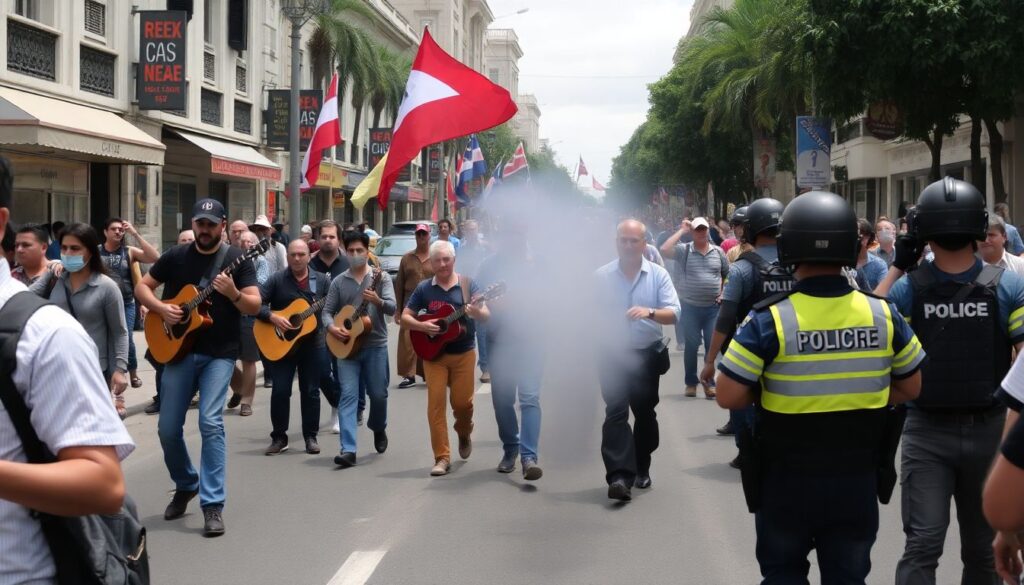
No. Most members never participate in serious assaults, and many groups focus on music, visual displays and travelling. However, a small militant core can set the tone and drag the entire group into confrontations, which is why targeted interventions are more effective than generalised bans.
Why do young people keep joining despite the risks?
Belonging, status, protection and excitement are powerful attractions, especially where other opportunities are scarce. The group offers clear roles and recognition. Any prevention strategy must offer alternative sources of identity and prestige, not just warnings about danger.
Do stricter stadium bans and surveillance cameras solve the problem?
They can reduce some incidents inside stadiums, but violence may move to streets, bars or public transport. Technology and bans work best when combined with transparent procedures, community engagement and realistic support for non‑violent fan initiatives.
Is buying ultra or barra merchandise supporting violence?
Not necessarily. Many fans buy scarves or clothing, including from a camisetas ultras y barras bravas tienda online, simply to feel closer to their club. Problems arise when profits finance violent activities or when symbols promote hate. Clubs can help by offering attractive, positive alternatives.
How can small clubs act if they have almost no budget?
They can focus on clear rules for group recognition, low‑cost dialogue structures, careful distribution of tickets, and collaboration with universities or NGOs. Many improvements rely more on coordination and transparency than on expensive technology.
Do academic studies really help people on the ground?
Well‑designed research, including modest projects rather than only expensive estudios académicos identidad y violencia en barras bravas comprar, can clarify what actually works and what does not. When researchers, clubs and authorities cooperate, findings can translate into practical protocols and training.