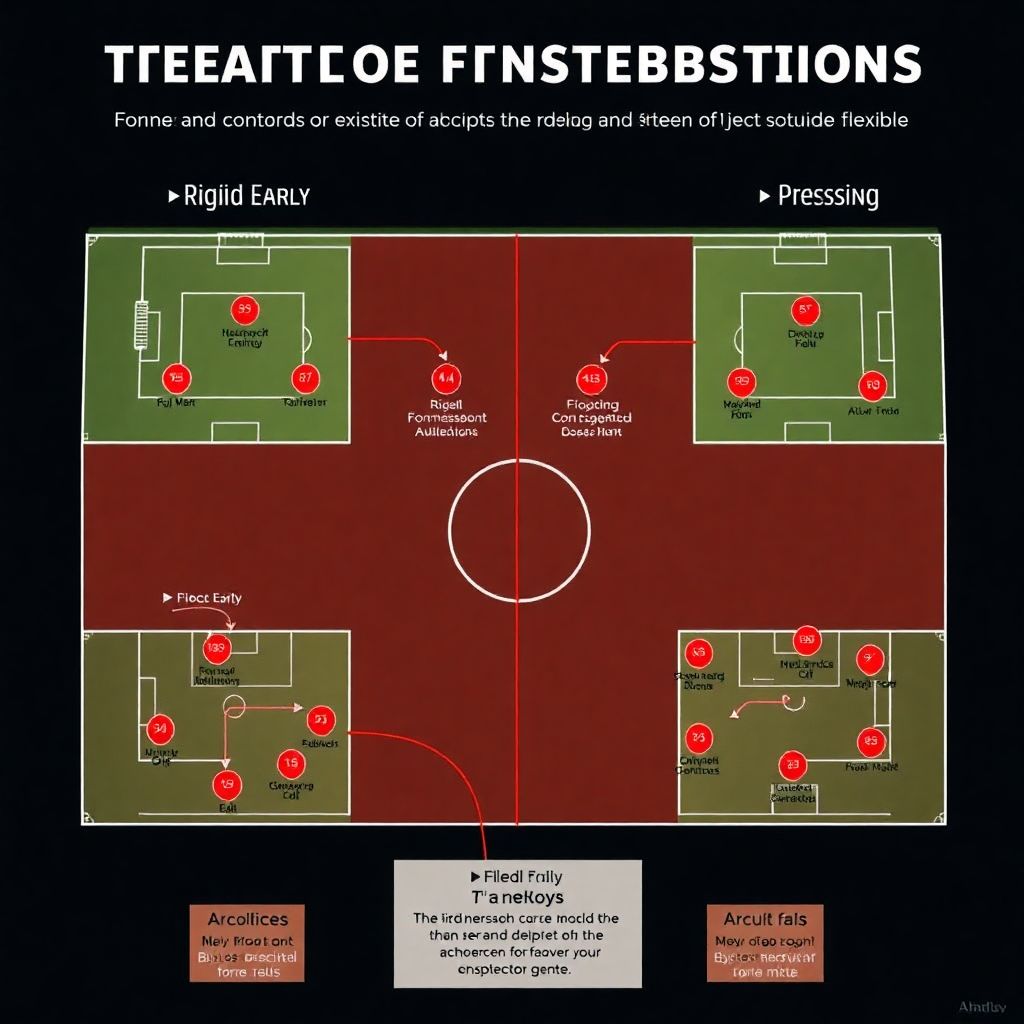
The historical evolution of football formations, from 2-3-5 to the false nine, is a shift from man-to-man duels and wing-focused attacks toward zonal defending, pressing and flexible roles. Understanding this path clarifies why modern systems look fluid, how to train them, and how to adapt with limited resources.
Milestones in tactical evolution
- Early 2-3-5 prioritised attack and individual duels over compact defending.
- The WM introduced a clear defensive line and more balanced lines across the pitch.
- Back fours and systems like 4-4-2 and 4-3-3 standardised zonal defending.
- Pressing and space management redefined roles, especially midfield and full-backs.
- The false nine blended midfielder and striker roles to manipulate defensive lines.
- Contemporary hybrids use constant role rotation to exploit specific zones and overloads.
From the 2-3-5 era: structure and intent
Any overview of the historia de las formaciones de fútbol starts with the classic 2-3-5, often called the "pyramid". Two defenders, three midfielders and five forwards created huge attacking width and many players close to the opposition box, but little protection for the back line.
The idea behind 2-3-5 was simple: win individual duels, cross often, and overload the penalty area. Defending was largely man-oriented, and space control was rudimentary. Teams relied heavily on physicality and technical superiority rather than collective movement, pressing triggers or coordinated defensive blocks.
As players became fitter and the game faster, this structure exposed too much space between lines and behind defenders. Opponents could counter-attack directly through the middle. This pressure pushed coaches to seek new tácticas y sistemas de juego en el fútbol moderno that gave more balance while still supporting attacks from the wings.
The WM and the birth of defensive shape
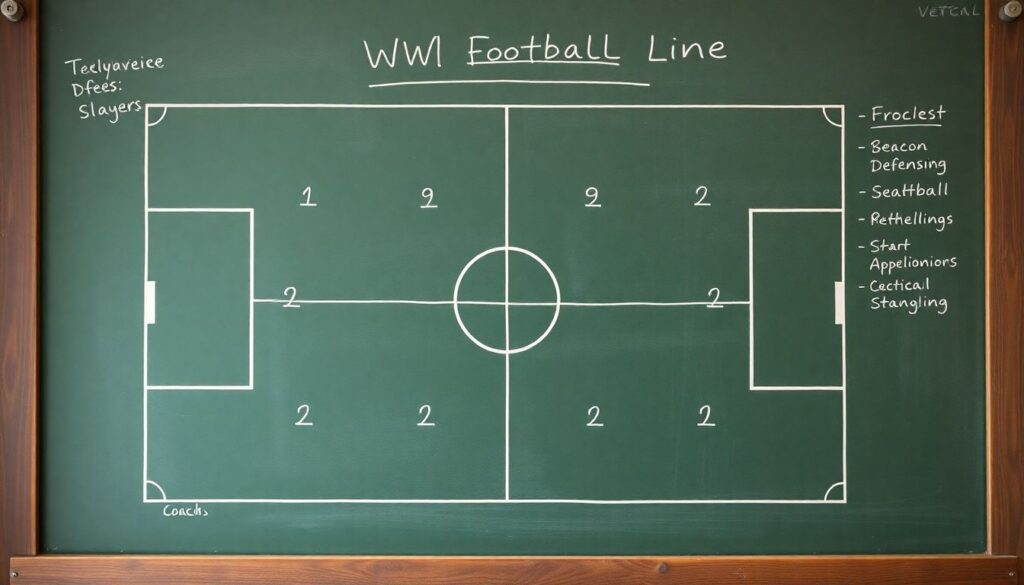
The WM system (often written as 3-2-2-3) bridged old and new ideas and is a key step in the evolución táctica del fútbol moderno. It introduced a recognisable defensive line and clearer vertical staggering of players.
- Creation of a back three: One midfielder dropped between the two defenders, forming three central players to protect the area in front of goal.
- Better coverage of vertical channels: The 3-2-2-3 split the pitch into lanes, improving control of the central corridor while keeping wingers wide.
- Man-marking with some zonal elements: Defenders still followed opponents closely, but starting positions became more structured, anticipating where space would open.
- Clearer lines and compactness: Three lines behind the forwards made it harder for rivals to counter directly through central areas.
- Role specialisation: Half-backs acted as early defensive midfielders, screening and starting build-up, something very relevant to modern pivots.
- Attacking triangles: The layout naturally created small passing triangles, the base for positional play that modern teams still use.
The rise of back fours and formation standardization
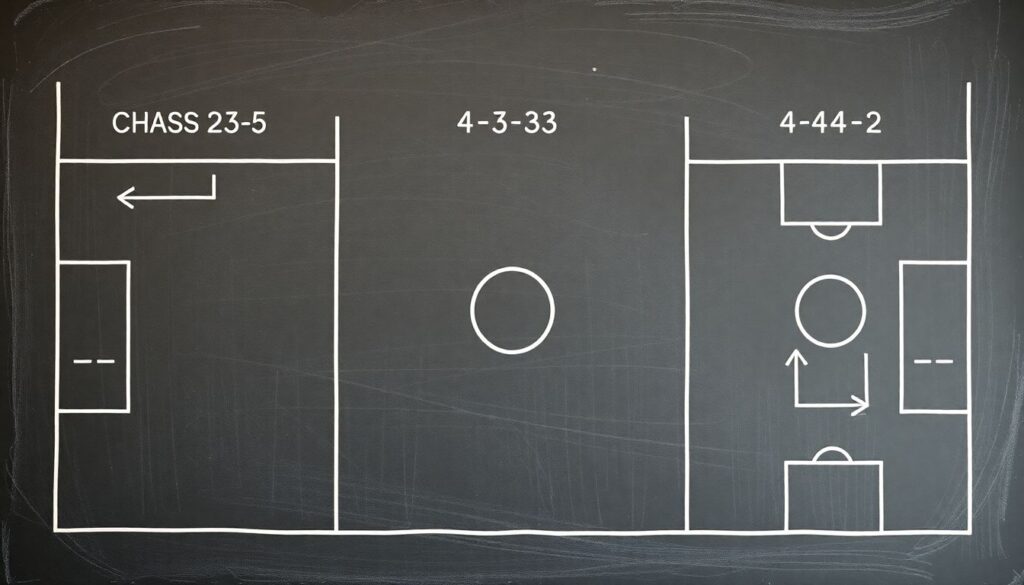
Over time, the WM evolved into systems with four defenders, producing the widely used back four. This phase is where formaciones de fútbol 2-3-5 4-3-3 4-4-2 show a clear timeline from chaos to relative standardisation.
| Formation | Key player roles | Typical in-game scenario |
|---|---|---|
| 2-3-5 | Many forwards, few defenders; wingers as main creators; centre-half as stopper. | Open games, many crosses, end-to-end transitions, big spaces in midfield and behind the defence. |
| 4-4-2 | Two banks of four; wide midfielders track full-backs; two strikers share pressing and finishing. | Balanced control; defend in a mid-block; attack with crosses, knockdowns and combination play between strikers. |
| 4-3-3 | Single pivot plus two interiors; wide forwards attack half-spaces; full-backs decide height based on risk. | Positional play; control through midfield overloads; pressing in coordinated waves starting from front three. |
Back fours became dominant for several reasons that matter in everyday coaching practice, even with limited resources.
- Clarity of tasks: Full-backs and centre-backs have distinct, easy-to-teach responsibilities, useful for amateur teams in Spain with few training sessions per week.
- Flexibility: From a 4-4-2 base, it is straightforward to adjust into 4-2-3-1 or 4-3-3 by slightly repositioning one midfielder or striker.
- Stability in wide areas: Two players per flank (full-back + wide midfielder/winger) help deal with modern overlapping full-backs.
- Compatibility with pressing: A back four supports coordinated pressing without leaving enormous gaps between defenders.
- Accessible for limited squads: At grassroots level, it is simpler to train a solid 4-4-2 or 4-2-3-1 block than very complex hybrid shapes.
Pressing, space management and the shift in roles
As physical and tactical levels rose, controlling space and pressing the ball became more important than classic man-marking. This deeply changed both roles and formations in the evolución táctica del fútbol moderno, especially for midfielders and full-backs.
Advantages of modern pressing and space-based systems
- Collective compactness: Teams move as a unit, shrinking usable space for opponents and forcing play into predictable zones.
- Ball-oriented defending: Players react to the ball and nearby opponents, not just their nominal marker, improving interception chances.
- Support for short build-up: Positions in systems like 4-3-3 or 4-2-3-1 create clean passing lines from goalkeeper to midfield.
- Role evolution: Full-backs can attack like wingers; defensive midfielders orchestrate both pressing and build-up.
- Adaptability: Coaches can adjust pressing height (high, mid, low block) without fully changing formation labels.
Limitations and practical constraints
- Physical demands: High pressing across a full season is difficult without rotation, a big challenge for small squads in regional leagues.
- Tactical learning curve: Coordinated pressing requires time on the training pitch, video analysis and repetition that many amateur teams cannot afford.
- Risk of exposure: Poorly-timed pressing leaves gaps between lines, allowing quick vertical passes or switches to the weak side.
- Dependence on communication: Silent or fragmented teams struggle to adjust pressing triggers in real time.
- Complexity for youth players: Young players may understand their position, but not yet the collective spatial concepts behind the system.
The false nine: origin, function and tactical anatomy
To explain qué es el falso nueve en fútbol, it helps to see it as another step in the long chain from static to dynamic roles. A false nine is a nominal striker who frequently drops into midfield to create numerical superiority and drag central defenders out of position.
This role gained global attention through teams like Spain and FC Barcelona, but variants existed much earlier. In modern tácticas y sistemas de juego en el fútbol moderno, it is common to see wingers or attacking midfielders also acting in "false" positions, constantly leaving their starting zones to disrupt markers.
Frequent misconceptions and practical mistakes
- Confusing "false nine" with a weak striker: The role demands high technical quality and decision-making; it is not an excuse to field a player who cannot finish.
- Ignoring teammates' movements: When the false nine drops, wide players or interiors must attack the depth; otherwise, the team loses depth and becomes predictable.
- Overusing it at amateur level: Without training and clear automatisms, a false nine can leave the box empty and disconnect the team.
- Forcing the role in every game: Some opponents defend well in zonal blocks and are not easily pulled out of position, reducing the role's advantage.
- Neglecting defensive duties: The false nine often leads the press; if they do not work without the ball, the first line of pressure collapses.
Contemporary hybrids: fluidity, overloads and role interchange
Modern top teams frequently combine ideas from several systems rather than sticking to a rigid 4-3-3 or 4-4-2. This hybridisation is the latest chapter in the historia de las formaciones de fútbol, especially evident in elite European and La Liga sides.
A typical pattern might look like this across phases of play:
- Build-up: Nominal 4-3-3 shifts into a 3-2-5 as one full-back moves into midfield and the opposite winger stays wide, creating five in the front line.
- Consolidated attack: The "false nine" drifts into a pocket between opposition midfield and defence, while an interior runs beyond to attack the space behind defenders.
- Defensive transition: The closest three players counter-press immediately, with the advanced full-back dropping back to restore a back four or back three depending on risk management.
- Set blocks: When defending deeper, the same team may resemble a 4-4-2, with a winger joining the striker to form the first pressing line.
For a semi-professional side with limited analysis tools, a practical path is to start from a simple base shape (for example 4-4-2) and design two or three clear "transformations" for specific phases, instead of trying to copy the full complexity of elite positional play.
Checklist for coaches and analysts
- Identify which historical structure (2-3-5, WM, 4-4-2, 4-3-3) your current team most resembles, and why.
- Define one primary and one secondary formation that your players can execute with minimal extra coaching time.
- Decide whether a false nine or similar hybrid role is realistic given your squad's technical level.
- Plan simple pressing rules that fit players' fitness and understanding, rather than copying elite models blindly.
- Review one match per month focused only on team shape across phases, not individual mistakes.
Tactical clarifications and concise answers
Why did teams move away from the 2-3-5 formation?
Because it left too much space between lines and behind defenders, especially as players became faster and more organised. Formations with more defenders and midfielders improved control of central areas and reduced vulnerability to counter-attacks.
What is the main difference between 4-4-2 and 4-3-3?
In 4-4-2 you typically have two strikers and a flat midfield line, offering balance but fewer central midfielders. In 4-3-3 you sacrifice a second striker for an extra midfielder, improving central control and pressing options.
When is a false nine role most effective?
It works best against teams whose centre-backs follow opponents tightly and leave their line. The false nine can pull them out of shape while teammates exploit the space behind.
Can amateur teams in Spain use complex hybrid systems?
Yes, but only in simplified form. Focus on one basic structure and add one or two clear positional rotations, instead of replicating the full complexity seen in elite clubs.
How do pressing and formations interact in modern football?
Pressing defines how a formation behaves without the ball: a 4-3-3 can press high or drop into a mid-block. The same nominal formation can produce very different behaviours depending on pressing triggers and compactness.
Is the back four still necessary in modern tactics?
Not strictly, but it remains popular because it is easy to teach, especially at youth and amateur level. Many teams now morph between a back four and a back three depending on phase and risk.
How should a small club start modernising its tactical system?
Start by clarifying roles in a simple shape, then gradually add concepts like pressing triggers, basic rotations and a more flexible use of the striker or "number ten" role.