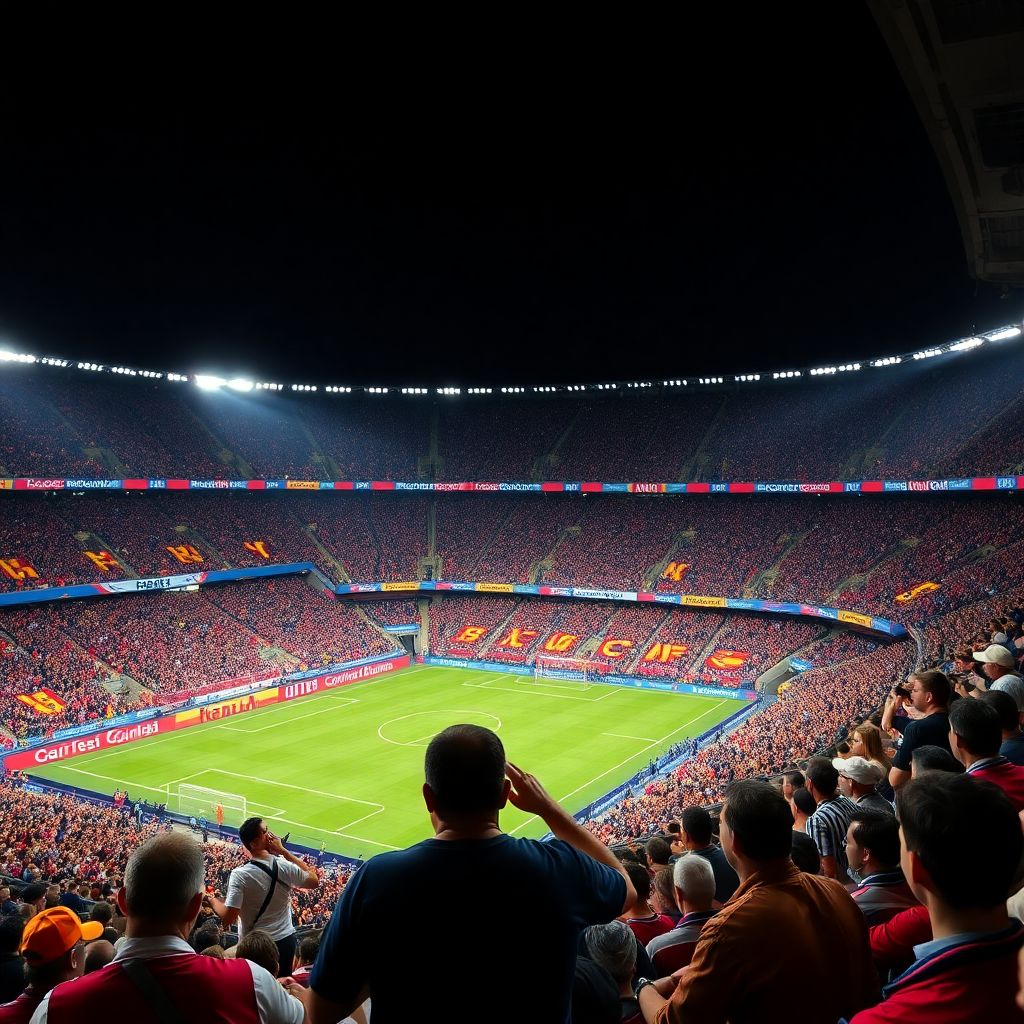
Football as a civil religion means that clubs, stadiums and matchdays work like a secular faith: fans share rituals, dogmas, sacred spaces, saints and even heresies. Understanding chants, tifos, idols and rivalries through this lens helps explain why football in Spain and beyond feels moral, emotional and almost sacred.
Foundational Concepts of Football as a Civil Religion
- Football behaves like a secular religion, with shared myths, rites, sacred times and spaces.
- Matchday rituals (chants, colours, pilgrimages to the stadium) function like collective ceremonies.
- Idols (players, coaches, historic fans) become quasi-saints embodying club virtues and stories.
- Stadiums and fan areas turn into symbolic shrines that structure urban and emotional geography.
- Dogmas define what counts as loyalty, betrayal, tradition and legitimate dissent inside the fan base.
- Rivalries, splits and fan conflicts act as schisms and heresies that re‑draw the limits of the community.
- Researchers and practitioners can use this framework even with limited resources, through basic observation, low-cost interviews and open data.
Collective Rituals: Matchday Ceremonies and Chants
Collective rituals are repeated symbolic actions that give meaning to being a supporter. In football as civil religion, these include club hymns, pre‑match processions, bar meet‑ups, scarf‑raising, choreographies and minute‑silences. They transform a simple game into a socially recognised sacred time and space.
In many Spanish cities, a home matchday resembles a local festival: people wear club colours, follow fixed routes to the stadium, stop at the same bars and sing the same songs at the same moments. These routines, even when informal, work like liturgies that organise emotion and belonging.
Rituals are not limited to elite clubs. In lower divisions or neighbourhood teams, simple acts-sharing food in the stands, banging on metal barriers, singing without microphones-create the same civil‑religious structure at a smaller scale. For communities with few resources, these low‑cost practices are especially important.
Media extend these rituals beyond the ground. Television broadcasts, fan podcasts and a good documental fútbol religión ídolos y rituales can reproduce the sense of ceremony for fans watching from home or bars. Even without tickets or travel budgets, supporters can still participate symbolically in the ritual cycle.
Icons and Saints: The Making and Maintenance of Football Idols
Idols in football are not just talented players; they are figures who condense a moral narrative about the club and its people. They become secular saints whose stories are retold in songs, murals and anecdotes, and whose images circulate on scarves, flags and social media.
- Narrative construction: An idol emerges when performance is combined with a compelling story: loyalty to the club, overcoming injury, local origins, or visible commitment to fans.
- Ritual repetition: Chants with the player's name, giant banners and recurring media stories keep the narrative alive over time.
- Material devotion: Fans show attachment through murals, tattoos and camisetas de fútbol personalizadas con mensajes religiosos, where a player becomes part of a quasi‑sacred message.
- Institutional endorsement: Clubs reinforce sainthood by retiring numbers, building statues, naming stands and inviting idols to official ceremonies.
- Community policing: Other fans enforce respect: mocking a sainted player, especially near the stadium, can be treated as a kind of blasphemy.
- Ritualised memory: Anniversaries of legendary matches, deaths or debuts serve as liturgical dates to renew the idol's status.
- Negotiated fall and redemption: When an idol fails or changes club, fans and media debate whether the saint has fallen, can be forgiven or must be erased from the symbolic pantheon.
Semi‑Applied Scenarios: Using the Civil Religion Lens in Practice
After understanding how idols are produced, it becomes easier to design or analyse concrete interventions, even with limited time and money.
- Small club memory project: A regional club documents the stories of three local legends, creates simple posters and organises a "legend day" before a key match. With almost no budget, it strengthens identity and passes the club mythos to younger fans.
- Supporters' group self‑reflection: An ultras group lists its "saints" (players, historic members) and asks what values they represent. They then check if current behaviour in the stand reflects those values or contradicts them, adjusting chants and banners accordingly.
- Academic micro‑study: A student watches a documental fútbol religión ídolos y rituales, takes structured notes on how idols are framed, and compares them with one live match observation. This minimal design is enough for a short paper on civil‑religious imagery.
- Budget‑light education activity: A teacher assigns students to analyse camisetas de fútbol personalizadas con mensajes religiosos found online, identifying references to saints, miracles or sacrifice, then linking them to club history and local identity.
These scenarios show that the "idols and saints" idea is not abstract theory but a workable tool for research, pedagogy and fan self‑organisation, including in contexts with very limited resources.
Sacred Spaces: Stadiums, Shrines and Fan Geography
Sacred space in football refers to physical and symbolic locations where the civil religion is concentrated: stadiums, fan bars, murals, memorial sites, training grounds and even digital communities. These spaces organise how supporters move, remember and feel, much like religious pilgrimage routes.
- The stadium as temple: Matchday turns the ground into a sanctified space with its own rules: specific gates, dress codes (colours, scarves), forbidden actions and ritual timing (when to sing, when to stay silent).
- Neighbourhood circuits: Bars, kiosks, fan clubs and kiosks selling fanzines form a ritual route from city centre to stadium. Walking this route on matchday is a kind of pilgrimage, especially in Spanish contexts with strong barrio identities.
- Memorial corners: Plaques, flowers or graffiti for deceased fans, victims of accidents or historic titles create small shrines inside or near the stadium. Fans may touch them for luck, take photos or stop for brief moments of silence.
- Domestic sacred zones: For supporters without access to stadiums, the "home altar" can be a wall with scarves and shirts, the sofa in front of the TV or the bar where they always watch games. These low‑cost spaces replicate the emotions of the temple.
- Digital shrines: Fan forums, WhatsApp groups and social media pages function as virtual stands where ritual acts-posting line‑ups, pre‑match prayers, post‑match confessions-take place, especially for diasporic or low‑income supporters.
- Transnational nodes: When Spanish fans gather in European away cities, they temporarily convert ordinary squares and pubs into sacred fan zones through chants, flags and dress codes.
Doctrines and Dogmas: Core Beliefs That Define Allegiance
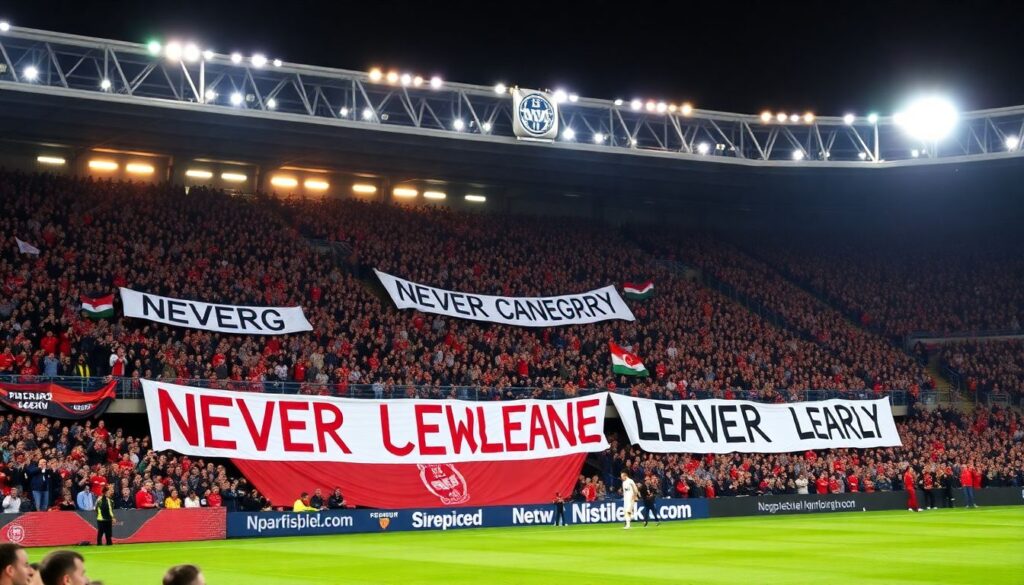
Dogmas in football as civil religion are non‑negotiable beliefs that structure fan identity: "you never support the rival", "you never leave early", "the badge is above any player". These doctrines define loyalty and judge behaviour, sometimes enabling solidarity and sometimes exclusion or violence.
Positive functions of football dogmas
- Stability of identity: Clear beliefs (for example, "the club is for everyone in the city") anchor people during crises and bad results.
- Mutual obligation: Doctrines about helping fellow fans-sharing tickets, protecting each other away from home-encourage concrete acts of solidarity.
- Intergenerational transmission: Dogmatic stories told by grandparents to grandchildren (myths about derbies, titles, injustices) keep the civil religion alive.
- Ethical standards: Some groups explicitly codify anti‑racist or anti‑sexist dogmas, using civil‑religious language to defend inclusive values in the stand.
- Resistance capacity: Strong doctrines can help fan bases resist opportunistic owners, speculative projects or rebranding that erases local identity.
Limitations and risks of football dogmas
- Exclusion and purity tests: Strict dogmas may label casual or late‑arriving fans as "plastic" or "fake", ignoring economic, family or health constraints.
- Blocked reform: Invoking "tradition" can paralyse needed changes such as safer stands, women's inclusion or anti‑racism measures.
- Escalation of rivalries: Doctrines that absolutise hatred of rivals can normalise insults about cities, ethnic groups or religions beyond football.
- Commodification of belief: Clubs may turn dogmas into marketing slogans, selling identity back to fans instead of respecting bottom‑up traditions.
- Unquestioned leadership: When certain fan leaders become quasi‑infallible, internal criticism is silenced and abuses of power or money can grow.
Herejías and Schisms: Rivalries, Dissent and Fan Heresies
In civil‑religious terms, heresy is behaviour that breaks core doctrines of the fan community. Schism is the durable split that can follow: creation of new supporters' groups, boycotts or alternative clubs. Understanding these dynamics is key for mediating conflicts in the stands.
- Myth: "Real fans never criticise their club": In practice, many historic improvements (safer stadiums, opposition to corrupt owners) came from "heretical" criticism framed as loyalty to deeper values.
- Myth: "Rivalries are purely spontaneous": Media, club marketing and even political actors often cultivate and dramatise rivalries, choosing which "heresies" to emphasise for profit or mobilisation.
- Error: Demonising all dissent as betrayal: Labelling any new song, banner or group as heretical prevents creative renewal and pushes young fans to parallel spaces where polarisation grows.
- Error: Ignoring economic and social divides: Splits between "old" and "new" fans often map onto class, ticket prices or gentrification. Treating them as purely moral fails to address material causes.
- Myth: "Schisms only happen in big clubs": Small teams also experience intense splits around club moves, mergers or political symbols on flags; the effects on local cohesion can be even stronger.
- Error: Romanticising radical subgroups: Presenting ultras or "hardcore" factions as pure guardians of tradition can hide internal violence, gender exclusion or connections with extremist politics.
From Ritual Practice to Policy: How Traditions Shape Club Governance
Club policies and governance are not neutral; they respond to, and shape, the civil religion of the fan base. Decisions about season tickets, stadium naming, official songs or commemorations are, in effect, theological interventions in the secular faith of supporters.
Consider a Spanish club that plans to rename its historic stadium for a sponsor:
- Initial ritual landscape: Fans treat the old stadium name as sacred, using it in chants and local identity. Supporters' groups organise annual events around the ground, including memorials.
- Policy proposal: The board negotiates a commercial naming deal that would officially replace the historic name. The financial argument is strong, but civil‑religious impacts are not fully studied.
- Fan reaction as civil theology: Supporters articulate arguments that the stadium is "more than a brand", collect signatures, and use banners referencing "respect for our temple".
- Negotiated compromise: To avoid a schism, the club adopts a double formula: the sponsor title plus a visible reference to the historic name on the facade and in official communication.
- Long‑term effect: Fans, once they see their rituals partially respected, accept the change more easily. The board learns to pre‑consult supporters on future symbolic decisions.
Even with limited resources, fan groups and researchers can document these processes: short interviews, basic archives and open‑access ensayos académicos fútbol religión civil descargar pdf allow grounded analysis without expensive fieldwork.
Those wanting more systematic tools can turn to cursos online sociología del fútbol y religión or to well‑chosen libros sobre fútbol como religión civil, which often include methodological chapters applicable to Spanish and European club contexts.
Practical Clarifications and Common Misconceptions
Is calling football a civil religion the same as saying fans are irrational believers?
No. The concept highlights structural similarities (rituals, myths, sacred spaces) without assuming that fans are naive or uncritical. Supporters can be reflexive and politically aware while still participating in emotionally intense rituals.
Can small amateur clubs really be analysed through the civil religion lens?
Yes. Even in modest settings with 200 spectators, you will find regular rituals, local idols and moral narratives. The scale is smaller, but the same analytical categories-rituals, dogmas, heresies-still help to map group dynamics.
How can I study these phenomena if I have almost no budget?

Use low‑cost methods: systematic observation of two or three matches, informal conversations with fans, and analysis of televised games, fan forums and documentaries. Free or cheap cursos online sociología del fútbol y religión and open‑access ensayos académicos fútbol religión civil descargar pdf provide useful frameworks.
Are personalised religious messages on shirts always problematic?
Not necessarily. Camisetas de fútbol personalizadas con mensajes religiosos can be harmless expressions of personal faith or gratitude. Tensions arise when messages exclude others, attack rivals or are instrumentalised for divisive politics.
Does focusing on idols ignore deeper club structures like ownership and finance?
It should not. Analysing idols and rituals is a gateway to understanding legitimacy, consent and resistance around ownership, pricing and governance. The civil religion perspective complements, rather than replaces, economic and political analysis.
Is violence an inevitable part of football as a civil religion?
No. While strong identities and dogmas can feed aggression, many fan cultures channel passion into creative, peaceful rituals. Policy, education and self‑regulation by supporter groups can strengthen non‑violent civil‑religious expressions.
Which materials are best to start learning more about football as civil religion?
Combine theory and practice: look for introductory libros sobre fútbol como religión civil, at least one good documental fútbol religión ídolos y rituales, and several case studies or ensayos académicos fútbol religión civil descargar pdf focusing on clubs similar to yours.