
Catenaccio, tiki-taka and gegenpressing are not just tactical systems but football ideologies: three distinct answers to how a team should defend, attack and control space. Understanding their historical roots, key principles and player profiles helps coaches combine them, counter them and adapt ideas even with limited resources in Spanish contexts.
Core tactical principles at a glance
- Catenaccio: defensive-first ideology, strict organisation, man-marking plus spare man (libero) and fast, direct counter-attacks.
- Tiki-taka: possession as control; short passes, constant angles, positional play and collective pressing after loss.
- Gegenpressing: pressing the loss of the ball as the main weapon; regain fast and attack immediately before rivals reorganise.
- Ideologies differ in how they value risk: catenaccio minimises it, tiki-taka manages it through structure, gegenpressing embraces it through aggression.
- With limited resources, grassroots coaches can apply simplified versions: compact block (catenaccio), rondos plus basic positional rules (tiki-taka), short intense pressing zones (gegenpressing).
Historical origins and ideological roots of catenaccio, tiki-taka and gegenpressing
Catenaccio emerged in mid-20th-century Europe, especially in Italy, as a reaction to more open, man-to-man football. It prioritised defensive security, tight marking and the idea that defensive discipline and suffering without the ball are legitimate paths to victory. The libero symbolised freedom only after the team had defended well.
Tiki-taka grew later, connected to Dutch Total Football and then refined in Spain. It treats the ball as the main defensive tool: if you have it, the opponent cannot hurt you. The ideology behind tiki-taka values technical excellence, short passing, positional play and patience, often associated with La Liga and the Spanish national team.
Gegenpressing developed strongly in German-speaking environments, with influences from pressing systems in Eastern Europe and later high-intensity coaches. Its ideological core is that the most vulnerable moment for the opponent is just after they win the ball. Instead of retreating, the team presses aggressively to recover immediately and exploit disorganisation.
For an intermediate coach in Spain exploring libros sobre táctica futbolística catenaccio tiki taka gegenpressing, these three currents offer contrasting answers to the same questions: who controls space, how you attack, how you defend transitions and what kind of players you value. Modern elite teams usually mix elements of all three ideologies.
Catenaccio: defensive architecture, man-marking and transition routes
Catenaccio is best understood as a defensive architecture that organises every action around protecting key zones and winning transitions.
- Deep, narrow block: Lines stay close to the box, compact horizontally and vertically. Wide players track their full-backs or wingers but rarely leave the block completely.
- Man-marking with a spare man: Defenders follow specific opponents, while the spare player (historically the libero, now often a covering centre-back) sweeps and covers depth.
- Clear pressing triggers only near goal: The block stays passive until the ball enters key zones (inside channel, edge of box). Then multiple players collapse on the carrier.
- Pre-planned counter routes: Upon regaining the ball, the first pass looks for a target man or a fast winger. Full-backs or midfielders support through direct forward runs, not wide combinations.
- Vertical passing over build-up: Rather than patient construction, the ideology prefers to reach the final third quickly, accepting a lower pass completion rate for higher territorial gain.
- Psychological focus on suffering: Players accept long periods without the ball. Effort, concentration and communication are valued more than individual technical expression.
- Low-resource variant: In amateur teams with limited training time, a simplified catenaccio means: two tight lines close to your box, clear man-marking on danger men and one or two rehearsed counter patterns known by everyone.
Tiki-taka: possession geometry, spacing and coordinated rotations
Tiki-taka uses positional rules and passing geometry to control the match. It is not just keeping the ball; it is about occupying specific spaces to create advantages.
- Build-up from the back: Goalkeeper and centre-backs invite pressure to open passes into midfield. Full-backs stretch the width, holding wide and high, while pivots offer angles close to the ball.
- Positional lanes and triangles: The pitch is divided into vertical and horizontal lanes. Only one player per lane on each line, creating clear triangles around the ball. This keeps passing options simple and short.
- Third-man combinations: Instead of direct passes to marked players, the ball goes through a free third man (for example centre-back → pivot → attacking midfielder) to bypass pressure.
- Controlled circulation to unbalance: The ball moves side to side to drag the block. Once a side is overloaded, quick switches find free players on the opposite wing.
- Immediate counterpress after loss: When the team loses the ball, nearby players press quickly to recover within a few seconds, allowing the block to stay high.
- Application with limited resources: For youth teams or regional clubs in Spain, focus on basic spacing (don’t crowd the ball), simple positional roles and daily rondos rather than complex patterns. This approach is also reflected in many cursos online de táctica de fútbol tiki taka y gegenpressing that simplify concepts for non-professionals.
Gegenpressing: triggers, recovery speed and collective aggression

Gegenpressing builds its ideology around the moment of losing possession. The team organises its attack already thinking about how it will press if the ball is lost.
- Pressing after loss as main weapon: The first idea is not to retreat but to surround the ball immediately in a small radius.
- Compactness around the ball: Attacking players stay close enough to react quickly. The team avoids extreme width unless there is clear cover inside.
- Clear triggers: Bad opponent control, backwards pass, ball to full-back facing his own goal, or pass into a player with closed body shape are typical signals to jump.
- Vertical attacks after regain: The objective is to attack immediately into the gap created by the opponent’s transition, often with direct passes and few touches.
- Training of physical and mental reactions: Drills focus on sprinting, fast direction changes and collective decision-making under fatigue.
- Low-budget adaptation: Amateur sides can apply gegenpressing only in defined zones (for example, press aggressively for ten seconds after loss in the final third) instead of all over the pitch.
Advantages of gegenpressing:
- Creates high-value chances in chaotic situations near the opponent’s goal.
- Prevents counters by reacting before the opponent can raise their head.
- Rewards collective effort and team spirit more than individual flair.
- Can compensate for lower technical quality by winning the ball in dangerous areas.
Limitations and risks of gegenpressing:
- Physically demanding; without proper conditioning, intensity drops and the block opens.
- Requires synchronisation; a single late player breaks the press and exposes large spaces.
- Vulnerable to long, accurate diagonal passes if the back line is too high.
- Hard to sustain across full seasons without squad depth, especially outside professional contexts.
Player profiles, training priorities and managerial mindsets
Each ideology shapes the type of players you recruit or develop, plus the way you design sessions, from grassroots to a máster análisis táctico fútbol catenaccio tiki taka gegenpressing.
- Myth: catenaccio needs only «defenders». In reality, it needs fast counter runners and a playmaking passer to start transitions. Overloading with pure stoppers kills your only attacking threat.
- Myth: tiki-taka is just many short passes. Without positional structure and vertical runs, you get sterile possession. Training must mix rondos with clear rules about where to stand and when to attack depth.
- Myth: gegenpressing is just running hard. Pressing is a collective brain, not only legs. If players do not understand triggers and cover shadows, more running only opens spaces.
- Error: copying elite systems without adaptation. Grassroots coaches often copy what they see on TV or in clínicas y seminarios de tácticas de fútbol modernas gegenpressing y tiki taka, ignoring age, pitch conditions and training frequency.
- Error: ignoring limited-resources reality. When players train only a couple of times a week, simplify: fewer rules, more repetition and clear non-negotiables (for example, line of engagement, pressing direction, counter pattern).
- Error: using software but not questions. Software de análisis táctico para estudiar catenaccio tiki taka y gegenpressing helps, but only if you ask clear questions: where are we losing compactness, which zones we fail to control, how transitions hurt us.
Tactical matchups: how to neutralize, adapt and hybridize each system
Modern coaches rarely apply a pure ideology. Instead, they build hybrids and specific plans for each opponent.
Simple matchup logic (pseudo-code style):
IF opponent plays deep catenaccio
  THEN stretch horizontally (switches) + attack with late box arrivals
  AND secure rest-defence to stop counters

IF opponent plays tiki-taka
  THEN decide: mid-block funnel inside OR high press on pivots
  AND attack quickly after regain, before block reorganises

IF opponent plays full gegenpressing
  THEN use long switches, third-man layoffs and targeted long balls
  AND slow the game with fouls and pauses when necessary
Hybrid examples for limited-resources squads:
- Catenaccio base block with tiki-taka exits: defend low, but when you win the ball, use short passes to escape first pressure before going long.
- Tiki-taka possession with zonal gegenpressing: use positional play in attack, but only apply intense counterpress in the central corridor to save energy.
- Flexible identity:
Home matches:
  More tiki-taka + selective gegenpressing in final third

Away vs stronger rival:
  Catenaccio block + fast counters, minimal pressing

Last 15 minutes when losing:
  Full gegenpressing, accept risk, defenders hold high line
Mini case study (regional Spanish team): A Tercera Federación side with limited budget trains three times per week. Coach decides: use compact mid/low block (catenaccio flavour), structured build-up only through one side (tiki-taka principle to simplify options) and short ten-second gegenpressing bursts in the final third. The match model remains clear without requiring professional-level fitness or complexity.
| Dimension | Catenaccio | Tiki-taka | Gegenpressing |
|---|---|---|---|
| Main priority | Protect box and counter | Control through possession | Control transition moments |
| Typical height | Low block | High/mid block | High block after loss |
| Key player types | Disciplined markers, fast runners | Technicians, intelligent movers | Intense pressers, dynamic runners |
| Low-resource focus | Compactness + 2 counters | Spacing + simple rondos | Short, zonal press bursts |
Quick self-checklist for coaches and analysts
- Have you defined which ideology is dominant in each phase: defending, attacking, transitions?
- Are your rules and drills simple enough for your players’ level and weekly training time?
- Can every player explain in one sentence what to do after losing the ball?
- Do your video notes or software tags relate to specific catenaccio, tiki-taka or gegenpressing principles?
- When planning next season or enrolling in cursos online de táctica de fútbol tiki taka y gegenpressing, do you know which gaps in your current model you want to fix?
Practical doubts, quick clarifications and common pitfalls
Is tiki-taka always better than catenaccio for modern football?
No. Tiki-taka suits teams with technically strong, intelligent players and enough training time. Catenaccio-style compactness is often more realistic for small clubs or national teams with limited preparation. The best choice depends on players, context and competition demands.
Can an amateur team really play gegenpressing safely?
Yes, if you reduce its scope. Define clear zones (for example only in the middle and final third) and short pressing durations. Train simple triggers and rest periods instead of trying to copy the intensity of top professional sides.
How do I start if my players cannot keep long possession?
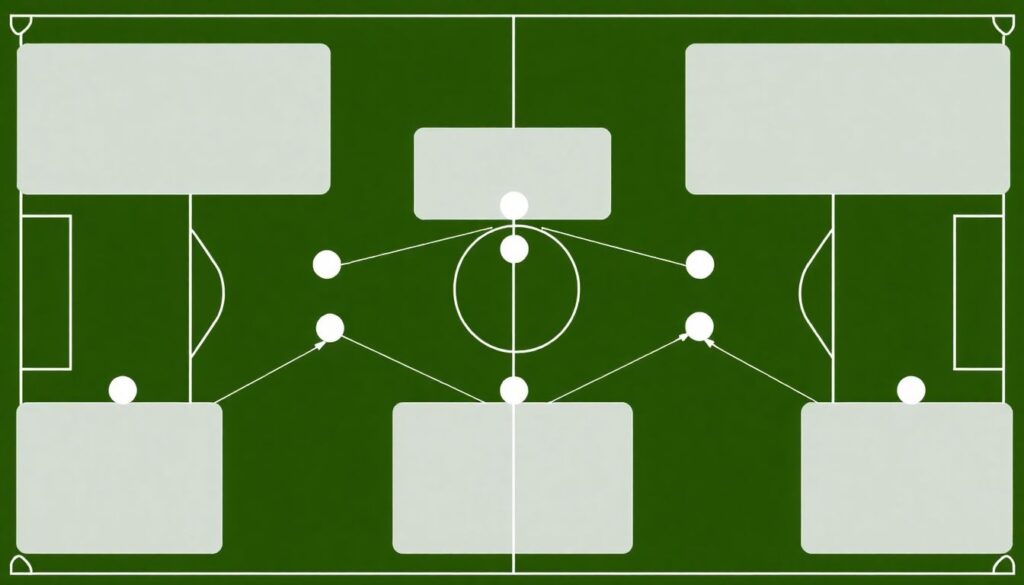
Begin from defensive organisation and basic exit patterns. Use a more catenaccio-inspired structure, then introduce simple tiki-taka elements like triangles on one flank and basic third-man runs. Do not force long possession if technical level and confidence are not ready.
Is software necessary to analyse these ideologies effectively?
Software de análisis táctico para estudiar catenaccio tiki taka y gegenpressing is useful but not essential. Even with simple video, focus on a few questions: compactness in defence, shape in possession and reaction after loss. Software only multiplies what you are already observing.
What type of education helps understand these tactics deeply?
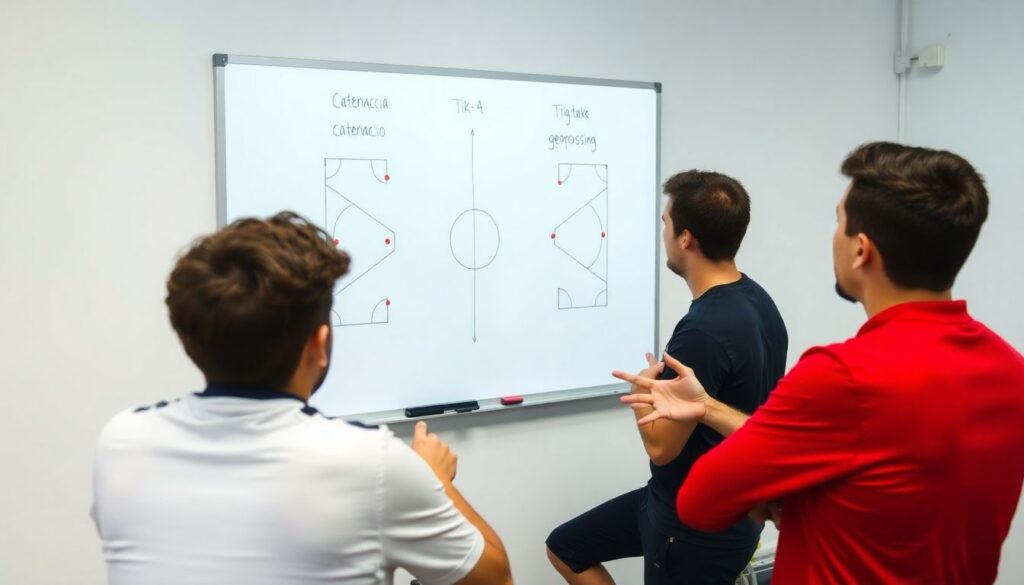
Beyond practice on the pitch, structured learning such as a máster análisis táctico fútbol catenaccio tiki taka gegenpressing, specialised libros sobre táctica futbolística catenaccio tiki taka gegenpressing or targeted clínicas y seminarios de tácticas de fútbol modernas gegenpressing y tiki taka can accelerate understanding. Choose programmes with clear match analysis and practical exercises.
Can one team change ideology within a season?
Gradual evolution is possible, full ideological change is difficult. Start by adjusting one phase (for example, add gegenpressing only after losing the ball in the final third) instead of transforming every principle at once. Players need time to internalise new rules.
Which ideology is most suitable for youth development in Spain?
A balanced mix. Tiki-taka principles (technical quality, spacing) are vital, but young players also benefit from learning to defend compactly and press aggressively. Combine small-sided positional games with transition drills and basic low-block organisation to build complete players.