
Understanding the clash: equipos‑empresa vs. equipos‑comunidad
The tension between corporate clubs and community clubs is basically a fight over who should own modern football: capital or neighbors. Equipos‑empresa treat the club as a scalable business: brands, assets, KPIs, global audiences. Equipos‑comunidad see it as a shared cultural space: belonging, memory, local identity. The clash appears everywhere: ticket prices, kick‑off times, player trading, even the badge and colors. When you compare entradas fútbol equipos empresa vs equipos comunidad, you’re really comparing two worldviews: one optimized for revenue and growth, the other for social cohesion and emotional continuity, often at the cost of financial firepower.
Tools you need to compare both models

Before choosing a side—or designing your own club strategy—you need a basic toolkit. At minimum, you’ll want financial reports, attendance data, and fan surveys to understand who really sustains the club. Add simple analytics tools or spreadsheets to model different scenarios, plus media‑monitoring apps to track reputation. You can also use social listening to see how fans react to decisions like selling a star or raising prices. For merchandising, platforms that show how people search camisetas oficiales equipos de empresa fútbol comprar online versus local jerseys help you see where demand comes from and how elastic your brand really is beyond the stadium walls.
– Financial dashboards and spreadsheets for income, wages and transfer spending
– Survey tools and social listening to capture fan sentiment and expectations
– Ticketing and merchandising platforms to map who actually pays for the project
Step‑by‑step: how to analyze or build your club model
A practical way to compare or design models is to move in stages. First, map ownership and governance: who decides, how transparent are they, and what is their time horizon. Second, list revenue streams—tickets, TV, player trading, sponsorships—and rate how stable each one is. Third, look at sporting strategy: youth development, transfer policy, coaching continuity. Fourth, measure community impact: participation in local leagues, academies, social projects. Finally, stress‑test: simulate a relegation or loss of a big sponsor and see which model survives. This step‑by‑step lens exposes whether you’re closer to a pure business or to a civic institution in football clothes.
– Ownership and governance mapping
– Revenue and cost structure analysis under different scenarios
– Community and sporting impact metrics, not just trophies
Money, tickets and shirts: where the business really diverges
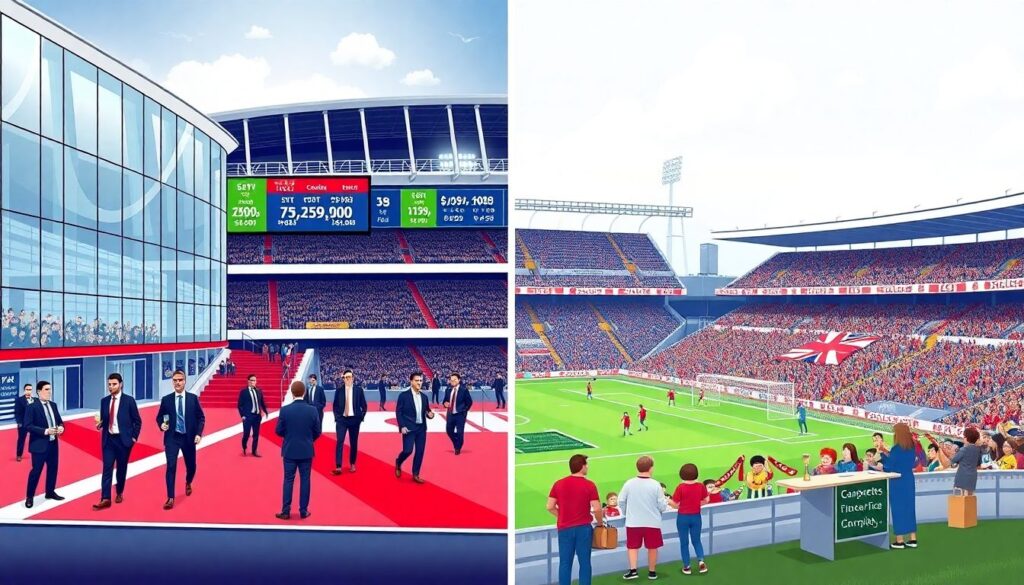
When you go granular, the gap widens around everyday decisions. Corporate clubs push dynamic pricing and VIP experiences; community clubs try to keep the ground full and accessible. Compare how entradas fútbol equipos empresa vs equipos comunidad are sold: one segment churns high‑margin hospitality, the other relies on regulars who attend every week. Merchandising is similar: a global brand aims to maximize how many camisetas oficiales equipos de empresa fútbol comprar online each season, while a barrio club may sell fewer shirts but with stronger emotional attachment. Even abonos temporada clubes de fútbol comunitarios precios show priorities: are season tickets a privilege for the wealthy, or a semi‑public service to maintain a living fan culture?
Dealing with conflicts and “troubleshooting” your club strategy
Whichever path you choose, conflicts are guaranteed, so think in terms of troubleshooting. If fans accuse an equipo‑empresa of “selling the soul,” the issue is usually a lack of participation, not just commercialization. Create real consultation spaces, supporter boards, and transparent communication around decisions like patrocinios deportivos para equipos de fútbol de empresa, because sponsors can feel invasive if the community never had a say. On the community side, trouble often comes from financial fragility: unpaid wages, decaying facilities, or dependency on a single local donor. There, the fix is usually better budgeting, diversification of income, and professional management without abandoning democratic control.
– For corporate clubs: build formal fan representation and clear red lines (badge, colors, location)
– For community clubs: professionalize finance and governance while preserving one‑member‑one‑vote principles
Hybrid paths: mixing corporate efficiency with community soul
Most sustainable projects blend both logics. Investors ask cómo invertir en clubes de fútbol empresa oportunidades de negocio without turning the stadium into a sterile mall, and communities need capital to compete beyond the regional level. A hybrid model might keep majority fan ownership while opening minority stakes to patient investors, or set legal safeguards around identity symbols. Commercial deals—TV rights, sponsors, global tours—can fund academies and local pitches instead of only shareholder dividends. The key is to treat football not as a normal asset class but as a social infrastructure business: you monetize attention, yes, but you also protect rituals, chants and intergenerational bonds that no balance sheet can fully capture.