Why “playing without the ball” changes everything
Most people watch football following only the guy on the ball. But coaches at elite level insist the real story is elsewhere: in the invisible movements, the smart pauses, the runs that never receive a pass. El juego sin balón is not a romantic idea, it’s the structure that holds a team together. Once you start noticing it, matches look completely different: you see how space opens, why counter‑pressing works, and how a simple five‑meter shift can kill an attack before it’s born. That perspective turns every player, at any level, into a potential game-changer.
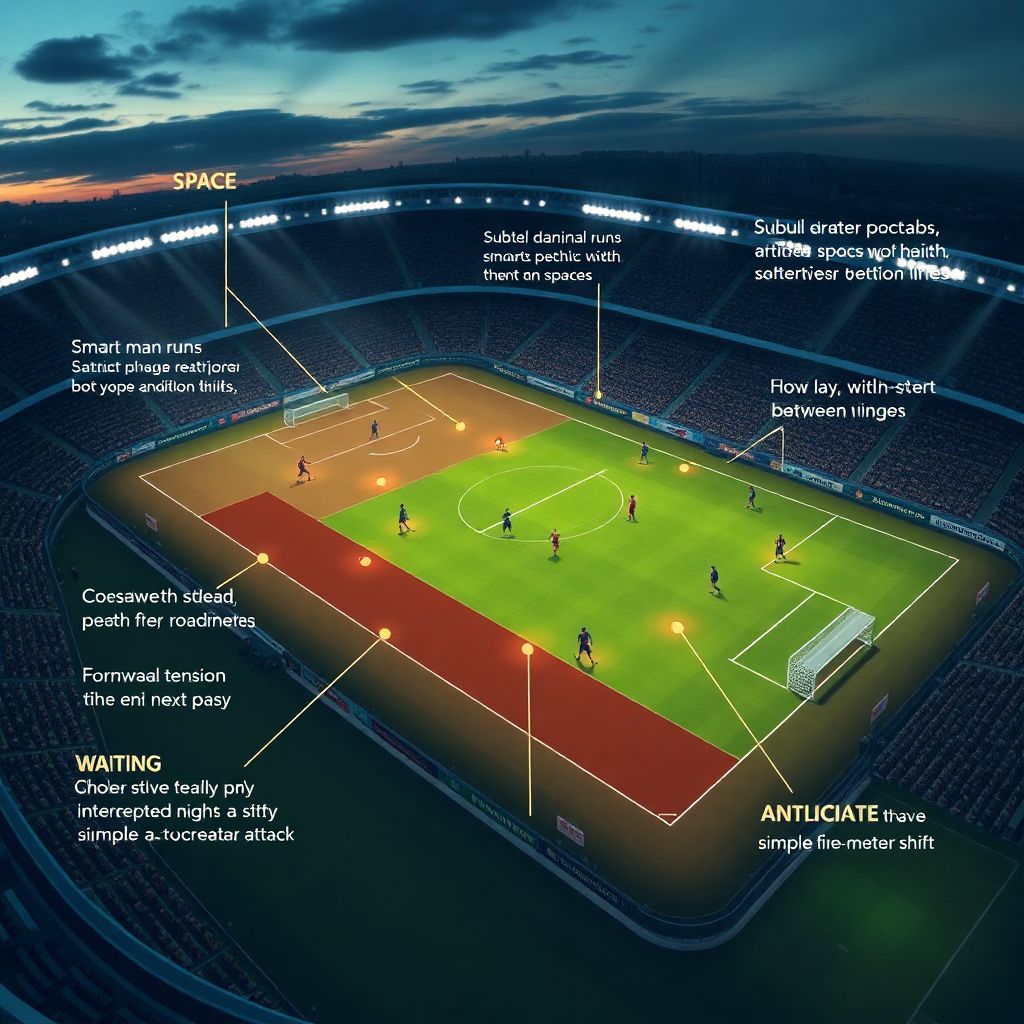
If you talk to analysts who do análisis táctico fútbol sin balón for a living, they’ll tell you the same thing: the best players don’t just react, they live one pass ahead. They’re constantly scanning, adjusting their body angle, and choosing when *not* to move. This sounds abstract, but it becomes very concrete when you break it down into space (where you stand), waiting (when you stay still on purpose) and anticipation (what you expect to happen). Master those three, and even as an amateur you suddenly look “surprisingly smart” on the pitch, because you’re always in the right spot a fraction earlier than everyone else.
The science of space: seeing the pitch in layers
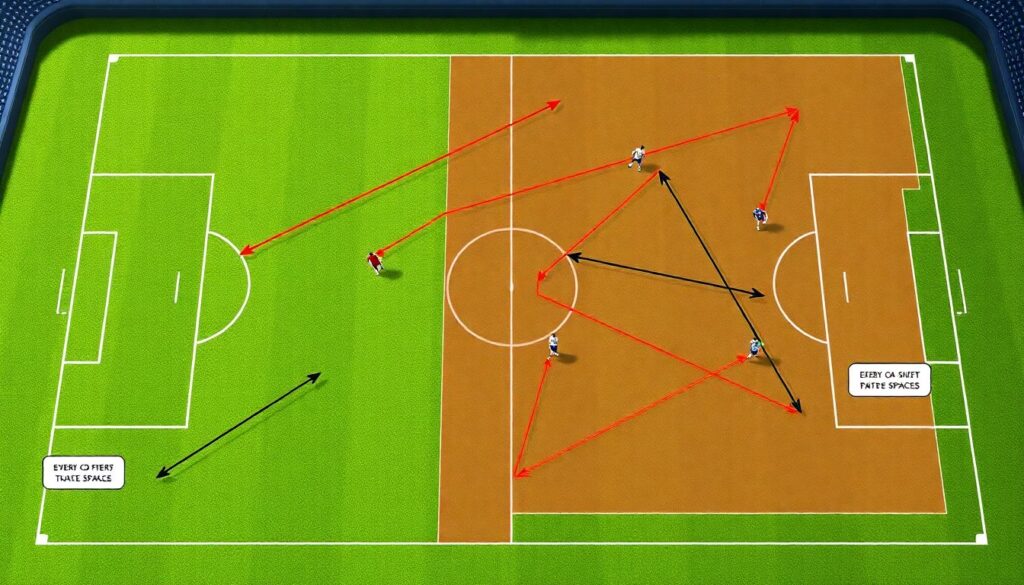
Space in football isn’t just “open grass”. It’s a dynamic map that changes with every step, every pass, every feint. Top coaches divide the field into zones and half‑spaces to train players to think in channels, not in straight lines. Instead of drifting aimlessly, you learn to occupy reference points: between lines, behind the pivot, on the blind side of a center-back. That’s why modern entrenamiento posicionamiento táctico fútbol focuses less on running more, and more on running *smarter*, shifting five meters to close a lane or appear between two defenders at exactly the right moment.
Expert analysts suggest a simple drill when you watch a game on TV: ignore the ball for five minutes. Pick a single midfielder and watch only him. You’ll see constant micro‑adjustments: tiny diagonals to offer a passing angle, steps backward to create depth, sideways shuffles to cut a vertical lane. That’s the practical side of análisis táctico del espacio: stop treating the pitch as flat and start reading it in layers — depth, width and height between lines. Once you feel those layers, your off‑ball choices become less random and more deliberate, like moves in a quiet, fast‑paced chess game.
Inspiring examples: geniuses who shine without the ball
Think of players like Thomas Müller, who literally branded himself a “Raumdeuter” — an interpreter of space. He doesn’t win beauty points for dribbling, yet is constantly decisive because of his timing and off‑ball movement. Watch how he lurks on the blind side, then appears unmarked between full‑back and center‑back a heartbeat before the cross. Or consider Sergio Busquets in his prime: often walking, rarely rushing, but always located at the exact pivot spot where he could receive, turn and break a line. Their brilliance is mostly invisible in highlights, but painfully obvious in slow tactical camera views.
Analysts in professional clubs often use software análisis táctico fútbol profesional to freeze frames and show these micro-movements. In those screenshots, the star is not the ball carrier; it’s the teammate who moved three meters earlier, pulling a defender a step away and creating a hidden passing lane. That’s why younger players who copy only the dribbles miss the point. The quiet genius lies in how these masters align their body to be playable, how they subtly curve their runs to stay onside and how they “disappear” behind opponents, only to reappear exactly when the defense loses track of them for a split second.
The power of waiting: stillness as a weapon

Waiting, in football, isn’t laziness; it’s a tactical choice. Expert coaches repeat that *too much movement is noise*. When all attackers run at once, defenders just follow the chaos and stay compact. The clever striker sometimes holds his position, anchoring a center-back while a winger attacks the space behind. A smart midfielder pauses between lines instead of dropping to the ball, forcing the defense to decide: step out and open a gap, or stay and allow a free pass. This use of controlled stillness turns “doing nothing” into a very active form of manipulation.
To train this, many academies build positional rondos where off‑ball players are punished not for standing still, but for moving at the wrong time. Expert recommendation: film your small‑sided games and rewatch only your off‑ball moments. Ask: “Was I attracting a defender on purpose or just spectating?” Over time, you’ll recognize that good waiting feels uncomfortable: you resist the urge to chase the ball and maintain a threatening position instead. That tension is what stretches defenses and creates those clean, central passes that normally seem impossible against a compact block.
Anticipation: living one pass into the future
Anticipation is where off‑ball play becomes almost predictive. The best defenders don’t sprint after wingers; they start moving during the pass, cutting off where the ball *will* be, not where it is. Expert defenders train this by constantly reading body shape: is the passer open to play forward, is the receiver checking his shoulder, is the supporting full-back high or low? Each cue updates a mental model of the next two or three passes. From the outside it looks like instinct, but it’s really trained perception plus fast decisions repeated thousands of times.
For attackers, anticipation means preparing your run before your teammate even receives. A classic recommendation from top forwards: start your movement while the pass to the assist-man is traveling. If you move only after the winger controls the ball, you’re already late. That half‑second head start is often the difference between a clear chance and a blocked shot. Coaches link this directly to constant scanning: every look over your shoulder builds a live radar of defenders. Without scanning, your anticipation is guesswork; with it, you’re picking from a mental library of patterns you’ve already seen ten times in the same match.
How to train your off‑ball IQ in practice
You don’t need a pro setup to improve your juego sin balón. Start with constrained games: for example, you can only score after at least one third‑man run, or midfielders may not drop below the ball line. These rules force players to think about where they should be *before* the pass. Coaches focused on entrenamiento posicionamiento táctico fútbol often design 6v6 or 7v7 games with zones that players must occupy, not as rigid cages but as reference areas. Over time, players develop an intuitive sense of optimal distance, angles and staggering between teammates.
Expert tip from high‑level academies: separate “vision” from “execution” in training. Run exercises where players are rewarded for spotting the right off‑ball run even if the pass isn’t perfect. Later, you upgrade the technical demand. That way, decision-making isn’t suffocated by fear of technical mistakes. Another simple habit: after every attack, freeze and look around. Ask teammates, “Where should I have been when the ball went wide?” That micro‑debrief, repeated often, builds a shared understanding of your collective map of space, far more effectively than any one‑time tactical lecture.
Case studies: teams and projects built on off‑ball excellence
Take a mid‑level semi‑pro team that can’t buy superstars but can outsmart richer rivals. One such club in Spain reoriented its entire identity around juego sin balón. Instead of focusing only on flashy drills, they invested in collective spacing: compact defending, synchronized pressing triggers, and automations for third‑man runs in attack. Within two seasons, their promotion push came less from standout individual talent and more from the clarity of each player’s off‑ball role, especially in transitions, where two or three small, coordinated steps killed counters before they were dangerous.
Another compelling example comes from a youth academy that paired a course online táctica y espacio en el fútbol with weekly video feedback sessions. Players were asked to tag their own off‑ball decisions: “good support,” “late run,” “closed passing lane,” and discuss them with coaches. The impact wasn’t just tactical; confidence skyrocketed. Kids who weren’t dribblers or physical standouts suddenly realized their brain could be their main weapon. That shift created a culture where reading space was as celebrated as scoring, and within a year the team’s collective movement looked years more mature than their age.
Resources to deepen your understanding
If you’re serious about this, go beyond random clips on social media. There are increasingly solid libros de táctica fútbol juego sin balón that break down off‑ball patterns with diagrams and match examples. Look for authors who connect theory with practical drills, not just abstract jargon. Many modern coaching books now embed QR codes that link to video, so you can see the exact movement sequences described on the page. Reading one or two of these with a notebook in hand can radically sharpen your eye when you next watch a match or lead a session.
For coaches and ambitious players, structured learning helps avoid confusion. A well‑designed curso online táctica y espacio en el fútbol guides you through basic principles of width, depth and inter-line occupation, then connects them to pressing, build-up and finishing patterns. Combine that with affordable software análisis táctico fútbol profesional, even at an amateur level, and suddenly you can freeze frames, draw passing lanes and track recurring errors. The blend of theory, video, and your own match footage transforms el juego sin balón from a vague idea into a concrete, trainable skill set.
Final expert recommendations: how to start tomorrow
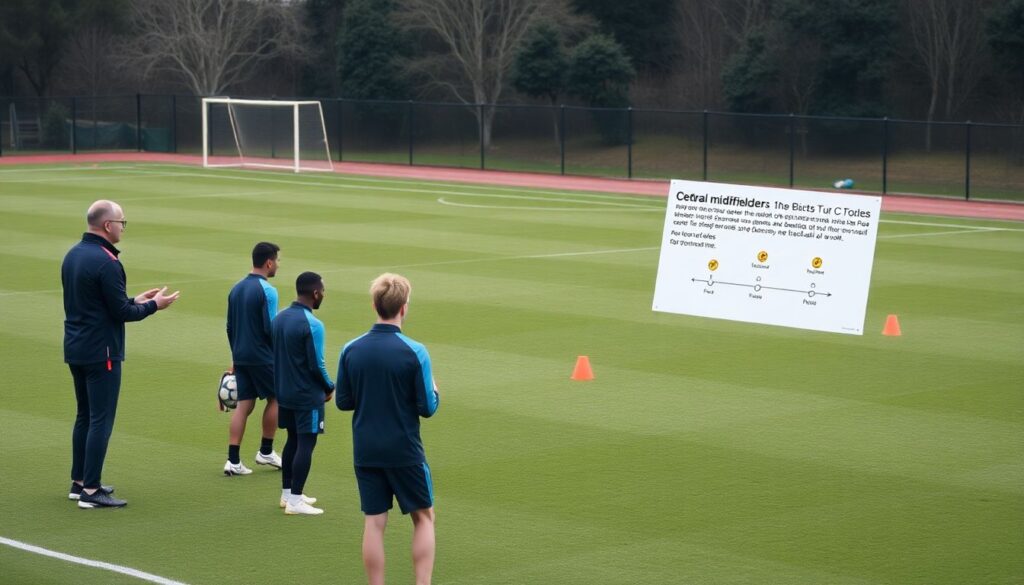
Coaches interviewed across different levels repeat three simple starting points. First, talk about off‑ball roles as clearly as you talk about set pieces. Before training, define one or two specific behaviors you want from each line: for example, “our eights must appear between lines as soon as the center-back lifts his head.” Second, build a language in your team: words for triggers, spaces and reference points so players can correct each other quickly during play. Shared words create shared thinking, and shared thinking creates coherent movement.
Third, create a personal off‑ball habit as a player. Experts suggest: in the next three matches, choose one focus per game — scanning every three seconds, keeping a minimum passing angle to the ball carrier, or holding your position between lines for at least two seconds before moving. Review your game with that one lens only. This narrow focus prevents overload and lets improvement compound. Over a season, those tiny, consistent upgrades in how you use space, wait and anticipate will matter far more than learning one more fancy trick move with the ball.