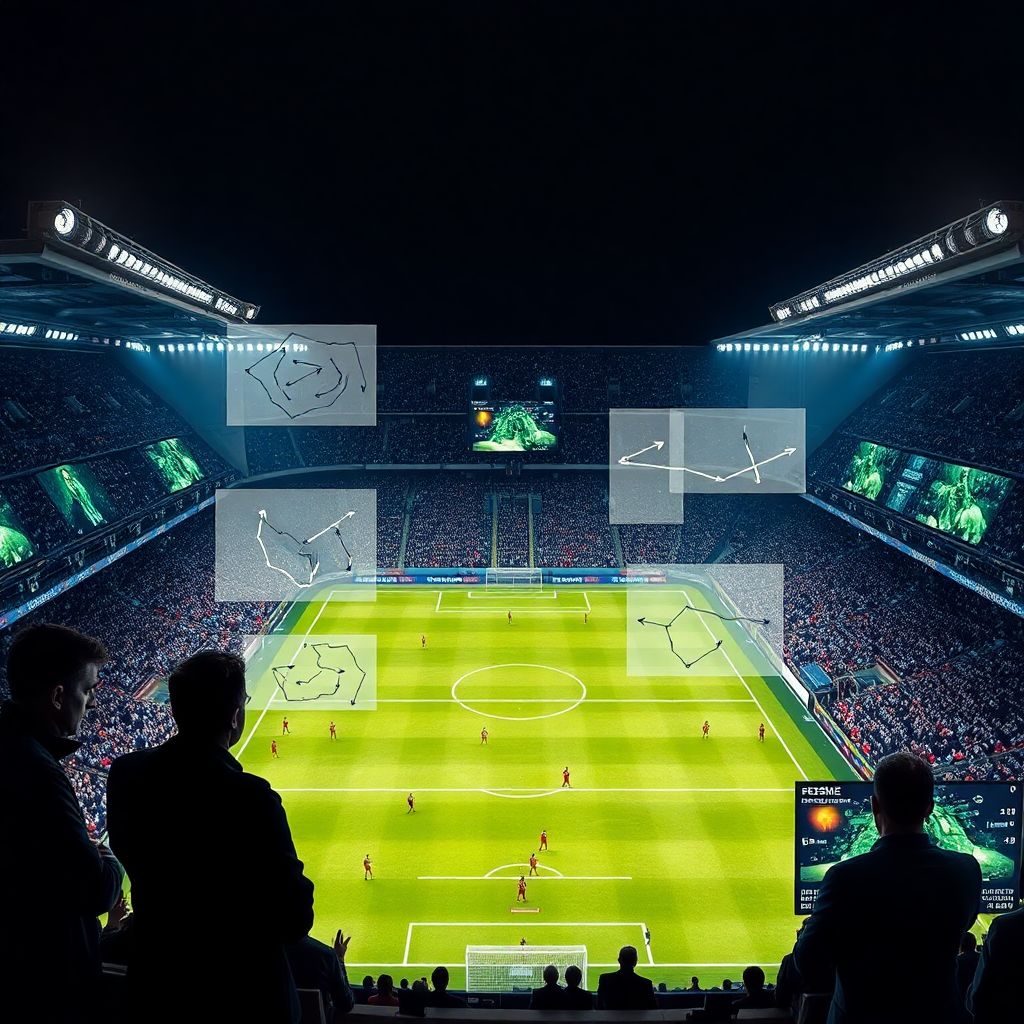
Television didn’t just watch football. It rewired it.
When people say “TV changed football”, they usually mean money, sponsors and prime‑time fixtures. That’s part of the story, but not the most interesting one. The really deep change is tactical: how teams defend, attack, press, rest, even how they waste time. The influence of the small screen has quietly infiltrated the whiteboard in every dressing room.
In other words, if you want to understand modern pressing systems, hyper‑organized blocks and data‑driven coaching, you need to look as much at the cameras as at the coaches.
—
From radio voices to multi‑camera labs: a short tactical history
From “kick and run” to “seen and analyzed”
The historia de la retransmisión de fútbol por tv is usually told as a timeline of rights deals and audience records. Tactically, though, the turning point was much simpler: once coaches could regularly *see* full matches, from above, and then rewatch specific actions, trial and error became systematic learning.
In the 1950s–70s, most teams had:
– Limited visual material (if any) of rivals
– Fragmented angles, little or no wide tactical view
– Almost no structured video feedback for players
By the 1990s, top clubs had already shifted to:
– Weekly video sessions, both for self‑analysis and scouting
– Early use of wide‑angle recordings to study lines and compactness
– Assistant coaches specializing in video preparation
That visual archive made something possible that radio or newspapers never could: you could freeze the exact moment when a pressing trigger was missed, or when the back line stepped too late, and show it to the players. Football, for the first time, became pause‑and‑rewind.
The TV camera as a silent co‑author of tactics
Look at how broadcasts changed and you’ll see how tactics followed:
– When cameras started to show more full‑pitch angles, coaches could copy zonal systems faster.
– When replays focused on build‑up, teams learned how to construct from the back with more nuance.
– When heatmaps and average positions appeared on TV, fans began to talk in the same language as analysts.
This is the impact de la televisión en el fútbol moderno that doesn’t show up on balance sheets: TV standardized tactical knowledge globally. A coach in a second division somewhere in the world can dissect Guardiola’s or Klopp’s pressing shape the next morning, frame by frame, for free.
—
Statistics: what the numbers quietly reveal
Data trends driven by the broadcast era
TV didn’t just show football; it incentivized measuring it. Broadcasters needed graphics, “insights”, numbers to fill air time. That demand accelerated the datafication of the game.
Across the top five European leagues, if you compare early 1990s to the 2020s, various trends line up with the TV‑driven era:
– Average sprint distance per match has grown by roughly 30–40%, mirroring the rise of high‑intensity pressing that is easy for TV to showcase and replay.
– Pass completion rates climbed from around low‑70% to mid‑80% for many midfielders, reflecting the move toward structured build‑up and support angles that analysts break down on screen.
– Shots taken from outside the box dropped, while cutbacks and high‑value chances inside the area rose—exactly the kind of “expected goals” situations that broadcasters highlight with graphics and slow‑mos.
Short version: what TV could segment, measure and dramatize became a priority to optimize.
One under‑discussed stat: tactical convergence
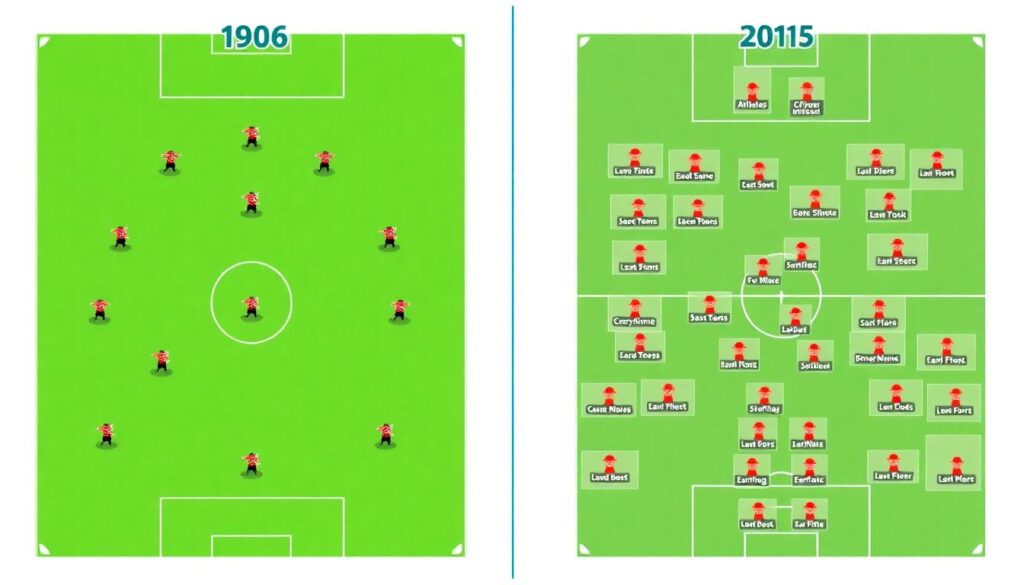
If you run basic clustering on team shapes (using tracking and positional data) from the 1980s vs. 2010s, you see a clear tightening: far more teams look tactically alike at the structural level. Five or six “base models” dominate. That’s not just coaching fashion; it’s imitation accelerated by universal visual access to the same televised matches.
—
How TV directly nudged tactical evolution
1. The 4‑4‑2 era and beyond
The classic 4‑4‑2 looks like a dinosaur today, but it thrived partly because it showed well on early broadcasts: clear lines, mirrored flanks, easy for commentators to explain. As tactical discourse on TV grew more sophisticated, coaches felt more freedom to experiment—and to justify that experimentation to fans and boards.
Television normalized:
– Asymmetric full‑backs
– Inverted wingers
– False nines and hybrid roles
Because once viewers had seen it at a World Cup or Champions League night and heard three pundits unpack it, it stopped being “crazy” and became “modern”.
2. How the clock and the highlights package shaped pressing
Here’s where cómo la televisión cambió la táctica del fútbol becomes very concrete. TV time is built around moments: turnovers, transitions, near chances. For sponsors, dead time is death.
That implicitly rewards styles that:
– Create frequent mini‑events (pressing traps, counterpressing, fast breaks)
– Condense excitement into 90 seconds of highlight reels
– Keep the ball in “danger zones” rather than slow circulation in harmless areas
Coaches are not naïve; many admit off the record that “intense football sells” and that club executives love the optics. The tactical swing toward aggressive pressing, high defensive lines and immediate verticality matches perfectly the storytelling logic of television.
—
Economic gravity: why tactics follow the money
TV rights as the main tactical sponsor
The derechos de transmisión fútbol televisión became the dominant income stream in most top leagues. As soon as that happened, a few subtle but crucial incentives appeared:
– Broadcasters want high‑stakes games in prime slots.
– Leagues want competitive matches that stay open until late in the season.
– Clubs want to be the kind of “product” that TV keeps picking for big windows.
Tactically, those pressures nudge teams toward:
– Spectacle: vertical football, higher risk, more chances per game.
– Recognizable “styles” that can be packaged (the pressing machine, the possession school, the counter‑attackers).
– Star‑centric systems, because TV sells faces more than structures.
In short, the negocio de la televisión y el fútbol profesional doesn’t dictate the exact formation, but it does shape the overall aesthetic: fast, intense, marketable.
Fixture congestion and tactical pragmatism
TV schedules also force weird kick‑off times and tighter calendars. That leads to:
– Heavier rotation and squad‑based tactics rather than a fixed XI.
– Energy‑saving game plans: blocks that drop off at certain minutes, pre‑planned phases of pressing.
– More importance on set‑pieces, where you can create value without constant running.
So although TV might “want” chaos, the actual tactical result is often an engineered alternation: 15 minutes of pressing, 15 minutes of rest in compact shape—coaches scripting intensity to survive broadcast‑driven calendars.
—
Industry transformation: coaching, analysis, and beyond
Analysts: children of the broadcast age
The explosion of televised football created an ocean of video. That made a new profession inevitable: the dedicated match analyst. At first, they just cut clips. Now they:
– Integrate broadcast feeds with tracking data
– Build opposition reports that mix numbers and visuals
– Work hand in hand with tactical coaches
The impacto de la televisión en el fútbol moderno here is organizational. Clubs restructured around video: analysts, performance units, big screens in meeting rooms. Without TV‑driven archives, the analyst role would be far smaller and slower.
Players as performers in a tactical show
Players now grow up fully aware of:
– Tactical camera angles that will expose their movements
– Freeze‑frame criticism on social media and TV debates
– Mic’d‑up moments and bench reactions that get replayed
That awareness influences decisions on the pitch. Defenders are less willing to launch aimless clearances that “look bad”; goalkeepers are coached to start moves because build‑up looks intelligent on replays; forwards track back not only to help the team, but also to avoid being the viral clip of “lazy pressing”.
We’re not just watching tactics; players are curating how their tactical discipline appears on screen.
—
Forecasts: where TV could push tactics next
1. Split‑screen tactics and live data on broadcasts
We’re already seeing experiments: live positional maps, pressing stats during games, coaches shown next to the pitch in picture‑in‑picture. The next step is:
– Full‑pitch tactical cams accessible to viewers
– Customizable angles in streaming apps
– Real‑time suggested metrics (“this team’s block has dropped 10 meters in the last 5 minutes”)
Once that becomes mainstream, coaches will know that fans and boards are literally watching shape and distances. Expect:
– Even more choreographed pressing structures
– Ultra‑precise rest‑defence positioning to avoid public blame
– Clearer, almost “diagram‑like” patterns that are easy to see from above
Paradoxically, the more visible tactics become, the more coaches might simplify core structures, using complexity in hidden micro‑details rather than in overall shape.
2. Global tactical ecosystems shaped by streaming
Streaming platforms carry not just elite leagues but also youth tournaments, women’s football, and minor competitions. That creates a feedback loop:
– Young coaches in small markets can copy elite tactics early.
– “Niche” tactical ideas from smaller leagues can suddenly go viral if a clip circulates.
– Women’s game tactics will influence men’s and vice versa, because both are now widely broadcast.
Expect faster tactical diffusion cycles: what used to take 5–10 years to spread might now take 1–2 seasons.
—
Unconventional ideas: using TV *against* TV
1. Tactical camouflage for broadcast opponents
One creative solution for clubs overwhelmed by scouting exposure is deliberate misdirection. Instead of hiding tactics, use broadcast visibility as a decoy:
– In “televised” league games, show a stable, predictable structure.
– In closed‑door sessions and non‑broadcast friendlies, rehearse alternative patterns.
– Switch to those patterns only in specific, high‑stakes matches against rivals who rely heavily on broadcast analysis.
This kind of tactical camouflage uses the opponent’s dependence on TV footage as a weakness.
2. Designing “TV‑proof” game plans
Because most analysis is based on what cameras see best (shape, distances, rotations), coaches can design:
– Micro‑communication systems (pre‑agreed cues) that don’t show up as obvious patterns.
– Flexible roles where players share responsibilities, so individual “villains” are harder to identify.
– Phases of play that look chaotic on TV but are tightly scripted internally.
This doesn’t mean abandoning structure—just hiding it deeper, below the resolution of the average broadcast.
—
Reframing the relationship: TV as a tactical lab, not just a client
Turning broadcasters into co‑innovators
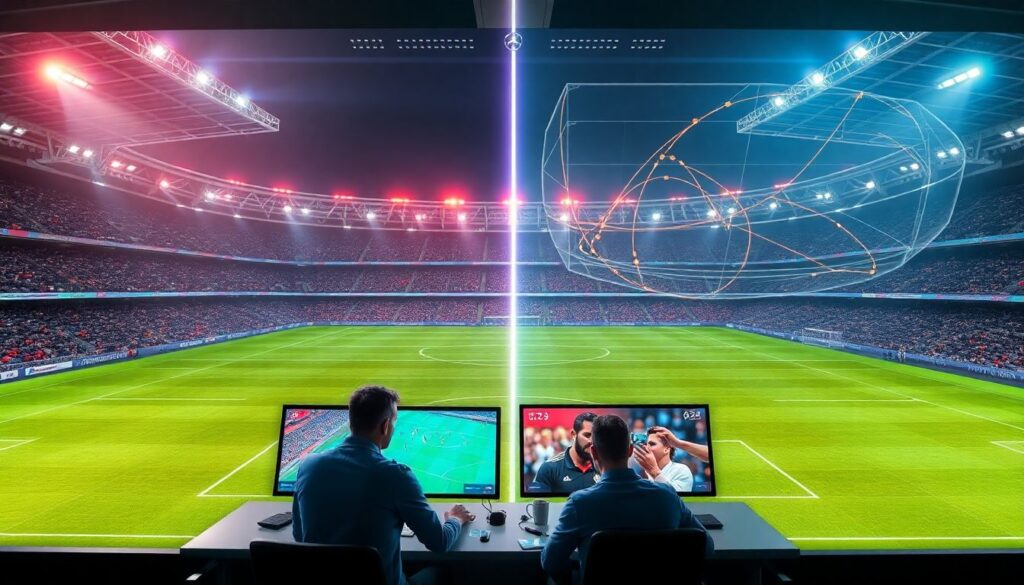
Instead of seeing television purely as a commercial partner, leagues could deliberately use it as a tactical R&D platform:
– Dedicated “tactical broadcasts” with constant wide‑angle views and coaching audio for a niche audience.
– Shared data programs where clubs get enriched tracking derived from TV hardware.
– Experimental rule tweaks in certain competitions optimized for both tactical variety and broadcast clarity.
That would turn the current passive influence—TV pushing for “more spectacle”—into an active collaboration where tactical diversity is a selling point, not a side effect.
—
Conclusion: the invisible coach in the gantry
Television has been an invisible extra coach in every stadium for decades. It supplied the video, the incentives, the pressure and the feedback loop that pushed football from improvisation toward highly engineered systems.
If we want more tactical creativity—not just higher intensity—we need to be honest about that relationship. The cameras are not going away. The question is whether clubs and leagues let TV flatten tactics into one hyper‑intense template, or consciously bend its power toward variety and depth.
Either way, the next tactical revolution is as likely to come from a broadcast truck as from a dugout.