
Owning a football club is legally possible but politically and ethically contested, especially when investment funds are involved. Law recognises shares and assets, not the soul of the club. The core debate is how far fondos de inversión en el fútbol europeo can control strategy, identity and competitions without undermining integrity and communities.
Core ethical and political issues in club ownership
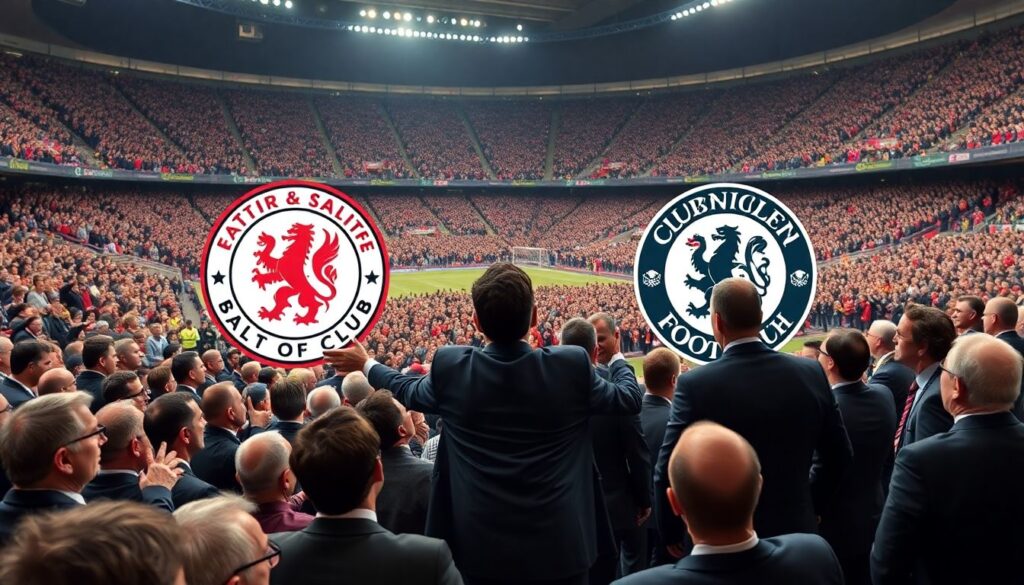
- Legal ownership (shares, assets, brand) does not fully capture clubs as social and cultural institutions.
- Investment funds bring capital and professional management, but can prioritise short‑term returns over sporting projects.
- Multi‑club ownership raises structural conflicts of interest within domestic leagues and UEFA competitions.
- Fan representation and local stakeholders are often weak compared with financial investors and broadcasters.
- Regulators struggle to balance open markets with competitive balance and integrity protections.
- Different European models vary in ease of implementation and risk: liberal «any fit buyer» regimes are simple but fragile; fan‑centric models are safer but harder to finance.
Legal regimes: ownership rights, share structures and sporting rules
In most European jurisdictions a club can be «owned» as a company: investors hold shares, control the board and indirectly control assets and employees. Legally, there is no special category for «football club» ownership; company law and competition law apply, then sporting rules add a second layer.
However, sporting regulators (national leagues, federations, UEFA) treat clubs as participants in a collective competition. They therefore impose additional conditions on owners: fit‑and‑proper tests, financial fair play, limits on related‑party transactions and bans on direct control over multiple competing clubs. This is where the ethics of los dueños fondos de inversión clubes de fútbol meets hard law.
Share structures shape how ownership power is exercised. Some states (for example Spain) allow listed sociedades anónimas deportivas with dispersed shareholders, while others maintain member‑owned associations or «50+1″‑style control by fans. Each structure balances three interests differently: investor protection, sporting competitiveness and community voice.
Sporting rules also draw a boundary between the legal right to sell a club and the political legitimacy of that sale. A fund may comply with company law when deciding comprar un club de fútbol inversión, yet still face resistance from fans and local authorities who experience the club as a public good rather than a pure asset.
Investment models: majority purchases, minority stakes and hybrid vehicles
Investment funds use several standard structures when entering football. These models differ by ease of implementation, capital needs and risk profile, both for the investor and for the club and its community.
- Majority buy‑out of the club company
Funds acquire more than 50% of voting rights, usually via a holding company. Implementation is straightforward where law allows free transfer of shares, but risk is high: they bear full financial exposure and full responsibility for sporting and reputational damage. - Minority equity stake with protective rights
The fund buys a non‑controlling share (for example 10-40%) and negotiates vetoes on budgets, key hires or stadium projects. Easier to sell politically to fans, lower capital requirement, but conflicts emerge when majority and minority disagree on time horizon or risk appetite. - Stadium or infrastructure vehicle
The club remains under traditional ownership, while a fund invests in a separate company that owns the stadium or training ground and leases it back. Implementation is legally complex but politically softer; financial risks can be shifted onto long‑term lease payments that constrain future sporting spending. - Revenue‑sharing and lending structures
Instead of equity, funds provide loans or advances guaranteed against future TV revenues, player sales or ticketing. Quick to implement and attractive for clubs needing cash, yet they raise integrity concerns if repayment depends on on‑pitch outcomes. - Multi‑club network structures
A single fund or corporate group acquires stakes in multiple clubs across countries. Economies of scale in scouting and analytics make this appealing for anyone studying cómo invertir en clubes de fútbol europeos, but regulators worry about conflicts in UEFA competitions. - Private equity in leagues or media rights
Some funds invest at league level, taking a share of central commercial rights rather than individual clubs. Implementation is complex (requires collective agreement) but spreads risk across multiple teams; it also shifts bargaining power away from clubs and towards investors.
Short application scenarios across European contexts
In Spain, a fund seeking comprar un club de fútbol inversión typically negotiates with the dominant shareholder of a Sociedad Anónima Deportiva, passes league approval, and then restructures debt. Implementation is technically simple, but fan buy‑in is fragile if early decisions signal short‑termism.
In Germany, a similar fund faces the 50+1 rule, so it may settle for a minority stake plus long‑term sponsorship deals. Implementation takes longer and returns may be lower, yet governance risks are smaller because members retain ultimate control.
At UEFA level, a multi‑club investor might purchase a majority stake in a mid‑table Spanish side and a minority stake in a Belgian club. Legal paperwork is manageable, but regulatory risk is high: if both qualify for European competitions, UEFA will scrutinise influence links and may force a restructuring.
Integrity risks: conflicts of interest, match manipulation and multi-club ownership
Once funds hold multiple stakes or deep contractual rights, integrity risks become structural rather than anecdotal. These scenarios shape how regulators and the public judge the ética de los fondos de inversión en el deporte.
- Direct multi‑club ownership in same competition
If the same fund controls two clubs in the same league or UEFA competition, any match between them raises suspicion. Even without explicit orders, aligned financial incentives can subtly influence squad rotation, transfer decisions or effort levels. - Cross‑ownership via partner funds or side vehicles
Some groups avoid formal bans by placing different clubs in separate funds with shared managers, or by using minority stakes below disclosure thresholds. The legal risk might be lower, but ethical and political risk is high once media uncover the network. - Player trading as an internal market
Multi‑club groups can move players between their teams at non‑market prices to shift profits, manage financial fair play or favour one club’s sporting success. This undermines competitive balance and can facilitate hidden value extraction. - Influence through debt and revenue contracts
A fund that holds a club’s key loans or revenue pre‑payments may push for specific transfer strategies or competition prioritisation to secure repayment. The club appears formally independent, yet sporting decisions serve creditor interests. - Insider information and betting markets
Control of several clubs or of back‑office data increases access to non‑public information about injuries, tactics or internal conflicts. Without strong compliance, this can feed betting schemes or market manipulation even if owners never fix a result directly. - Local capture of regulators
Large investors can become key economic actors in a city or region, weakening the willingness of local authorities or federations to sanction breaches. This political dependency amplifies the risks listed above.
Governance tools: transparency, stakeholder representation and oversight
Regulators and leagues use governance tools to manage these risks. Some instruments are easy to implement but weak; others are politically tough but more robust. Comparing approaches by effort and risk helps policymakers choose realistic packages rather than ideal but unenforceable models.
Strengths of common governance mechanisms
- Ownership transparency registers – Easy to set up and update; they make ultimate beneficial owners visible, which is essential to detect multi‑club patterns and related‑party deals.
- Fit‑and‑proper owner tests – Moderate implementation cost; they filter out owners with criminal backgrounds or proven financial abuse, reducing extreme downside risks.
- Fan representation on boards – Harder to negotiate but powerful for balancing purely financial decisions with community interests; improves legitimacy of tough restructuring moves.
- Independent league compliance units – Require investment in expertise but centralise monitoring and sanctions, which is more efficient than each club policing itself.
- Caps on intra‑group transactions – Once ownership links are known, simple quantitative caps (on transfer prices, loans, sponsorships) are relatively easy to monitor.
Limitations and residual risks of these mechanisms
- Transparency without enforcement – Registers can expose structures but do not prevent harmful behaviour if regulators lack capacity or political will to act on the data.
- Shallow owner tests – If criteria focus only on formal criminal records and basic finances, they miss reputational, geopolitical or integrity concerns.
- Tokenistic fan seats – One or two fan directors without vetoes can be used to legitimise decisions they cannot realistically influence.
- Regulatory arbitrage – Investors can route ownership through jurisdictions or competitions with weaker rules, fragmenting oversight in European football.
- Cost and complexity – Sophisticated oversight regimes may be prohibitive for smaller federations, leaving lower leagues more exposed to predatory investors.
Community impact: fan agency, local economy and cultural consequences

Public debates in Spain and across Europe show recurring misunderstandings about what investment funds can and cannot do once they «own» a club. Some myths make it harder to design sensible rules that protect communities without scaring off all external capital.
- Myth: «Ownership equals absolute power»
Reality: Club owners operate within company law, sporting rules and contracts. They cannot unilaterally move the club to another city or league without legal and political costs. Overestimating their power discourages fans from using real tools they do have, like association rights or local alliances. - Myth: «Any fund is better than local mismanagement»
Reality: Swapping a chaotic local owner for a highly leveraged or opaque fund can replace one set of risks with another. For small cities, high‑risk financial engineering may threaten the club’s survival and the local economy when returns disappoint. - Myth: «Professionalisation automatically aligns with fan interests»
Reality: Professional management can improve finances yet still prioritise global TV audiences over match‑day affordability or local identity. Commercial success may coexist with cultural alienation. - Myth: «Fans should not care who pays the bills»
Reality: Investor time horizons, governance style and risk appetite directly shape ticket prices, academy investment and even club symbols. Treating capital as neutral hides crucial ethical trade‑offs. - Myth: «Community models are quaint but unviable»
Reality: Member‑owned or mixed models may raise capital more slowly, but they often deliver more stable projects and better alignment with local goals, especially when combined with clear, investor‑friendly rules.
Policy responses: regulatory design, enforcement and practical safeguards

Regulators in es_ES and across the EU face a design choice: simple, investor‑friendly rules with high integrity risk, or more complex safeguards that demand stronger institutions. A pragmatic path is to combine clear market access with targeted, enforceable limits on conflicts of interest.
Mini‑case: designing a balanced ownership regime
Imagine a national federation revising its rules as fondos de inversión en el fútbol europeo grow more active:
- Clarify admissible ownership structures
Allow majority, minority and infrastructure investments, but require full disclosure of all football‑related holdings worldwide. This keeps entry simple while giving regulators visibility. - Introduce tiered multi‑club restrictions
Ban control of two clubs in the same domestic league; cap cross‑ownership in clubs that may meet in UEFA competitions; require firewalls (separate management, no player trades) where minority stakes are allowed. - Mandate minimum fan safeguards
Oblige all professional clubs to create a recognised supporters’ trust with information rights and at least one board seat; for sensitive decisions (badge, colours, stadium move), require qualified fan or municipal approval. - Strengthen independent oversight
Set up a small but expert integrity unit, funded by a levy on transfers and TV rights. Its mandate: supervise related‑party transactions, investigate conflicts of interest and coordinate with betting regulators. - Align incentives through licensing
Link licensing to transparent governance: clubs that meet higher standards get procedural advantages (faster approvals, lighter reporting), while repeat offenders face sporting sanctions, not just fines that rich owners can absorb.
Compared with a laissez‑faire model, this regime is harder to implement but significantly lowers systemic risks. Compared with a strict ban on external funds, it remains open enough to attract capital from actors serious about long‑term football projects.
Clarifications on common ownership dilemmas
Can an investment fund truly «own» a club in Europe?
Legally, a fund can own the company that operates a club, but it does not own the history, identity or competition itself. Its power is limited by law, federation rules and contracts with players, staff and commercial partners.
Are minority stakes safer than majority buy‑outs?
Minority stakes often reduce financial exposure and political backlash, yet they can still create conflicts of interest and control via veto rights or debt. Safety depends less on percentage and more on governance, transparency and regulatory enforcement.
Is multi‑club ownership always incompatible with integrity?
Not always, but risks increase with the level of control and competitive proximity. Strict rules on when clubs can meet, how players move and how decisions are separated are essential; without them, public trust in competitions erodes quickly.
Do fan representatives on boards really make a difference?
They do when they have information rights, training and some formal influence over strategic decisions. Purely symbolic seats with no access to documents or votes offer little more than public relations value.
Why do regulators struggle to control investment funds?
Funds operate across borders and use complex structures, while many federations have limited investigative capacity. Without coordinated data, legal expertise and political backing, even well‑written rules remain hard to enforce.
Is banning investment funds a realistic solution?
An outright ban would be difficult to justify under EU law and could leave indebted clubs without financing options. More realistic is targeted regulation that filters out high‑risk models and manages conflicts, while accepting responsible long‑term investors.
How should a fan base react when a fund wants to buy their club?
Fans should demand transparency on the buyer’s structure, time horizon and other football assets, push for formal representation, and engage local authorities early. Collective, informed pressure is more effective than purely symbolic protests.