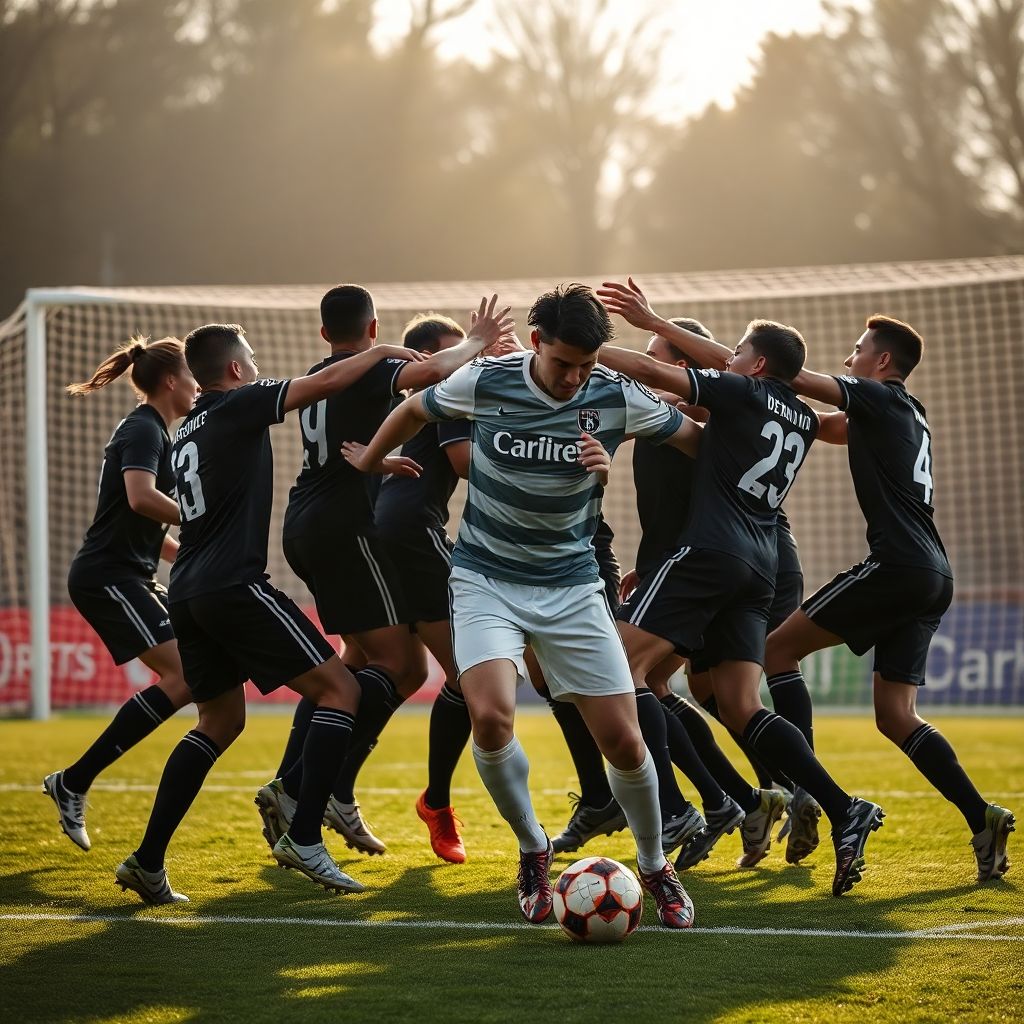
High pressing is a collective tactical behaviour where the team defends close to the opponent’s goal to recover the ball quickly, condition their build-up and create immediate chances. A good analysis combines physical demands, psychological responses and the symbolic messages the press sends about dominance, identity and control of space.
Core tactical insights on high pressing
- High pressing is not just running forward; it is a coordinated occupation of space with clear pressing and cover roles.
- The physical dimension (repeat sprint ability and recovery) sets the ceiling of how long and how often you can press.
- The psychological dimension (decision speed, bravery and collective aggression) decides whether players actually press on time.
- The symbolic dimension shapes how rivals perceive your team: dominant, chaotic, or easy to manipulate.
- Good analysis uses video, data and contextual notes, often supported by software análisis táctico fútbol para estudiar presión alta.
- Training must connect plantillas y sesiones de entrenamiento presión alta fútbol profesional with match-specific game plans.
Fast practical tips to sharpen your high press this week
- Clip 8-10 actions where your press started late and note the exact trigger missed (back pass, bad touch, open body shape).
- Run 3v3+2 possession games in a 25x20m zone with a 6-second limit to recover after loss, to simulate presión tras pérdida.
- Assign one player per line as pressing leader and rehearse verbal cues for starting and stopping the press.
- Use a simple colour code in your video notes: green = good distance, amber = late start, red = broken line.
- From any curso análisis táctico fútbol presión alta or libros de táctica fútbol presión alta y presión tras pérdida you use, extract one principle and turn it into a micro-task for the next session.
Mechanics and objectives of an effective high press
An effective high press starts from a clear objective: win the ball high, force long clearances, or push the rival to one side. Mechanics are then designed to support that objective: starting positions, pressing angles, cover and balance behind the ball.
The first line of pressure usually locks the centre, guides the ball to a pre-defined area and tries to eliminate one or two opposition passing lanes. Behind them, the second and third lines squeeze space, control depth and anticipate the next pass instead of reacting to it.
In the context of La Liga or any máster en análisis del juego y scouting presión alta fútbol, you will often frame high pressing as a specific phase of play: from the opponent’s goal kick until they either break the line or clear long. The boundaries are spatial (final third or high mid-third) and temporal (first 5-8 seconds after loss).
Coach’s checklist for the mechanics section
- Can every player explain in one sentence what the main objective of your high press is?
- Do you have a defined area where you want the opponent to play (touchline, specific side, specific centre-back)?
- Is there a shared cue that clearly starts and clearly stops the press?
Physical profile: stamina, sprinting and recovery demands
The physical dimension of high pressing is about repeating short, intense accelerations with minimal recovery, while maintaining technical quality and tactical clarity. Below are key components to analyse and train.
- Acceleration and deceleration: First 3-5 metres decide whether the presser arrives on time. Train with repeated 5-10m sprints followed by sharp stops and direction changes.
- Repeat sprint ability: Players must sustain several presses in a row. Use small-sided games with strict work:rest ratios (for example, 30 seconds work, 30 seconds rest) instead of isolated running.
- Recovery between actions: The team must recover shape quickly after an intense press. Condition games so that if the press fails, players have a short time limit to drop to a mid-block line.
- Role-specific demands: Wingers and 9s usually cover the longest high-speed distances, while 6s and centre-backs perform more short accelerations and body contacts.
- Load management across the week: The more aggressive your pressing model, the more careful you must be with session density and total sprint volume.
- Objective tracking: Use GPS or simple manual counts (number of high-intensity presses per player) to adjust workloads and link them to performance.
Coach’s checklist for the physical section
- Do your main pressing players (9, wingers, 8s) train more accelerations than your rest defenders?
- Is there at least one game-based drill per week focused on repeated short presses and fast recovery?
- Do you review physical data or simple counts to see whether the team can sustain the chosen pressing intensity?
Psychological pressure: decision speed, risk tolerance and collective aggression
The psychological dimension determines whether the high press exists beyond the whiteboard. Players must recognise cues fast, accept the risk of leaving space behind, and act with collective aggression rather than isolated efforts.
Below are typical game scenarios where psychological aspects are decisive:
- Goalkeeper in clear control: Many teams hesitate to press when the goalkeeper has time. Your players need confidence in the pressing trap and clear knowledge of who jumps first and who covers depth.
- Rival breaks first line once or twice: After a couple of failed presses, players often drop intensity. Mental resilience is key to keep pressing with conviction, while staff adjust details instead of abandoning the plan.
- Big matches and symbolic weight: Pressing high against a historically strong rival sends a symbolic message of bravery. Some players may feel exposed; others grow with that identity. The coach must frame the press as part of the team’s story, not just a tactic.
- Playing away in hostile environments: Noise and pressure can speed up or slow down decisions. Simple language, repeated rehearsals and clear first actions help maintain composure.
- Young players stepping up: Debutants may chase the ball impulsively. You need to transform individual hyper-activity into disciplined, collective aggression.
Coach’s checklist for the psychological section
- Have you agreed simple verbal cues and gestures so players can decide to press in under one second?
- Do you regularly show video clips where brave, coordinated pressing changed the game in your favour?
- Is the team identity clearly connected to pressing behaviour (e.g. «we are brave without the ball»)?
Positional roles and coordinated triggers within pressing systems
Each position in the structure has a specific function in the high press. The system (4-3-3, 4-4-2, 3-4-3) only matters if roles and triggers are clearly defined and repeatedly trained using plantillas y sesiones de entrenamiento presión alta fútbol profesional adapted to your squad.
Below is a non-exhaustive view of advantages and limitations of different role allocations.
Typical positional responsibilities in a high press
- Centre-forward: Guides play to one side, screens the pivot, presses centre-backs and occasionally jumps to the goalkeeper.
- Wingers: Lock full-backs, curve runs to block inside passes and are ready to attack depth after regaining.
- Interior midfielders: Step out to press pivots, cover the half-spaces and protect the 6 from being overloaded.
- Pivot (6): Balances the press, protects the space in front of centre-backs and decides when to drop or step in.
- Full-backs: Decide whether to jump on rival full-backs or protect space behind wingers, depending on game plan.
- Centre-backs: Hold a high line, control depth and communicate constantly to keep compactness.
Common pressing triggers and chains of actions
- Back pass to goalkeeper: 9 jumps aggressively, wingers close centre-backs, interiors lock inside lanes, line pushes up.
- Bad first touch or bouncing ball: Nearest player presses, second player covers inside pass, third secures depth.
- Pass into isolated full-back: Winger presses outside-in, full-back jumps to overlap zone, pivot shifts to cover half-space.
- Rival turns back to goal: Immediate squeeze from behind and in front, aiming to trap and recover within two passes.
Coach’s checklist for the positional section
- Can each player describe their pressing role in three clear verbs (e.g. guide, press, cover)?
- Have you defined at least two specific pressing triggers and rehearsed the whole team’s reaction to each?
- Do your game models, session plans and video meetings use the same language to describe these roles and triggers?
Countermeasures by opponents and in-game tactical adjustments
Opponents will prepare strategies to punish an aggressive high press. Understanding their countermeasures helps you adjust during the match instead of simply running more.
- Stretching vertical space: Long diagonals to fast wingers or 9s behind your line. Answer with better rest-defence, more compact distances and, if needed, a slightly lower starting position.
- Overloading build-up with extra players: Goalkeeper plus dropping 6 can create free men. Decide whether your 10 steps up or whether you keep one player less pressing and protect central zones.
- Asymmetrical full-back positioning: One full-back tucks in to create a back three, moving your pressing reference points. Adjust who presses outside centre-backs and who marks the pivot.
- Rapid switches of play: Some teams invite your press to one side and then switch. Your far-side winger and full-back must be ready to shift early, not after the pass is played.
- Intentional provocation: Rivals may slow down to tempt reckless presses. Maintain your triggers; do not press just because the ball is still.
Coach’s checklist for the countermeasures section
- Have you prepared at least one in-game adjustment if the rival starts hitting long balls behind your line?
- Do players know what changes if the rival builds with three at the back instead of two?
- Can your team recognise and communicate when it is time to drop from high press to mid-block?
Evaluating success: KPIs, video indicators and contextual interpretation
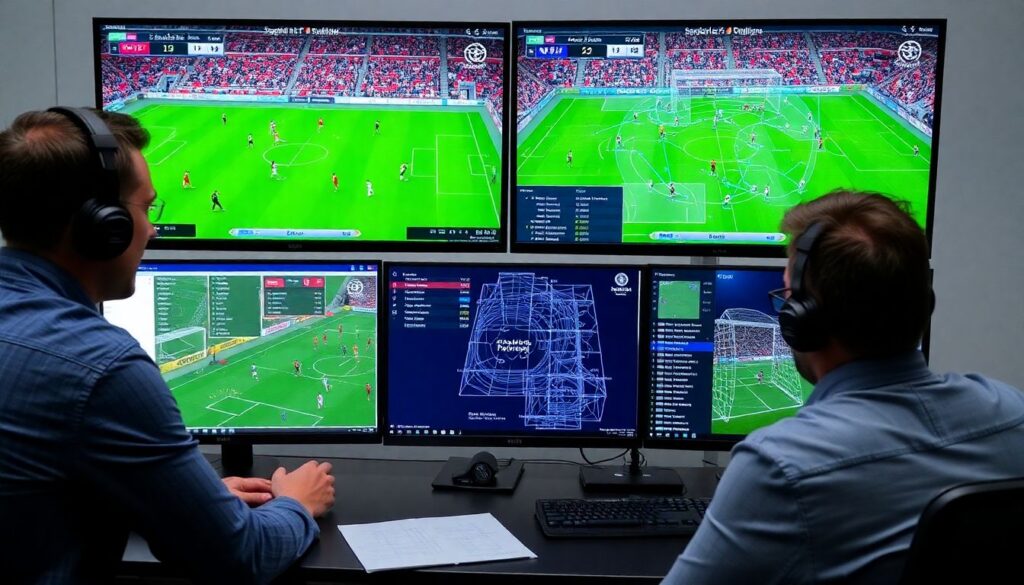
Evaluating a high press requires more than counting recoveries. You must connect game model, context and numbers, often using software análisis táctico fútbol para estudiar presión alta or even basic tagging tools.
Mini-case from a Spanish Segunda División match: your team decides to press high for the first 20 minutes. After the game, staff review video and simple KPIs for that period.
- Contextual notes: Weather, rival rotation, your own line-up, and whether you were leading or chasing the score.
- Outcome indicators: Number of high recoveries, shots within 10 seconds of regain, forced long balls and lost duels in wide areas.
- Process indicators: Distances between lines, synchronisation of pressing triggers, body orientation when pressing.
You then compare these indicators with other matches and with your weekly training content, including any curso análisis táctico fútbol presión alta or máster en análisis del juego y scouting presión alta fútbol resources your staff are using. Over time, you build a reference of what «good» looks like for your specific team.
Coach’s checklist for the evaluation section
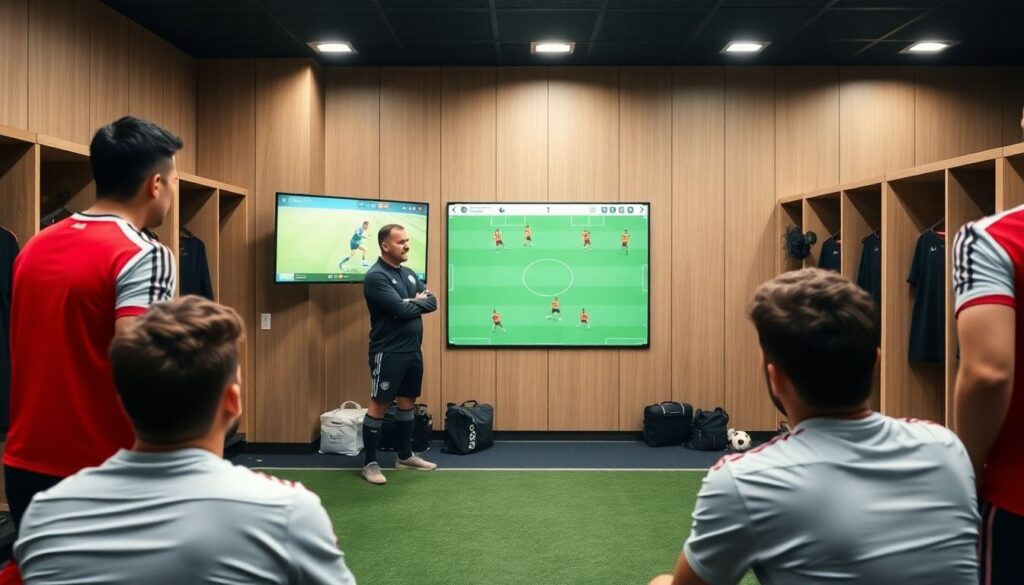
- Do you have 3-5 simple indicators for your high press that players can understand?
- Are these indicators reviewed with video clips, not just in numbers or spreadsheets?
- Do training tasks specifically target the weaknesses you detect in match analysis?
End-of-article self-audit checklist for your high pressing model
- Objective: Is the primary goal of your high press clearly defined and shared with players?
- Structure: Are roles, triggers and rest-defence behind the press explicitly described and trained?
- Loads: Does your weekly plan align physical demands with how often and how high you want to press?
- Psychology: Have you worked on bravery, decision speed and collective identity around the press?
- Analysis: Are you using at least basic video and, if possible, software or libros de táctica fútbol presión alta y presión tras pérdida to refine your model?
Practical dilemmas coaches face and concise solutions
How do I start implementing a high press with a team that is used to sitting deep?
Begin with short, pre-defined pressing phases (for example, first 10 minutes of each half) and clear triggers. Train small-sided games focusing on pressing shape and rest-defence, then gradually extend the duration as players gain confidence.
What if my squad lacks fitness to maintain an aggressive high press for 90 minutes?
Use a mixed strategy: press high in specific periods and drop to a mid-block at other times. Adjust your weekly load and include repeat-sprint, game-based conditioning, rather than trying to press high non-stop with inadequate physical preparation.
How can I analyse our press without expensive technology?
Use wide-angle video (even from a phone at the top of the stand) and manually tag 10-15 pressing actions per match. Focus on starting positions, distances between lines and timing of triggers; simple spreadsheets are enough to track trends over time.
My players press individually and we get exposed; how do I fix this?
Clarify who starts the press and who provides cover for each trigger. Train games where a press only «counts» if at least three players move together; stop and correct when someone jumps alone, highlighting the cost to the team shape.
How should I adapt our high press against back threes or false nines?
Prepare two or three specific pressing plans in advance: for a back three, decide if a winger jumps to the wide centre-back; for a false nine, define who tracks him when he drops. Rehearse these adaptations once a week so they are automatic on matchday.
Is it worth investing in software análisis táctico fútbol para estudiar presión alta for a semi-professional club?
If staff time is limited, simple tools that speed up clipping and tagging can be very valuable. Prioritise software that is easy to use over complex platforms; even basic solutions will enhance the quality of your feedback and tactical meetings.
How do I connect formal education like curso or máster with daily field work?
From any curso análisis táctico fútbol presión alta or máster en análisis del juego y scouting presión alta fútbol, extract concrete principles and immediately translate them into one new drill or coaching cue. Avoid accumulating theory; transform it into specific adjustments in your plantillas y sesiones de entrenamiento presión alta fútbol profesional.