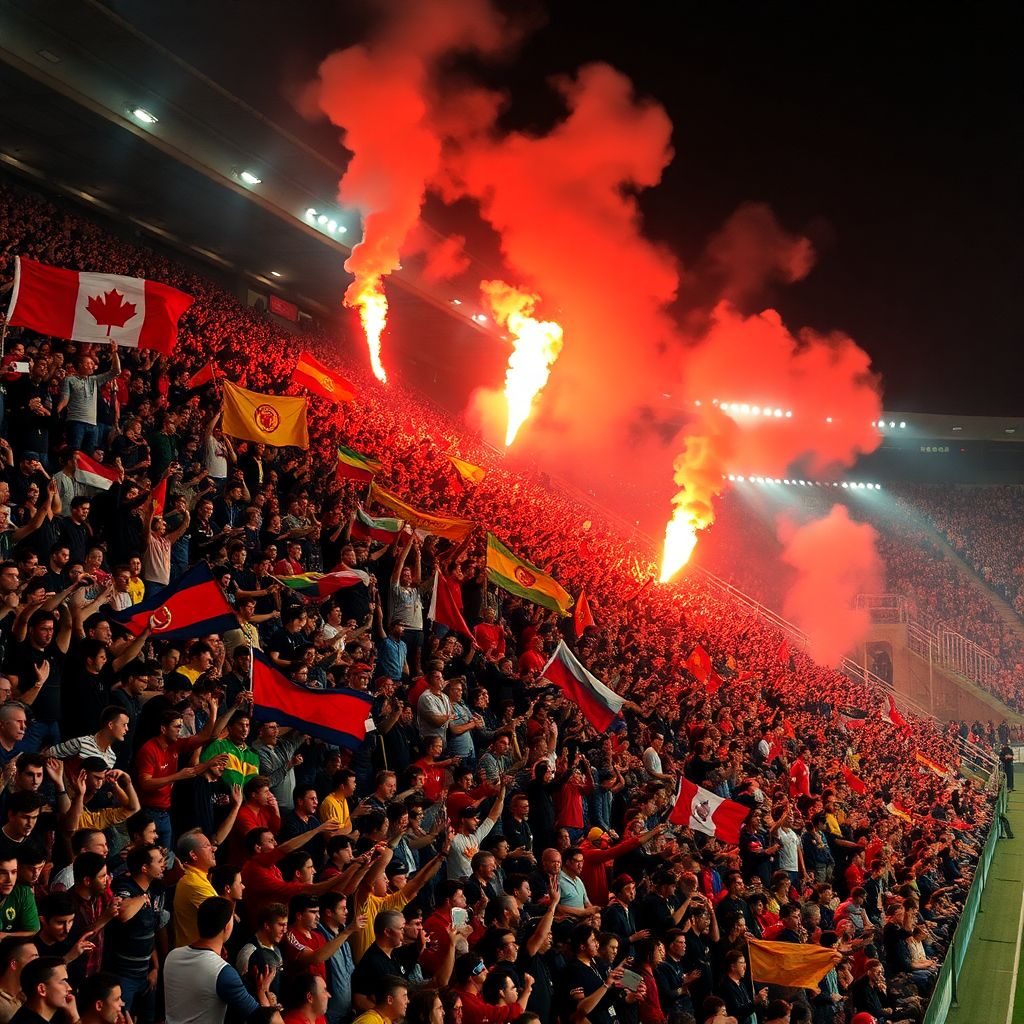
Ultras, barras bravas and broader hinchadas are intense football supporter communities defined by solidarity, ritual and territorial pride, but also by risks of violence and criminal capture. Understanding how they emerge, organize and express themselves helps clubs, administrations and fans separate healthy passion from dangerous identity dynamics around stadiums and online.
Core Concepts of Ultra and Barra Identities
- Ultras (Europe) and barras bravas (Latin America) are structured fan subcultures, not just «loud fans in a corner».
- Both combine choreographies, chants and visual codes with strict internal hierarchy and loyalty rules.
- Hinchada is the broader supporter crowd; ultras and barras are its most organized, militant segments.
- Social roots include class identity, local territory, politicised youth culture and sometimes criminal economies.
- Rituals build belonging but may normalise risk‑taking, confrontations and occasional violent escalation.
- Policy responses work best when they mix security, social work, participation and transparent club governance.
Origins and Social Roots of Football Supporter Groups
Modern football supporter groups grew from informal neighbourhood crowds into recognisable subcultures. In Europe, ultras appeared around the late 1960s-1970s, influenced by Italian, Balkan and Mediterranean youth scenes; in Latin America, barras bravas consolidated around major clubs with strong links to urban peripheries and political brokerage networks.
Ultras usually frame themselves as guardians of «true» fan culture: standing, singing, cheap access and opposition to over‑commercialised football. In contrast, barras bravas often blend this romantic discourse with more explicit control of tickets, parking, street vending and sometimes local political mobilisation, which raises distinct risk profiles for clubs and cities.
Across regions, hinchadas express class and territorial identities: working‑class districts, migrant communities or specific barrios. Collective rituals at the stadium offer recognition and status that might be missing elsewhere. This helps explain the attraction for young people and why simplistic bans rarely dismantle these cultures, but instead push them into more opaque, risky spaces.
Digital platforms intensified these roots. Fans coordinate tifos, share chants and even plan viajes organizados para partidos de fútbol con hinchadas through social media. At the same time, online rivalries, doxxing and the grey economy of entradas fútbol barra brava vs ultras comprar online amplify both community building and potential for fraud and conflict.
Organizational Structures: From Informal Crews to Coordinated Brigades
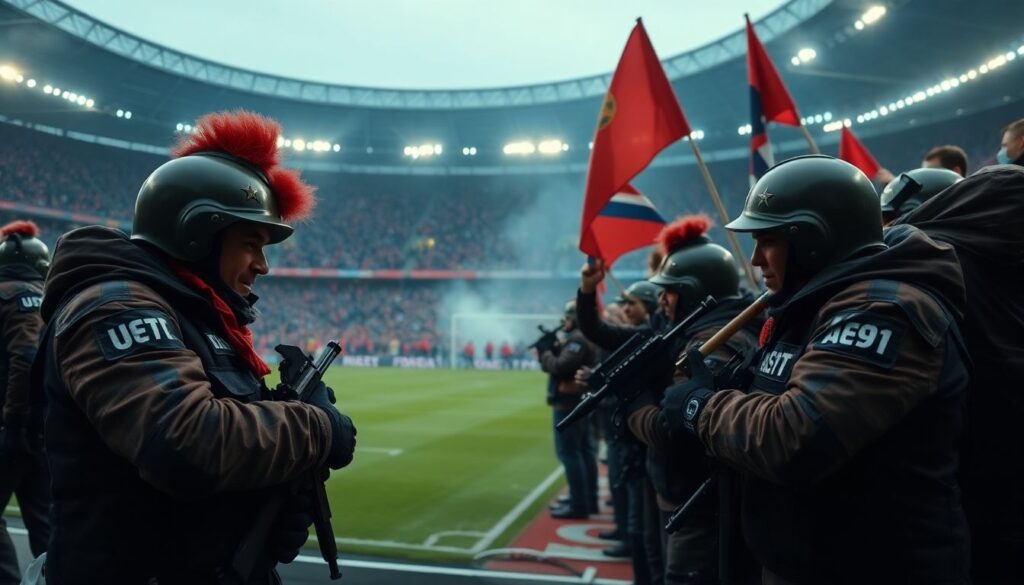
Supporter groups range from loose circles of friends to militarised brigades. The organisational structure shapes how easily rituals can be coordinated and how likely violence or criminal governance becomes embedded in group routines.
- Core leadership (capo / jefe de barra / «the boys»): Small inner circles decide chants, banners, travel plans and relationships with the club or local authorities. In European ultras, this may be a rotating committee; in many barras bravas, leadership can be personalised and hereditary.
- Sub‑groups and neighbourhood cells: Groups often mirror urban geography (districts, suburbs, peñas). This helps mobilisation for large choreographies but can also replicate local rivalries inside the same hinchada, occasionally leading to internal fights.
- Logistics and finance roles: Responsible for drums, megaphones, away‑day buses, storage of flags and sometimes semi‑formal ticket distribution. Here the convenience of «one point of contact» for the club overlaps with the risk of dependency on potentially violent brokers.
- Communication channels: Encrypted chats, social media pages and message boards coordinate match‑day actions, merchandising and travel. Fans might discuss camisetas ultras hinchadas fútbol tienda online or new banners while also sharing meeting points that police cannot easily monitor.
- Ritual specialists: Capos, chant leaders, percussionists and tifo designers translate abstract identity («we are the people of this barrio») into concrete match‑day performances. Their prestige locks younger members into group norms, including risk‑taking.
- Security and «front‑line» crews: Some ultras and many barras have sub‑groups tasked with confrontation, flag defence and «security» of leaders. This introduces quasi‑paramilitary dynamics and increases the chance of escalation inside and around stadiums.
- Periphery and sympathisers: Thousands of fans may follow visual and musical cues without belonging to the hard core. For clubs and leagues, this is where preventive education and safer rituals can be promoted with lower resistance.
Rituals, Symbols and Performance in Matchday Culture
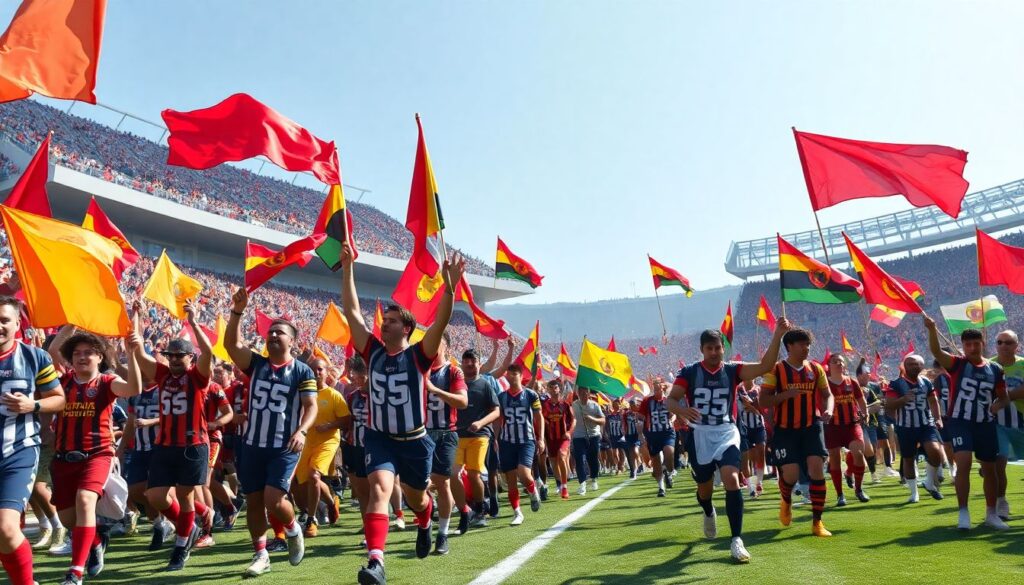
Once the structure exists, ultras, barras and wider hinchadas use highly codified rituals to occupy space, claim legitimacy and communicate status to rivals and allies. These performances are attractive, easy to copy and, if managed poorly, can provide cover for violent dynamics.
- Pre‑match processions and congregations: Marches from key plazas or barrios to the stadium, with drums, flags and fireworks. In Latin America, these caravans sometimes involve armed escorts or illicit street control; in Europe, they may be tightly policed, with earlier kick‑off times to limit alcohol‑fueled incidents.
- Territorial occupation inside the stadium: The curva, grada de animación or popular stand is claimed as the group’s home. Residents of this «territory» often have their own entry gates, informal pricing, and unwritten rules about who can stand where, sing what, and wear which colours.
- Tifos and visual choreographies: Giant banners, card mosaics and coordinated colour blocks signal power and creativity. In Europe, group funds and club support usually finance these displays; in South America, links with local businesses or political patrons can matter more.
- Pyrotechnics, smoke and drums: Flares and bombas de humo create spectacle but carry legal and safety risks. African and some Eastern European contexts add local instruments and dance styles, turning the curva into an extension of street and village culture.
- Merchandising and identity objects: Scarves, caps, bomber jackets and camisetas ultras hinchadas fútbol tienda online reinforce belonging beyond match days. In Latin America, barras bravas may control stalls around stadiums and parallel «merchandising oficial barras e hinchadas fútbol envío internacional», blurring lines between legal fan shops and informal economies.
- Media and narrative production: Fanzines, podcasts, graffiti and social media accounts produce stories about loyalty, betrayal and authenticity. Fans might share reviews of libros y documentales sobre ultras y barras bravas comprar to legitimise their own reading of history and justify current practices.
These scenarios show how visually similar rituals can carry different risk levels. A choreographed tifo in a tightly regulated European league may be relatively easy to integrate into safe‑standing policies, while a politically connected barra’s march through a fragile neighbourhood can intimidate residents and rival groups, undermining public order.
Music, Chants and Visual Language: Mechanics of Collective Expression
Music, chanting and visual codes are powerful, low‑cost tools that shape emotions and behaviour. They make identity sticky and portable but can also normalise hostility or dehumanisation of rivals if left unchecked.
Constructive aspects of ultra and barra culture
- Belonging and mental health: Regular singing, movement and shared symbols combat isolation and provide structure for vulnerable youth, especially in marginalised barrios and satellite towns.
- Stadium atmosphere and commercial value: TV broadcasters, sponsors and even clubs rely on ultras and hinchadas to create intense audio‑visual backdrops that differentiate live football from other entertainment, indirectly boosting demand for memberships and tickets.
- Cultural creativity: Chants remix popular songs, political slogans and local humour. In many African and Latin American stadiums, this turns stands into living archives of popular culture rather than passive consumer zones.
- Informal education: Lyrics and banners transmit club history, local geography and coded political messages, teaching new generations a sense of continuity and place.
Constraints, risks and unintended consequences
- Normalisation of hate speech: Chants can embed racism, homophobia or misogyny as «tradition», making it hard for individuals to opt out without social sanctions from peers.
- Escalation scripts: Certain songs, gestures or banners are recognised cues for confrontation. Once triggered, they shorten the distance between symbolic rivalry and physical violence.
- Commercial capture of authenticity: Clubs and brands profit from the aesthetics of ultras and barras through official lines of merchandising oficial barras e hinchadas fútbol envío internacional, sometimes without investing in safety, education or support services.
- Barrier to inclusion: Hyper‑masculine, aggressive styles of chanting and movement can exclude women, families and disabled supporters, limiting the diversity of the match‑day crowd.
- Copy‑paste radicalism: Viral clips, podcasts and libros y documentales sobre ultras y barras bravas comprar may romanticise confrontations, leading newer groups to imitate high‑risk practices without understanding local consequences.
Boundaries, Rivalry and Pathways to Escalation
Not every ultra or barra group is violent, but their structure and rituals can lower the threshold for escalation. Misunderstanding these dynamics leads to ineffective or even counterproductive policies by clubs and authorities.
- Myth: «All ultras and barras are the same»: In reality, groups vary widely in ideology, violence levels and criminal entanglement. Copy‑pasted bans ignore this diversity and may strengthen more radical factions by eliminating moderate interlocutors.
- Myth: «If they create atmosphere, they must be safe»: Clubs sometimes trade tolerance of risky behaviours (pyro, intimidation, control of entradas fútbol barra brava vs ultras comprar online through intermediaries) for noise and spectacle. This short‑term convenience can embed long‑term governance problems.
- Myth: «Violence is only about hooligan passion»: In some barras bravas, match‑day incidents link to disputes over territory, drug markets or political contracts, not just «love of the shirt». Treating them purely as fan issues misses underlying drivers.
- Myth: «Repression alone solves the problem»: Heavy‑handed policing without dialogue, youth work or exit routes often displaces conflict to streets, trains or amateur grounds. Banned leaders may continue coordinating violence from outside stadiums.
- Myth: «Merchandise and travel are harmless extras»: Control over buses, viajes organizados para partidos de fútbol con hinchadas, and unofficial merch can finance risky groups and increase their leverage over ordinary supporters.
- Myth: «Education campaigns are just PR»: When designed with real fan input, workshops, storytelling projects and inclusive chants can reset norms and make it easier for members to reject dangerous orders without losing face.
Policy, Club and Community Responses: Prevention, Regulation and Reintegration
Effective responses combine legal tools, club governance reforms and community work. The goal is to keep passion, colour and noise while removing incentives for criminal capture and reducing the probability of violent incidents in and around stadiums.
A practical club‑level approach can be thought of as a staged process:
{
  define_safe_zone: curva_or_stand,
  map_actors: [ultras_groups, barras, peñas, families],
  set_rules: {no_weapons, controlled_pyro, anti_hate_speech},
  negotiate: structured_dialogue_with_clear_red_lines,
  monitor: joint_safety_committees_with_fans,
  support: youth_programmes_and_exit_routes,
  enforce: targeted_sanctions_plus_legal_action
}
For example, a Spanish club hosting passionate hinchadas might first audit who controls tickets, buses and informal sales of camisetas ultras hinchadas fútbol tienda online on match days. Based on this, it can regularise official fan groups, create transparent allocation for away tickets and ban intermediaries linked to violence, while simultaneously opening inclusive singing sections and supporting creative tifos under clear safety rules.
At league or city level, coordinated strategies help. Shared databases, proportional stadium bans, and rehabilitation programmes for identified risk leaders can reduce relapse. Partnering with schools, neighbourhood groups and independent fan organisations ensures that any restrictions on ultras or barras bravas are accompanied by alternative spaces for youth expression, so that intense football identity becomes a vehicle for civic engagement rather than a pathway into organised violence.
| Aspect | European Ultras | Latin American Barras Bravas | Broader Hinchada / Generic Supporters |
|---|---|---|---|
| Typical structure | Collectives with committees and sub‑groups, often horizontally framed but with informal leaders. | Personalised leadership, tighter hierarchies, sometimes succession struggles. | Loose, diverse crowd with minimal formal roles. |
| Economic role | Merch, tifo funding, occasional ticket mediation. | Control of tickets, buses, street vending and local protection networks in some cases. | Primarily consumers of official club products. |
| Risk profile | High for intense rivalries and pyro; varies strongly by group and country. | Frequently intersects with broader urban violence and political patronage. | Lower; incidents usually isolated and alcohol‑related. |
| Policy leverage points | Dialogue, safe‑standing regulation, co‑designed codes of conduct. | Tickets control, criminal investigations, alternative youth pathways. | Pricing, family‑friendly policies, mass education campaigns. |
Practical Questions and Clear Definitions
What is the difference between ultras, barras bravas and hinchadas?
Ultras are organised European supporter groups focused on choreographies and constant singing; barras bravas are Latin American hard‑core groups with stronger ties to local politics and informal economies. Hinchada is the broader supporter crowd, which may include ultras, barras and ordinary fans without formal group membership.
Are all ultras and barras bravas violent by definition?
No. Both cultures include groups that reject physical violence and others that embrace or tolerate it. Risk depends on leadership style, funding sources, local context and how clubs and authorities interact with them. Treating all groups as identical often backfires.
Why do young people join these football identity groups?
They offer belonging, status, protection and a clear weekly rhythm around matches. For some, being part of a barra or ultra group provides more recognition than school or work. The combination of music, travel and strong peer expectations can be especially attractive during adolescence.
How do tickets, travel and merchandising influence group power?
Control of entradas fútbol barra brava vs ultras comprar online, buses for away games and semi‑official merchandise allows leaders to generate income and reward loyalty. This economic leverage makes it harder for ordinary fans to challenge risky orders or abusive behaviour.
Can buying fan gear online accidentally support violent groups?
Yes. Some sites selling camisetas ultras hinchadas fútbol tienda online or unofficial merchandising oficial barras e hinchadas fútbol envío internacional are controlled by hard‑core factions. Fans who want to avoid financing violence should check whether a shop is recognised by the club or independent and transparent.
Are organised trips with supporter groups always dangerous?
Not always. Many viajes organizados para partidos de fútbol con hinchadas are peaceful, especially when clubs, travel agencies and fan groups coordinate with police. Risk increases when trips are informal, alcohol‑heavy and led by factions with a history of confrontations.
Do books and documentaries help reduce or increase radicalisation?
It depends. Critical libros y documentales sobre ultras y barras bravas comprar that include victims’ voices and structural analysis can support reflection. Romanticised works that glorify fights without context may instead encourage imitation of high‑risk behaviours.