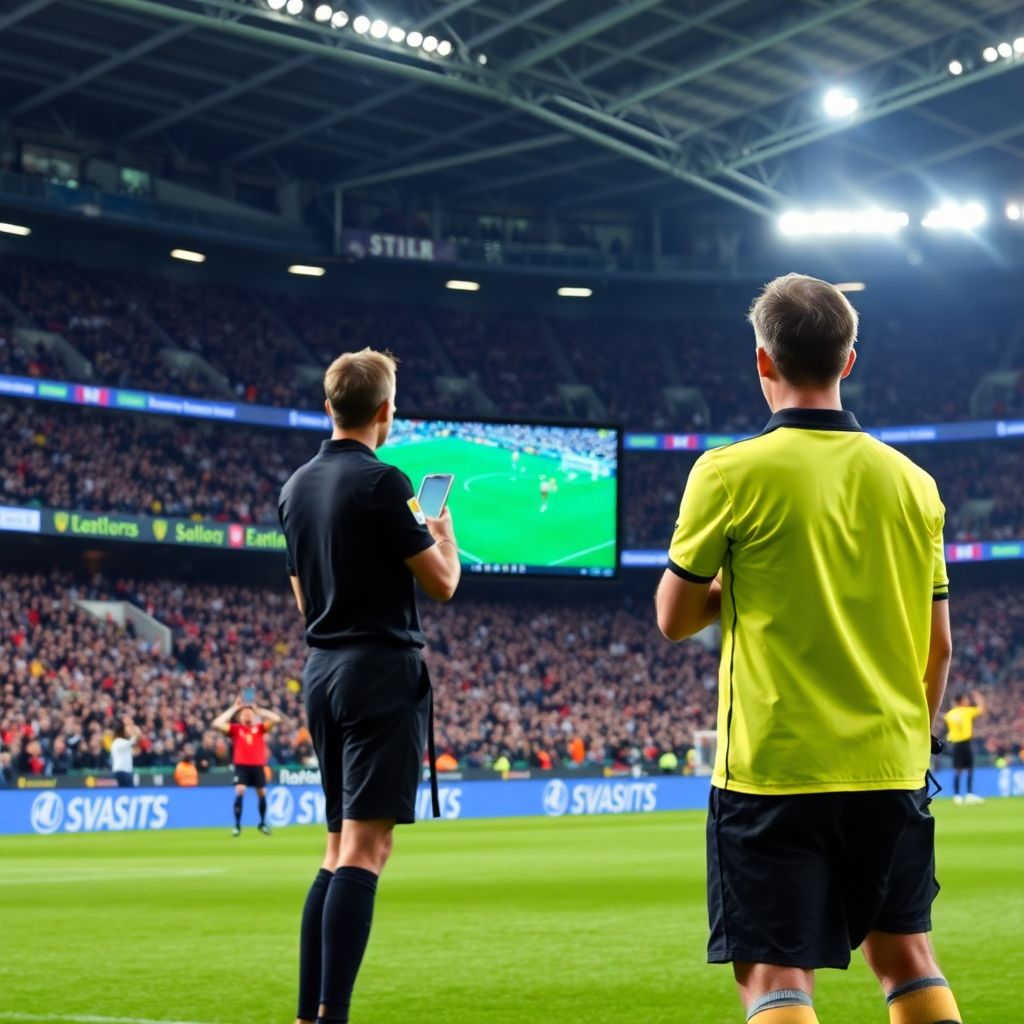
Video Assistant Referee (VAR) improves factual accuracy but creates new ethical risks: opaque decision processes, shifting responsibility from referees to technology, unequal treatment across matches and leagues, and frustrating delays. To troubleshoot these problems, clubs and regulators must audit protocols, transparency, and human training around tecnología VAR fútbol análisis, not just the hardware.
Core ethical tensions and symptomatic failures
- Referees and VAR teams share power, but no one clearly «owns» controversial decisions.
- Clubs experience inconsistent intervention thresholds and unclear criteria for review.
- Replays seem selective, reinforcing perceptions of bias and unequal treatment.
- Players’ welfare and match flow suffer when checks are long, frequent or poorly communicated.
- Fans distrust justicia deportiva y uso del VAR en ligas profesionales due to low transparency.
- Governance and liability rules lag behind the real impacto del VAR en decisiones arbitrales y resultados de partidos.
How VAR reshapes responsibility and decision ownership
Typical symptoms around responsibility and justice:
- After a controversial call, referees say «VAR decided», while VAR officials insist «the referee always decides».
- Clubs cannot see who exactly recommended intervention or which angles were used.
- Public explanations differ between similar incidents in the same competition.
- Referees hesitate to make strong on‑field calls, waiting for VAR to «save» them.
Diagnosis by likelihood and speed of verification:
- Protocol ambiguity: VAR and referees lack a shared, written definition of «clear and obvious error». Check competition protocols and pre‑match briefings.
- Communication gaps: headset conversations are unstructured, leading to confusion about who leads. Review sample audio (if available) and post‑match debriefs.
- Inconsistent training: different referee groups interpret intervention thresholds differently. Compare clips from referee education sessions with real‑match uses.
- Media misframing: broadcasters talk about «VAR giving a penalty», reinforcing wrong mental models. Audit commentary guidelines and club communications.
Practical remedies:
- Rewrite competition regulations to state explicitly: the referee owns the final decision; VAR only recommends.
- Standardise short, mandatory verbal formulas (e.g. referee states the final decision and reason before restart).
- Publish a seasonal clip library that shows when VAR will and will not intervene in typical incidents.
- Include «responsibility language» in referee media briefings and commentator training.
Example: In a La Liga match, a penalty was awarded after a long review. Post‑match, both the league and referee committee clarified that the on‑field referee kept responsibility, and later shared training clips to show the same threshold in other games.
Evidence limits: ambiguous footage, interpretive gaps and truth claims
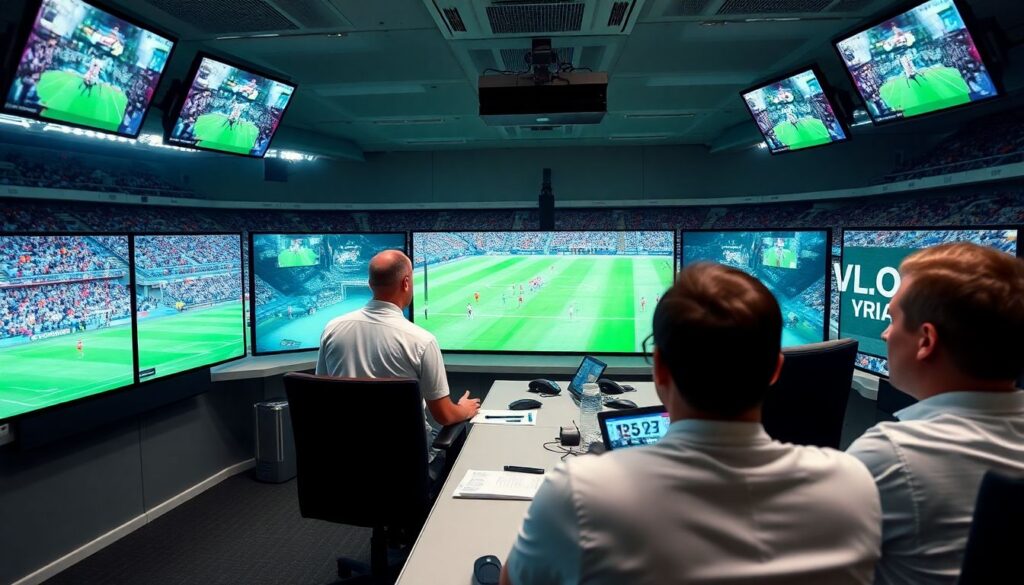
Ethical friction often starts from over‑confidence in the video «truth». Use this checklist to diagnose when evidence is too weak to support strong decisions in a debate ético sobre el VAR en el fútbol:
- Only one or two angles exist, both partially obstructed or off‑axis to the event.
- Frame rate is insufficient to determine the exact contact moment (e.g. offside lines, handball distance).
- Camera perspective introduces parallax, but no correction tools are available in that stadium.
- Slow‑motion exaggerates the severity of contact compared with the real‑speed impression.
- Two trained officials watching the same footage reach opposite conclusions after discussion.
- Applying the Laws of the Game still requires subjective judgement (e.g. «unnatural position», «careless vs reckless»).
- VAR room feels time‑pressured by broadcasters or crowd noise, limiting careful analysis.
- Clubs cannot later access the same angles to audit the decision, undermining perceived fairness.
- Different competitions with similar technology reach systematically different outcomes in comparable clips.
- Match officials rely on «what looks worst on TV» rather than on the written law and guidance.
When several checklist items are present, ethically safe practice is to keep the original on‑field decision unless there is a demonstrable, clearly visible error that survives multiple angles and speeds.
Systemic bias: unequal access, camera placement and human prejudice
Symptoms that ethical problems are structural rather than isolated mistakes:
- Big clubs perceive they get more favourable overturns than smaller clubs across a season.
- Some stadiums without full camera coverage see fewer VAR interventions, often against the away team.
- Certain types of fouls (e.g. against goalkeepers, on star players) are more likely to be reviewed.
- Patterns persist across seasons and competitions, not just single matches.
Typical root causes and ways to troubleshoot them:
| Symptom | Possible causes | How to verify quickly | How to correct ethically |
|---|---|---|---|
| Fewer VAR checks in smaller stadiums | Limited cameras; poor angles; cost‑driven deployment choices | Compare camera maps and intervention rates between venues | Set minimum camera standards or restrict VAR use to fully equipped stadiums |
| Perceived favouring of «big» clubs | Unconscious human bias; social pressure; media narratives | Blind review of clips by neutral panels without club identity visible | Regular bias‑awareness training; rotation of VAR crews; transparent clip audits |
| More reviews for attacking incidents than defensive fouls | «Entertainment bias»; pressure to create goals and drama | Tag interventions by incident type and phase of play | Explicitly instruct «attack and defence equal» in training; show counter‑examples |
| Consistent under‑protection of certain player profiles | Stereotypes (e.g. «diver», «strong, can take it»); league culture | Compare foul and VAR stats controlling for role and reputation | Use anonymised clips for calibration; adjust guidance on threshold for protection |
| Clubs from weaker leagues distrust international VAR crews | Cultural communication gaps; different interpretations of the law | Review multilingual briefings; survey participants post‑match | Pre‑tournament joint workshops with shared clip libraries and agreed standards |
Remedies prioritised by impact and ease:
- Standardise minimal technical setups for all professional matches where VAR is used; if not possible, clearly declare reduced VAR scope.
- Implement anonymised clip reviews across competitions to detect systematic bias in interventions and non‑interventions.
- Provide recurring, mandatory unconscious‑bias training for referees and VAR officials, grounded in real match examples.
- Rotate VAR crews across different types of matches to reduce familiarity bias with specific teams.
- Publish seasonal reports that summarise patterns and corrective measures, supporting a balanced view of ventajas y desventajas del VAR en el fútbol.
Example: A federation found many offside checks missing in smaller venues. After enforcing a minimum offside‑line camera standard and publicly listing which matches met it, perceptions of fairness improved even before full parity was achieved.
When accuracy harms: consequences for player welfare and game flow
High precision can still be ethically problematic when it ignores human impact. To protect player welfare and match experience, follow this step‑by‑step approach, from safest to more disruptive actions (respecting the idea of «do not break prod, start with read‑only checks»):
- Audit current interruption patterns (read‑only): Log all VAR checks and reviews over several rounds. Note duration, decision type and match minute. Do not change protocols yet; just observe how often and when play is stopped.
- Flag extreme delays and sensitive contexts: Identify reviews that took unusually long or occurred after intense physical actions (e.g. repeated sprints, cold weather). Assess possible links to fatigue‑related injuries or emotional escalation.
- Re‑evaluate «forensic» offside and handball use cases: Examine whether ultra‑marginal offsides or unavoidable handballs are worth long delays. In justicia deportiva y uso del VAR en ligas profesionales, fairness may mean setting tolerance thresholds, not chasing millimetres.
- Introduce soft time caps for reviews: Without announcing rigid limits, instruct VAR teams to recommend «check complete» when evidence is inconclusive after a reasonable time, preserving flow and the referee’s initial judgement.
- Prioritise safety‑relevant interventions: Give higher priority to serious foul play, head injuries and violent conduct than to marginal tactical fouls. Ensure VAR «attention budget» serves player welfare first.
- Refine communication with players and coaches: Instruct referees to briefly explain long checks to captains, reducing anxiety and anger. Clear, quick phrases help everyone accept the delay.
- Test competition‑specific adaptations: In some youth or lower‑tier leagues, consider limited VAR (e.g. only for goal‑line and mistaken identity) to protect rhythm and enjoyment while still benefiting from technology.
- Review law interpretations with stakeholders: If repeated cases show that hyper‑accurate technology and current wording produce outcomes seen as unfair, engage in joint reviews with players, coaches and referees.
Example: A league noticed long checks for tiny offsides. After redefining the line‑drawing protocol and accepting a small «margin of uncertainty», both review times and controversy decreased without clear loss of accuracy.
Regulation, liability and transparency in VAR governance
Some problems cannot be solved on the field and must be escalated to higher authorities or independent experts. Recognise escalation triggers early to prevent trust erosion in the tecnología VAR fútbol análisis framework:
- Repeated systemic failures: If similar VAR mistakes or controversies recur across multiple matchdays and refereeing crews, local fixes are insufficient. Escalate to the competition’s refereeing committee and, if needed, national or international boards.
- Opaque or contradictory protocols: When club compliance staff cannot obtain a clear, written explanation of VAR procedures, escalate through league governance channels for formal clarification and publication.
- Potential conflicts of interest: If the same entity controls competition organisation, commercial rights and VAR operations, consider involving independent oversight bodies or ethics committees.
- Serious impact on standings: When a high‑stakes match decision, linked to VAR, appears to have changed titles, promotion or relegation and remains controversial, third‑party review by neutral technical experts is advisable.
- Data protection and privacy issues: Use of additional microphones, cameras or biometric tools around VAR requires legal and data‑protection vetting beyond sports officials.
- Cross‑border competitions: For international tournaments where regulations differ from domestic leagues, escalate interpretation questions early to tournament‑level VAR and refereeing panels.
In all escalated cases, publishing clear, accessible explanations of both the decision and the review process is key to keeping the public debate ético sobre el VAR en el fútbol informed instead of speculative.
Operational breakdowns: common error patterns and practical fixes
To prevent recurrent issues and manage the ventajas y desventajas del VAR en el fútbol more ethically, focus on these preventive actions, ordered by impact and ease:
- Standardise pre‑match technical checks: Consistently verify camera coverage, replay systems and communication lines before every game, documenting any limitations that may affect the impacto del VAR en decisiones arbitrales y resultados de partidos.
- Run structured pre‑match briefings: Referee, assistants and VAR crew should align on competition‑specific thresholds, recent guidance and known «points of emphasis».
- Maintain a shared incident library: Build and update a clip bank of typical scenarios and agreed outcomes, accessible to all officials across the league for calibration.
- Schedule regular post‑match debriefs: Discuss key checks and reviews shortly after matches, focusing on process quality rather than blame.
- Implement simple communication protocols: Use concise, standard phrases in the headset to reduce confusion and speed up decision‑making.
- Invest in referee and VAR joint training: Practise complete decision cycles in simulated matches, including crowd noise and broadcast pressure.
- Align with broadcasters on expectations: Agree how replays and commentary will describe VAR, avoiding misleading claims that «the machine decides».
- Periodically publish transparency reports: Summarise intervention numbers, error corrections and outstanding issues, reinforcing confianza in justicia deportiva y uso del VAR en ligas profesionales.
- Review governance annually: Evaluate whether technological, legal or cultural changes require adjustments in VAR scope or procedures.
Practical questions from referees, clubs and regulators
How can a league quickly detect if VAR is introducing unfair bias?
Start with a read‑only audit: collect all interventions and non‑interventions over several rounds and compare by team, stadium and incident type. If consistent asymmetries appear, commission anonymised clip reviews by neutral experts to separate perception from structural bias.
What should referees do when video evidence is inconclusive?
Keep the on‑field decision unless there is a clearly demonstrable error visible from multiple angles and at real speed. Communicate this clearly to the VAR and, when possible, to team captains to avoid the impression that technology «must» always change the call.
How can clubs argue for changes without appearing self‑interested?

Use league‑wide data and neutral examples, not only incidents involving your own matches. Propose transparent processes-public clip libraries, external audits, time‑limit guidelines-that will help all teams, and frame requests in terms of long‑term credibility of VAR rather than short‑term results.
Is it ethical to limit VAR to certain competitions or stadiums?
Yes, if limitations are clearly communicated and applied consistently. What is unethical is using full VAR in some matches and partial, opaque VAR in others without telling stakeholders, thereby creating hidden inequalities in technological support.
How should regulators balance accuracy against game flow?
Set explicit priorities: protect player safety first, correct clear errors second and minimise disruption third. Review real interruption data and adjust protocols where marginal gains in accuracy cause major losses in rhythm and enjoyment for players and fans.
Can transparency about VAR errors damage trust?
Short term, admitting mistakes can trigger criticism; long term, openness is the only sustainable way to build trust. Structured explanations, corrective measures and periodic reporting show that the system learns, which strengthens rather than weakens legitimacy.
What role do broadcasters play in ethical use of VAR?
Broadcasters shape public understanding of VAR. They should avoid misleading phrases, present all relevant angles when criticising decisions and participate in joint education efforts so that viewers grasp both the capabilities and limits of the technology.