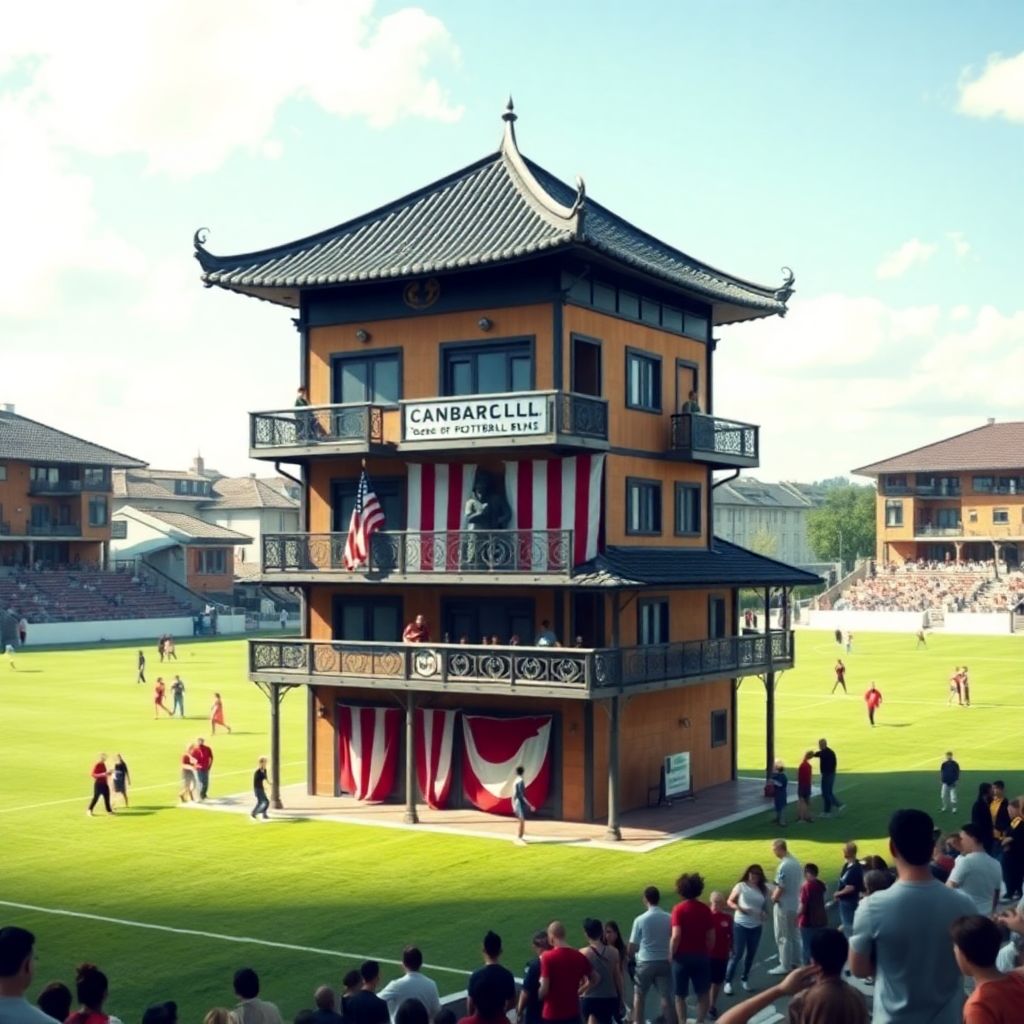
The hidden history of football commodification is the shift from community-run neighborhood clubs into market-driven entertainment companies, especially Sociedades Anónimas Deportivas (SAD) in Spain. It moved power from members to investors, prioritising profit over local identity through TV rights, branding, ticketing strategies and financial engineering around players and stadiums.
Concise overview: turning clubs into commodities
- Neighborhood clubs started as social, worker or parish initiatives, not businesses.
- Early commercialization arrived via ticket sales, tours and local sponsorships.
- Radio and TV transformed matches into media products with sellable rights.
- Legal reforms, especially SAD in Spain, converted many clubs into companies.
- New revenue models (TV, transfers, merchandising, investors) dominate club strategies.
- Communities gained spectacle but often lost ownership, influence and affordability.
- Fans now use education, activism and local projects to resist excessive mercantilization.
Grassroots foundations: social role of neighborhood clubs
Before the full historia del fútbol moderno y su mercantilización, neighborhood clubs in Spain and across Europe were primarily social spaces. Workers, migrants, parish groups or political communities created teams to organise free time, build solidarity and defend local pride. Money mattered, but it was secondary to belonging.
These early entities functioned as associations, often run democratically by members who voted in assemblies, elected boards and approved budgets. The club badge represented a street, a barrio or a town, not a brand. Voluntary work, small local sponsors and modest ticket income kept activity alive.
This social DNA is essential to understand the later impact of mercantilization. When a club turns into an SAD, ownership concentrates in shareholders, and the legal and financial priorities change. What used to be a community institution becomes an asset that can be bought, sold or relocated according to business logic.
Neighborhood clubs also played a strong educational role: they taught collective responsibility, self-organisation and conflict resolution. That is why documentales sobre mercantilización del fútbol y clubes de barrio often focus on how this culture got eroded once professional football followed a more corporate path.
Early commercialization: sponsorships, ticketing and touring teams
The first wave of commodification came long before global TV deals. It grew through a series of concrete practices that you can still recognise today:
- Paid ticketing for big matches: Clubs moved from open or symbolic access to structured ticket prices, differentiated stands and strategies to maximise gate income.
- Local sponsorships: Bars, factories or shops paid to appear on match programmes, fences or shirts, turning clubs into advertising platforms for the first time.
- Touring teams and friendlies: Popular teams travelled to other cities or countries to play paid friendlies, exporting their appeal and collecting appearance fees.
- Basic merchandising: Scarves, pins and simple souvenirs emerged around big derbies or finals, testing the idea that fans would pay for identity-related products.
- Stadium improvements as revenue tools: New stands and covered sections were justified not only by comfort but by the capacity to attract higher-paying audiences.
- Early media deals: Newspapers and radio stations paid or exchanged value for exclusive access, interviews or advertising space around matches.
- Professionalisation of players: Salaries and bonuses turned football into a job; clubs had to think more systematically about budgets, contracts and returns.
Broadcasts and branding: media’s role in creating market value
The decisive leap in the evolución económica del fútbol profesional español came with radio, then TV and finally digital platforms. Media turned local events into mass spectacles, multiplying the potential audience and therefore the commercial value of each match.
Typical scenarios where media drives commodification include:
- Exclusive TV rights deals: Leagues and clubs sell broadcasting rights, often centrally, concentrating power in broadcasters and creating big gaps between divisions.
- Prime-time scheduling: Kick-off times start to follow TV grids and advertiser interests rather than fan convenience or local climate conditions.
- Brand construction around stars: Players and coaches become media brands; clubs structure marketing campaigns around their faces, social media presence and narrative arcs.
- Global tours for exposure: Pre-season trips to Asia, America or the Middle East are designed more for brand visibility and sponsors than for sporting preparation.
- Segmented content products: From highlights packages to club-specific channels, content is sliced into sellable units for different audiences and platforms.
- Storytelling over sport: Rivalries, controversies and transfer sagas are framed as serial entertainment, keeping fans engaged as consumers all year round.
Understanding these scenarios helps you read TV contracts, marketing campaigns and even editorial decisions in sports media as part of a broader commodification process.
Legal transformation: the rise of Sociedades Anónimas Deportivas (SAD)
In Spain, a turning point in the hidden history of football mercantilization was the legal creation of Sociedades Anónimas Deportivas (SAD). Many professional clubs were forced, or strongly incentivised, to convert from member-owned associations into sports corporations, often as a response to accumulated debts and demands for financial control.
For anyone taking a curso online gestión de clubes de fútbol y SAD, the real challenge is to see both sides: what the SAD structure makes easier, and what it puts at risk compared with traditional association models.
Advantages often associated with SAD structures
- Access to share capital from investors, beyond member contributions.
- Clear corporate governance rules defined by company law and stock regulation.
- Potential for stock-market listing and higher liquidity for owners.
- Formal separation between club identity and operational company structures.
- Stronger pressure for transparent accounting and external audits.
- Easier to attract strategic partners who require equity participation.
Limitations and risks that affect clubs and communities
- Loss of democratic control: members become customers, not owners.
- Club decisions follow shareholder interests, which may ignore local needs.
- Increased risk of speculative investors using clubs as short-term assets.
- Ticket prices, memberships and merchandising guided by profit maximisation.
- Identity and symbols can be modified or relocated if owners consider it profitable.
- Financialisation makes clubs vulnerable to credit cycles and market crises.
Many libros sobre negocio del fútbol y sociedades anónimas deportivas trace these tensions, showing that legal form is not neutral: it shapes power, incentives and the daily relationship between club and supporters.
Economic models and revenue streams: transfers, merchandising, and investors
Modern professional clubs use diversified economic models, but a lot of confusion and myths circulate around them. Identifying those myths is key if you want to analyse or manage a club realistically.
- Myth: transfers are pure profit. In reality, transfer income must be compared with amortised signing costs, agent fees, wages and hidden bonuses. Without that, a club may look rich on paper while actually burning cash.
- Myth: merchandising can fund everything. Shirt and product sales help, but margins are often limited by manufacturing, distribution and licensing agreements. Overestimating merchandising leads to unrealistic budgets and pressure on fans to buy more.
- Myth: foreign investors automatically stabilise finances. Investors may bring capital, but also demand returns, control and branding changes. Without clear governance safeguards, clubs can become vehicles for image-washing or pure speculation.
- Myth: debt is always bad. Sensibly structured debt can finance infrastructure and long-term projects. The problem is short-term, high-interest obligations used to cover operational holes or risky transfer bets.
- Myth: TV money benefits all equally. Even with redistribution mechanisms, large clubs typically extract a disproportionate share of broadcasting revenue. Smaller clubs must build alternative strengths: youth development, local engagement, or niche sponsorships.
- Myth: success on the pitch guarantees economic health. Trophies can mask structural problems. High bonuses, over-investment in squads and dependence on European qualification can create financial cliffs after a few bad seasons.
Social consequences: community loss, identity shifts and resistance
The transformation from barrio clubs to SAD has deep social effects. Public narratives usually focus on elite competitions, but the more subtle change is in how people relate to their clubs and to each other through football.
Imagine a mid-size Spanish city where the main club converts into an SAD to survive accumulated debt. A foreign investment group buys most shares, rebrands the badge and negotiates a new stadium in a commercial area far from the original neighborhood. Ticket prices rise; long-time season-ticket holders move to TV-only consumption.
At the same time, local amateur clubs lose visibility and sponsors to the bigger brand. Young players see football primarily as a career path, not as a social game. This mini-case is reproduced, with variations, across many cities described in documentales sobre mercantilización del fútbol y clubes de barrio, showing concrete losses in everyday life: fewer community links, less intergenerational exchange and a more transactional relationship with the sport.
Resistance emerges in different ways: supporter trusts buying shares, fan-owned phoenix clubs starting in lower divisions, campaigns against unfair schedules or price rises, and educational projects that teach economic literacy using football as context. When you explore the historia del fútbol moderno y su mercantilización, these bottom-up initiatives are as important as financial reforms.
End-of-article checklist: reading mercantilization in practice
- When you watch a match, can you identify who really profits from the event: club, league, broadcaster, sponsors or investors?
- Do you know whether your local club is an association or an SAD, and who controls its key decisions?
- Have you mapped the main income streams (tickets, TV, transfers, merchandising) and their risks for your club?
- Can you point to at least one local initiative that preserves community values around football?
- When choosing libros sobre negocio del fútbol y sociedades anónimas deportivas or a curso online gestión de clubes de fútbol y SAD, do you check if they cover social impact, not only business tools?
Practical clarifications and common doubts
What is the core difference between a member-owned club and an SAD?
In a member-owned club, supporters collectively own and govern the entity through assemblies and elections. In an SAD, shareholders own the company and control strategy according to their capital participation, so fans usually act as customers rather than decision-makers.
Did commercialization start only with TV money?
No. Commercialization began much earlier with ticketing, sponsorships and paid tours. TV money accelerated and scaled existing tendencies, but the logic of treating clubs as revenue-generating assets was already developing in the early professional era.
Are SAD structures always negative for communities?
Not necessarily. They can stabilise finances, professionalise management and attract investment. The problem appears when regulation is weak and community safeguards are absent, allowing speculative owners to prioritise short-term returns over long-term sporting and social health.
How can fans understand their club’s real economic situation?
Start by reading annual reports, checking debt levels, wage commitments and transfer spending over several seasons. Compare this with stable income sources like TV rights and ticketing, and be suspicious of one-off operations used to cover structural deficits.
What role do books and documentaries play in this topic?
Serious books and documentales sobre mercantilización del fútbol y clubes de barrio help connect financial mechanisms with everyday experiences of fans and neighborhoods. They provide context, case studies and tools to question official narratives from clubs, leagues or investors.
Why focus specifically on the Spanish case and SAD?
Spain offers a clear laboratory of how legal reform, debt crises and TV money can reshape club ownership. The evolución económica del fútbol profesional español shows tensions between global markets and local identities that are now appearing in many other countries.
How can I learn more in a structured way?
Look for a curso online gestión de clubes de fútbol y SAD that combines finance, law and social impact, and complement it with critical readings and libros sobre negocio del fútbol y sociedades anónimas deportivas that analyse power relations, not only business optimisation.