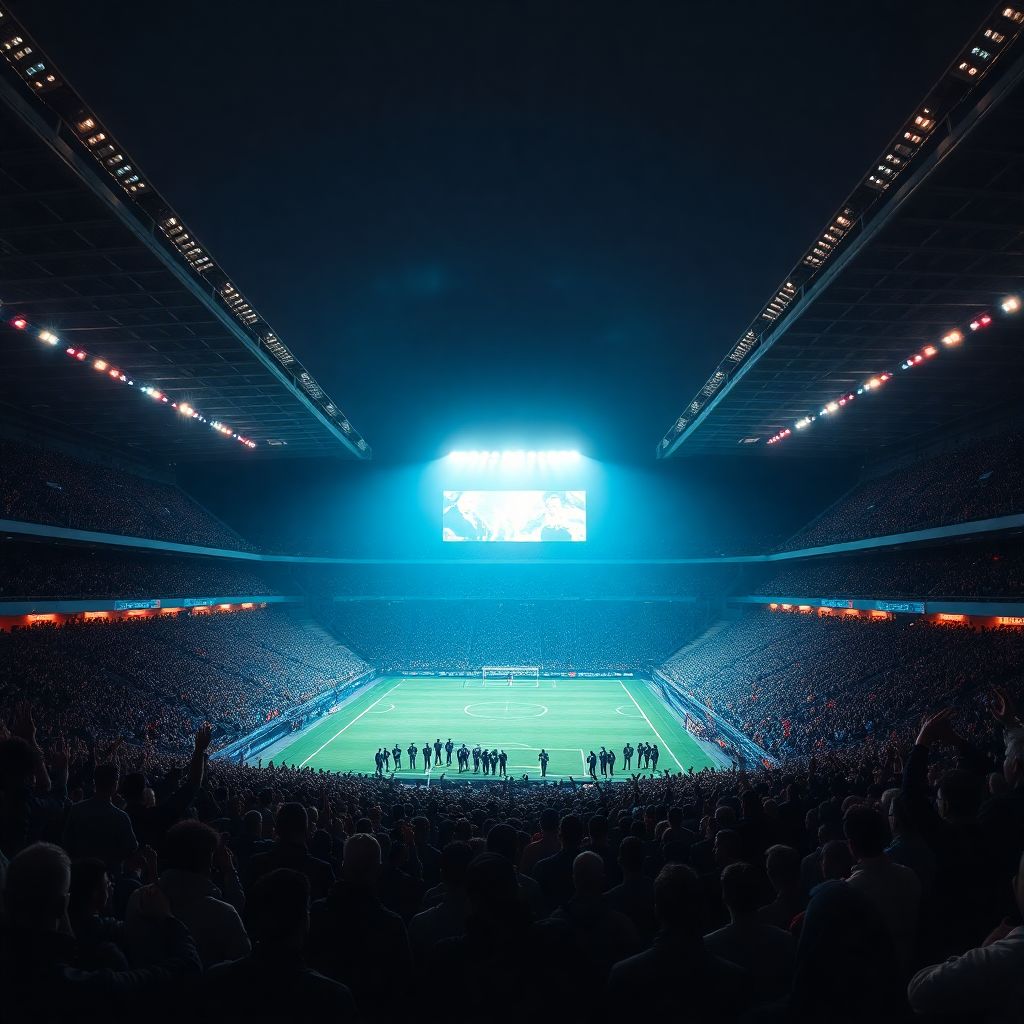
Stadiums function as secular temples when repeated rituals, chants and spatial design transform a football match into a shared emotional ceremony that builds collective identity. Unlike religious temples, their «sacredness» is temporary, negotiated and commercialised, but still powerful enough to shape how fans feel, remember and define who is «us» and «them».
Core propositions on stadiums as secular temples
- Calling a stadium a secular temple is a metaphor that highlights ritual, emotion and community, not literal belief or doctrine.
- Pre-game, in-game and post-game routines work like liturgies that script emotions and group boundaries.
- Chants and soundscapes synchronise bodies and voices, creating intense but fragile moments of unity.
- Architecture and spatial symbols make certain areas feel «sacred» and others marginal or profane.
- Identity is built through participation, repetition and storytelling, not only through spectacular choreographies.
- Market forces, VIP experiences and merchandising both support and distort these rituals.
- Common mistakes come from romanticising fans, ignoring conflict and underestimating commercial pressures.
Debunking Myths: What the ‘Stadium as Temple’ Metaphor Gets Wrong
The first mistake is taking the metaphor literally. A stadium is not a church without God; it is a site where entertainment, business, politics and deep emotion collide. Treating it as a pure sacred space hides power relations, security strategies and commercial agendas that shape every matchday.
A second frequent error is romanticising «the people» in the stands as a homogeneous, heroic community. In reality, ultras, casual fans, tourists on a tour por estadios de fútbol icónicos compra de tickets, families and VIP guests often have conflicting interests, norms and ritual expectations that coexist and sometimes clash.
Clarifying the concept of secular temple
As a concept, the secular temple emphasises how football stadiums organise time (kick-off as sacred moment), space (home end as altar) and emotion (collective effervescence). Unlike religious temples, there is no single doctrine or moral code; what unites people is attachment to club, colours and shared memories.
Drawing the boundaries of the metaphor
Another error is stretching the metaphor until everything in football becomes «ritual» and every fan object becomes «sacred». A disciplined approach distinguishes between banal routines (buying snacks), meaningful matchday practices (marching to the ground) and high-intensity rituals (tifos, anthems, memorial minutes of silence).
Good analysis stays alert to where the analogy fails: stadium rituals rarely claim truth about the universe; they regulate belonging, status and emotion in very concrete, this-worldly ways. Preventing confusion starts with asking, in each case, what exactly is being sacralised and by whom.
Rituals and Routines: Pre-game, In-game and Post-game Practices
A common mistake is to focus only on spectacular moments and ignore the quieter routines that actually stabilise stadium culture. To prevent this, map the whole matchday sequence, from waking up to the journey home, and notice where emotions spike or calm down.
- Pre-game journeys and gatherings – Meeting at the same bar, metro station or plaza before walking to the stadium turns urban space into a processional route. Actors: fan groups, friends, families. Mechanics: repetition, shared songs, alcohol or food. Consequence: a sense of «we are mobilising together».
- Entrance rituals and first sight of the pitch – Scanning the crowd, taking photos, touching badges or stadium gates are micro-rituals. Mistake: treating these as trivial. Quick fix: include them when analysing how a stadium becomes emotionally «charged» before kick-off.
- In-game standing, jumping and gesturing – Coordinated movements (jumping, clapping, raising scarves) embody loyalty. Actors: capos, drummers, stadium DJs. Mechanics: visual cues, rhythm, peer pressure. Consequence: visible unity that can exclude those who do not or cannot participate.
- Halftime routines – Smoking, checking other scores, debating tactics or queuing for food. Analysts often overlook this «liminal» period; yet, it is where narratives and interpretations of the first half are negotiated informally.
- Post-game dispersal and storytelling – Walking home, posting online, debating in bars. Here, fans turn events into stories. Error: assuming ritual ends at the final whistle. Prevention: track how match narratives are fixed or contested afterwards.
- Special occasion practices – Derbies, promotions, relegations and commemorations intensify ordinary routines. Managing pyro, tifos or memorial acts demands careful coordination to avoid accidents, repression or trivialisation of grief.
Chants, Songs and Soundscapes: Mechanisms of Emotional Synchronization
A widespread myth is that chants simply «erupt» from passion. In practice, they are curated, rehearsed and strategically deployed by specific actors. Ignoring this design hides the labour of fan groups and the role of club marketing in promoting certain songs over others.
Matchday soundscapes in different scenarios
- Home ultras leading the curva – In many Spanish and Latin American stadiums, capos direct songs with megaphones and drums. Mechanics: call-and-response, clear leadership, repetition. Consequence: high synchronisation but also internal policing of who may start a chant.
- National team tournaments – Here the crowd is more mixed: locals, foreign visitors, people with experiencias en estadios de fútbol entradas y paquetes vip. Result: simpler, more universal chants, often linked to national identity, fewer complex ultras songs.
- Moments of protest – Whistles, silence, critical banners and ironic songs turn the soundscape into a political arena. Mistake: reading all noise as support. Quick prevention: listen to tone, lyrics and timing; not all loudness is loyalty.
- Commercially driven anthems – Clubs sometimes introduce official songs, light shows and PA-led clapping routines. When overused, these can crowd out organic chants and create a theme-park feeling, especially for regulars in traditional hinchadas.
- Memorial silences and applause – One-minute silences, applause for ex-players or victims connect football to broader social memory. Errors include poor communication, disrespectful interruptions or using mourning rituals as branding opportunities.
- Online extensions of chanting – documentales y cursos online sobre rituales y cánticos en el fútbol codify certain songs, gestures and histories, influencing which traditions younger fans learn and which fade away.
Architecture and Spatial Semiotics: Designing Sacred-Seeming Spaces
Another frequent error is assuming that atmosphere is purely «organic», independent of architecture. In reality, stadium design, acoustics, seating plans and signage strongly shape which groups dominate, who feels at home and which zones acquire a sacred aura.
Design features that enable stadium sacralisation
- Iconic visual axes – Tunnels, club crests, mosaics and statues frame the approach to the pitch as a pilgrimage. In Spain, older grounds often retain narrow, dramatic entrances that reveal the field suddenly, intensifying the «wow» effect.
- Dedicated stands and ends – «Kop» or «Grada de animación» sections concentrate the most active fans. This territorialisation helps ritual focus but can also isolate noise, leaving other stands passive.
- Memorial corners and museums – Club museums, trophy rooms and external murals transform everyday infrastructure into shrines. Fans on a non-matchday visit feel a similar reverence to tourists in religious sites.
- Lighting and sound systems – Pre-game light shows, giant screens and piped music can heighten drama. Used carefully, they support atmosphere; overused, they feel artificial and drown out spontaneous sound.
Structural and ethical limitations of the temple analogy
- Segregation and exclusion – Safety barriers, high ticket prices and membership systems physically and economically filter who can access the «sacred» interior, contradicting the idea of a community temple open to all.
- Neighbourhood impacts – Residential discomfort, gentrification and surveillance around the ground show that stadium sacrality for fans can mean disruption for nearby residents.
- Commercial overlays – Naming rights, corporate boxes and branded «fan experiences» may clash with club history, creating layered, sometimes conflicting meanings within the same space.
- Safety and control – Modern all-seater designs and heavy policing constrain certain traditional rituals (standing, flags, pyro). This protects bodies but can hollow out older cultural practices.
Collective Identity Formation: Rituals, Symbols and Boundary Work
Analysts often overstate unity and underestimate internal divisions. Collective identity in stadiums emerges through constant negotiation: who counts as a «real» fan, which symbols are legitimate and how harshly outsiders or deviants are treated.
Common misconceptions and how to avoid them
- Myth: identity is fixed and ancient – In reality, chants, logos, even club colours can change. Quick prevention: study when particular symbols entered the scene and how fans debated them instead of assuming eternal tradition.
- Myth: all fans share the same motives – Some seek intense emotion, others socialising, others status or business networking. Observing who buys camisetas y merchandising de hinchadas y clubes de fútbol, who invests in banners and who prefers VIP areas reveals different identity strategies.
- Myth: more passion always means more violence – Highly ritualised passion can actually channel aggression symbolically through songs, flags and choreographies. To prevent simplistic conclusions, distinguish between regulated rivalry and situations where weapons, alcohol and political hate speech escalate risk.
- Myth: political messages are always imposed from above – Sometimes clubs use tifo or slogans for PR, but grassroots fan groups also push their own agendas. Avoid error by tracing who designs, funds and carries specific banners and choreos.
- Myth: books and media only reflect culture – libros sobre identidad colectiva y cultura de hinchadas de fútbol and mainstream series shape how new fans imagine «authentic» support, influencing which rituals they adopt or reject.
Commodification and Politics: How Market Forces Transform Rituals
A crucial blind spot is ignoring how money and governance reshape the «temple». Clubs, leagues and sponsors constantly package rituals, images and even fan groups into products, memberships and content, turning lived culture into marketable experiences.
Mini case: from terrace culture to packaged experience
Consider a historic Spanish club modernising its stadium. Traditional standing terraces are replaced with numbered seats and expanded hospitality areas. Old-school season ticket holders are relocated while new hospitality partners promote experiencias en estadios de fútbol entradas y paquetes vip that promise «authentic atmosphere» plus premium catering.
Mechanically, this creates parallel ritual economies: long-time fans sustain songs and banners with their own funds; corporate clients consume atmosphere as part of a service package. Consequence: the stadium still feels like a secular temple, but whose temple it is – and who writes the liturgy – becomes contested.
At the same time, fan museums, stadium tours and online shops professionalise and sell identity. Visitors book a tour por estadios de fútbol icónicos compra de tickets, buy camisetas y merchandising de hinchadas y clubes de fútbol and later watch documentales y cursos online sobre rituales y cánticos en el fútbol. Rituals survive and circulate, but increasingly through commercial channels that filter which histories and practices are amplified.
Lingering questions on rituals, identity and stadium culture
Are stadium rituals really comparable to religious ceremonies?
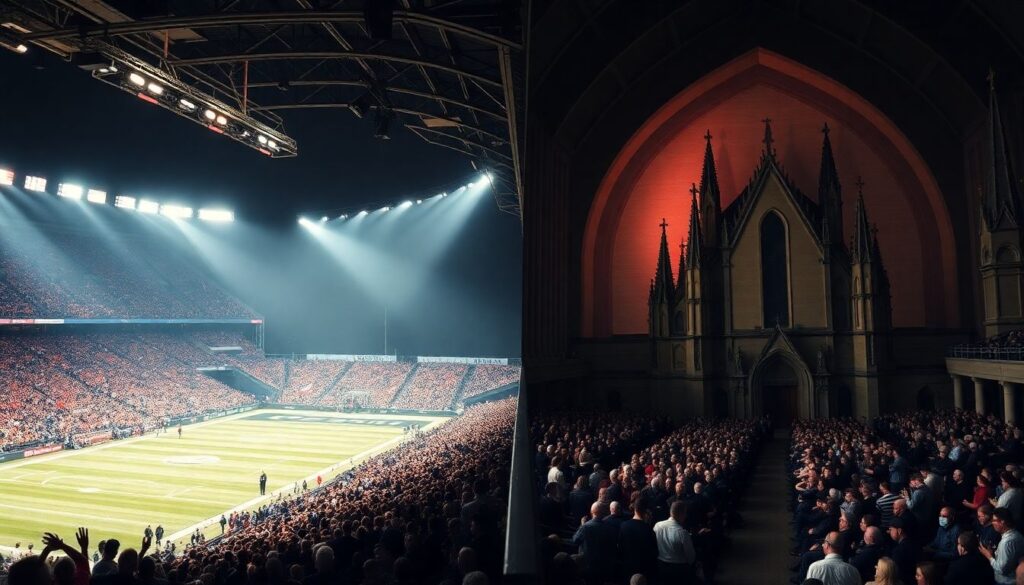
They are comparable in structure-repetition, symbolism, emotional peaks-but different in purpose. Stadium rituals rarely claim ultimate truth; they organise loyalty, memory and rivalry. The metaphor of the secular temple is useful if treated as an analogy, not an equation.
How can clubs avoid killing atmosphere when modernising stadiums?
Involve active fan groups early, protect or recreate key acoustic and visual features, and keep areas where people can stand, sing and display tifos. Over-programming with music and light shows should not drown out organic chants and local traditions.
Do VIP areas always damage collective identity?
Not necessarily, but they easily create segregated experiences and dilute shared rituals. The risk is highest when VIP design separates guests acoustically and visually from the wider crowd, turning participation into mere consumption of atmosphere.
Can online fandom replace physical presence in the stadium?
Online communities extend and reinterpret rituals through memes, videos and debates, but they cannot fully reproduce the embodied synchronisation of chanting and movement. They work best as a complement, not a substitute, for in-stadium participation.
How should researchers deal with violence and discrimination in stadium culture?
By neither romanticising nor moralising prematurely. Map when and where abuse or violence appears, which groups resist or enable it, and how rules, policing and education change practices over time. Precision is key to proposing realistic interventions.
Are commercial fan products always a threat to authenticity?
Fan-made scarves, fanzines and DIY banners can strengthen identity, even when sold. Problems emerge when top-down branding erases local symbols or when merchandise becomes the main entry ticket to feeling like a «real» fan.
Why do some clubs have much stronger ritual cultures than others?
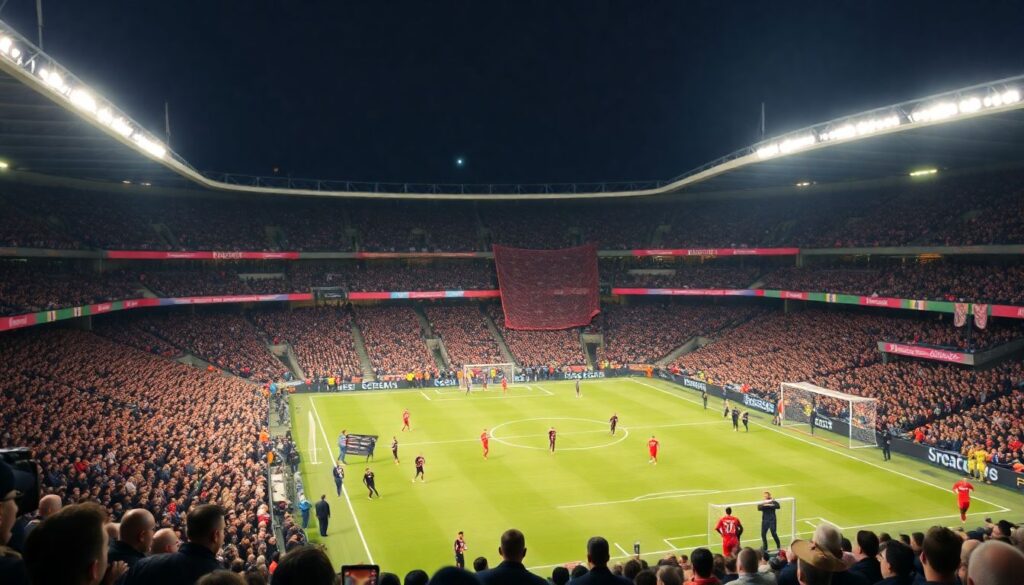
History, local politics, stadium design, pricing policies and the presence of organised fan groups all matter. Rather than searching for a single cause, compare how these factors combine in each case, especially across different cities and leagues.