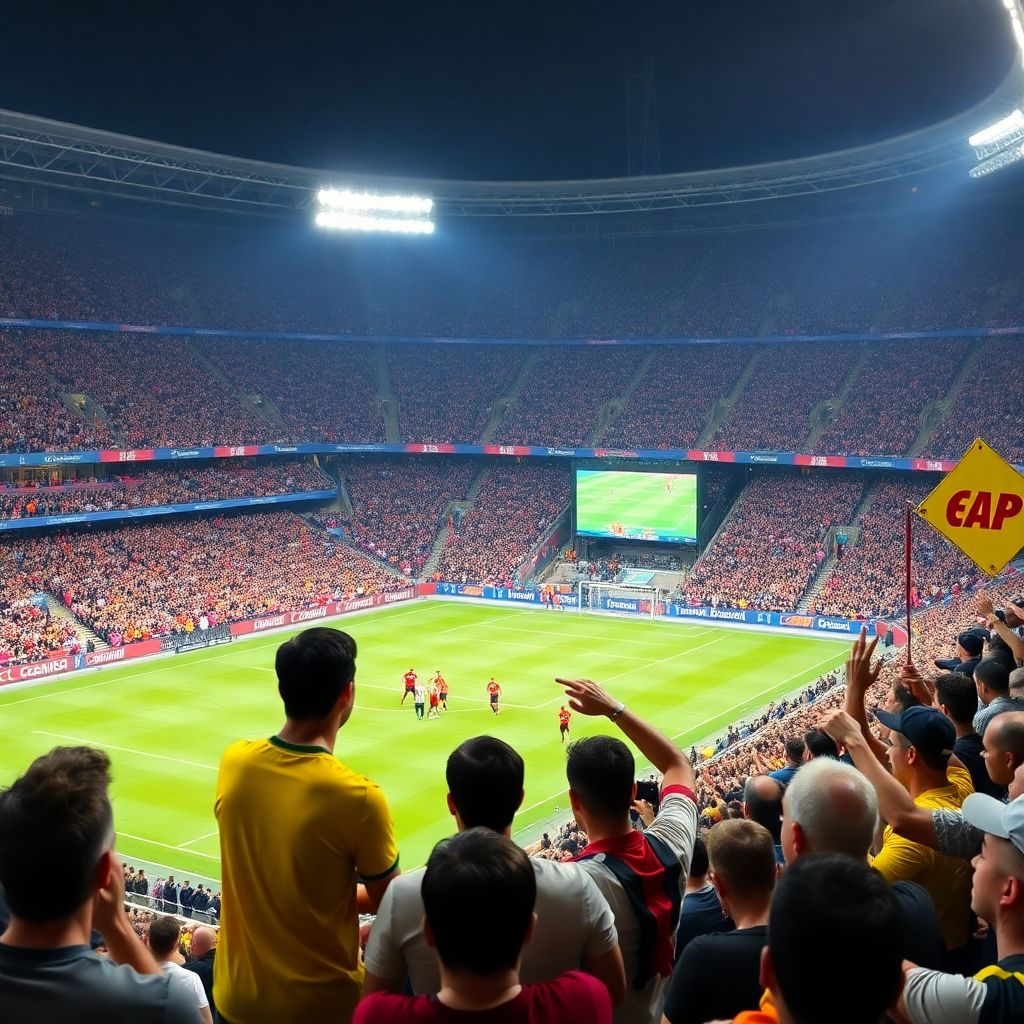
VAR brings more justice on clear, match-changing incidents but reduces spontaneity through long checks, fragmented celebrations and new polémicas. For Spanish football stakeholders, the best approach is not simply «VAR sí o no», but adjusting refereeing protocols, tactics, player behavior and fan expectations to balance accuracy with the traditional rhythm and emoción del fútbol.
Core contrasts overview: justice vs spontaneity
- VAR significantly reduces some blatant errors, shifting the debate justicia deportiva con var en el fútbol from «robos» to protocol and interpretation.
- Spontaneity suffers through delayed celebrations and frequent interruptions, changing cómo ha cambiado el fútbol con el var for fans in Spain.
- Referees gain a safety net but face more tecnología var polémicas arbitraje fútbol and public scrutiny of every big call.
- Coaches adapt pressing, offside traps and set pieces because of the impacto del var en la emoción del fútbol and on risk-reward decisions.
- Players modify aggression and simulation, knowing that every gesture is recorded and rewatched from multiple angles.
- For fans, var en el fútbol opiniones a favor y en contra now focus less on pure emotion, more on procedural fairness and transparency.
VAR and refereeing: accuracy, authority, limits
For referees and competition managers, VAR is a tool, not a replacement for judgment. Choosing how far to rely on it means weighing several criteria that directly affect fairness, rhythm and authority on the pitch.
- Type of incidents covered: Define clearly which situations justify intervention (goals, penalties, direct reds, mistaken identity) to avoid «VAR for everything» and endless delays.
- Threshold for intervention: «Clear and obvious error» must be operationalised; a low threshold increases accuracy but kills flow, a high threshold preserves rhythm but accepts more grey-area mistakes.
- On-field referee authority: Decide whether the VAR is suggestive (advice only) or quasi-decisive; too much remote control can undermine the referee’s presence and leadership.
- Communication style in stadium: Public explanations on the screens or via audio reduce polémicas but lengthen reviews; secrecy preserves speed but fuels mistrust.
- Time management of checks: Limitations on review duration and number of angles help protect tempo, especially in leagues that value vertical, fast fútbol like LaLiga.
- Consistency across competitions: Different protocols between league, Copa and UEFA tournaments confuse players, coaches and fans; alignment helps everyone adapt behavior.
- Technology and camera quality: The more cameras and frame rates you use, the finer the decisions (e.g., offsides by centimeters), but the more artificial and detached from the live experience they can feel.
- Training and psychology of officials: Referees must learn when to trust their instinct versus waiting for a VAR check, and how to manage players’ pressure during delays.
- Cultural expectations of the league: In Spain, historical debates around arbitraje mean that VAR adoption must respond to a long tradition of mistrust, not just to technical criteria.
Tactical ripple effects for coaches and match preparation
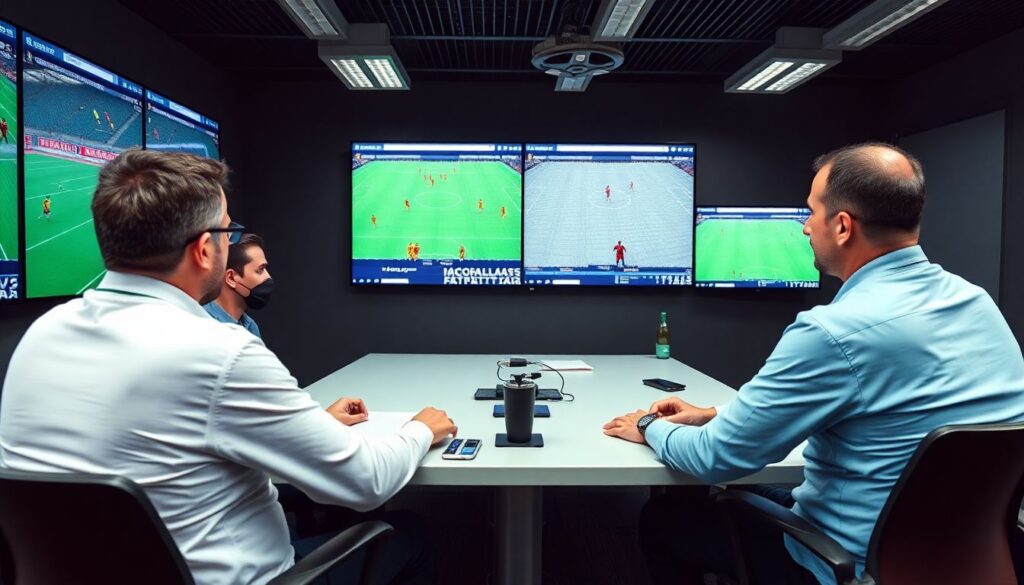
Coaches in Spain now prepare «with VAR in mind». Instead of debating only var en el fútbol opiniones a favor y en contra, they choose tactical variants that either exploit or mitigate the presence of technology.
| Variant | Best suited for | Pros | Cons | When to choose |
|---|---|---|---|---|
| Hyper-aggressive high press and offside trap | Coaches with well-drilled defensive lines and fast centre-backs | VAR reduces missed offsides, rewarding coordinated traps; forces opponents into risky long balls. | Millimetric offside lines can turn many goals into disallowed celebrations; psychological impact on forwards. | Use at home with intense atmosphere where repeated VAR offsides can frustrate rival attackers. |
| Penalty-oriented attacking in the box | Teams with skillful dribblers and mobile strikers | More fouls and handballs are detected; nudges in the box are likelier to be punished on review. | Players may subconsciously hunt for contact, risking bookings for simulation when VAR confirms no foul. | Ideal when you dominate possession but struggle to create clear chances in open play. |
| Controlled physicality in midfield duels | Squads used to intense pressing and tactical fouling | Maintains aggression but with coached body positions to look clean on slow-motion replays. | Requires constant re-education; some players feel less «natural» and lose edge in duels. | Against technical rivals where breaking rhythm is vital but red cards would be disastrous. |
| Set-piece specialisation with VAR-safe blocking | Teams reliant on corners and free kicks | Well-planned screens and movements that look legal from every angle survive VAR checks. | Complex rehearsed patterns take time on the training ground; one player’s mistake can ruin the plan. | In tight knockout ties where one set piece can decide qualification, especially under UEFA VAR crews. |
| Tempo management to absorb long stoppages | Experienced squads with strong leaders and fitness | Team stays mentally ready during reviews; uses pauses to adjust tactics and rest physically. | Risk of losing attacking momentum; requires good communication from the bench to the pitch. | When facing emotionally volatile rivals who are easily destabilised by interruptions and controversy. |
For analysts and performance staff, each variant implies different data tracking: how many interventions, where reviews occur, and how reviews change xG and disciplinary profiles. This is how tecnología var polémicas arbitraje fútbol moves from bar talk to structured preparation.
Players under the lens: behavior, risk-taking and mental load
For players, VAR changes not only what they can get away with, but also how they experience pressure. Below are scenario-based recommendations tailored to defenders, attackers and midfielders.
- If you are a central defender who relies on grabbing and blocking, then progressively replace shirt-pulling with body positioning and step across lines that look legal at half-speed replay; assume every set piece is under surveillance.
- If you are a winger who often attacks one‑v‑one in the box, then focus on staying upright as long as possible and exaggerate only what truly exists; VAR punishes obvious dives but rewards genuine, continuous fouls that the first referee misses.
- If you take many shots from the edge of the area, then train follow-through technique to avoid high studs and late contact; slow-motion makes borderline fouls look worse, so control after the strike is now part of your defensive responsibility.
- If you are a defensive midfielder who uses «tactical fouls», then distribute your fouls in space and time; two similar reckless challenges look very bad on compilation during a VAR check and increase chances of upgrading yellow to red.
- If you are a captain dealing with the referee during reviews, then act as the single spokesperson, keep distance and tone controlled; television focuses on your body language and can shape post-match narratives and sanctions.
- If you tend to celebrate by removing your shirt or provoking rivals, then add a micro‑pause to wait for a quick VAR confirmation on tight goals; better one delayed, shared explosion than an annulled goal plus a pointless booking.
These micro-adjustments show cómo ha cambiado el fútbol con el var for professionals: less space for «picardía» without consequences, more need for controlled intensity and emotional intelligence.
Supporters’ perspective: atmosphere, trust and engagement
From the stands or the sofa, the core question is the impacto del var en la emoción del fútbol. Use this simple checklist to decide how to personally balance justice and spontaneity as a fan or club community leader.
- Clarify your priority: do you prefer more correct decisions over full-speed romance, or do you accept human error to protect uninterrupted euphoria?
- Observe your own reactions during checks: do VAR delays make you disconnect from the match or do they add suspense and shared tension in the grada?
- Evaluate trust in institutions: if you historically suspected bias, does VAR reduce your suspicion or simply move it to the van and to the línea de fuera de juego?
- Track how often your team benefits or suffers: over a season, do you feel balance, or do specific VAR nights dominate your memory and feed resentment?
- Decide your acceptable level of intrusion: are you comfortable with re-refereeing offside toes, or would you restrict VAR to clear penalties and red cards only?
- Adapt your celebration style: are you happier with a two-step celebration (initial shout, then confirmation roar) or with going «all in» every time despite possible annulment?
- Engage constructively in var en el fútbol opiniones a favor y en contra: when discussing with friends or on social media, focus on protocols and solutions, not just on your club’s last grievance.
Supporters who consciously choose their position suffer less from each individual polémica and influence clubs’ and leagues’ decisions about future adjustments to VAR usage.
Empirical trade-offs: error reduction, stoppage time and flow
Leagues and federations often mismanage the trade-offs around VAR implementation. These are common strategic mistakes when trying to choose «how much VAR» a competition should have.
- Expanding VAR to too many incident types, turning matches into long legal discussions instead of fast contests.
- Allowing indefinite review times without clear maximums, which erodes rhythm and intensifies the feeling of artificial control.
- Focusing protocols on extremely tight offsides while leaving other, more impactful fouls and handballs in a grey zone.
- Under‑investing in referee and VAR training, assuming that technology alone will fix cultural and competence issues.
- Failing to communicate protocols to coaches, players and fans, which fuels conspiracy theories every time a decision goes against a big club.
- Ignoring the psychological cost of repeated disallowed goals on attackers and on the stadium atmosphere.
- Using different camera setups and standards between stadiums, creating perceived inequality between big and small clubs.
- Not measuring how often VAR interventions really change results, leaving the debate justicia deportiva con var en el fútbol in pure opinion territory.
- Reacting to single high-profile polémicas with drastic rule tweaks instead of gradual, evidence-based calibration.
- Overloading broadcasters with technical lines and replays that confuse casual viewers about the spirit of the Laws of the Game.
Governance, transparency and long-term implications
For referees and regulators, VAR is best as a calibrated support system with narrow scope and strict time limits. For coaches and analysts, it is a constraint to optimise tactics and discipline. For players and fans, the healthiest path is accepting fewer injustices in exchange for slightly cooler, but more trustworthy, spontaneity.
Practical doubts and clarifications for stakeholders
Does VAR make football completely fair?
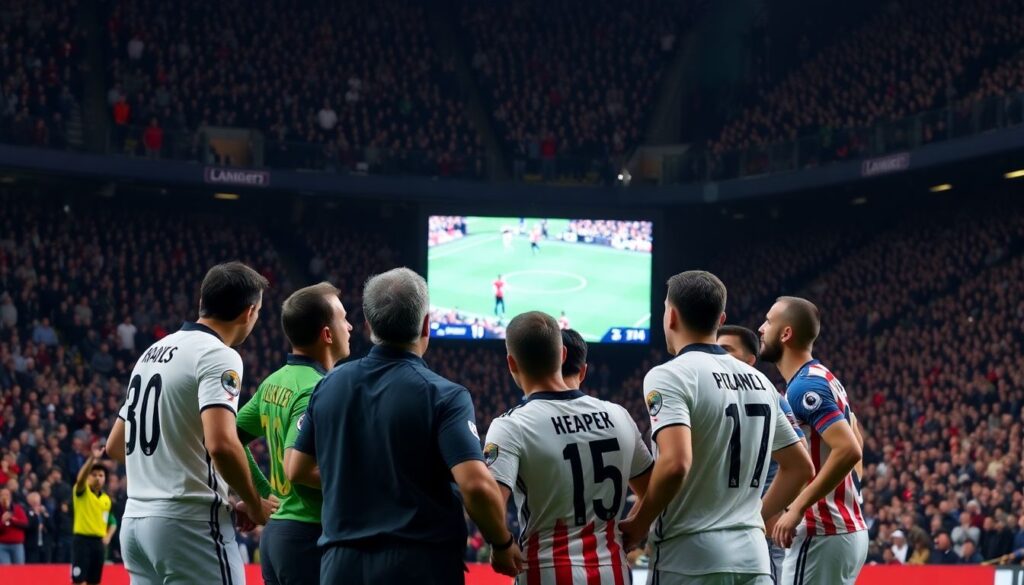
No. VAR reduces some clear errors but does not eliminate subjective interpretation, camera limitations or referee bias. It shifts many arguments from «I didn’t see it» to «how should we interpret this contact or handball?».
Why do VAR checks feel longer than they really are?
Because they interrupt peak emotion. After a goal or a possible penalty, even a short pause feels disproportionately long. Lack of information in the stadium intensifies this perception for fans and players.
How should a coach in Spain adapt training sessions to VAR?
Integrate video of typical fouls, offsides and handballs into tactical drills, coach «VAR-safe» duels on set pieces, and simulate emotional resets after disallowed goals so players quickly refocus on the next action.
Is it possible to limit VAR without removing it completely?
Yes. Competitions can restrict VAR to a small set of incidents, impose maximum review times, and avoid re-refereeing marginal offsides. This protects justice on big calls while defending match flow.
Does VAR reduce the power of star players and big clubs?
It may slightly reduce the effect of reputational bias on some decisions, but other structural advantages remain. Perceptions depend heavily on which clubs feel most harmed in decisive matches.
Can fan groups influence how VAR is used?
Organised supporters can push leagues and clubs to demand clearer communication, better in-stadium information and public post‑match explanations, shaping future protocol changes.
Should young players in academies already train «with VAR in mind»?
Yes. Teaching clean technique in duels, emotional control and honesty in the box prepares them for professional football, where cameras catch far more than referees do.