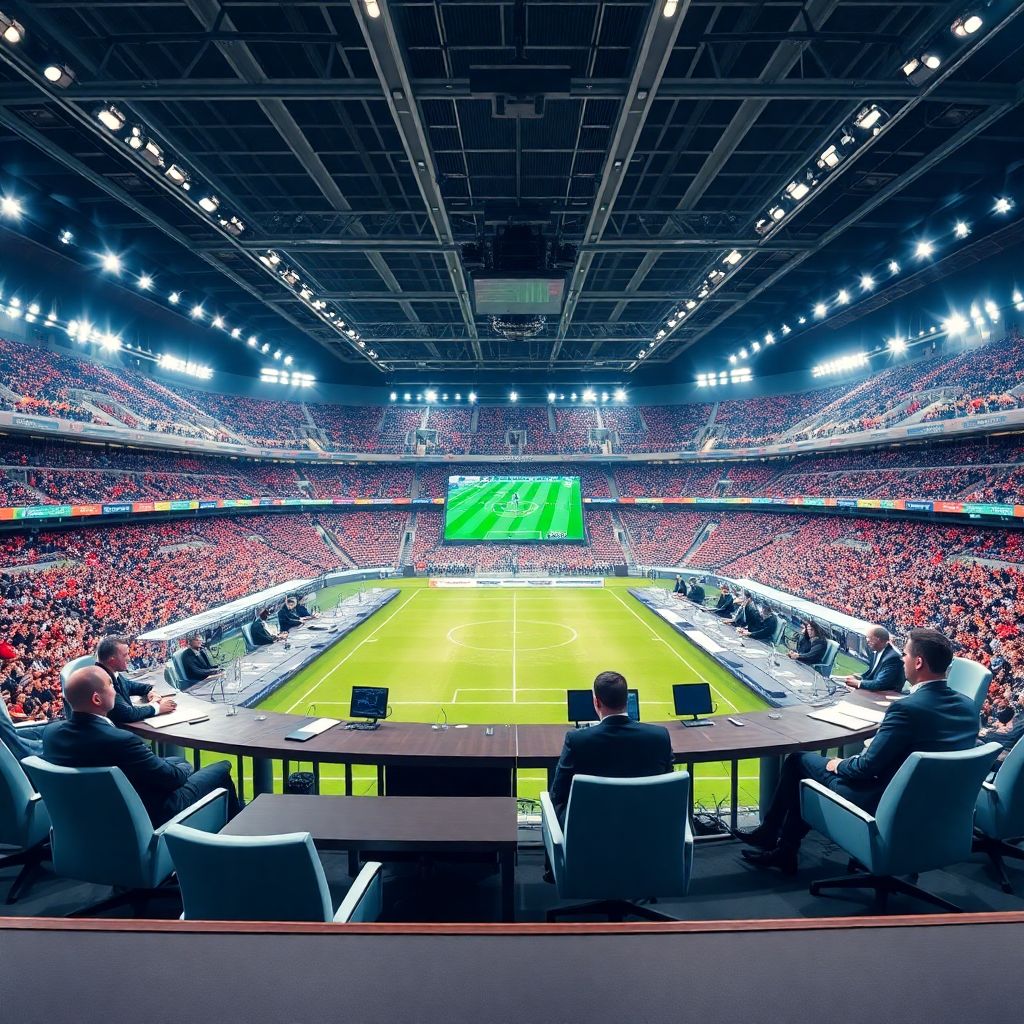
Pure sport works best when long-term credibility, youth development and competitive balance are your priorities; spectacle-first works when you optimise for audiences, sponsorship and short-term revenue. For most European football and multisport organisations in Spain, a clearly governed balanced model-sport-first rules, show-aware packaging and digital innovation in broadcasting-is usually the most robust choice.
Executive summary for decision-makers
- Define your non‑negotiables first: integrity, athlete welfare, and minimum sporting merit must never be traded fully for TV ratings or extra inventory for publicidad en eventos deportivos televisados.
- A balanced sport-show model usually maximises resilience: stable competition formats plus flexible broadcasting windows and digital engagement.
- Broadcast models differ: traditional TV deals, mixed packages, and contratos de transmisión deportiva streaming each redistribute power between leagues, clubs, players and platforms.
- Fast rule tweaks for spectacle (extra timeouts, expanded playoffs, late kick‑offs) can erode trust if they obviously follow derechos de televisión fútbol en vivo interests, not sporting logic.
- In Spain, fans already juggle multiple plataformas para ver fútbol y deportes online; fragmentation and rising paquetes TV deportes en directo precio increase pressure for clearer value and strong competition integrity.
- Decision-making works best with explicit trade‑offs: document for every change who wins, who loses, and how integrity, safety and long‑term fan trust are protected.
Historical trajectory: how sport became spectacle
When deciding how far to push your competition towards entertainment, use these criteria to structure internal debates and board decisions.
- Integrity of competition: To what extent are promotion/relegation, qualification and titles decided purely on sporting performance rather than commercial criteria or brand value?
- Predictability versus uncertainty: How much randomness and competitive balance do you want versus a few dominant brands that deliver stable TV audiences?
- Calendar density and player load: Are match schedules set to optimise athlete health and peak performance, or to fill prime‑time slots and global windows?
- Rule stability: Do rules change slowly following technical analysis, or quickly in response to broadcasters and sponsors chasing more goals, more drama or shorter games?
- Fan access and affordability: Can ordinary supporters follow the season without multiple subscriptions, or do media deals systematically push them away from stadiums and free‑to‑air?
- Cultural identity: How strongly do clubs and leagues protect traditions (kick‑off times, local rivalries, cup formats) against TV‑driven standardisation?
- Revenue dependency: Is your budget dominated by derechos de televisión fútbol en vivo and central sponsorship, or diversified with ticketing, membership and community programmes?
- Governance independence: Who ultimately decides on format and scheduling: sporting authorities, an independent regulator, or media partners and investors?
- Transparency and communication: How clearly are fans told why changes are made, and how often is sporting integrity explicitly mentioned in official justifications?
| Dimension | Sport values emphasised | Spectacle incentives emphasised |
|---|---|---|
| Primary goal | Fair competition, meritocracy, development | Audience growth, ratings, monetisation |
| Key reference | Rules and sporting criteria | TV slots, engagement metrics, sponsor demands |
| Time horizon | Multi‑decade credibility and legacy | Season‑to‑season commercial performance |
| Fan relationship | Membership, attendance, local community | Viewership, clicks, global casual audiences |
| Risk profile | Lower financial volatility, slower growth | Higher upside, higher reputation risk |
Market mechanics: broadcast rights, sponsorship and rating pressures
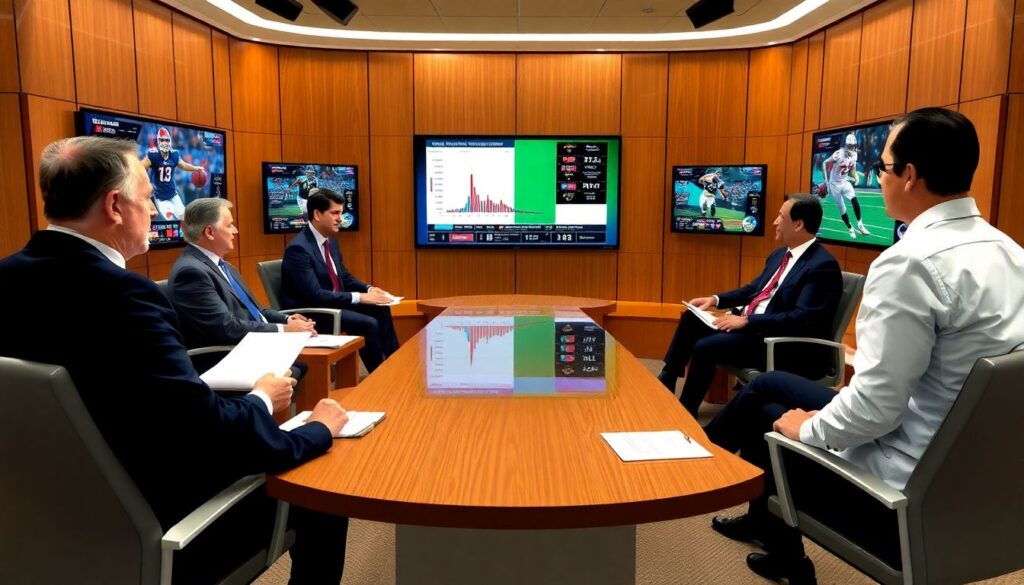
The way you structure broadcast and sponsorship income determines how strongly spectacle will influence sporting decisions. Below is a comparison of strategic models.
| Variant | Best suited for | Advantages | Drawbacks | When to choose |
|---|---|---|---|---|
| Sport-first governance | Federations, lower divisions, youth systems, clubs prioritising identity and long‑term trust | Preserves integrity and tradition; lower dependence on a single TV contract; easier to justify rules to fans and players. | Slower revenue growth; fewer premium night slots; less bargaining power with major broadcasters and sponsors. | When your financial survival does not rely on maximising media rights and when you want to protect promotion/relegation, local kick‑off times and player pathways. |
| Balanced sport-show model | Top national leagues (e.g. LaLiga), major cups, multi‑sport events needing both credibility and mass audiences | Strong media value while maintaining meritocracy; more flexibility in contratos de transmisión deportiva streaming; supports global and domestic fan bases. | Constant tension between TV demands and sporting logic; risk of creeping schedule overload; complex negotiations with clubs and broadcasters. | When you are a leading property in Spain or Europe and must serve both hardcore match‑goers and global viewers on múltiples plataformas para ver fútbol y deportes online. |
| Show-first entertainment model | Closed leagues, new formats, exhibition tournaments, investor‑led projects | Maximum control over format and calendar; easy to optimise for rating peaks and sponsorship activation; friendly to crossovers and celebrity participation. | Perceived as artificial or plastic; weaker link to grassroots; higher backlash risk when sporting values are sidelined; vulnerable if audience taste changes. | When your product is clearly branded as entertainment, not a traditional pyramid (e.g. all‑star games, skills contests, short‑season tournaments). |
| Digital streaming-led ecosystem | Properties targeting younger audiences, niche sports, and flexible international distribution | Direct data and relationship with fans; easier experimentation with kick‑off times and formats; bundling with other content reduces dependence on a single league. | Fragmentation raises paquetes TV deportes en directo precio for multi‑fan households; platform algorithms may push for more content volume than athletes can safely deliver. | When you can sign modular contratos de transmisión deportiva streaming, exploit second screens, and build communities beyond linear TV. |
The practical decision is less about choosing a single model and more about where to position your competition on the spectrum. Many Spanish organisations combine a balanced sport‑show core with digital streaming sub‑rights, careful publicidad en eventos deportivos televisados, and selected free‑to‑air matches to preserve reach.
| Stakeholder choice | Immediate outcome | Medium‑term risk | Recommended mitigation |
|---|---|---|---|
| Maximise income from exclusive pay‑TV packages | Revenue spike; tighter link to main broadcaster | Fan access drops; political and regulator pressure over affordability | Reserve some games for free‑to‑air or low‑cost tiers; transparent communication of reinvestment into grassroots |
| Accept heavy schedule reshaping for prime‑time | Better ratings; more sponsor interest | Player fatigue; quality decline; more injuries | Introduce hard caps on matches; rotation rules; collective bargaining with player unions |
| Offer sub‑licences to multiple streaming platforms | Broader reach; diversified income | Fan confusion over where to watch; rising combined cost | Centralised fixture information; unified app linking all plataformas para ver fútbol y deportes online |
| Design formats around sponsor activations | Integrated branding; strong partner retention | Perception that money overrides sport; integrity questions | Independent ethics committee; clear red lines on competitive interference |
Competitor incentives: athlete priorities and career calculus
Elite players and coaches react quickly when incentives change. Aligning their calculus with your governance model keeps the balance between sport and spectacle stable.
- If you increase the number of matches or tournaments for TV inventory, then expect top athletes to prioritise competitions with the most prestige, money and visibility, possibly downgrading national cups or smaller events.
- If prize money and exposure are highly concentrated in a small number of televised fixtures, then players may push for transfers to a few super‑clubs, reducing competitive balance and long‑term suspense.
- If you protect rest windows and limit back‑to‑back fixtures despite broadcaster requests, then you increase the probability of peak‑quality games and longer careers, even if short‑term content volume is lower.
- If rules on simulation, time‑wasting and VAR are enforced with integrity, then players adapt towards more continuous play, which serves both pure sporting values and spectator experience.
- If smaller competitions in Spain are given digital exposure and modest but visible performance bonuses, then young players and coaches see them as real pathways, not just filler content between big European nights.
- If image rights and individual sponsorship are allowed to dominate decisions (e.g. friendly tours for shirt sales), then athlete energy may be diverted from the core domestic calendar, harming regular fans.
Game design trade-offs: rule changes, pacing and athlete safety
Use this algorithmic checklist before approving any change that might tilt your sport towards spectacle.
- Clarify the primary objective: Specify whether the change aims at fairness, safety, clarity, or entertainment. If entertainment is primary, document why sporting integrity still improves or at least does not fall.
- Test against athlete load: Quantify how the change affects distance covered, collisions, and recovery cycles; reject modifications that only add content without a compensating safety measure.
- Simulate game flow: Model how the change alters average stoppage time, ball‑in‑play minutes, and decisive actions; prefer changes that simplify while keeping the core identity of the game.
- Check commercialization spillover: Identify where extra breaks could invite more publicidad en eventos deportivos televisados; ensure any added inventory does not disrupt tension at key sporting moments.
- Pilot in lower‑risk contexts: Trial rule tweaks in youth or secondary competitions first, with transparent evaluation criteria and independent medical monitoring.
- Collect multi‑stakeholder feedback: Gather structured input from referees, players, coaches, broadcasters and fan groups in Spain before making changes permanent.
- Review after two full seasons: Assess injuries, quality of play, fan satisfaction and financial outcomes; be ready to roll back if spectacle gains came at too high a sporting cost.
Audience dynamics: live attendance versus televised engagement
Mixing stadium and remote audiences creates room for strategy errors. Avoid these common mistakes when balancing pure sport with the TV show.
- Assuming that higher TV ratings automatically justify kick‑off times that make stadium attendance difficult for families, workers or long‑distance supporters.
- Fragmenting rights across too many services so that even dedicated fans cannot track who holds which partidos, especially as paquetes TV deportes en directo precio rise in Spain.
- Designing broadcast graphics, replays and second‑screen content only for remote viewers, leaving in‑stadium fans with long pauses, unclear VAR decisions and no explanation.
- Underestimating how empty or quiet stadiums reduce the perceived intensity of televised matches, especially for international viewers choosing between multiple leagues.
- Treating fan groups as obstacles rather than partners when adjusting schedules for derechos de televisión fútbol en vivo, instead of consulting them and co‑creating mitigations.
- Over‑relying on short viral clips from plataformas para ver fútbol y deportes online as a substitute for the long emotional arc of a competition that keeps local fans engaged.
- Neglecting transport, safety and pricing policies around late‑night games, which can turn supporters away from live experiences and damage the league brand.
- Ignoring the different expectations of casual streamers and season‑ticket holders; both count, but they value different aspects of authenticity and atmosphere.
- Failing to differentiate coverage tiers: the same television show template used for derbies, relegation battles and low‑stakes matches, instead of tailoring depth and storytelling.
Governance and integrity: regulation, anti-manipulation and ethical limits
Before choosing your equilibrium between sport and spectacle, apply this simple decision path.
- If your competition’s legitimacy is fragile (match‑fixing history, new format, strong fan scepticism), anchor firmly in sport‑first governance and introduce spectacle only through safer channels like storytelling and production.
- If you are an established league with stable rules and credible refereeing, evolve towards a balanced sport‑show model using careful scheduling, digital innovation and measured commercial partnerships.
- If you are launching a new entertainment product with no promotion/relegation pyramid behind it, be explicit that it is show‑first and avoid claiming the same moral authority as traditional competitions.
- If regulators, governments or player unions in Spain raise red flags over scheduling, concussion protocols or financial transparency, pause expansion and reset priorities towards safety and integrity.
Best for safeguarding long‑term trust and a national football ecosystem in Spain is a sport‑first governance stance with transparent regulation and strong integrity controls. Best for revenue, global reach and innovation is a balanced sport‑show model with diversified media partners. Best for experimental formats and high‑impact events is a clearly labelled show‑first product, ring‑fenced so it does not undermine the core sporting pyramid.
Common dilemmas and practical resolutions
How can a league grow TV income without losing traditional kick-off times?
Protect a minimum quota of heritage time slots (for example, local derbies at fan‑friendly hours) in the central calendar, and auction flexible windows around them. Use clear criteria so broadcasters know which fixtures are movable and which are anchored.
Should smaller Spanish clubs accept late-night slots for extra exposure?
Only if the financial upside is clearly reinvested into club stability and fan experience. Negotiate support on transport, communication and possible earlier weekend fixtures so local supporters are not consistently penalised.
Are streaming-only deals a good idea for domestic football competitions?
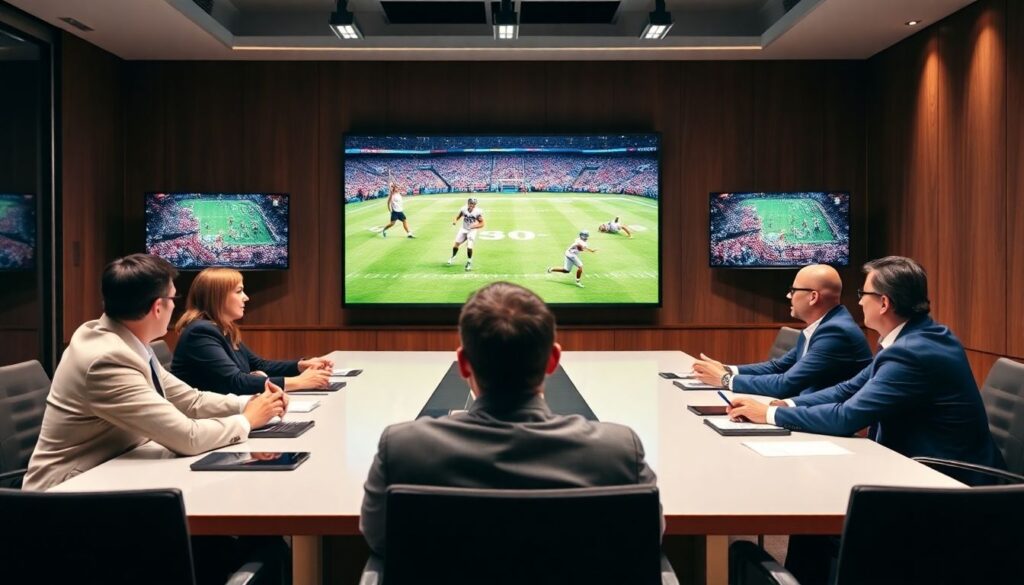
Streaming‑only contratos de transmisión deportiva streaming can work for niche or youth competitions, but major properties usually need a mixed model. Combine digital flexibility with some free‑to‑air or basic‑tier coverage to maintain reach and political goodwill.
How much influence should broadcasters have on rule changes?
Broadcasters may offer valuable insights about clarity and pacing, but they should never have veto power over core sporting rules. Set a formal consultation process where their input is heard yet final authority rests with independent sporting bodies.
What is a reasonable way to manage in-game advertising pressure?
Define protected zones in each match where no additional publicidad en eventos deportivos televisados is allowed, such as serious injuries, penalties and final minutes. Concentrate commercial activations in pre‑match, half‑time and post‑match segments.
How can clubs communicate unpopular schedule changes to fans?
Explain the specific trade‑offs, including how extra revenue supports squad depth, facilities or ticket subsidies. Offer practical mitigations-transport partnerships, flexible season tickets-and show that supporters were consulted before final decisions.
Is it possible to reverse overly entertainment-focused reforms?
Yes, but it requires admitting mistakes and presenting solid evidence on injuries, fan dissatisfaction or integrity risks. Plan sunset clauses for experimental changes so they automatically expire unless explicitly renewed after evaluation.