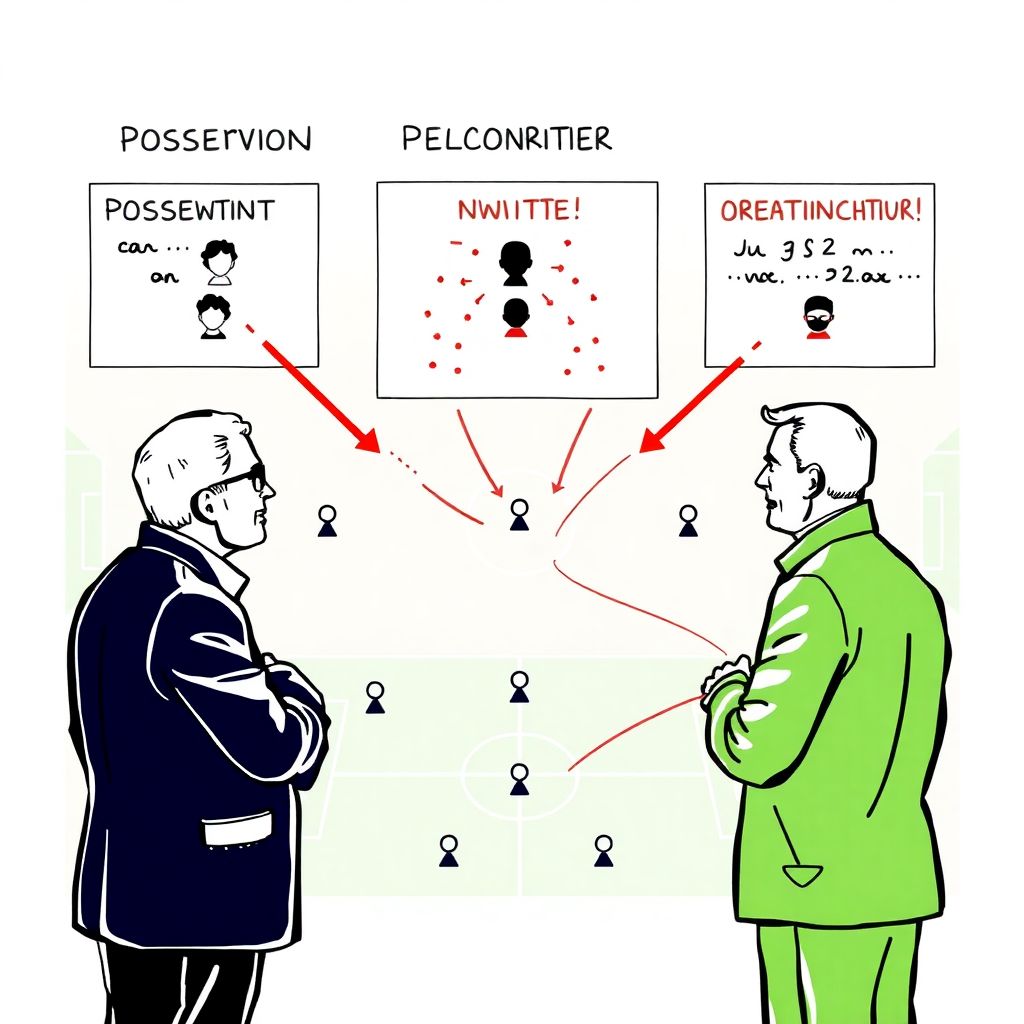
Possession, counterattack and so‑called «organized chaos» are three philosophical frames for understanding order in football. Possession treats control of the ball as order, counterattack treats disruption as order, and organized chaos treats fluid, adaptive behaviour as order. Each model has different risks, learning curves and practical implications for coaches and players.
Core Concepts and Definitions
- Possession as institutional order: team structure, spacing and circulation of the ball define what «good order» means.
- Counterattack as disruption: order appears in how fast and coherently a team exploits disorganization in the rival block.
- Organized chaos: pre-agreed principles allow apparently anarchic movements that still maintain collective balance.
- Implementation difficulty grows from basic counterattack patterns to stable possession structures to full organized chaos.
- Risk management differs: possession accepts slower threat for stability, counterattack accepts volatility, organized chaos accepts creative uncertainty.
- Good training design and clear language are more important than labels when integrating these three metaphors in one game model.
Possession as Institutional Order: Principles and Metrics
In this metaphor, order in football is defined by how a team occupies space and circulates the ball. Modern tácticas de posesión en el fútbol moderno turn positional structure into a kind of «institution»: stable zones, repeated passing lanes and clear rules about who moves where and when. The ball is used to control the tempo and psychology of the match.
Practically, possession football relies on three pillars: stable rest-defense behind the ball, clear occupation of width and height, and constant creation of passing triangles or diamonds. Each pass is a small investment to improve future options, reduce risk of counterattacks and move the rival block. The metaphor of institutional order appears in the predictability of patterns.
For intermediate coaches in Spain, the main challenge is not copying elite models, but building simple positional rules the current squad can execute. Metrics such as possession percentage are superficial; more useful are measures like how often the ball is progressed between lines, how many players are positioned to counterpress, and how safely the team can recycle under pressure.
- Define 3-5 simple positional rules that every player can repeat without thinking.
- Evaluate possession quality by progression and protection, not by raw time on the ball.
- Introduce one new circulation pattern at a time to avoid overloading players.
Counterattack as Disruption: Mechanics and Tactical Logic
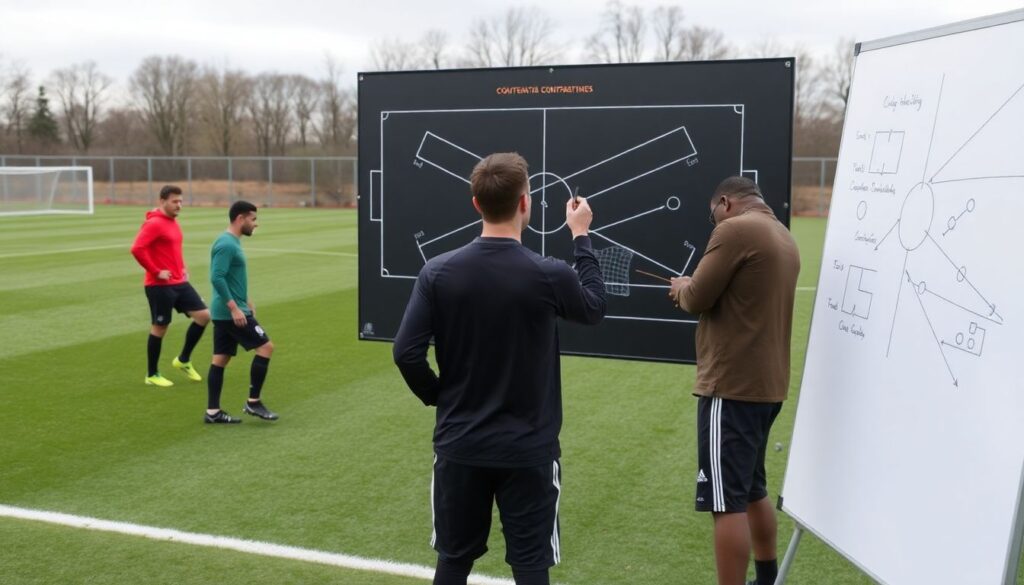
Counterattacking treats order as the ability to immediately organize when the rival loses the ball. Instead of building a stable institution, the team specializes in reading and exploiting moments of disorder. The mejores estrategias de contraataque en fútbol are not random sprints; they are well-rehearsed reactions to specific triggers.
- Ball recovery trigger: Typically in central areas or near the touchline, with at least one forward already positioned to run in behind.
- First forward pass rule: Immediate vertical or diagonal pass to the most advanced free player, avoiding lateral «pause» passes.
- Running lanes: Clear pre-agreed corridors (wide, central, opposite halfspace) so players do not bunch around the ball.
- Support timing: One player runs beyond the ball, one provides a safe passing option behind, one attacks the far post.
- Decision at the box: Simple algorithm: if numerical superiority, attack goal in three passes or fewer; if equality, protect and wait for late runners; if inferiority, hold or recycle.
- Defensive reload: Non-involved players immediately form the new defensive line as the attack unfolds.
This model is simpler to install in lower categories because patterns are short and easy to memorise. However, the risk is dependence on the opponent’s mistakes: if the rival plays safe, the counterattacking team may spend long periods without meaningful possession and lose psychological control of the match.
- Train a maximum of two clear counterattack patterns per channel (left, right, central).
- Attach each pattern to a visible trigger (interception, bad back pass, goalkeeper save).
- Monitor whether your team can create chances against deep blocks, not only in transitions.
Organized Chaos: Emergent Structures and Flexibility
Organized chaos is a metaphor for teams that seem wild and improvisational, yet reveal hidden order in their behaviour. Instead of rigid positions, coaches define principles and constraints, allowing structures to emerge from player decisions. This fits especially well with entrenamiento para fútbol ofensivo y presión alta, where intensity and unpredictability are assets.
In practice, organized chaos often appears in: aggressive counterpressing immediately after losing the ball; rotations that constantly change who occupies each space; and unpredictable third-man runs. The «order» is in the non-negotiable principles: always attack forward first, always have cover behind the ball, always close the centre before the wings.
For semi-professional or amateur sides, the biggest difficulty is cognitive load. Without enough tactical education (for example via good cursos online de análisis táctico de fútbol), players may confuse freedom with lack of responsibility. The model then collapses into real chaos: huge distances between lines, late reactions in defensive transitions and inconsistent pressing.
Coaches in Spain often use small-sided games with asymmetrical rules to grow this style: bonus goals after regaining and scoring within a few seconds, liberty to swap positions as long as three reference zones are always occupied, or constraints on back passes to force forward thinking. Over time, players internalise patterns without explicit rigid schemes.
- Define 3-4 non-negotiable principles that guide all «chaotic» behaviour.
- Use games, not chalkboard lectures, to build intuition for rotations and pressing.
- Increase freedom only when players show they can maintain compactness and balance.
Comparative Dynamics: When Possession Wins and When It Fails
Comparing these metaphors through the lenses of ease of implementation and risk helps coaches choose a realistic starting point. Possession demands more collective education and time, but offers stable control of the match rhythm. Counterattack is faster to implement and emotionally attractive, but heavily dependent on rival mistakes. Organized chaos promises high ceilings but punishes lack of clarity.
In the Spanish context, where many players grow up with ball-based training and strong technical habits, possession and high pressing are culturally natural. Yet, for squads with physical advantages and less tactical schooling, a counterattacking identity might better fit resources. Understanding when each approach «wins» or «fails» is more important than ideological loyalty.
Main strengths by metaphor
- Possession: Controls tempo, reduces randomness, favours technically superior teams, aligns well with long-term player development.
- Counterattack: Clear roles, fast emotional reward, good for underdogs, less cognitive complexity in the initial phase.
- Organized chaos: High chance creation, difficult to defend, maximises creative players, synergises with pressure and aggressive mentality.
Main limitations and risks
- Possession: Risk of sterile dominance, vulnerability to fast counters, requires patience from club and fans.
- Counterattack: Long defensive phases, physical fatigue, limited solutions versus low blocks, possible identity crisis when favourites.
- Organized chaos: High learning curve, dependence on intelligent leaders on the pitch, risk of disorganization when confidence drops.
- Choose a primary metaphor based on your current player profile and training time.
- Plan a secondary metaphor to use as a situational tool (e.g., counterattack when leading).
- Audit your last five matches: which metaphor actually describes your behaviour, not your intention?
Translating Metaphor into Practice: Training Drills and Match Plans
To move from philosophy to training design, think of each metaphor as a set of constraints for your sessions. For possession, use positional rondos and structured build-up games where width and support angles are rewarded. For counterattack, design transition games that start from ball recovery and finish within a fixed time or number of passes.
For organized chaos, mix rules: high pressing triggers, free rotations and bonus points for third-man combinations or regains in specific zones. Here, libros de táctica y filosofía del fútbol can be valuable, not as dogma but as inspiration for varied constraints and vocabulary. The goal is not copying famous authors, but translating abstract ideas into repeatable behaviours for your group.
Common mistakes come from misunderstanding the metaphors as pure styles instead of toolboxes. Coaches sometimes try to play «pure» possession even when chasing a match, or insist on constant pressing without considering physical limits across the season. Others label everything as organized chaos without having clear teaching points for players.
Typical mistakes and myths to avoid
- Believing more possession always means more control, ignoring field zones and rest-defense quality.
- Using counterattack only as a «small team» identity, instead of a planned phase for all teams.
- Calling random movement «organized chaos» without explicit principles and review of video examples.
- Overcomplicating drills with many rules instead of few clear constraints aligned with the chosen metaphor.
- Check that every drill clearly supports possession, counterattack or organized chaos principles.
- Include at least one transition-focused game per microcycle, regardless of your primary style.
- Review match clips with players using the same language you use in training games.
Evaluating Success: Statistical and Qualitative Indicators
To judge whether your chosen metaphor is working, combine simple statistics with qualitative observations. For possession, do not only count possession percentage; monitor how often you break lines, how many controlled entries into the final third you produce, and how exposed you are when losing the ball. For counterattack, track chances created within a few seconds of recovery.
For organized chaos and presión alta, success appears in repeated high regains, forced long balls from opponents, and the team’s ability to maintain compactness even when rotating positions. Basic spreadsheets or simple match reports already allow intermediate coaches to record these patterns without complex software. Over time, trends show whether philosophical intentions are becoming real behaviour.
| Metaphor | Simple quantitative indicator | Key qualitative question |
|---|---|---|
| Possession | Completed progressions from build-up to final third | Do we look calm and connected when pressed? |
| Counterattack | Shots within 10 seconds of recovery | Do our runs create clear passing lanes or traffic? |
| Organized chaos | High regains per match | Do we stay compact while rotating aggressively? |
As a mini-case, imagine a team that trains entrenamiento para fútbol ofensivo y presión alta but records very few high regains and many long opponent possessions. Video shows that first pressing actions are intense, but second and third lines are late. The diagnosis: the metaphor of organized chaos is only partly implemented; players know «go», but not «how to cover behind».
- Pick one primary metric and one key question per metaphor and track them for at least five matches.
- Use short video clips to connect numbers with concrete pressing, build-up or counterattack moments.
- Adjust your weekly plan based on evidence instead of stereotypes about your team’s «style».
- Clarify which metaphor currently fits your squad’s strengths and training time.
- Define 3-5 non-negotiable principles that express that metaphor on the pitch.
- Design weekly drills that explicitly train possession, counterattack and pressing behaviours.
- Review matches using simple metrics plus video to verify that training ideas appear in competition.
Practical Clarifications and Common Doubts
Can a team mix possession, counterattack and organized chaos in one game model?
Yes. Most top teams blend a dominant metaphor with situational tools: structured possession in early build-up, aggressive organized chaos when pressing, and prepared counterattacks against specific rivals. The key is using consistent principles so players recognise when to switch behaviour.
Is possession football always harder to implement than counterattack?
Possession tends to require more collective understanding and time, especially regarding spacing and pressing resistance. However, with technically strong players and frequent training, simple positional rules can be installed gradually. Pure counterattack is easier to execute early but can become predictable against deep, patient opponents.
How important is individual creativity in an organized chaos approach?
Very important, but it must be framed by shared principles. Creative players thrive when they know which risk level is acceptable and where others will move to balance them. Without that shared framework, creativity turns into random decision-making that weakens the collective block.
Do youth teams in Spain need a defined metaphor or just general development?
Youth teams benefit from exposure to all three metaphors, with emphasis on technical and cognitive development. Coaches can change the main metaphor by age or season phase, but should always highlight transferable concepts: orientation of first touch, scanning, reaction after loss and coordinated runs.
Can organized chaos work without intense physical conditioning?
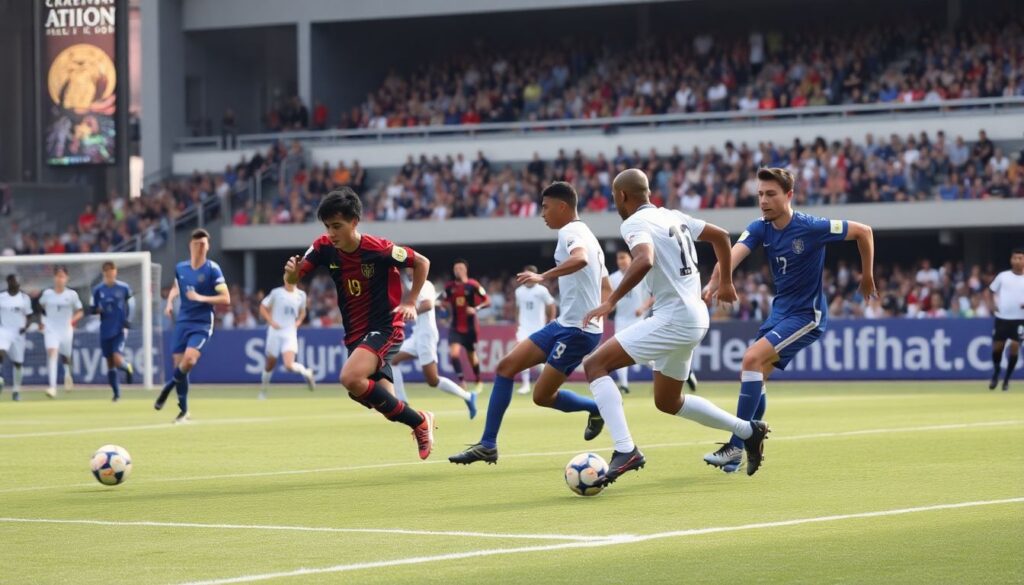
Only partially. High pressing and frequent rotations demand repeated sprints and fast recovery. A less physical squad can still apply organized chaos in shorter, strategic bursts or specific zones, but should not depend on constant high tempo across ninety minutes.
Are books or online courses really useful for intermediate coaches?
Quality libros de táctica y filosofía del fútbol and well-structured cursos online de análisis táctico de fútbol help turn intuition into clear language and training design. Their value depends on whether the coach translates concepts into simple rules and games adapted to the actual level of the team.
How often should a team review and possibly change its main metaphor?
At least once per season, or when there is a major change in squad profile or competition context. Sudden, radical shifts mid-season usually fail unless clearly communicated and supported by targeted training blocks and realistic short-term expectations.
Комментарии